Artwork
Manasa, The Snake Goddess
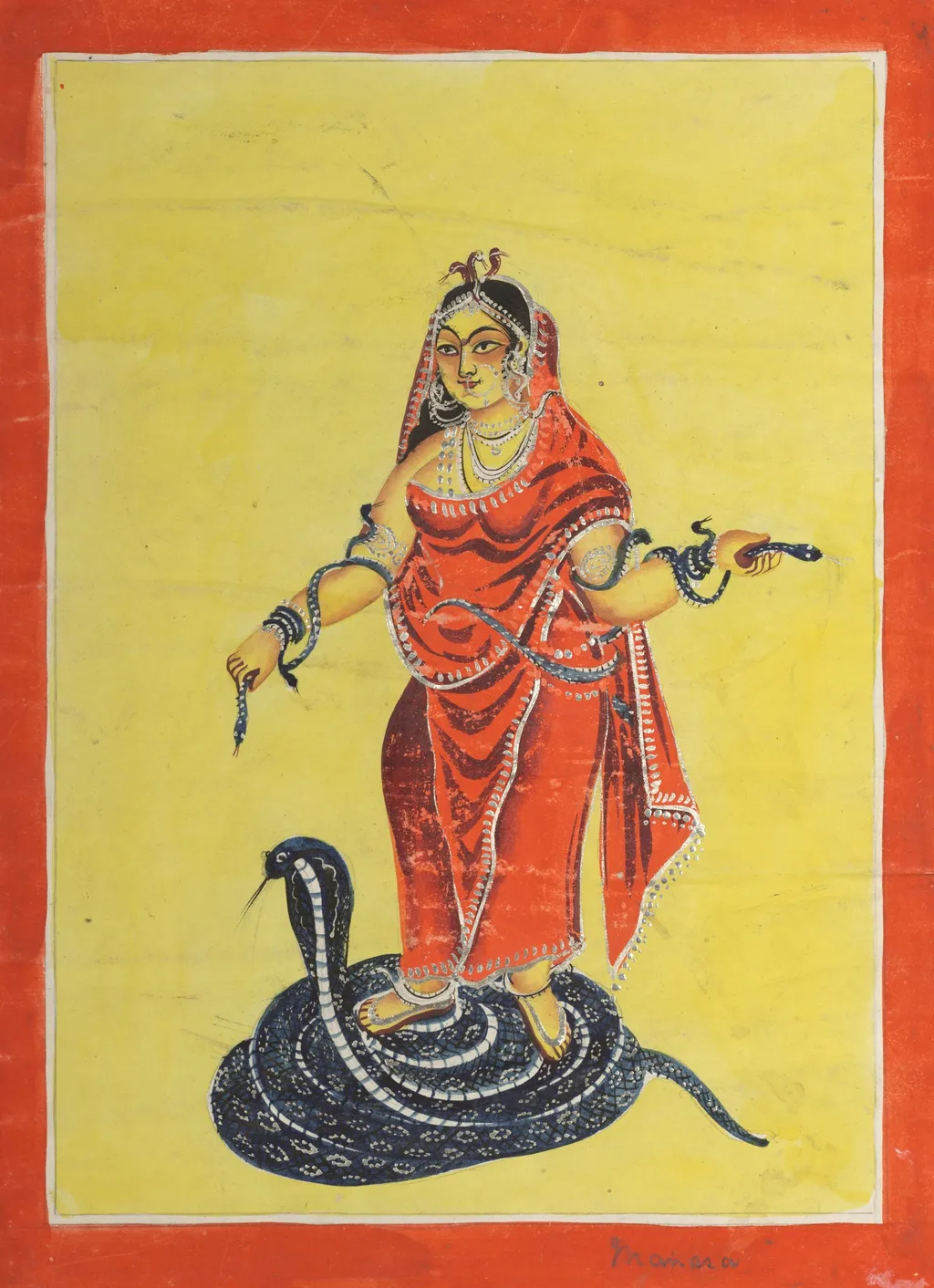
Manasa, The Snake Goddess is an unspecified painting by Unknown. It dates from 1896 and is held in the collection of the Cleveland Museum of Art.
About this work
Overview
In each hand she holds a small object, while the background consists of a plain yellow field edged with a red border, directing attention to the central scene.
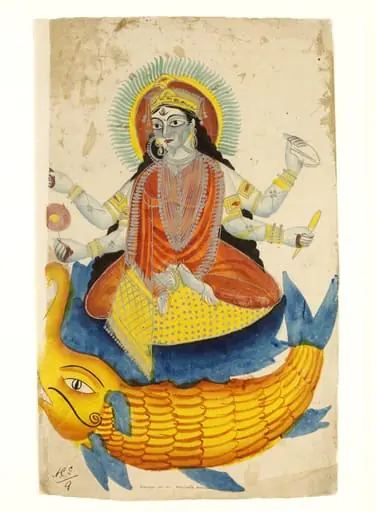
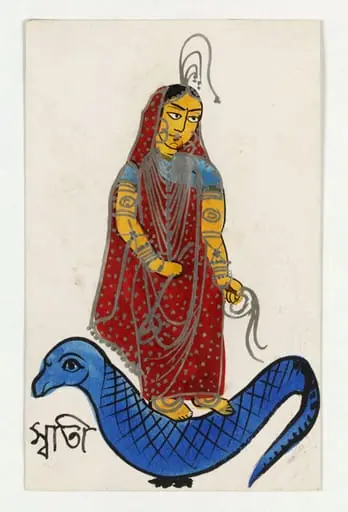
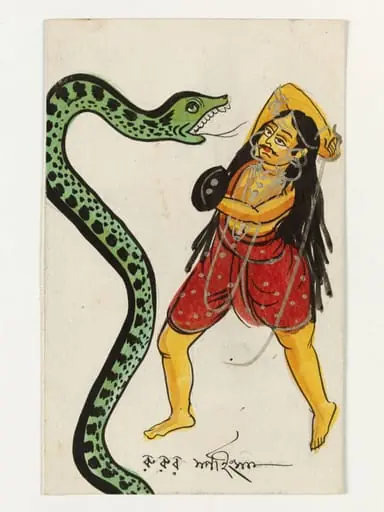
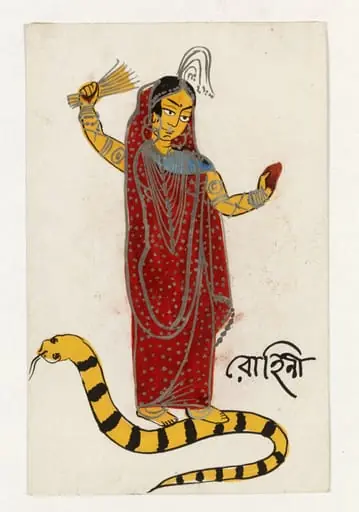
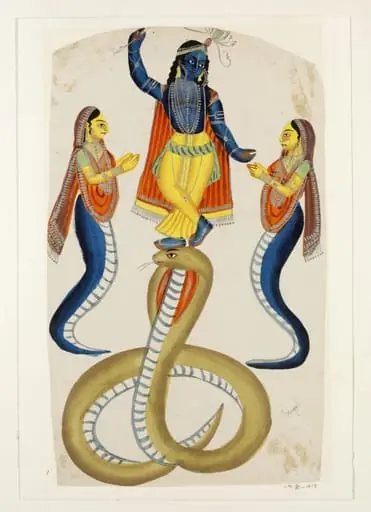
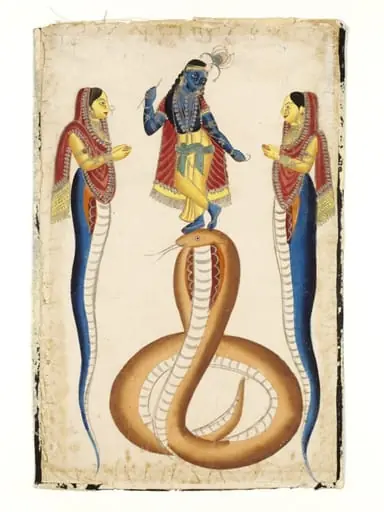
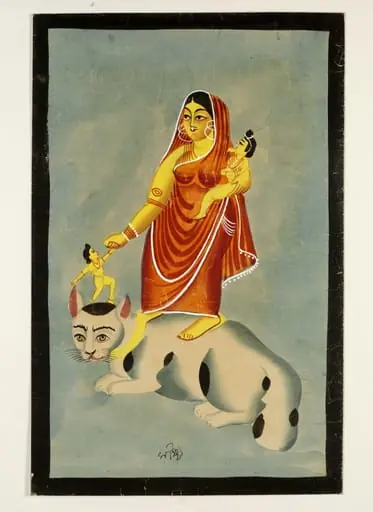
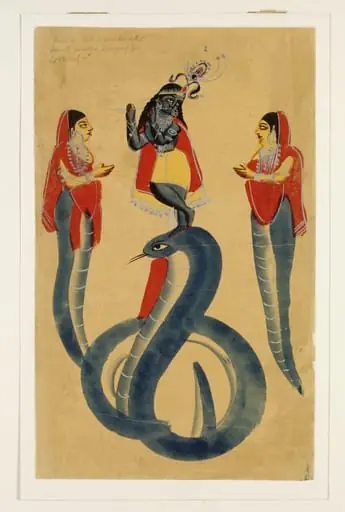
The work titled “Manasa, The Snake Goddess” is a painted composition that centers on a female figure clad in vivid red garments. She stands atop a coiled serpent whose hood is expanded, and she is adorned with multiple pieces of jewelry, including necklaces, earrings and armbands. In each hand she holds a small object, while the background consists of a plain yellow field edged with a red border, directing attention to the central scene.
Subject & Meaning
The figure is presented with a serene expression, suggesting a calm authority over the serpent beneath her feet. Such iconography aligns with South Asian religious traditions in which deities are associated with serpents, symbolizing protection, fertility or cosmic power. The juxtaposition of the goddess and the snake conveys a narrative of dominion and guardianship within that cultural framework.
Technique & Style
The artist renders the snake’s scales with precise striping, creating a tactile sense of texture against the smoothness of the woman’s robes. The palette is limited to dominant reds, yellows and the natural tones of the serpent, emphasizing contrast and focus. The composition is flattened, lacking deep perspective, which is typical of devotional paintings that prioritize symbolic clarity over realistic space.
Context
While the painting’s precise origin is not specified, its visual language reflects motifs common in South Asian devotional art, where deities such as Manasa, a snake goddess, are depicted in vibrant attire and surrounded by symbolic fauna. The work’s inclusion in museum collections, such as the Cleveland Museum of Art, situates it within broader exhibitions of Asian religious painting.
Artist & collection

 Domestic Scene
 Giacomo and Cardinal Marco, investing Andrea, Abbot of San Zeno, with his Benefice
 The Nymph of Fontainebleau
 Portrait of a Woman
 Madonna and Child with Saints in the Enclosed Garden
 Venus and Minerva
 Family Group of Four on Sofa
 Wall painting from Room H of the Villa of P. Fannius Synistor at Boscoreale