Artwork
Text, Folio 19 (recto), from a Kalpa-sutra
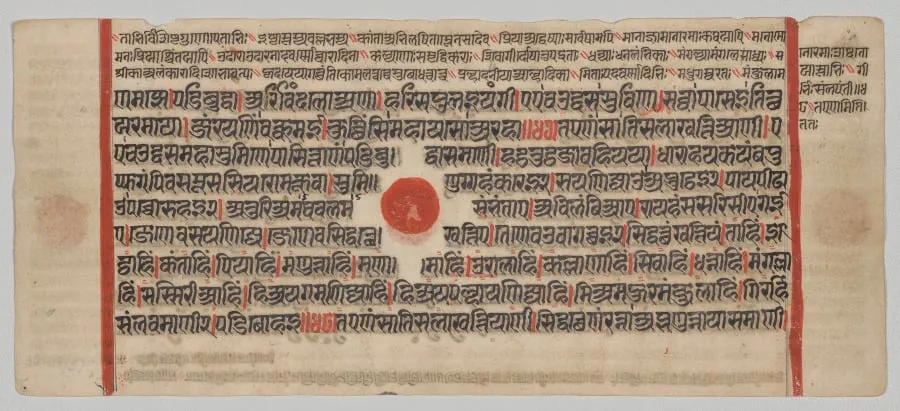
Text, Folio 19 (recto), from a Kalpa-sutra is an unspecified painting by the Mughal Painting artist Unknown. It dates from 1488 and is held in the collection of the Cleveland Museum of Art. This folio originates from a Kalpa-sutra manuscript, a Jain religious text used in ritual recitation.
About this work
Overview
A central red circle with a white dot appears as a visual anchor, possibly serving as a marker or symbolic element.
This folio originates from a Kalpa-sutra manuscript, a Jain religious text used in ritual recitation. The page features densely arranged handwritten script in red and black ink, organized in orderly lines. A central red circle with a white dot appears as a visual anchor, possibly serving as a marker or symbolic element. Faded yellowed margins suggest age and handling, consistent with devotional use over centuries.
Subject & Meaning
The text contains passages from the Kalpa-sutra, detailing the lives of Jain Tirthankaras and monastic rules. Red underlining likely highlights key doctrinal phrases or liturgical markers for oral recitation. The central red circle may denote a structural division in the text or symbolize spiritual focus, common in Jain scribal traditions. Its function is ritual rather than decorative, guiding the reader’s attention during chanting.
Technique & Style
The script is executed in fine, precise handwriting typical of Jain manuscript production. Ink colors—black for primary text, red for emphasis—follow established conventions. The red circle, painted with minute care, contrasts subtly against the paper. The surface shows slight wear, indicating repeated use. No illustrations accompany the text, reflecting the Jain preference for textual purity over figural representation.
History & Provenance
This folio was likely produced in western India between the 14th and 16th centuries, a period of active Jain manuscript copying. It passed through monastic libraries before entering private or institutional collections. Its survival suggests careful preservation, though the faded edges indicate exposure to light and handling. The Cleveland Museum of Art acquired it as part of a broader collection of South Asian religious texts.
Context
Jain scribes maintained strict standards for copying sacred texts, viewing the act as a devotional practice. Manuscripts like this were used in communal recitations, especially during festivals. The absence of images aligns with Jain aniconic traditions, emphasizing the word as the vessel of spiritual truth. Similar folios survive in collections across India and Europe, reflecting the widespread circulation of Jain liturgical materials.
Legacy
This folio exemplifies the enduring Jain commitment to textual preservation and ritual precision. Its survival offers insight into pre-modern scribal practices and the role of manuscripts in religious life. While no longer used in active worship, it remains a key artifact for understanding Jain liturgical culture and the aesthetics of sacred writing in South Asia.
Artist & collection

 Domestic Scene
 Giacomo and Cardinal Marco, investing Andrea, Abbot of San Zeno, with his Benefice
 The Nymph of Fontainebleau
 Portrait of a Woman
 Madonna and Child with Saints in the Enclosed Garden
 Venus and Minerva
 Family Group of Four on Sofa
 Wall painting from Room H of the Villa of P. Fannius Synistor at Boscoreale
 Text, Folio 20 (recto), from a Kalpa-sutra
 Text, Folio 19 (verso), from a Kalpa-sutra
 Text, Folio 5 (recto), from a Kalpa-sutra
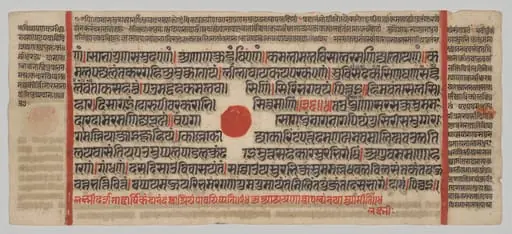 Text, Folio 16 (recto), from a Kalpa-sutra
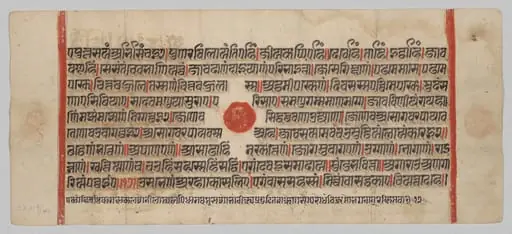 Text, Folio 55 (recto), from a Kalpa-sutra
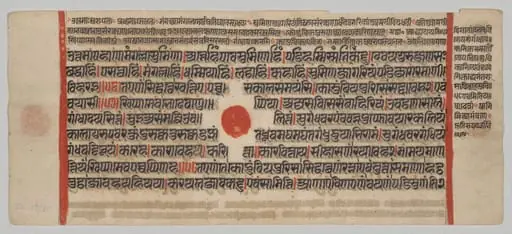 Text, Folio 21 (recto), from a Kalpa-sutra
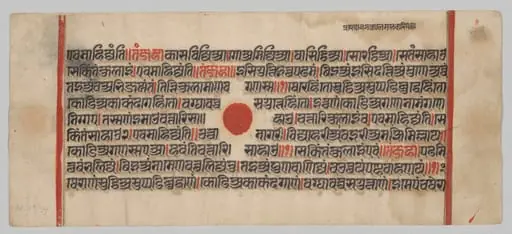 Text, Folio 63 (recto), from a Kalpa-sutra
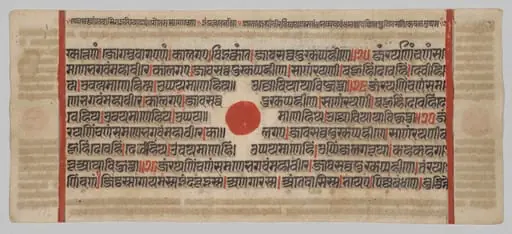 Text, Folio 41 (recto), from a Kalpa-sutra
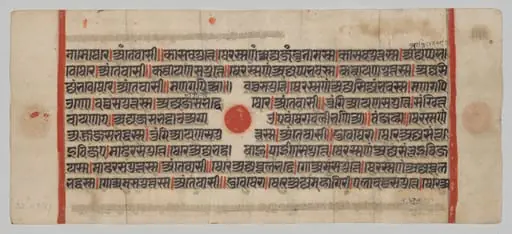 Text, Folio 59 (recto), from a Kalpa-sutra
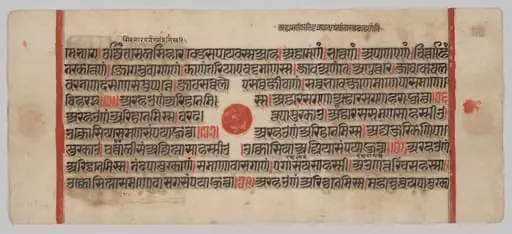 Text, Folio 50 (recto), from a Kalpa-sutra