Artwork
Text of Rustam and Suhrab, from the Shah-nama of Firdausi (Persian, c. 934–1020) (recto)
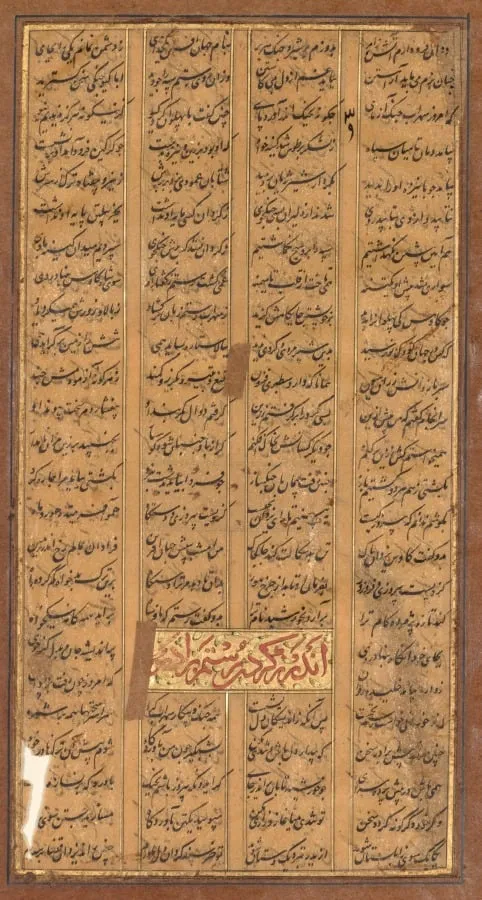
Text of Rustam and Suhrab, from the Shah-nama of Firdausi (Persian, c. 934–1020) (recto) is an unspecified painting by the Baroque artist Unknown. It dates from 1610 and is held in the collection of the Cleveland Museum of Art. This illuminated page presents a segment of the Persian epic Shah‑nama, rendered in black ink with a prominent red chapter heading.
About this work
Overview
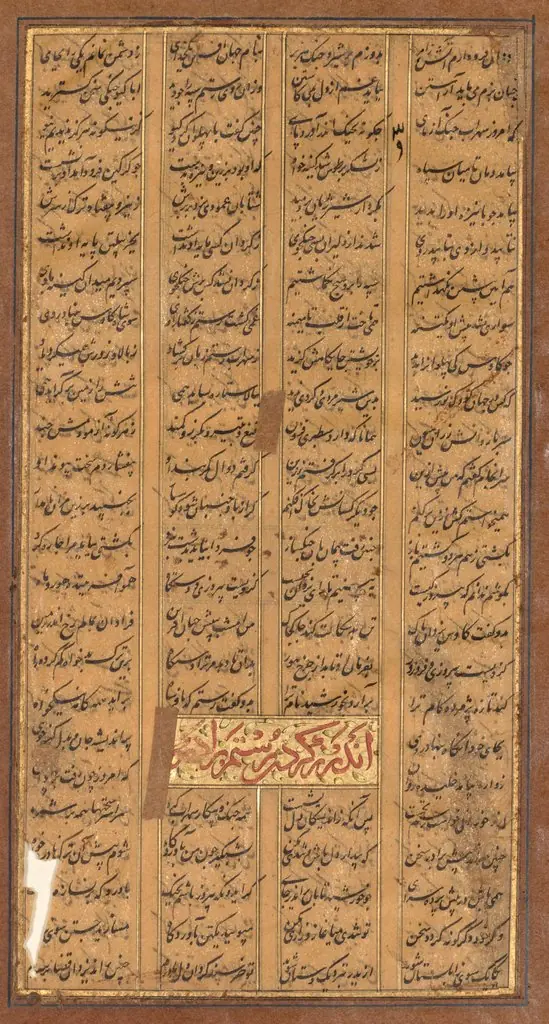
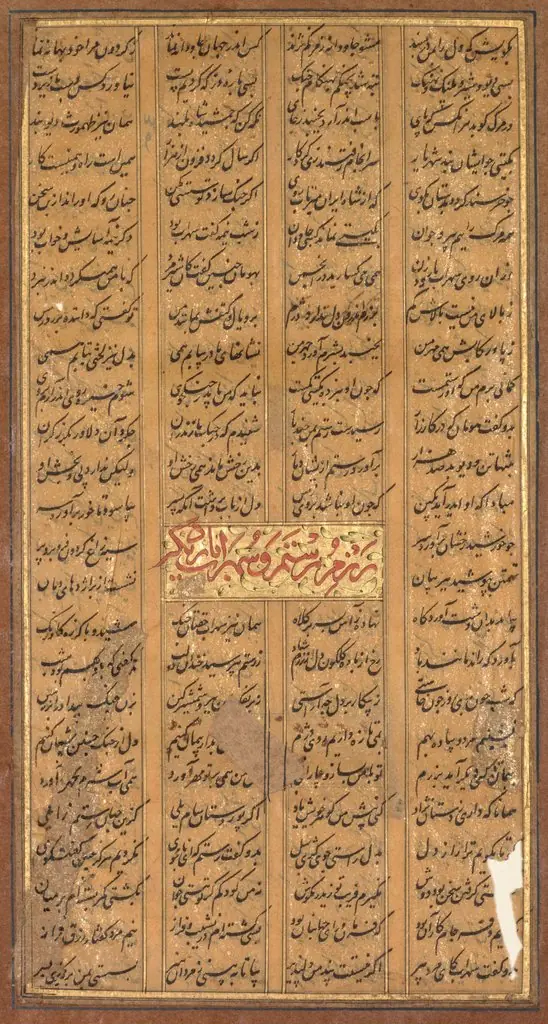
This illuminated page presents a segment of the Persian epic Shah‑nama, rendered in black ink with a prominent red chapter heading. The text recounts the tragic duel in which the hero Rustam unknowingly kills his son Suhrâb. The page is a miniature example of a manuscript produced in Bijapur, a cultural hub of southern India where Persian literary traditions were visually adapted.
Subject & Meaning
The passage focuses on the climactic single combat between Rustam and Suhrâb, a pivotal episode that explores themes of fate, identity, and the tragic consequences of ignorance. By highlighting the moment of accidental filicide, the text underscores the moral complexities of heroic duty within the larger narrative of the Shah‑nama.
Technique & Style
The script is executed in fine black ink, while the chapter heading is emphasized in vivid red, a common practice in Persian manuscripts to guide the reader. The page reflects the Bijapuri workshop’s synthesis of Persian calligraphic conventions with local decorative motifs, evident in the careful balance of text and ornamental space.
History & Provenance
Created in the city of Bijapur, the manuscript belongs to a tradition of Persian literary production that flourished in the Deccan during the 16th and 17th centuries. Though the original poet Firdausī lived in the 10th‑11th centuries, this copy represents a later regional transmission of his epic, illustrating the spread of Persian culture into South India.
Context
The Shah‑nama, composed by Firdausī, is a monumental poetic chronicle of Iranian mythic and historical kings. In the Deccan, patrons commissioned lavishly illustrated copies to demonstrate erudition and prestige, integrating Persian artistic vocabularies with indigenous aesthetics, thereby fostering a hybrid visual language.
Legacy
Pages such as this exemplify the cross‑cultural exchange that defined Indo‑Persian manuscript production. They provide scholars with insight into how Persian literary heritage was preserved, adapted, and visually interpreted far beyond its geographic origins, influencing subsequent artistic developments in the region.
Artist & collection

 Domestic Scene
 Giacomo and Cardinal Marco, investing Andrea, Abbot of San Zeno, with his Benefice
 The Nymph of Fontainebleau
 Portrait of a Woman
 Madonna and Child with Saints in the Enclosed Garden
 Venus and Minerva
 Family Group of Four on Sofa
 Wall painting from Room H of the Villa of P. Fannius Synistor at Boscoreale
 Text of Rustam and Suhrab, from the Shah-nama of Firdausi (Persian, c. 934–1020) (verso)
 Text of Rustam and Suhrab, from the Shah-nama of Firdausi (Persian, c. 934–1020) (recto)
 Text of Rustam and Suhrab, from the Shah-nama of Firdausi (Persian, c. 934–1020) (verso)
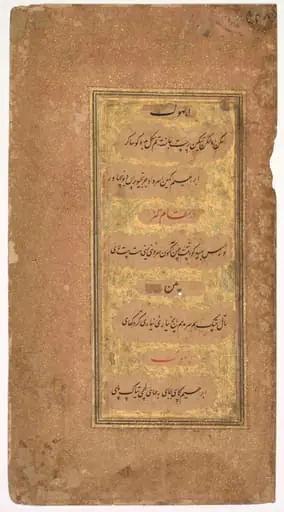 From Dohras (Songs) 40 and 42 from the Kitab-i Nauras (Book of Nine Essences) of Sultan Ibrahim Adil Shah II of Bijapur (r. 1580–1627) (recto)
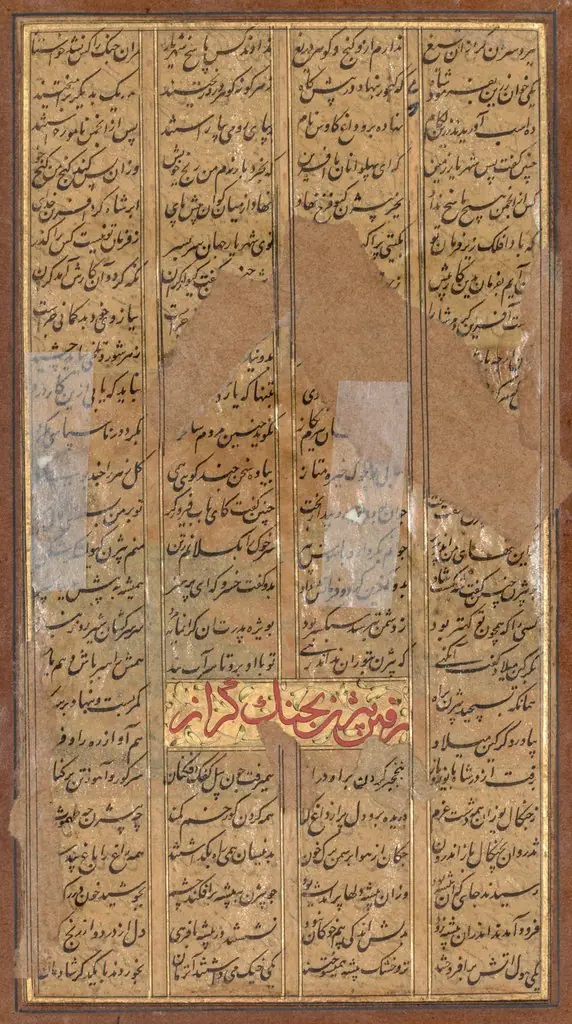 Bijan killing the wild boars of Irman, from a Shah-nama (Book of Kings) of Firdausi (Persian, about 934–1020), (recto)
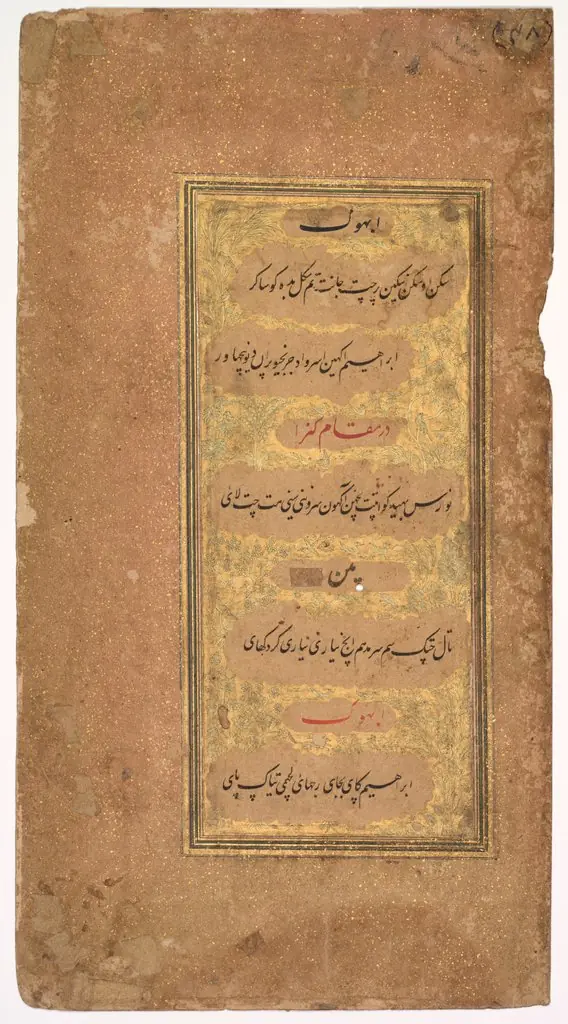 From Dohras (Songs) 40 and 42 from the Kitab-i Nauras (Book of Nine Essences) of Sultan Ibrahim Adil Shah II of Bijapur (r. 1580–1627) (recto)
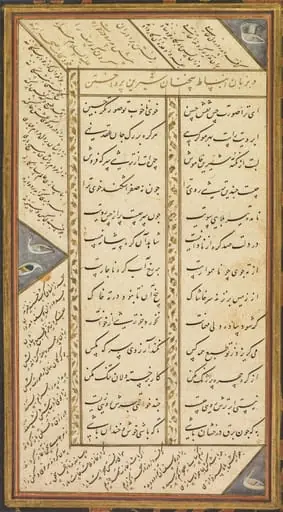 Page from the Panj Ganj (Five Treasures) of Abd al-Rahman Jami (Persian, 1414–1492), with two Persian masnavis (narrative poems): Yusuf va Zulaykha (Joseph and Zulaykha) and Subhat al-abrar (Rosary of the Righteous)