Artwork
The Annunciation
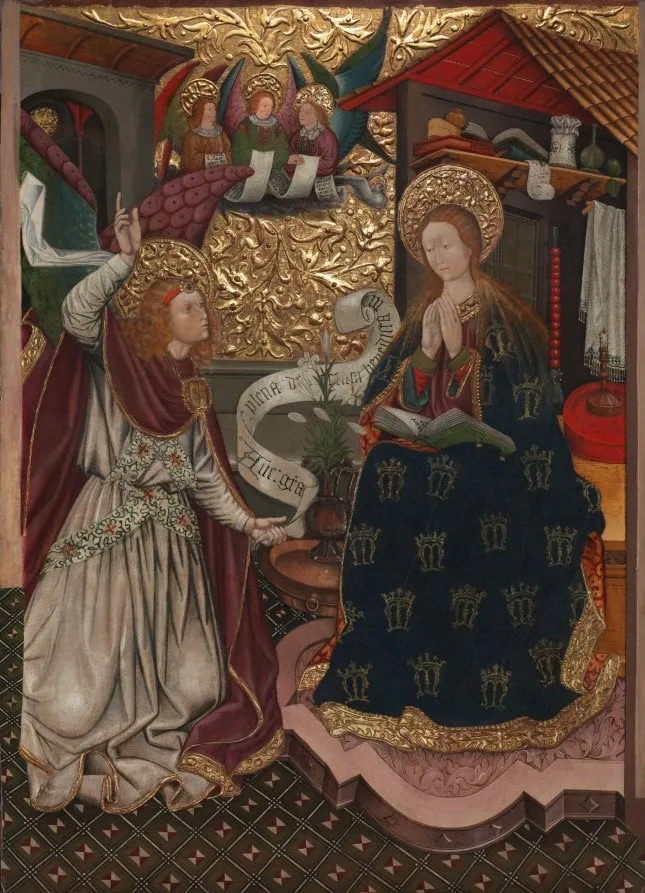
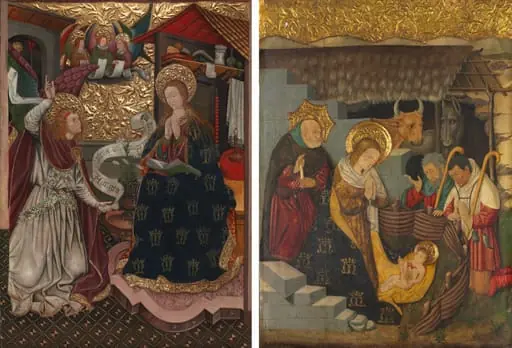
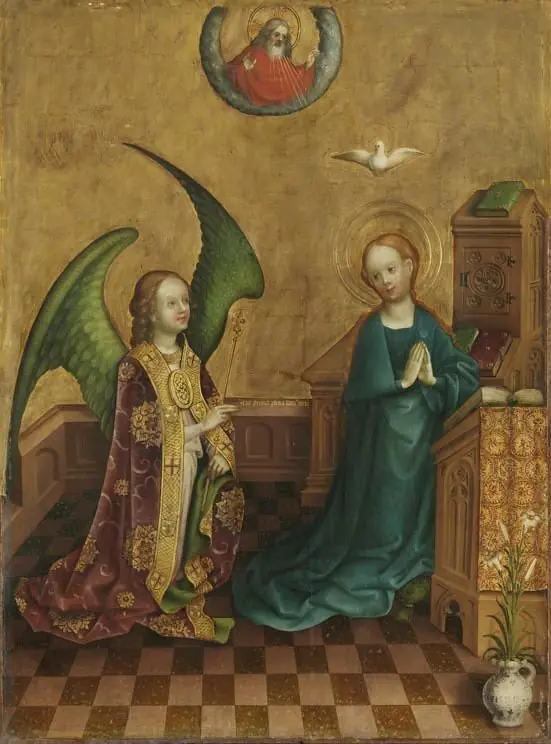
The Annunciation is an unspecified painting by the Early Renaissance artist Jaume Ferrer II. It dates from 1457 and is held in the collection of the Cleveland Museum of Art. The panel depicts the biblical moment when the Archangel Gabriel announces to Mary that she will bear the Son of God.
About this work
Overview
The panel depicts the biblical moment when the Archangel Gabriel announces to Mary that she will bear the Son of God. Rendered in a domestic interior, the composition places the Virgin in a modest blue robe opposite the angel, both set against an opulent gold ground that features raised decorative relief.
Subject & Meaning
Symbolic objects populate the scene: lilies signify Mary's purity; a covered jar and water vessel suggest inviolability; a pomegranate alludes to resurrection; an apple references the Fall; a towel and basin evoke liturgical washing; a extinguished candle hints at divine illumination. Two books—one closed, one open—represent the Old and New Testaments, linking prophecy to fulfillment.
Technique & Style
The gold background is not a flat plane but is embellished with pastiglia, a low relief made from a mixture of glue and powdered shell or chalk. This technique, popular in 15th‑century Catalonia, creates a tactile, shimmering surface that enhances the spiritual atmosphere of the work.
History & Provenance
The panel is believed to be one of the surviving components of a six‑panel altarpiece, the central large panel of which resides in Barcelona’s Museu Nacional d’Art de Catalunya. The work was a collaborative commission between the artist Ferrer and the painter Pere Garcia de Benavarri.
Context
Spanish devotional paintings of the period often employed lavish gold ornamentation and intricate symbolic programs to engage viewers in contemplation. The domestic setting reflects a trend toward humanizing sacred narratives, making the divine event accessible within everyday surroundings.
Artist & collection

 The Annunciation
 The Annunciation
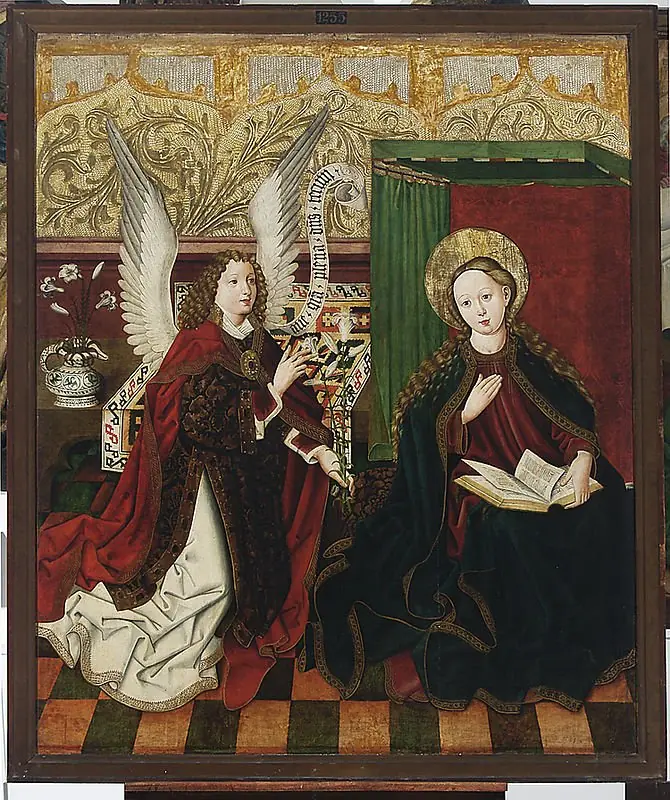 Legnica polyptych - left wing internal - upper panel - obverse: Annunciation; reverse: St Lawrence, St Vincent the Levite. St John the Baptist
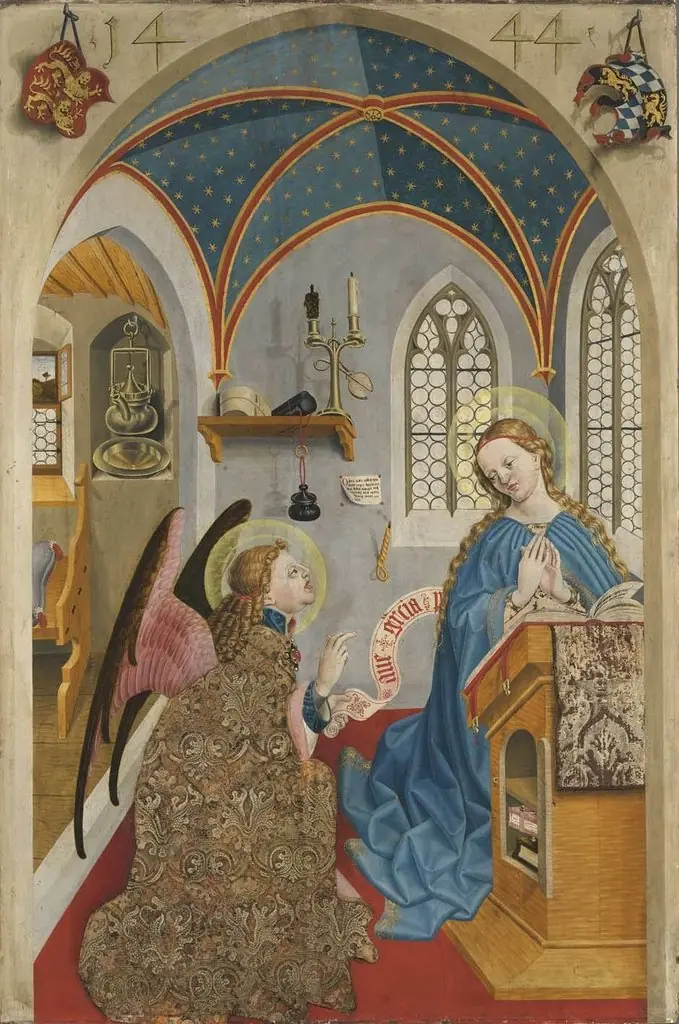 Altar of Mary: Annunciation to Mary
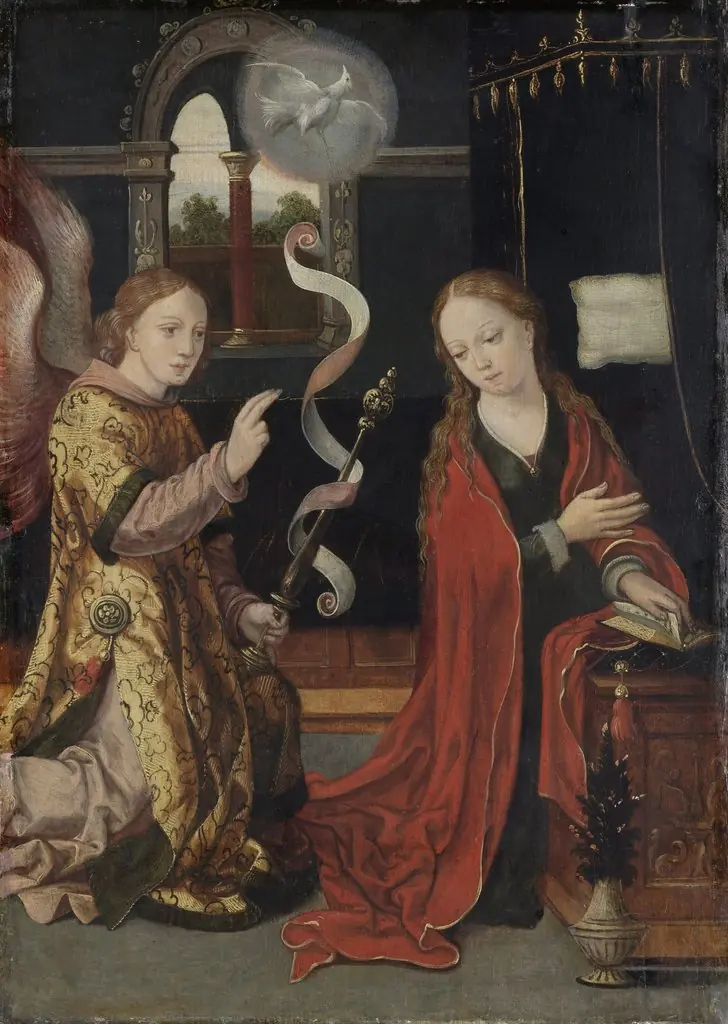 The Annunciation
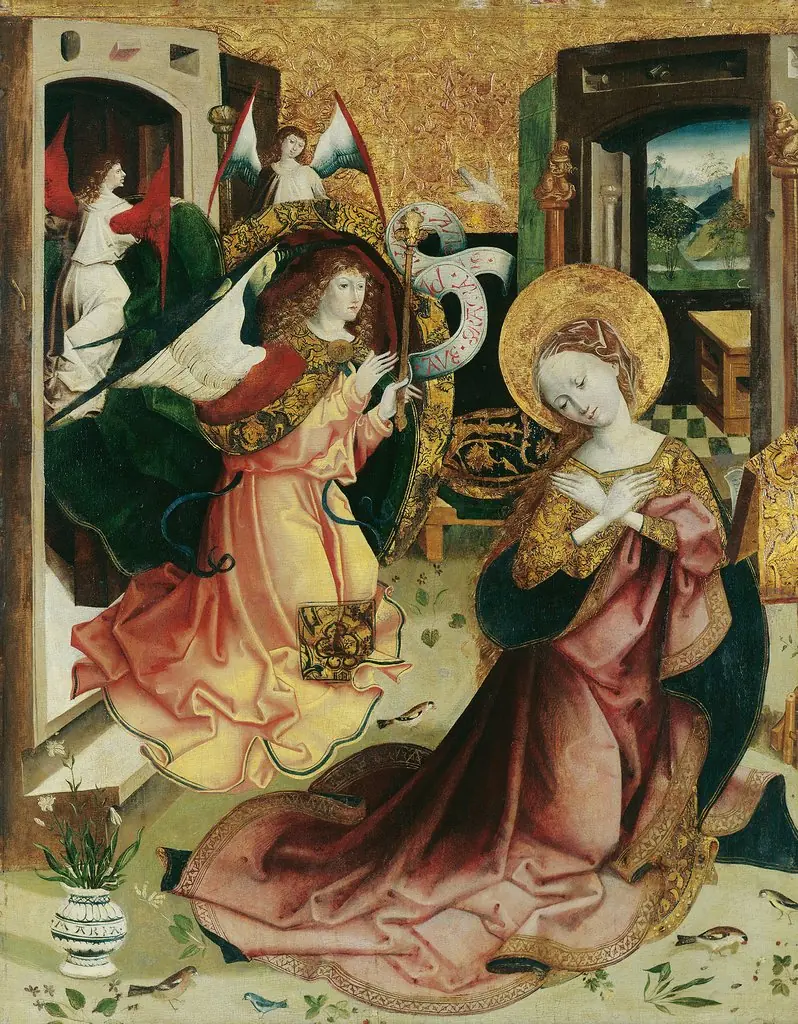 Verkündigung an Maria
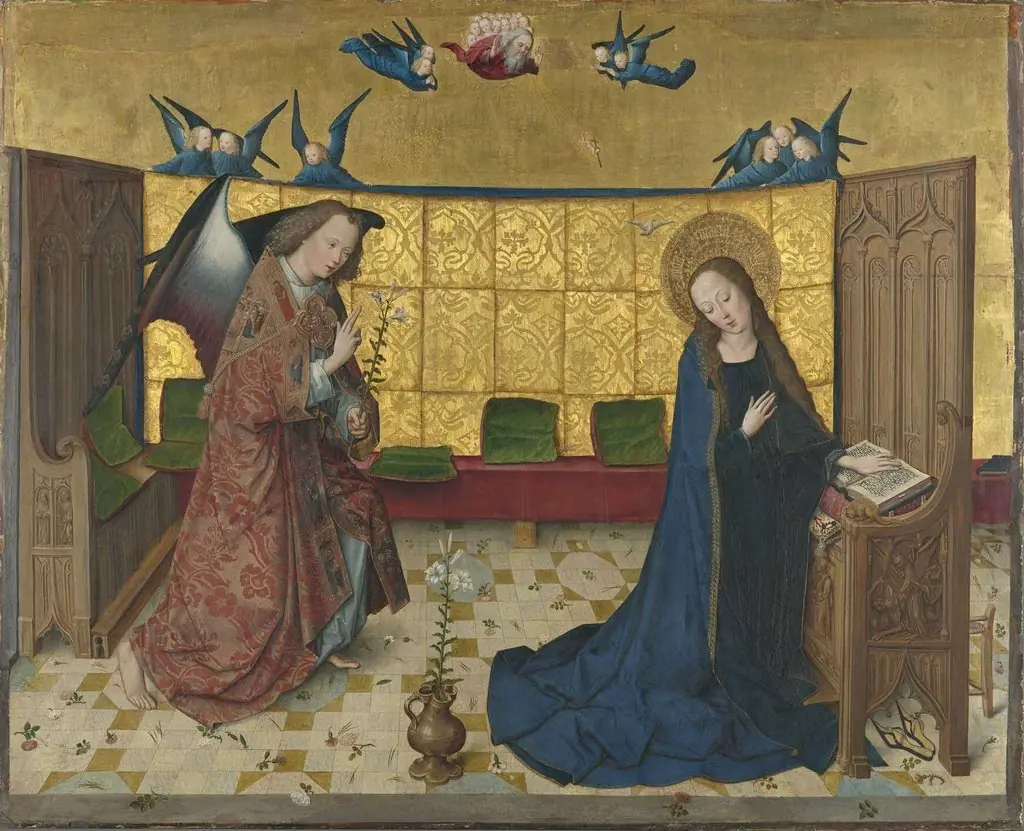 The Life of Mary: the Annunciation (lower half of the Crucifixion of Christ)
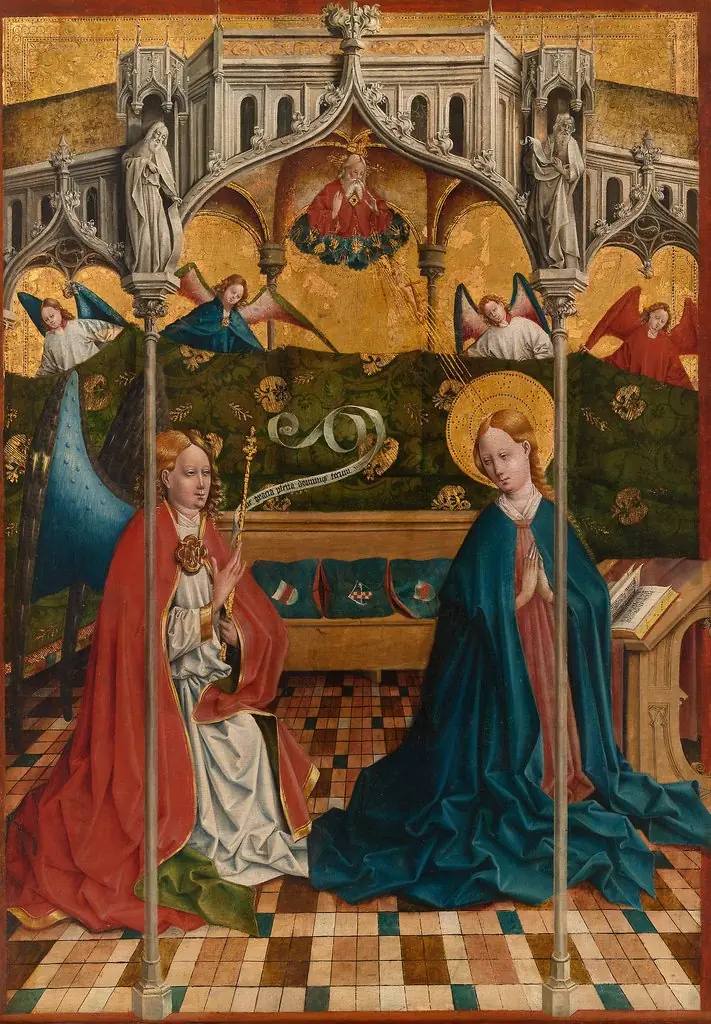 The Annunciation
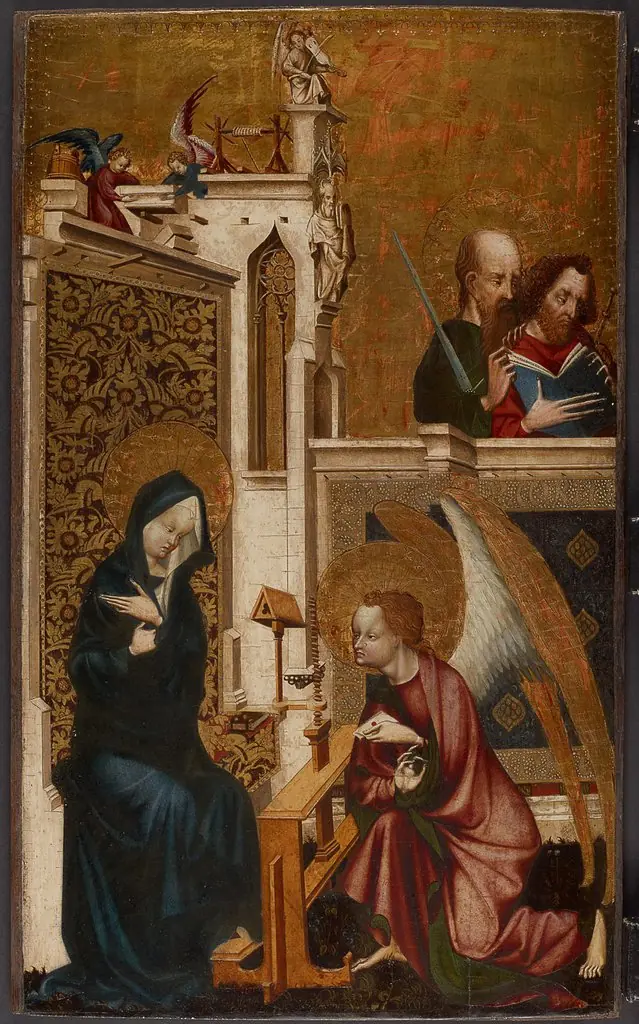 Verkündigung Mariae, Rückseite: Hl. Dorothea
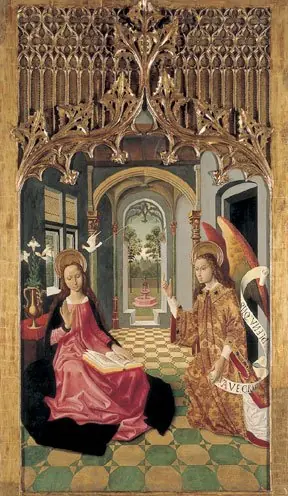 The Annunciation (Meister from Canapost)