Artwork
The Bible of the Poor (Biblia Pauperum), Pharaoh's Army Drowned in the Red Sea; Baptism of Christ; and Moses' Spies Returning with Grapes from Canaan Esau Selling Jacob his Birthright; Temptation of Christ; and Temptation of Adam and Eve
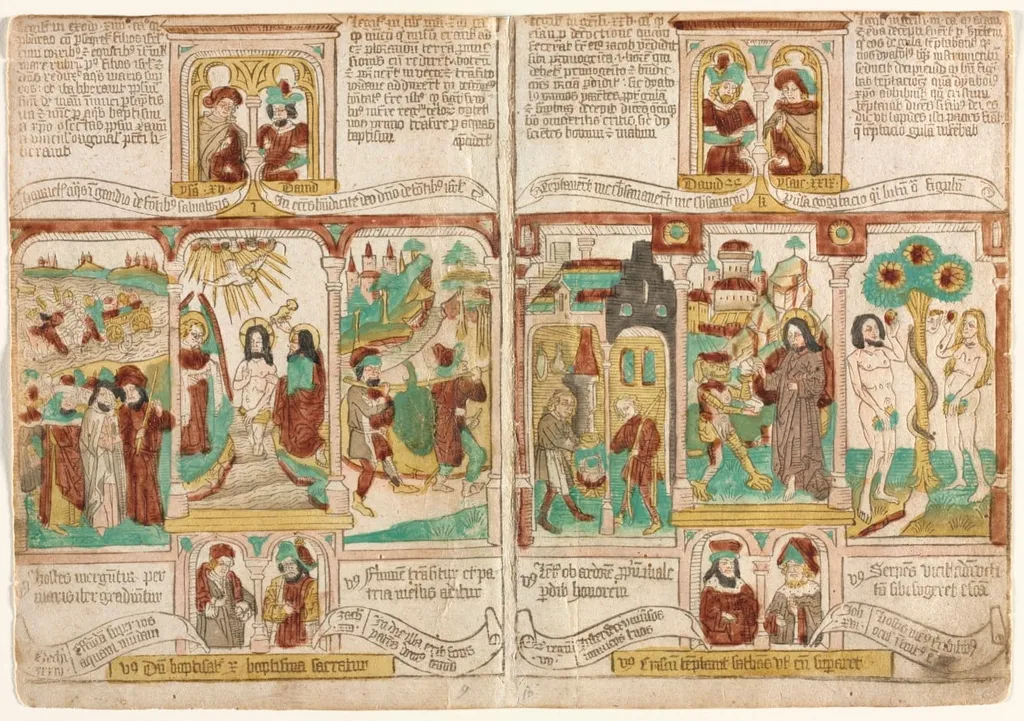
The Bible of the Poor (Biblia Pauperum), Pharaoh's Army Drowned in the Red Sea; Baptism of Christ; and Moses' Spies Returning with Grapes from Canaan Esau Selling Jacob his Birthright; Temptation of Christ; and Temptation of Adam and Eve is a print by the Renaissance artist Unknown. It dates from 1465 and is held in the collection of the Cleveland Museum of Art.
About this work
You see three Bible stories side by side on a single page: Pharaoh’s soldiers drowning, Christ being baptized, and spies carrying a giant grapevine.
You see three Bible stories side by side on a single page: Pharaoh’s soldiers drowning, Christ being baptized, and spies carrying a giant grapevine.
This page comes from a book called *Biblia Pauperum*—"Bible of the Poor." It was made for people who couldn’t read or afford big Bibles. The images were carved from wood blocks, then stamped and colored by hand. The book paired Old and New Testament scenes to teach lessons.
Look up *germany or the netherlands, 15th century* to see more of these block-printed books.
Overview
This hand‑colored leaf is a page from a 15th‑century blockbook titled *Biblia Pauperum*, a compact visual guide intended to convey biblical narratives to a largely illiterate audience. The sheet presents three scenes arranged horizontally, each rendered from a single woodcut that combines line work and pigment applied after printing.
Subject & Meaning
The central image depicts the baptism of Christ, flanked on the left by the drowning of Pharaoh’s army and the return of Moses’ spies bearing a massive grapevine, while the right side shows Christ’s temptation alongside the Old Testament episodes of Esau selling his birthright to Jacob and the temptation of Adam and Eve. The juxtaposition links typological parallels between the Old and New Testaments.
Technique & Style
The page exemplifies blockbook production, in which both text and illustration are incised on the same wooden block and printed in a single impression. After the impression, colors were added manually, giving each copy a modest but vivid palette. The figures are rendered in a stylized, narrative manner typical of late medieval devotional prints.
History & Provenance
Blockbooks emerged in the early 1400s in the Germanic and Low Countries regions as a transitional form between manuscript illumination and movable‑type printing. This particular leaf likely originated in a workshop that catered to parish churches and lay confraternities, offering an affordable alternative to full‑size illuminated Bibles.
Context
The *Biblia Pauperum* reflects a period of increasing demand for accessible religious instruction, coinciding with the spread of vernacular literacy and the rise of print technology. By pairing Old Testament prefigurations with New Testament events, the work reinforced theological continuity for viewers without requiring textual reading.
Artist & collection

 Domestic Scene
 Giacomo and Cardinal Marco, investing Andrea, Abbot of San Zeno, with his Benefice
 The Nymph of Fontainebleau
 Portrait of a Woman
 Madonna and Child with Saints in the Enclosed Garden
 Venus and Minerva
 Family Group of Four on Sofa
 Wall painting from Room H of the Villa of P. Fannius Synistor at Boscoreale
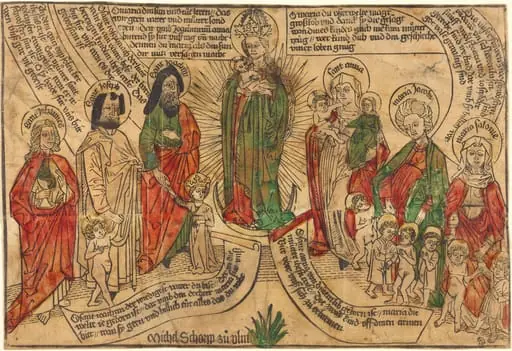 Holy Kinship
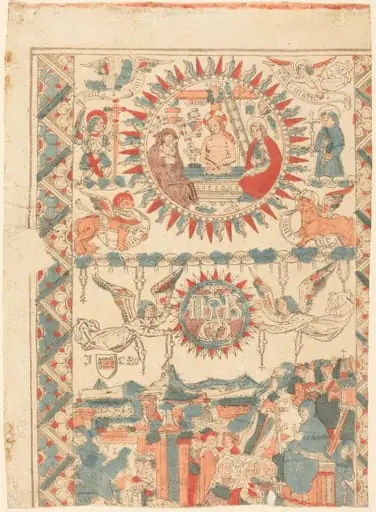 Saint Bonaventure Arriving and Preaching in Lyon
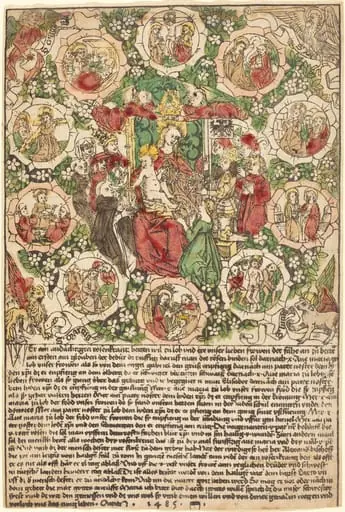 Madonna with the Rosary
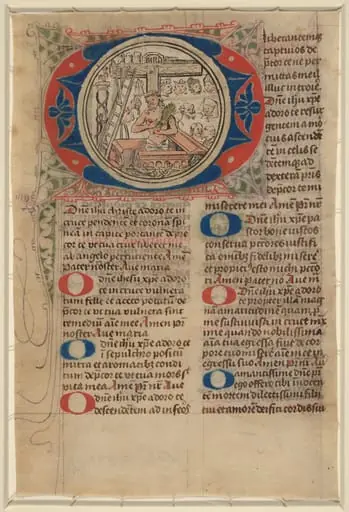 Christ as the Man of Sorrows
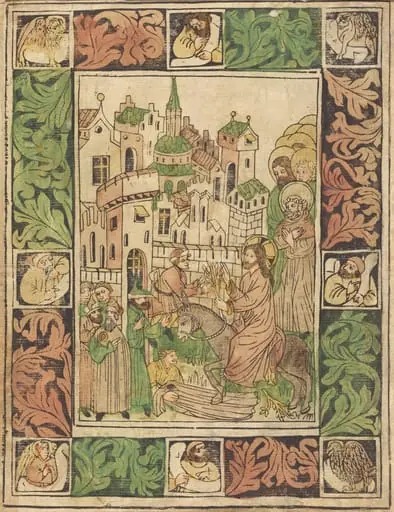 Christ's Entry into Jerusalem
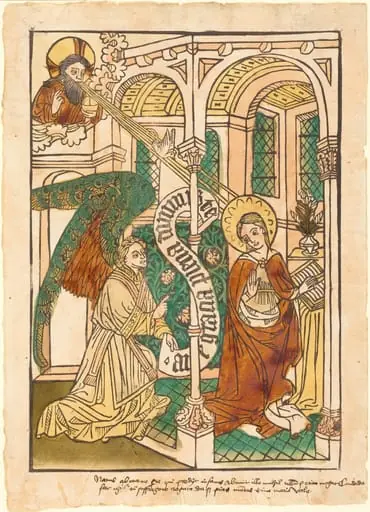 The Annunciation
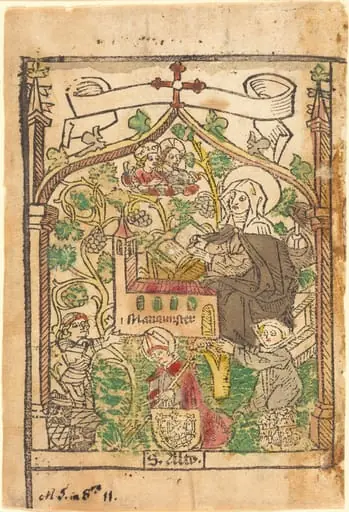 Saint Alto, Saint Bridget and the Founders of the Mariamunster
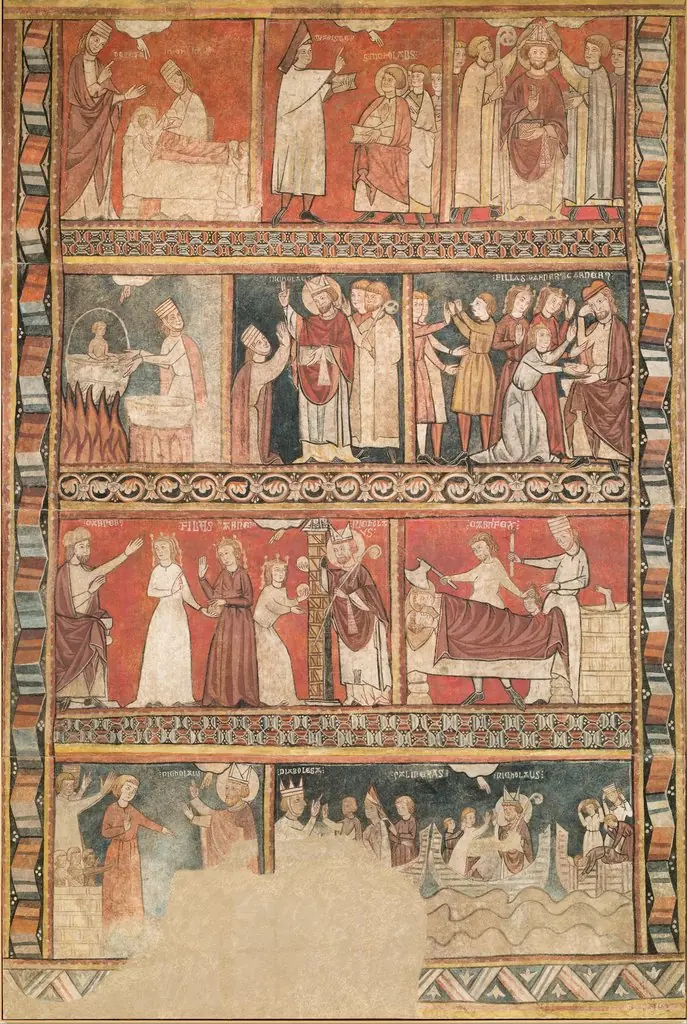 Life of Saint Nicholas
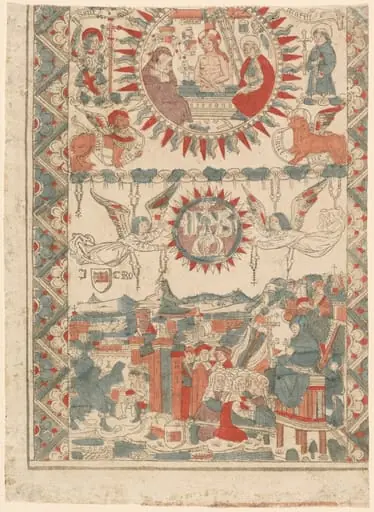 Saint Bonaventure Arriving and Preaching in Lyon
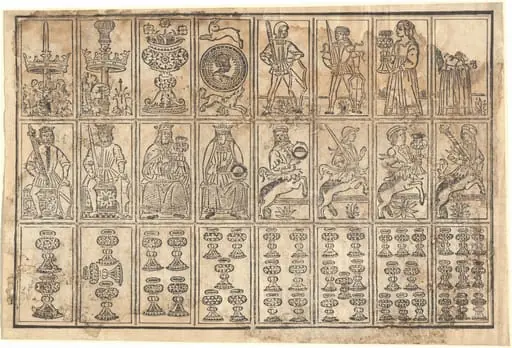 Playing Cards
![The Destruction of the Egyptian Idols [verso], by Italian 15th Century](https://artifactworldgallery.com/img/italian-15th-century--the-destruction-of-the-egyptian-idols-verso--646d3c2b8098cfee-w320.webp) The Destruction of the Egyptian Idols [verso]
The Destruction of the Egyptian Idols [verso]!["Do Not Turn Back When You Arrive at the End" [fol. 26 verso / 27 recto], by French early 16th Century](https://artifactworldgallery.com/img/french-early-16th-century--do-not-turn-back-when-you-arrive-at-the-end-fol-26-verso-27--e11e5d3478112a7e-w320.webp) "Do Not Turn Back When You Arrive at the End" [fol. 26 verso / 27 recto]
"Do Not Turn Back When You Arrive at the End" [fol. 26 verso / 27 recto]