Artwork
The Annunciation
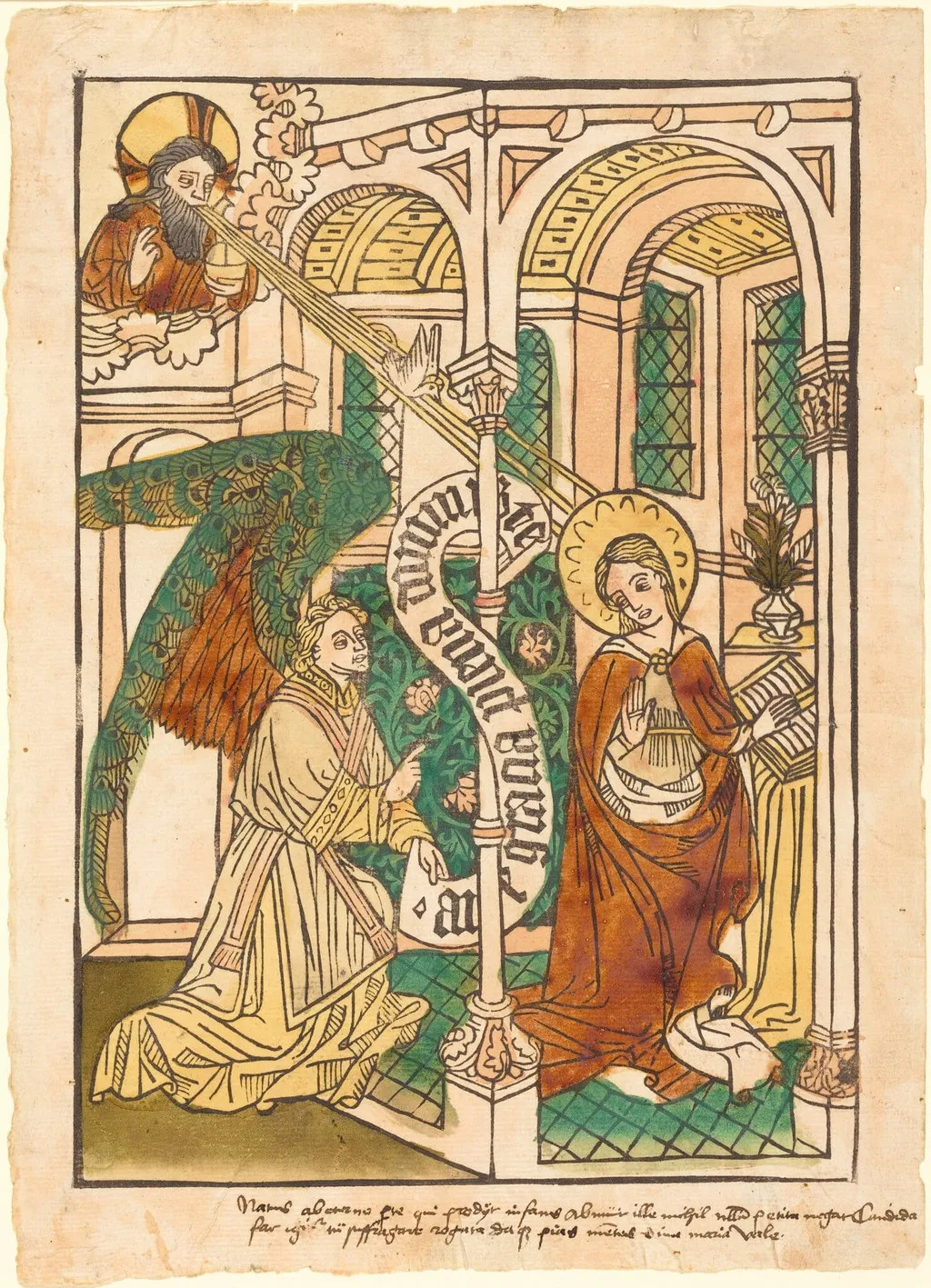
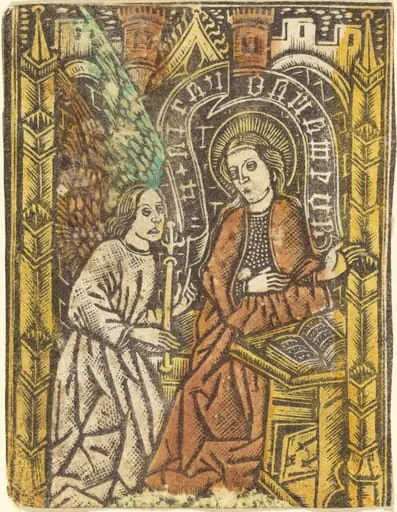
The Annunciation is an ink print by the Renaissance artist German 15th Century. It dates from 1460 and is held in the collection of the National Gallery of Art. This hand‑colored woodcut portrays the biblical Annunciation, showing a kneeling woman in a red dress gazing upward at a winged angel.
About this work
Overview
This hand‑colored woodcut portrays the biblical Annunciation, showing a kneeling woman in a red dress gazing upward at a winged angel. The angel, robed in white, holds a scroll bearing black lettering. The composition includes a tiled floor, arched ceiling, and a background featuring an arched doorway, a window with green panes, and a bearded, haloed figure in the upper left.
Subject & Meaning
The scene captures the moment the Archangel Gabriel announces to the Virgin Mary that she will bear the Christ child. Mary's posture of kneeling and her upward gaze emphasize humility and receptivity, while the angel’s scroll symbolizes the divine message. The presence of a haloed man suggests a secondary holy figure, reinforcing the work’s religious narrative.
Technique & Style
Executed as a woodcut, the image is defined by carved lines that create bold outlines and intricate details. After printing, the work was hand‑colored using pigments such as red lake, green, yellow, tan, olive, and pink, adding depth and vibrancy to the monochrome print. The color palette highlights the contrast between the figures and the architectural setting.
History & Provenance
The piece belongs to the tradition of early modern religious prints, where woodcut production allowed for wider dissemination of devotional images. While specific dates and ownership records are not provided, such hand‑colored prints were commonly produced for private contemplation and liturgical use.
Context
During the period when this print was created, the Annunciation was a favored subject for both painted altarpieces and printed media, reflecting the central role of Marian devotion in Christian practice. The combination of detailed architectural elements and vivid coloration aligns with contemporary efforts to make sacred narratives visually accessible.
Legacy
Woodcut prints like this one contributed to the spread of biblical iconography beyond elite patrons, influencing later graphic traditions and devotional literature. The hand‑coloring technique demonstrates an early intersection of printmaking and painting, a practice that informed later developments in illustrated books and religious pamphlets.
Artist & collection

Artist
This 15th-century German artist carved vivid religious scenes into metal and wood, then hand-painted them in bright, symbolic colors.

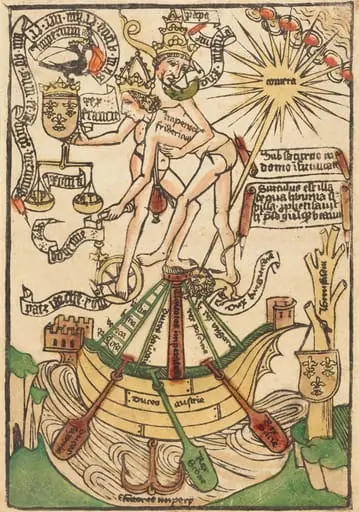 Allegory of the Meeting of Pope Paul II and Emperor Frederick III
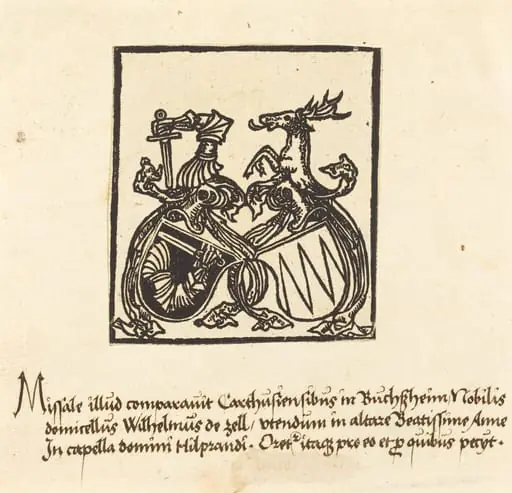 Bookplate of Wilhelm von Zell
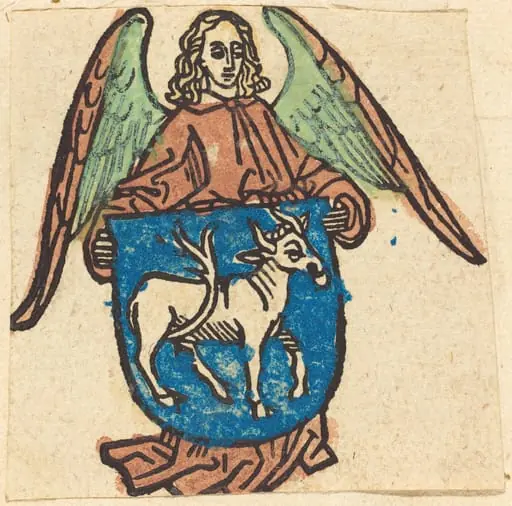 Bookplate of Hilprand Brandenburg of Bibrach
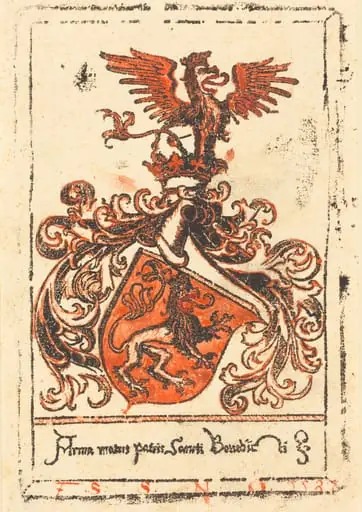 Bookplate of the Abbey of Ottobeuren
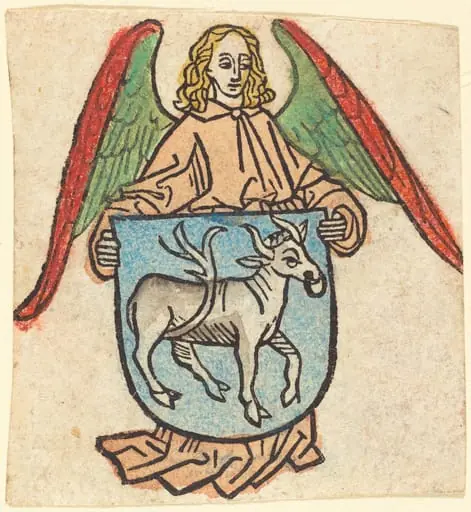 Bookplate of Hilprand Brandenburg of Bibrach
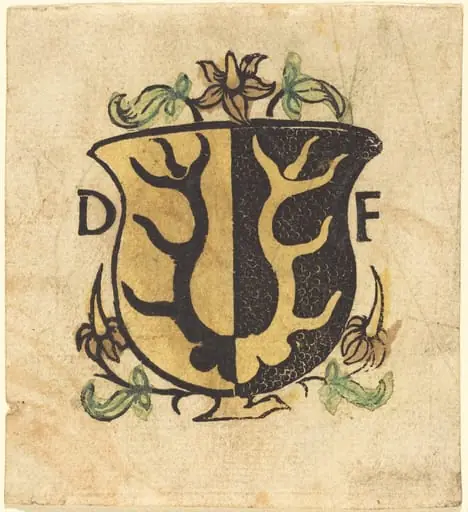 Bookplate of Dominicus Frauenfelder
![Studies for Six Figures (sheet from a model book) [recto], by German 15th Century](https://artifactworldgallery.com/img/german-15th-century--studies-for-six-figures-sheet-from-a-model-book-recto--4837429e0755bc3f-w320.webp) Studies for Six Figures (sheet from a model book) [recto]
Studies for Six Figures (sheet from a model book) [recto]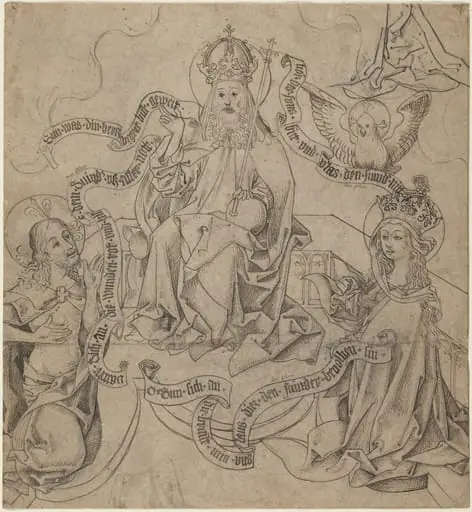 Christ and Mary Interceding with God the Father
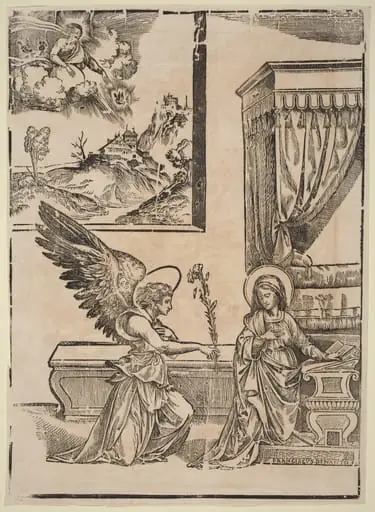 The Annunciation
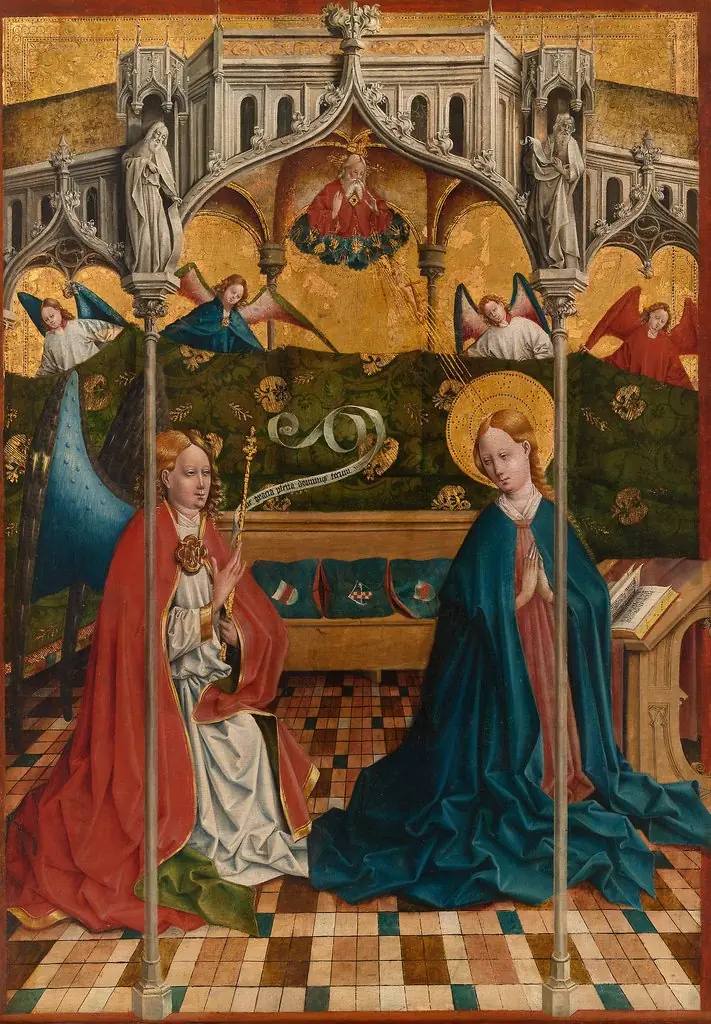 The Annunciation
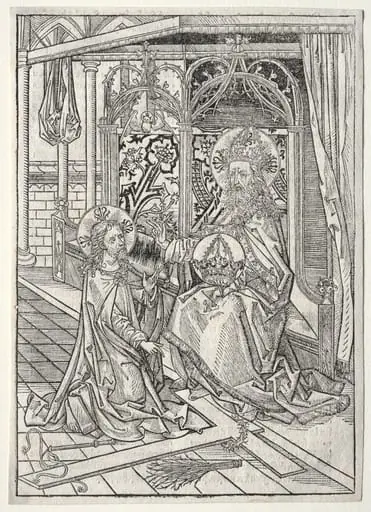 Der Schatzbehalter: The Trinity
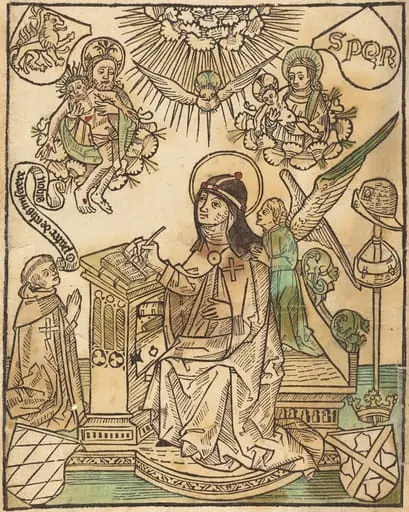 Saint Bridget
 Saint Alto, Saint Bridget and the Founders of the Mariamunster
 Saint John
 The Annunciation
 Die Verkündigung an Maria Rückseite: Teil einer Anbetung der Könige
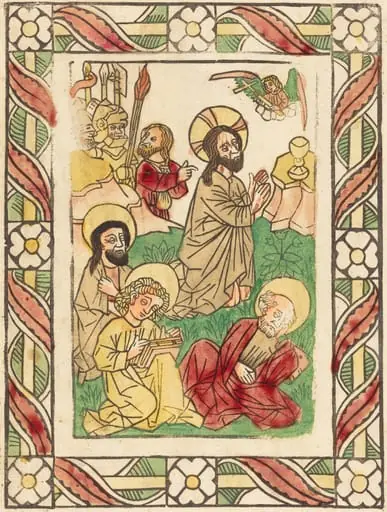 Christ on the Mount of Olives
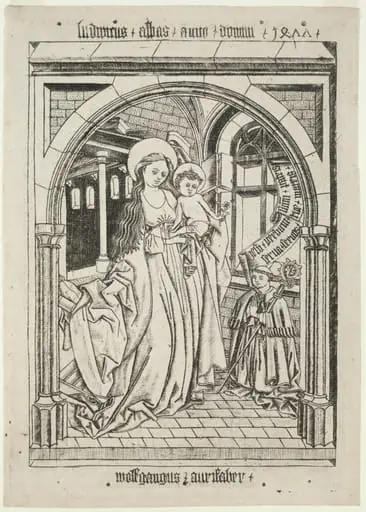 Virgin and Child, Abbot Ludwig Kneeling
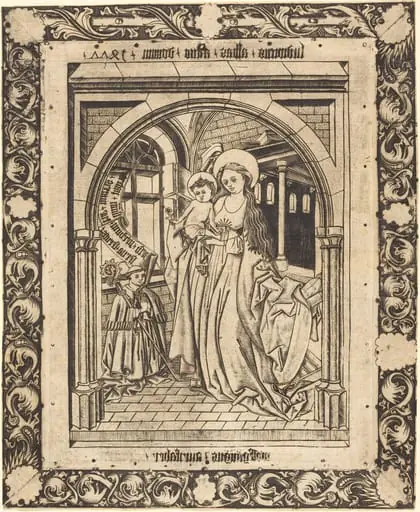 The Madonna and Child with the Abbot Ludwig von Churchwalden
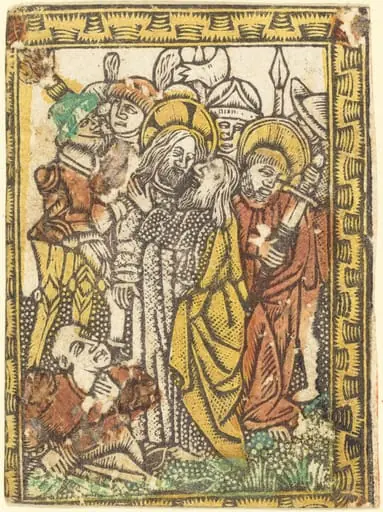 The Betrayal