Artwork
The Brahman comes upon a lion who has a deer and a gazelle as his viziers, from a Tuti-nama (Tales of a Parrot): Twenty-first Night
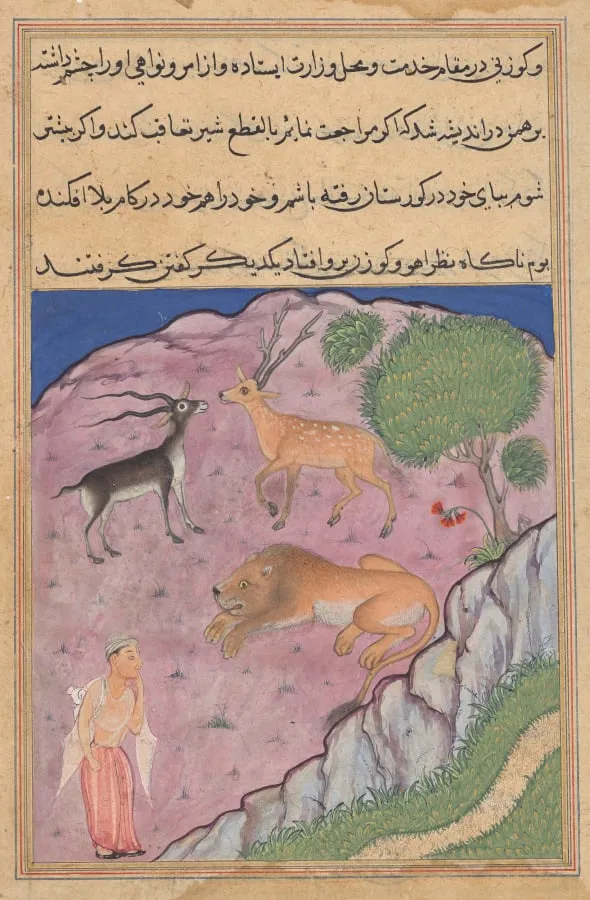
The Brahman comes upon a lion who has a deer and a gazelle as his viziers, from a Tuti-nama (Tales of a Parrot): Twenty-first Night is an unspecified painting by the Mughal Painting artist Unknown. It dates from 1560 and is held in the collection of the Cleveland Museum of Art. This painting depicts a serene encounter between a Brahman and a lion, accompanied by a deer and a gazelle, set beside a river.
About this work
To see more paintings like this, look up Mughal India, court of Akbar (reigned 1556–1605).
You see a man in a white robe walking toward a lion lounging by a river. The lion has two animals—deer and gazelle—standing like advisors beside him. The scene looks like a quiet meeting, not a hunt.
This painting comes from a book of parrot tales made for Emperor Akbar’s court. The story says the lion gives the man treasure, turning bad luck into good. The tiny details—flowers, ripples in the water—show how much care went into every inch.
To see more paintings like this, look up Mughal India, court of Akbar (reigned 1556–1605).
Overview
This painting depicts a serene encounter between a Brahman and a lion, accompanied by a deer and a gazelle, set beside a river. The scene conveys a narrative of unexpected kindness and fortune, illustrated with meticulous detail.
Subject & Meaning
The artwork illustrates a moral tale from the Tuti-nama, where a lion, advised by his viziers (a deer and a gazelle), spares and instead gifts a treasure to a penniless Brahman who has stumbled into the wilderness, symbolizing a transformation from misfortune to good luck.
Technique & Style
Characterized by intricate details such as flowering vegetation and rippled water, the painting showcases the meticulous craftsmanship typical of Mughal court art during Akbar's reign.
History & Provenance
This painting is one of the illustrations from a Tuti-nama (Tales of a Parrot) manuscript, specifically created for the court of Emperor Akbar, who ruled from 1556 to 1605.
Context
Produced for Akbar's court, the work reflects the Mughal Empire's patronage of refined and narratively rich art, blending Indian and Persian influences.
Legacy
As part of the Tuti-nama illustrations, this painting contributes to the enduring legacy of Mughal art under Akbar, influencing subsequent Indian and Islamic artistic traditions.
Artist & collection

 Domestic Scene
 Giacomo and Cardinal Marco, investing Andrea, Abbot of San Zeno, with his Benefice
 The Nymph of Fontainebleau
 Portrait of a Woman
 Madonna and Child with Saints in the Enclosed Garden
 Venus and Minerva
 Family Group of Four on Sofa
 Wall painting from Room H of the Villa of P. Fannius Synistor at Boscoreale
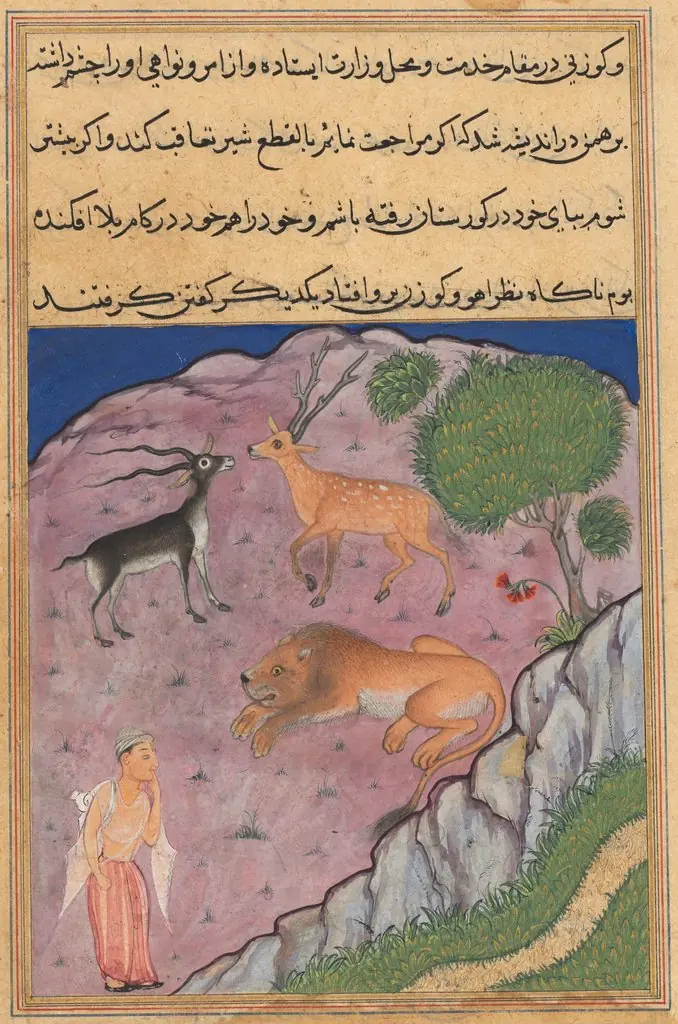 The Brahman comes upon a lion who has a deer and a gazelle as his viziers, from a Tuti-nama (Tales of a Parrot): Twenty-first Night
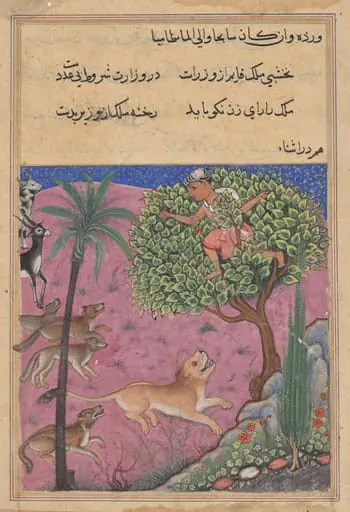 The wolf and the jackal, serving as viziers, instigate the lion who pursues the Brahman up a tree, from a Tuti-nama (Tales of a Parrot): Twenty-first Night
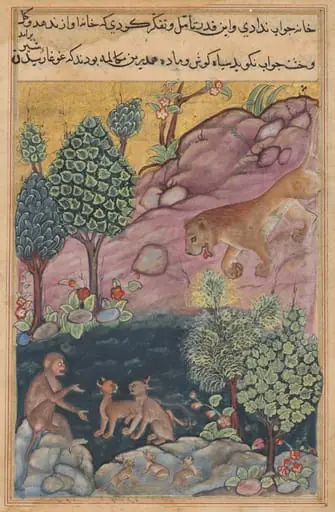 The lion returns to his territory and sees the monkey conversing with the lynx, from a Tuti-nama (Tales of a Parrot): Twenty-ninth Night
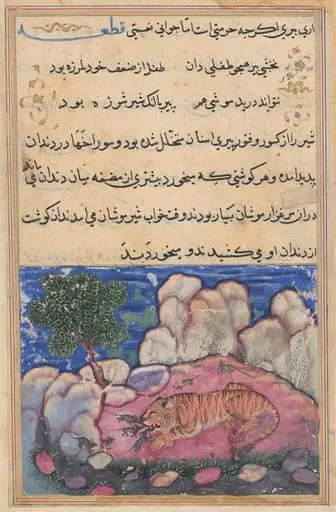 The lion disturbed by mice who eat the food trapped in his aging teeth, from a Tuti-nama (Tales of a Parrot): Fifteenth Night
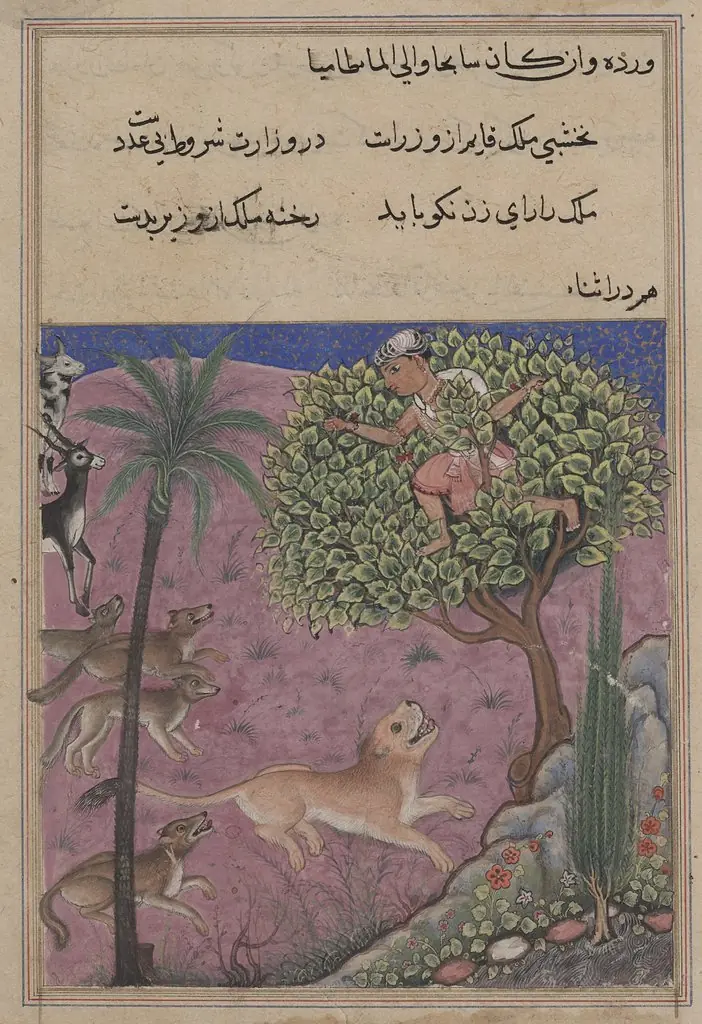 The wolf and the jackal, serving as viziers, instigate the lion who pursues the Brahman up a tree, from a Tuti-nama (Tales of a Parrot): Twenty-first Night
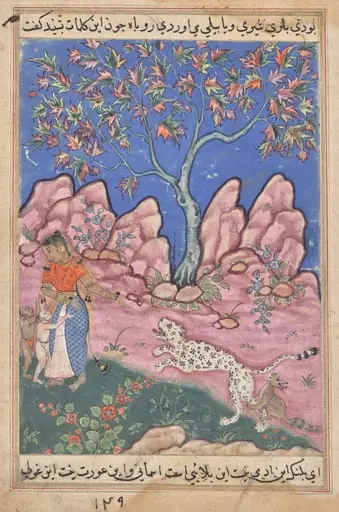 The woman conversing with her children, as the leopard returns, egged on by a fox who is tied to his leg, from a Tuti-nama (Tales of a Parrot): Thirtieth Night