Artwork
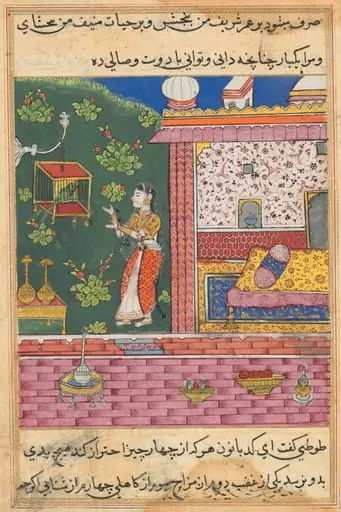
The woman conversing with her children, as the leopard returns, egged on by a fox who is tied to his leg, from a Tuti-nama (Tales of a Parrot): Thirtieth Night
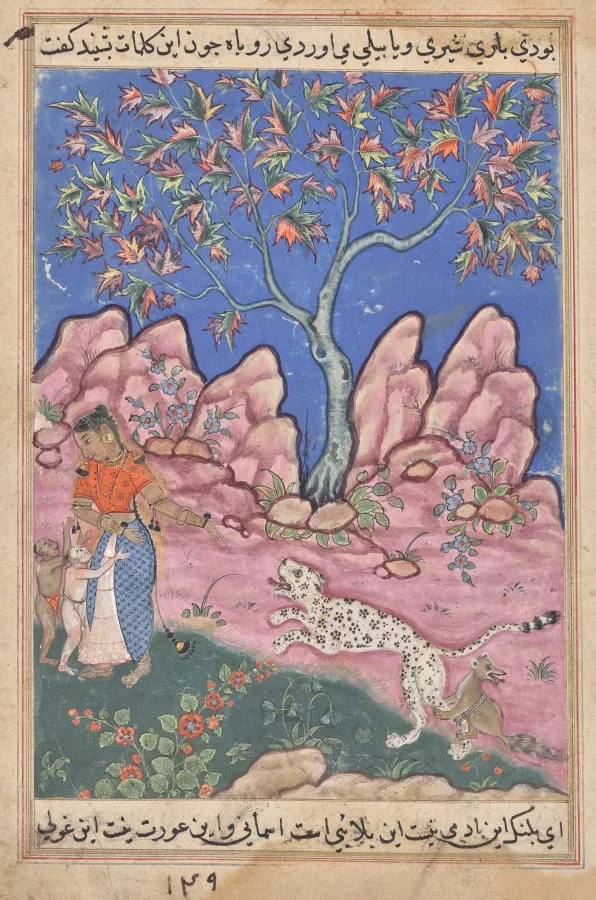
The woman conversing with her children, as the leopard returns, egged on by a fox who is tied to his leg, from a Tuti-nama (Tales of a Parrot): Thirtieth Night is an unspecified painting by the Mughal Painting artist Unknown. It dates from 1560 and is held in the collection of the Cleveland Museum of Art. The work illustrates a scene from the Tuti‑nama, a collection of parrot‑told stories popular in Mughal India.
About this work
The bright colors and busy scene were made for Emperor Akbar’s court, where artists mixed Persian and Indian styles.
You see a woman talking to her kids while a leopard creeps toward them, a fox tied to its leg urging it on.
This painting comes from a book of parrot tales told in Mughal India. The woman outsmarts the leopard twice—first by pretending to be a hyena in human form. The bright colors and busy scene were made for Emperor Akbar’s court, where artists mixed Persian and Indian styles.
To see more stories like this, look up Mughal India, court of Akbar (reigned 1556–1605).
Overview
The work illustrates a scene from the Tuti‑nama, a collection of parrot‑told stories popular in Mughal India. A mother is shown speaking to her children while a leopard stalks toward them, urged on by a fox whose leg is bound. The composition is dense and vivid, reflecting the courtly taste for narrative detail.
Subject & Meaning
The narrative depicts the second attempt of a leopard to seize the woman and her offspring. Earlier, the predator had been fooled by the woman’s claim that she was a hyena in human form. In this episode, a fox encourages the leopard, yet the woman again uses clever deception to protect her family.
Technique & Style
Executed in the richly coloured palette typical of Akbar’s atelier, the painting combines Persian miniature conventions—delicate line work and ornamental borders—with Indian elements such as naturalistic foliage and dynamic movement. The crowded scene and fine brushwork demonstrate the collaborative workshop practice of the period.
History & Provenance
Created for the imperial court of Emperor Akbar (r. 1556–1605), the piece formed part of a manuscript commissioned to celebrate the emperor’s patronage of the arts. The manuscript circulated among elite circles and later entered museum collections as a representative example of Mughal narrative painting.
Context
Mughal illustrators frequently adapted Persian literary models to Indian themes, producing hybrid visual narratives. The Tuti‑nama, with its moralistic animal tales, offered a vehicle for showcasing the court’s sophistication and the artists’ skill in rendering complex stories within a single frame.
Artist & collection

 Domestic Scene
 Giacomo and Cardinal Marco, investing Andrea, Abbot of San Zeno, with his Benefice
 The Nymph of Fontainebleau
 Portrait of a Woman
 Madonna and Child with Saints in the Enclosed Garden
 Venus and Minerva
 Family Group of Four on Sofa
 Wall painting from Room H of the Villa of P. Fannius Synistor at Boscoreale
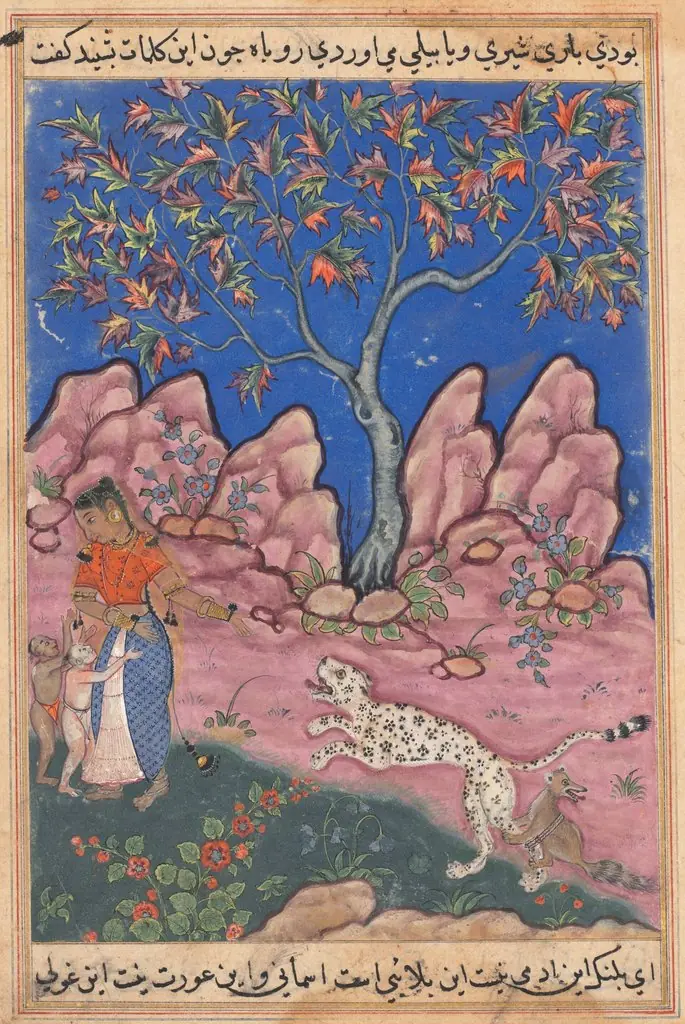 The woman conversing with her children, as the leopard returns, egged on by a fox who is tied to his leg, from a Tuti-nama (Tales of a Parrot): Thirtieth Night
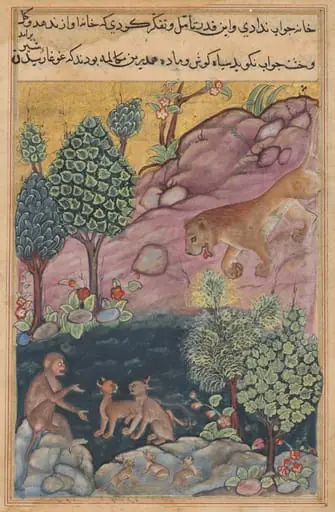 The lion returns to his territory and sees the monkey conversing with the lynx, from a Tuti-nama (Tales of a Parrot): Twenty-ninth Night
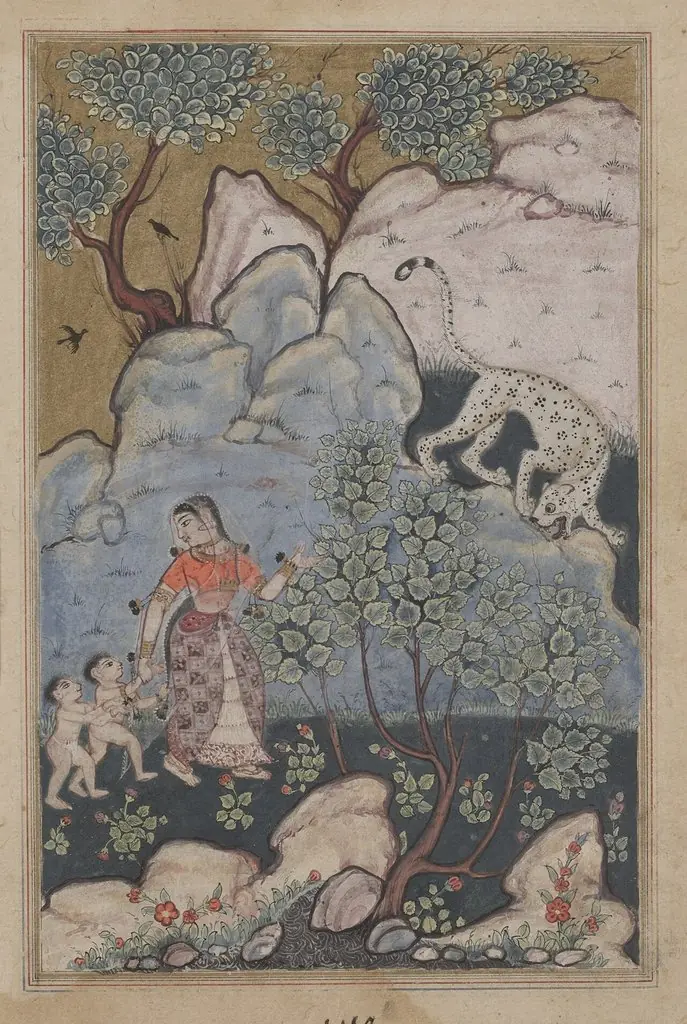 A woman with two children, having abandoned her home, goes into the forest where she encounters a leopard, from a Tuti-nama (Tales of a Parrot): Thirtieth Night
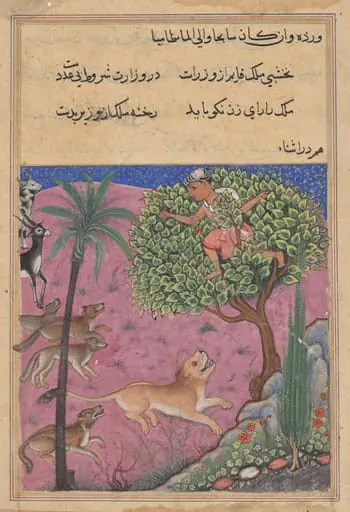 The wolf and the jackal, serving as viziers, instigate the lion who pursues the Brahman up a tree, from a Tuti-nama (Tales of a Parrot): Twenty-first Night
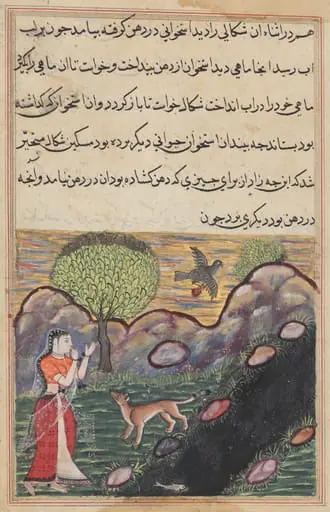 The daughter-in-law of the king of Banaras sees the jackal deprived of its food by a bird, as it unsuccessfully attempts to catch a fish, from a Tuti-nama (Tales of a Parrot): Sixteenth Night
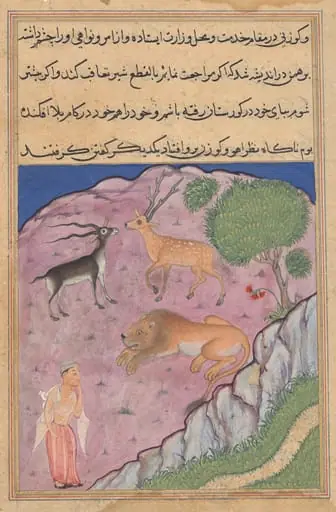 The Brahman comes upon a lion who has a deer and a gazelle as his viziers, from a Tuti-nama (Tales of a Parrot): Twenty-first Night
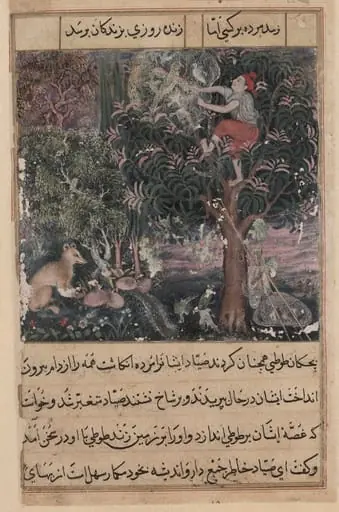 The hunter throws away the baby parrots, who pretend to be dead, and captures the mother, from a Tuti-nama (Tales of a Parrot): Fifth Night
 The Parrot Addresses Khujasta at the Beginning of the Thirtieth Night, from a Tuti-nama (Tales of a Parrot)