Artwork
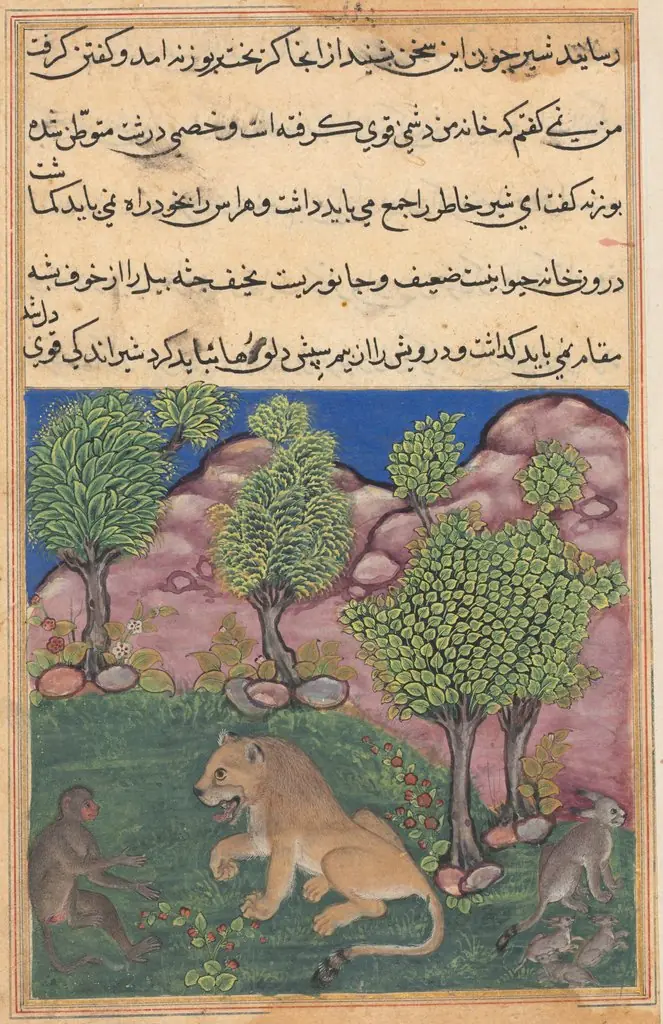
The lion returns to his territory and sees the monkey conversing with the lynx, from a Tuti-nama (Tales of a Parrot): Twenty-ninth Night
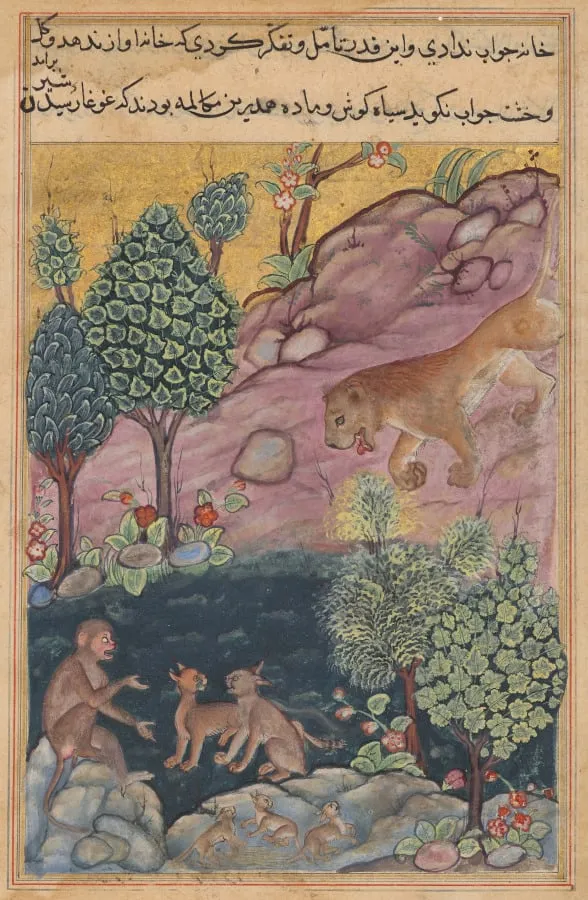
The lion returns to his territory and sees the monkey conversing with the lynx, from a Tuti-nama (Tales of a Parrot): Twenty-ninth Night is an unspecified painting by the Mughal Painting artist Unknown. It dates from 1560 and is held in the collection of the Cleveland Museum of Art. The work illustrates a lion, a monkey and a lynx gathered in a flower‑strewn meadow under slender trees.
About this work
The artist left that part out, so the painting feels like a quiet moment instead of a fight.
You see a lion, a monkey, and a lynx in a meadow full of flowers and tiny trees. The lion looks surprised, as if he just walked in on a secret meeting.
This painting comes from a book of parrot tales made for Emperor Akbar’s court. The story says the lion is tricked—the lynx aren’t really there when he first arrives. The artist left that part out, so the painting feels like a quiet moment instead of a fight.
If you like this, look up more from Mughal India, court of Akbar (reigned 1556–1605).
Overview
The work illustrates a lion, a monkey and a lynx gathered in a flower‑strewn meadow under slender trees. The lion appears startled, as though having entered an unexpected gathering. Rendered in the miniature style of a Mughal manuscript, the scene captures a quiet, almost theatrical moment rather than a violent confrontation.
Subject & Meaning
Derived from the twenty‑ninth night of the Tuti‑nama, a collection of parrot tales for Emperor Akbar’s court, the image depicts the lion’s return to his domain only to encounter a lynx family claiming ownership. In the narrative the lion is deceived, believing the lynx to be formidable foes, a nuance the painting omits, emphasizing surprise over conflict.
Technique & Style
Executed in the fine brushwork characteristic of Mughal miniatures, the composition balances delicate line with rich pigments. The flora and miniature trees are rendered with meticulous detail, while the animals are stylized yet expressive, their postures conveying narrative tension within a compact, book‑page format.
History & Provenance
The painting originates from a manuscript produced in the late 16th‑century Mughal workshop serving Emperor Akbar (reigned 1556–1605). It formed part of a deluxe illustrated volume of the Tuti‑nama, intended for the imperial library and reflecting the court’s patronage of Persian‑influenced literary art.
Context
Mughal court art often merged Persian miniature traditions with Indian naturalistic observation. This piece exemplifies that synthesis, using a literary episode to explore themes of authority, deception, and the animal kingdom, while also showcasing the court’s taste for elaborate, didactic storytelling.
Artist & collection

 Domestic Scene
 Giacomo and Cardinal Marco, investing Andrea, Abbot of San Zeno, with his Benefice
 The Nymph of Fontainebleau
 Portrait of a Woman
 Madonna and Child with Saints in the Enclosed Garden
 Venus and Minerva
 Family Group of Four on Sofa
 Wall painting from Room H of the Villa of P. Fannius Synistor at Boscoreale
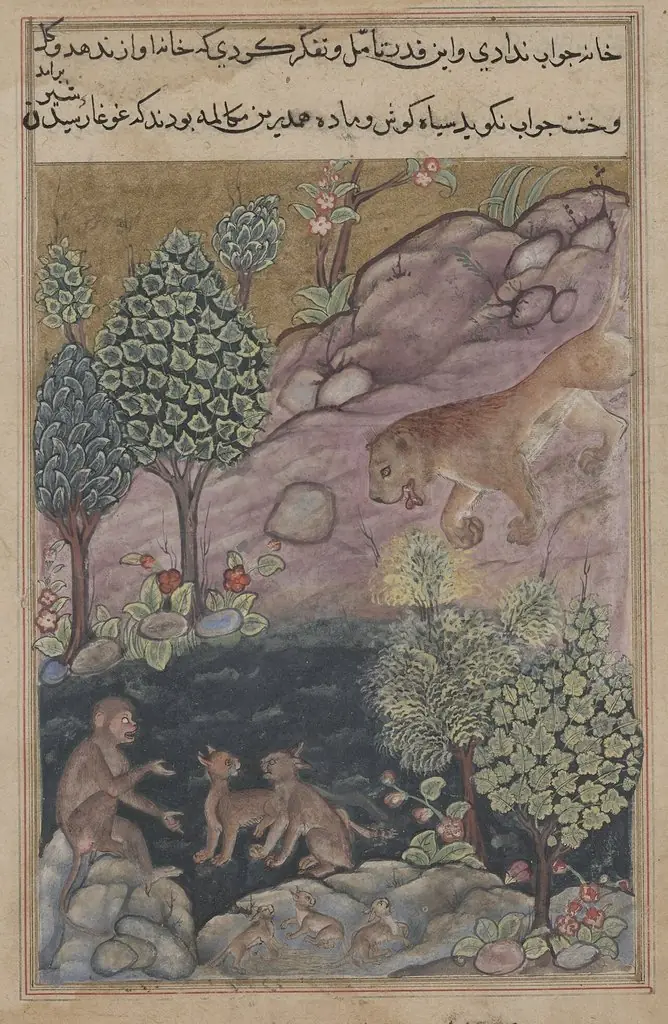 The lion returns to his territory and sees the monkey conversing with the lynx, from a Tuti-nama (Tales of a Parrot): Twenty-ninth Night
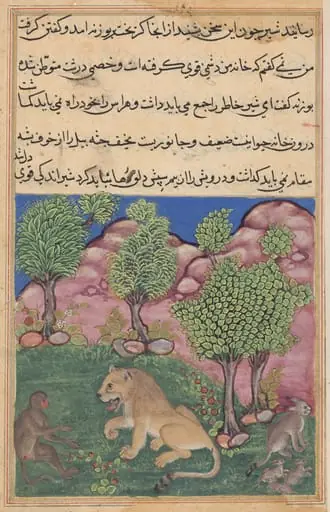 The monkey advises the suspicious lion to cast off fear and take possession of his territory, from a Tuti-nama (Tales of a Parrot): Twenty-ninth Night
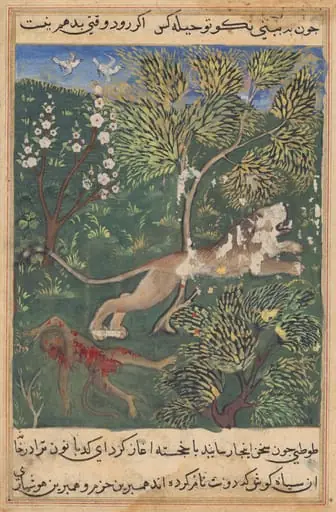 The lion, suspecting treachery on the part of the monkey, slays him and flees, from a Tuti-nama (Tales of a Parrot): Twenty-ninth Night
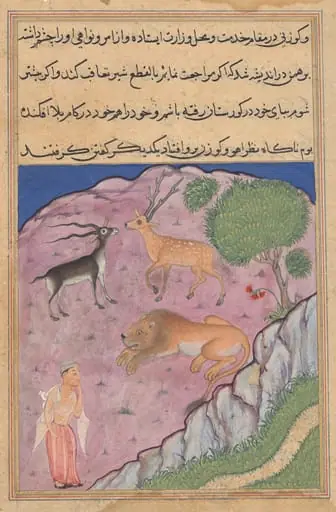 The Brahman comes upon a lion who has a deer and a gazelle as his viziers, from a Tuti-nama (Tales of a Parrot): Twenty-first Night
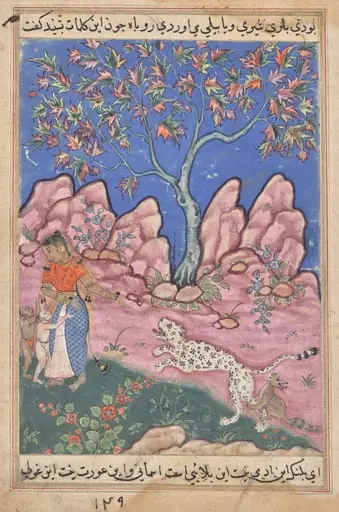 The woman conversing with her children, as the leopard returns, egged on by a fox who is tied to his leg, from a Tuti-nama (Tales of a Parrot): Thirtieth Night
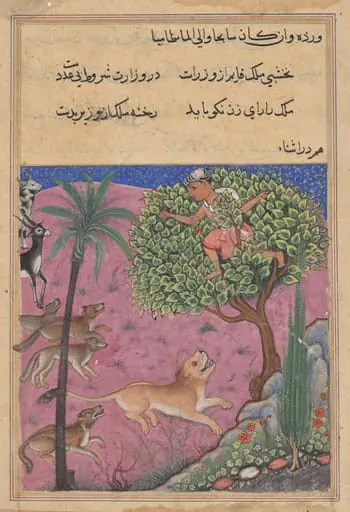 The wolf and the jackal, serving as viziers, instigate the lion who pursues the Brahman up a tree, from a Tuti-nama (Tales of a Parrot): Twenty-first Night
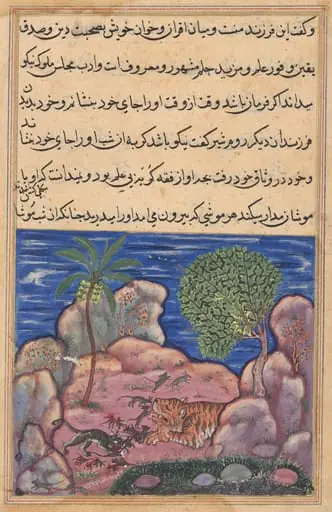 The cat attacks the mice which disturb the lion, from a Tuti-nama (Tales of a Parrot): Fifteenth Night
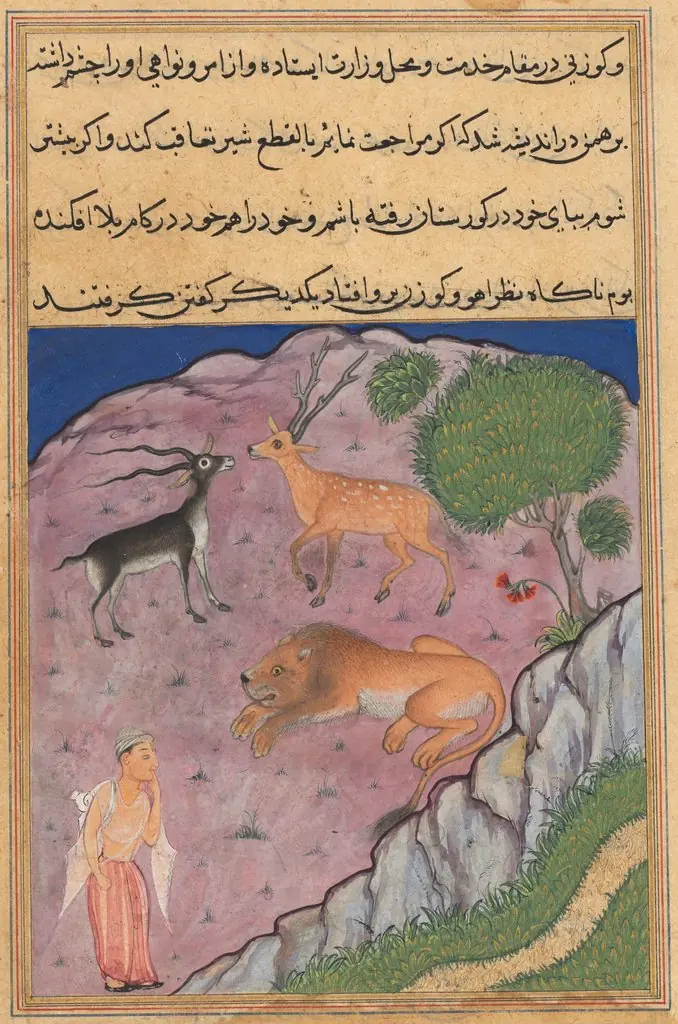 The Brahman comes upon a lion who has a deer and a gazelle as his viziers, from a Tuti-nama (Tales of a Parrot): Twenty-first Night
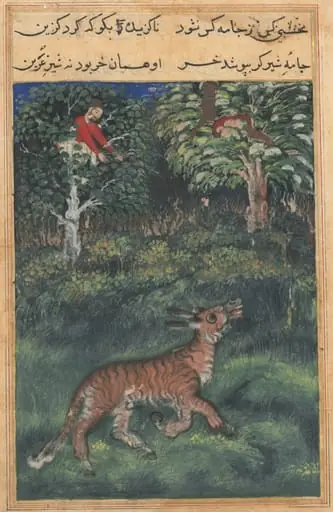 The donkey, in a tiger’s skin, reveals his identity by braying aloud, from a Tuti-nama (Tales of a Parrot): Thirty-first Night
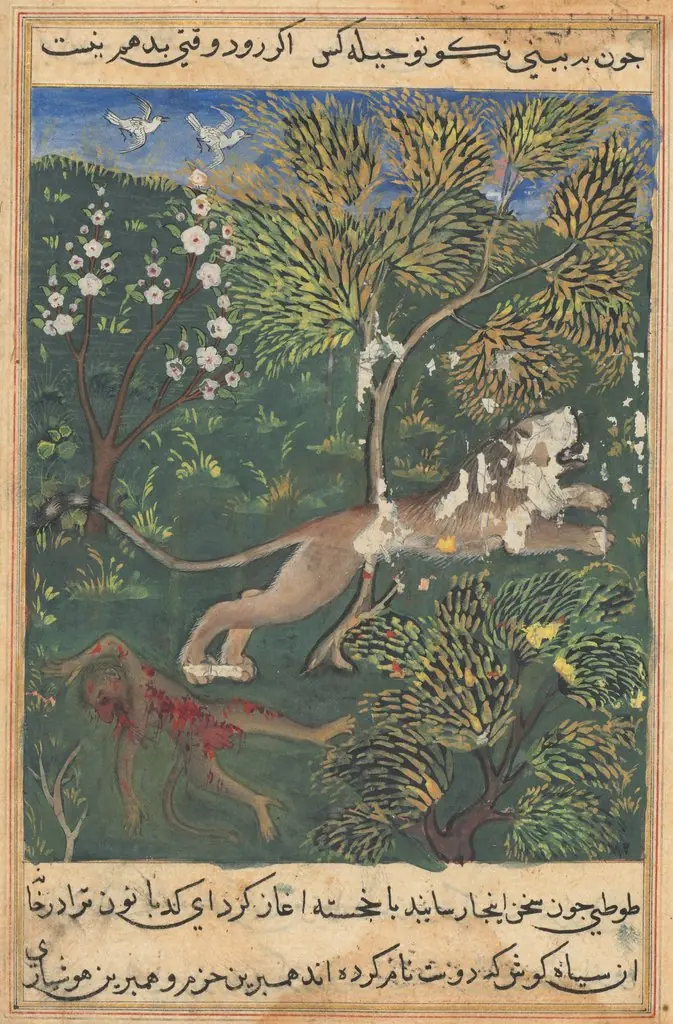 The lion, suspecting treachery on the part of the monkey, slays him and flees, from a Tuti-nama (Tales of a Parrot): Twenty-ninth Night
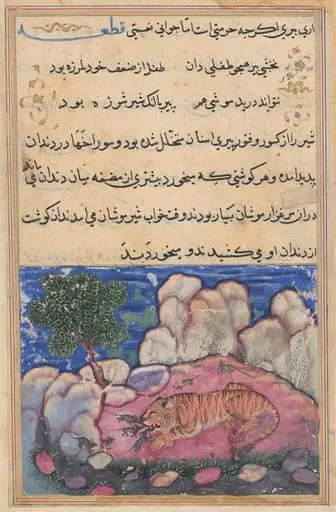 The lion disturbed by mice who eat the food trapped in his aging teeth, from a Tuti-nama (Tales of a Parrot): Fifteenth Night
 The monkey advises the suspicious lion to cast off fear and take possession of his territory, from a Tuti-nama (Tales of a Parrot): Twenty-ninth Night