Artwork
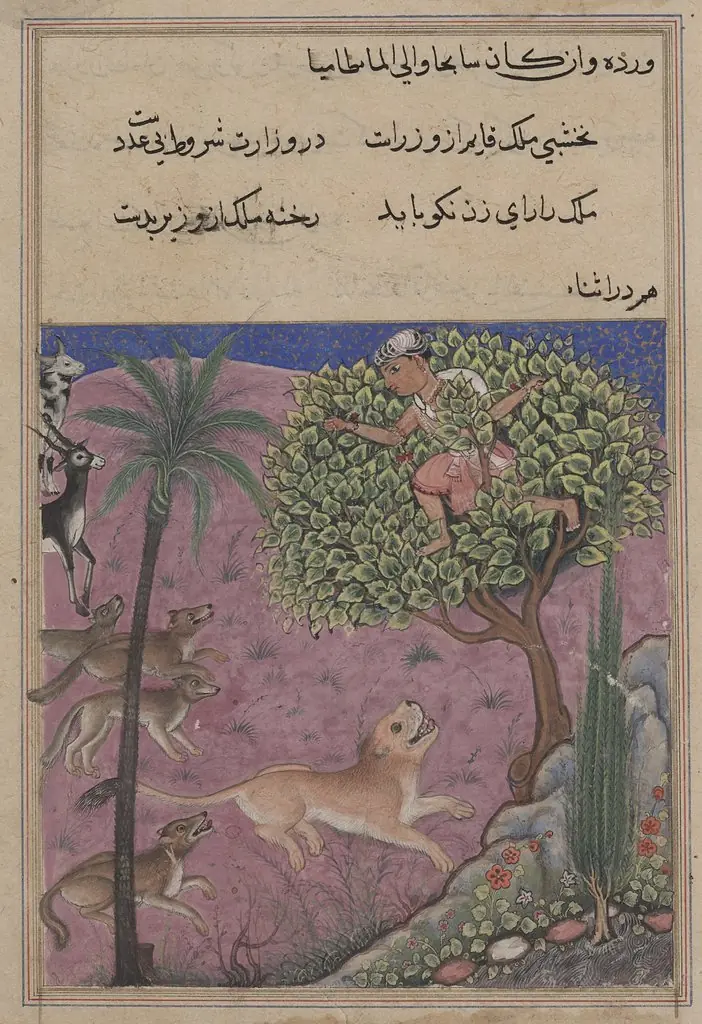
The wolf and the jackal, serving as viziers, instigate the lion who pursues the Brahman up a tree, from a Tuti-nama (Tales of a Parrot): Twenty-first Night
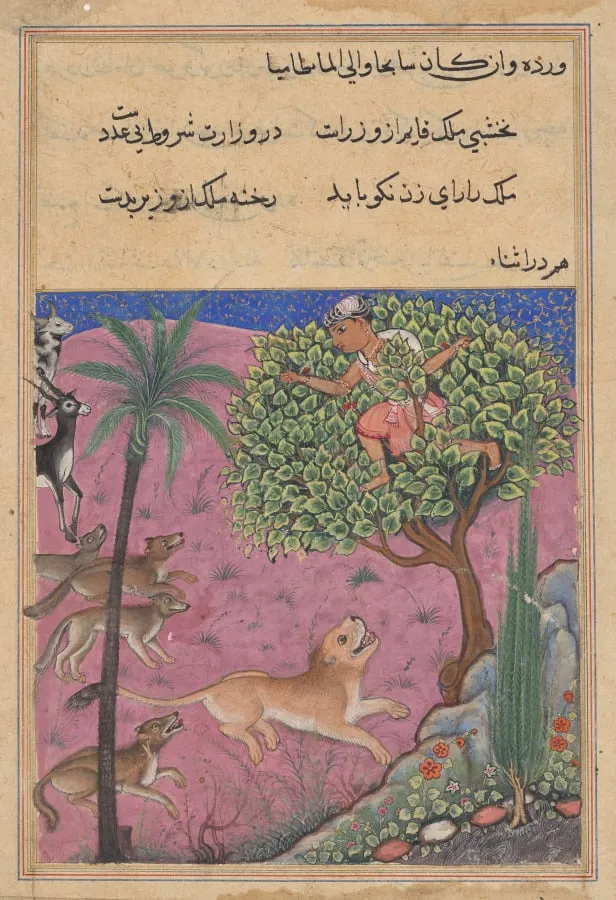
The wolf and the jackal, serving as viziers, instigate the lion who pursues the Brahman up a tree, from a Tuti-nama (Tales of a Parrot): Twenty-first Night is an unspecified painting by the Mughal Painting artist Unknown. It dates from 1560 and is held in the collection of the Cleveland Museum of Art. The painting illustrates a scene from a Tuti‑nama, a collection of parrot tales compiled for Emperor Akbar’s court.
About this work
To see more art from this time, look up Mughal India, court of Akbar (reigned 1556–1605).
A man clings to the top of a tree while a lion waits below, teeth bared. Around the lion, wolves and jackals whisper, urging him to attack. Two gentle deer watch from the side, looking worried.
This painting comes from a book of parrot tales made for Emperor Akbar’s court. The story warns against bad advisors—here, the wolves and jackals play the villains. The bright colors and flat shapes make the scene feel like a fable, not real life.
To see more art from this time, look up Mughal India, court of Akbar (reigned 1556–1605).
Overview
The painting illustrates a scene from a Tuti‑nama, a collection of parrot tales compiled for Emperor Akbar’s court. In the composition a human figure clings to a tree branch while a lion prowls below, its jaws open. Around the predator, wolves and jackals appear to be urging an attack, whereas two deer stand aside, watching with concern.
Subject & Meaning
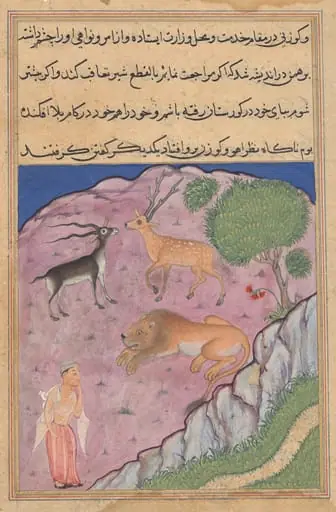
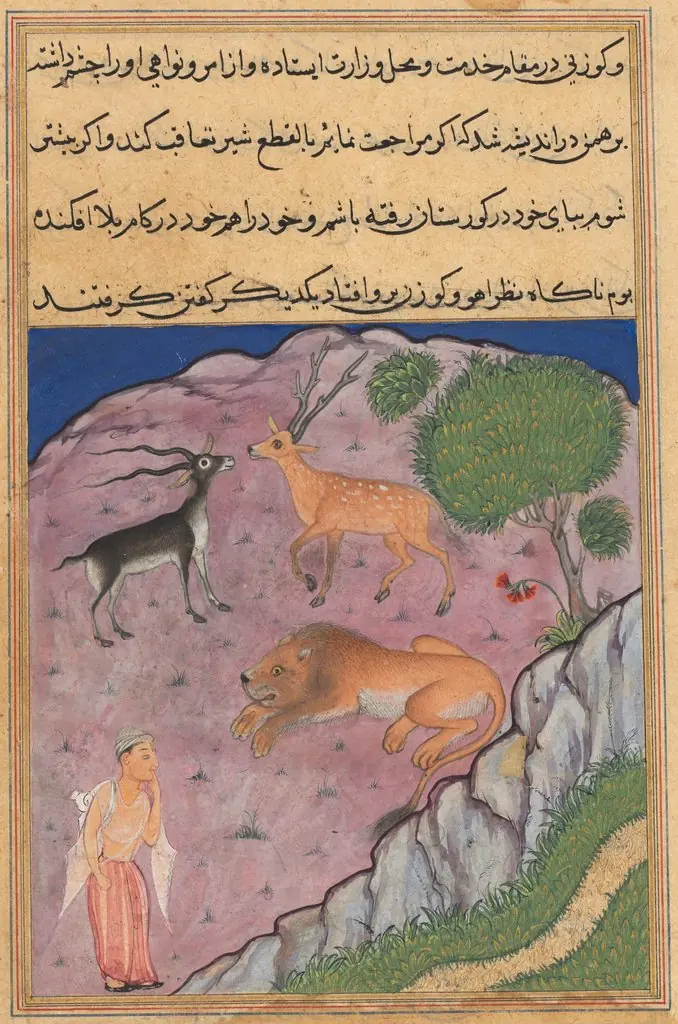
The narrative depicts a Brahman (a Hindu priest) trapped atop a tree, threatened by a lion whose advisors—here represented by wolves and jackals—press for violence. Earlier in the tale, gentler advisors, a deer and a gazelle, had counseled mercy; their reappearance in the image underscores the moral warning against following corrupt counsel.
Technique & Style
Executed in the vivid palette typical of Mughal court painting, the work employs flat, decorative shapes that flatten space and emphasize the storybook quality of the scene. The bright colors and stylised figures create a didactic, almost allegorical atmosphere rather than a realistic portrayal.
History & Provenance
The image originates from a manuscript of the Tuti‑nama, produced during the reign of Akbar (1556–1605) for his imperial workshop. The manuscript was intended for the emperor’s library, reflecting the Mughal interest in Persian literary traditions adapted to Indian contexts.
Context
Mughal artists frequently illustrated moral tales to convey ethical lessons to court audiences. This particular episode uses animal characters as advisors to critique the influence of malicious counsel, a theme resonant with the political culture of Akbar’s court, which valued wise governance.
Artist & collection

 Domestic Scene
 Giacomo and Cardinal Marco, investing Andrea, Abbot of San Zeno, with his Benefice
 The Nymph of Fontainebleau
 Portrait of a Woman
 Madonna and Child with Saints in the Enclosed Garden
 Venus and Minerva
 Family Group of Four on Sofa
 Wall painting from Room H of the Villa of P. Fannius Synistor at Boscoreale
 The wolf and the jackal, serving as viziers, instigate the lion who pursues the Brahman up a tree, from a Tuti-nama (Tales of a Parrot): Twenty-first Night
 The Brahman comes upon a lion who has a deer and a gazelle as his viziers, from a Tuti-nama (Tales of a Parrot): Twenty-first Night
 The Brahman comes upon a lion who has a deer and a gazelle as his viziers, from a Tuti-nama (Tales of a Parrot): Twenty-first Night
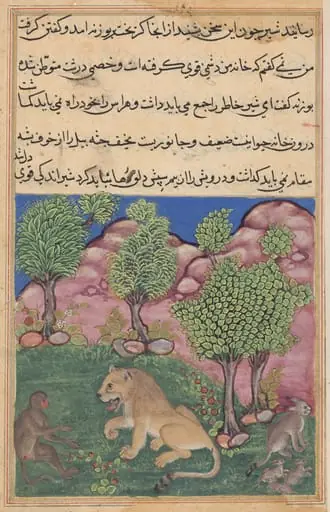 The monkey advises the suspicious lion to cast off fear and take possession of his territory, from a Tuti-nama (Tales of a Parrot): Twenty-ninth Night
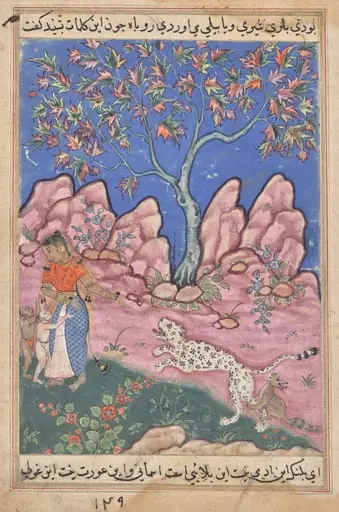 The woman conversing with her children, as the leopard returns, egged on by a fox who is tied to his leg, from a Tuti-nama (Tales of a Parrot): Thirtieth Night
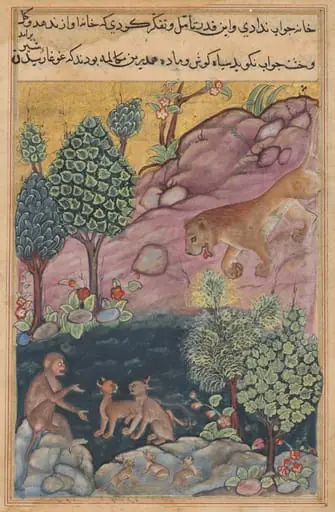 The lion returns to his territory and sees the monkey conversing with the lynx, from a Tuti-nama (Tales of a Parrot): Twenty-ninth Night
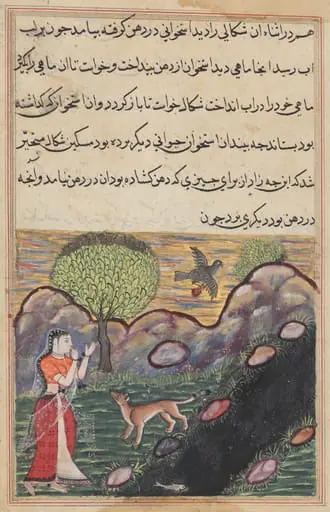 The daughter-in-law of the king of Banaras sees the jackal deprived of its food by a bird, as it unsuccessfully attempts to catch a fish, from a Tuti-nama (Tales of a Parrot): Sixteenth Night
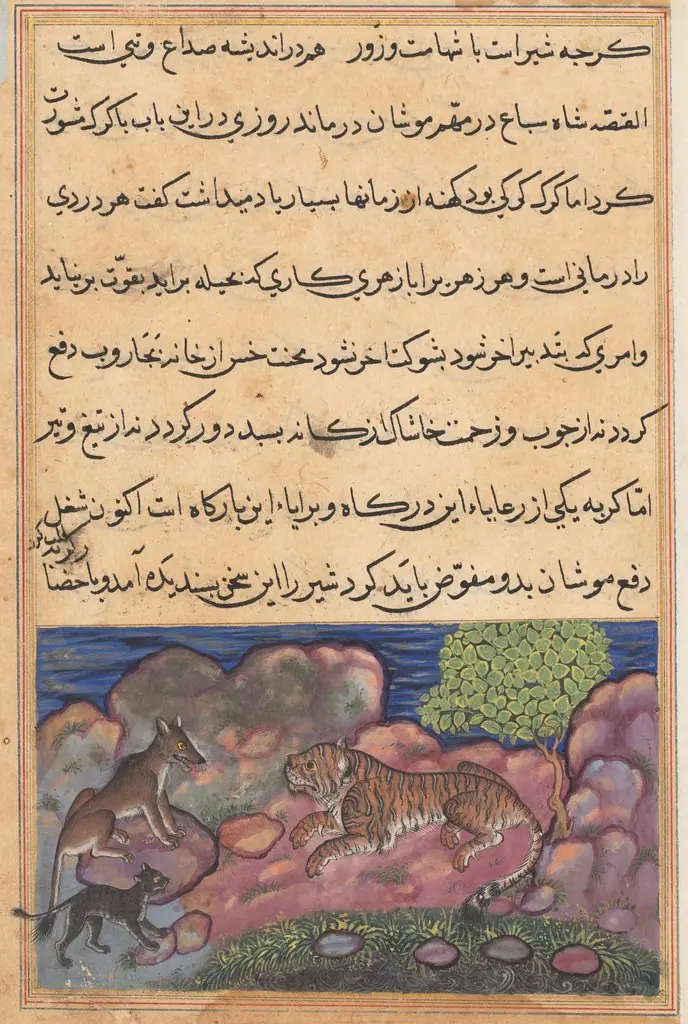 The wolf advises the lion to consult the cat, from a Tuti-nama (Tales of a Parrot): Fifteenth Night
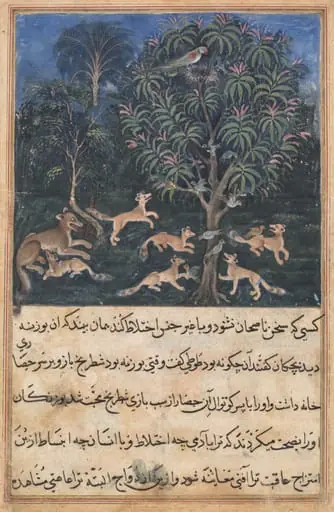 The parrot mother cautions her young on the danger of playing with foxes, from a Tuti-nama (Tales of a Parrot): Fifth Night
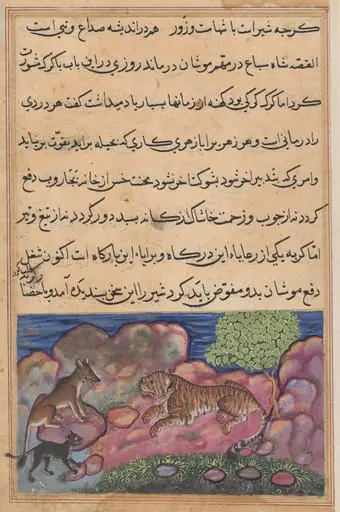 The wolf advises the lion to consult the cat, from a Tuti-nama (Tales of a Parrot): Fifteenth Night
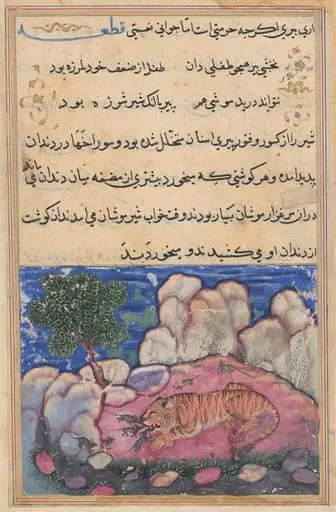 The lion disturbed by mice who eat the food trapped in his aging teeth, from a Tuti-nama (Tales of a Parrot): Fifteenth Night