Artwork
The Brahman gambler sees the daughter of the king of the jinns in a pit together with an old man and a cauldron of boiling oil, from a Tuti-nama (Tales of a Parrot: Seventh Night)
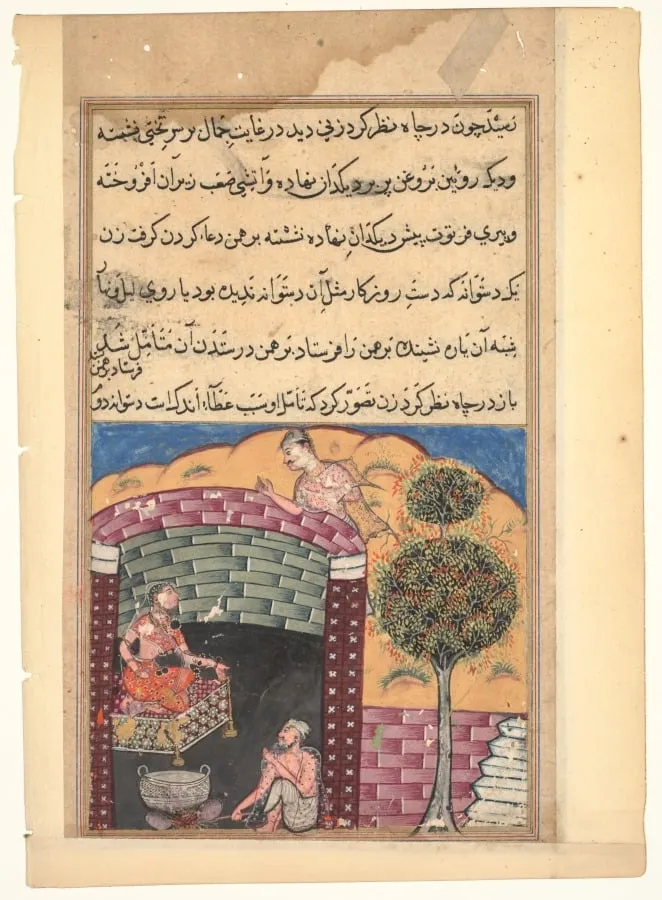
The Brahman gambler sees the daughter of the king of the jinns in a pit together with an old man and a cauldron of boiling oil, from a Tuti-nama (Tales of a Parrot: Seventh Night) is an unspecified painting by the Mughal Painting artist Unknown. It dates from 1560 and is held in the collection of the Cleveland Museum of Art.
About this work
The artist shows the pit in cross-section so we can see every layer—smoke, oil, and the woman’s secret gift.
A man in rags looks down into a pit cut open like a dollhouse. Inside, a young woman hands him two gold bracelets while an old man tends a fire under a boiling cauldron.
The story comes from a book of parrot tales read aloud at the Mughal court. The artist shows the pit in cross-section so we can see every layer—smoke, oil, and the woman’s secret gift.
To see more paintings like this, look up Mughal India, court of Akbar (reigned 1556–1605).
Overview
This painting illustrates a scene from the Tuti-nama (Tales of a Parrot: Seventh Night), depicting a pivotal moment where a destitute Brahman encounters mysterious figures in an open pit.
Subject & Meaning
The scene shows a Brahman receiving two gold bracelets from a beautiful woman in the pit, alongside an elderly man tending a cauldron of boiling oil he has managed for nearly eighty years. The interaction suggests a narrative of unexpected aid or revelation.
Technique & Style
The composition employs a cross-sectional representation of the pit, akin to a dollhouse, allowing viewers to observe all elements simultaneously. This technique is characteristic of Mughal miniature painting, emphasizing clarity and detail.
History & Provenance
Originating from the Mughal court during the reign of Akbar (1556–1605), this painting is part of an illustrated manuscript of the Tuti-nama, a collection of stories meant for oral recitation at court.
Context
The work reflects the cultural and artistic practices of the Mughal Empire under Akbar, known for its vibrant literary and visual arts patronage, including the adaptation of diverse textual sources into elaborate manuscripts.
Legacy
As part of the Tuti-nama illustrations, this painting contributes to the understanding of Mughal artistic techniques and the popularity of the Tuti-nama stories within the imperial court's literary culture.
Artist & collection

 Domestic Scene
 Giacomo and Cardinal Marco, investing Andrea, Abbot of San Zeno, with his Benefice
 The Nymph of Fontainebleau
 Portrait of a Woman
 Madonna and Child with Saints in the Enclosed Garden
 Venus and Minerva
 Family Group of Four on Sofa
 Wall painting from Room H of the Villa of P. Fannius Synistor at Boscoreale
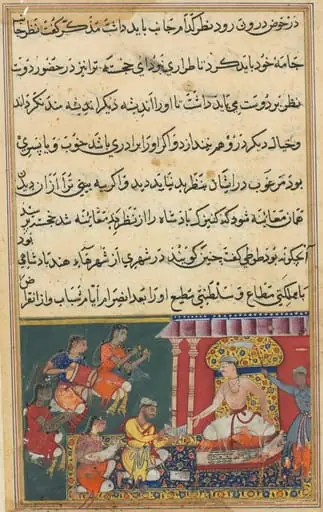 The astrologer predicts a calamity for the newly born prince in his thirteenth year, but one which he would be able to overcome, from a Tuti-nama (Tales of a Parrot): Eighth Night
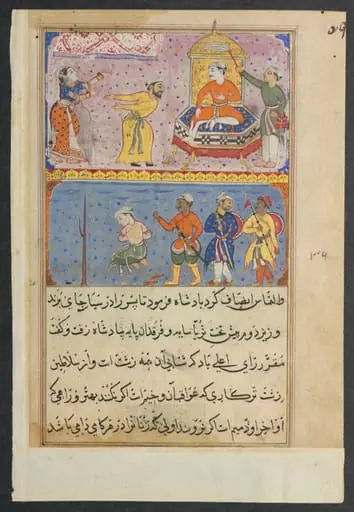 The prince, once reprieved, is returned to the palace of execution a second time on the plea of the king’s handmaiden, from a Tuti-nama (Tales of a Parrot): Eighth Night
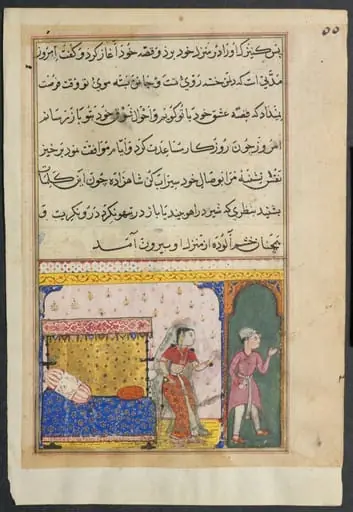 The prince rejects the amorous advances of the king’s handmaiden, from a Tuti-nama (Tales of a Parrot): Eighth Night
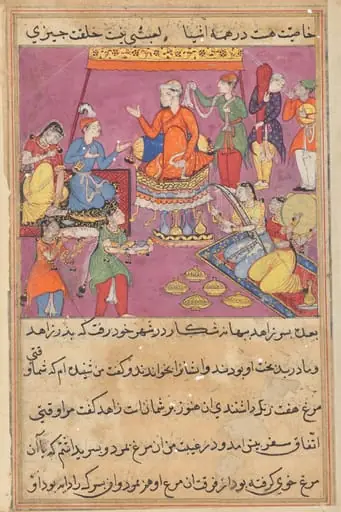 The king gives his daughter in marriage to the pious man’s son, from a Tuti-nama (Tales of a Parrot): Fifty-second Night
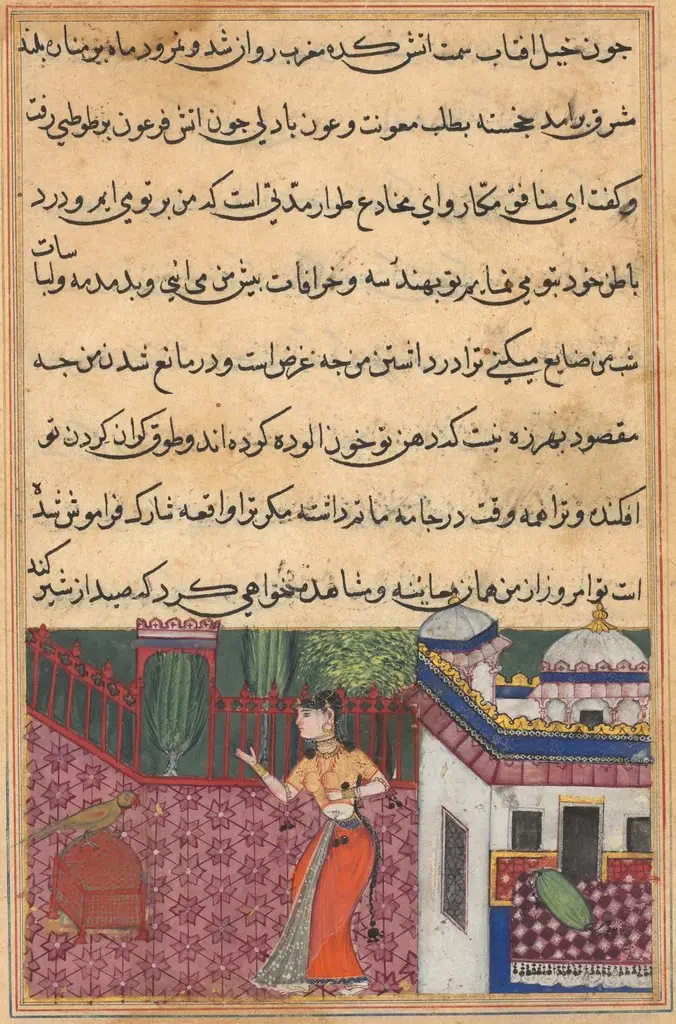 The parrot addresses Khujasta at the beginning of the thirty-third night, from a Tuti-nama (Tales of a Parrot)
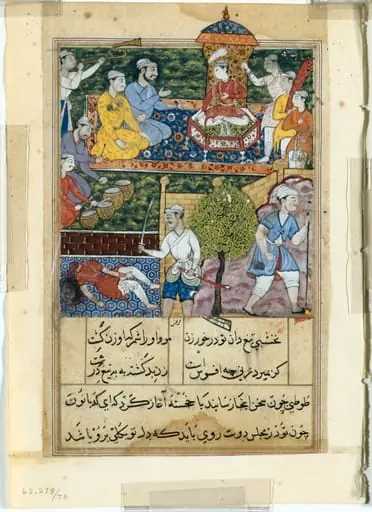 The young prince is crowned and the wicked handmaiden is executed, from a Tuti-nama (Tales of a Parrot): Eighth Night
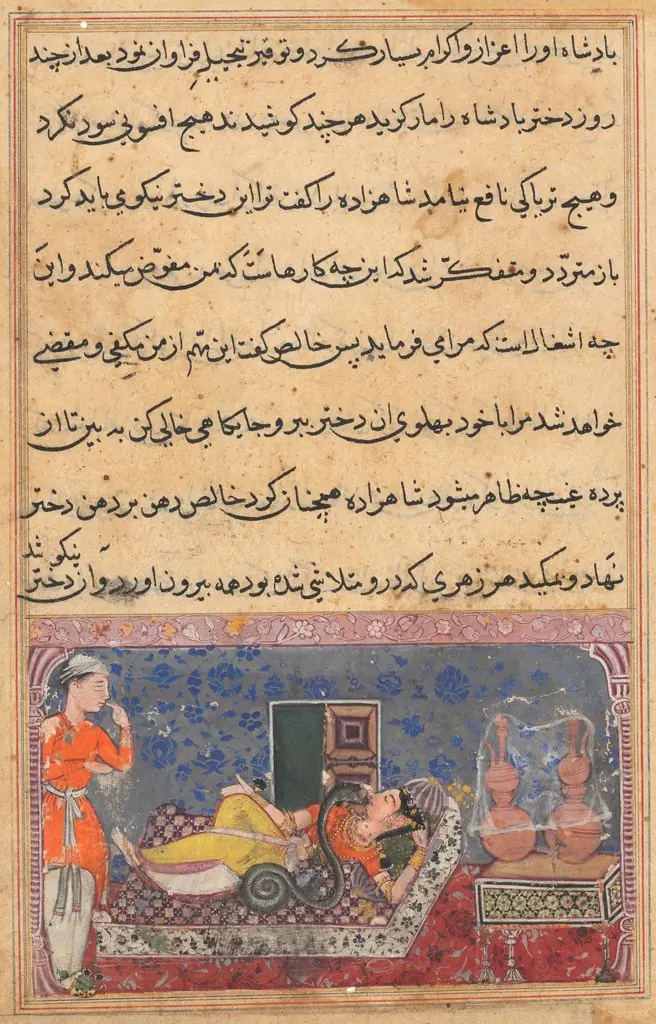 Khalis repays the prince for his kindness by changing into a snake and sucking the poison from the king’s daughter, from a Tuti-nama (Tales of a Parrot): Eighteenth Night