Artwork
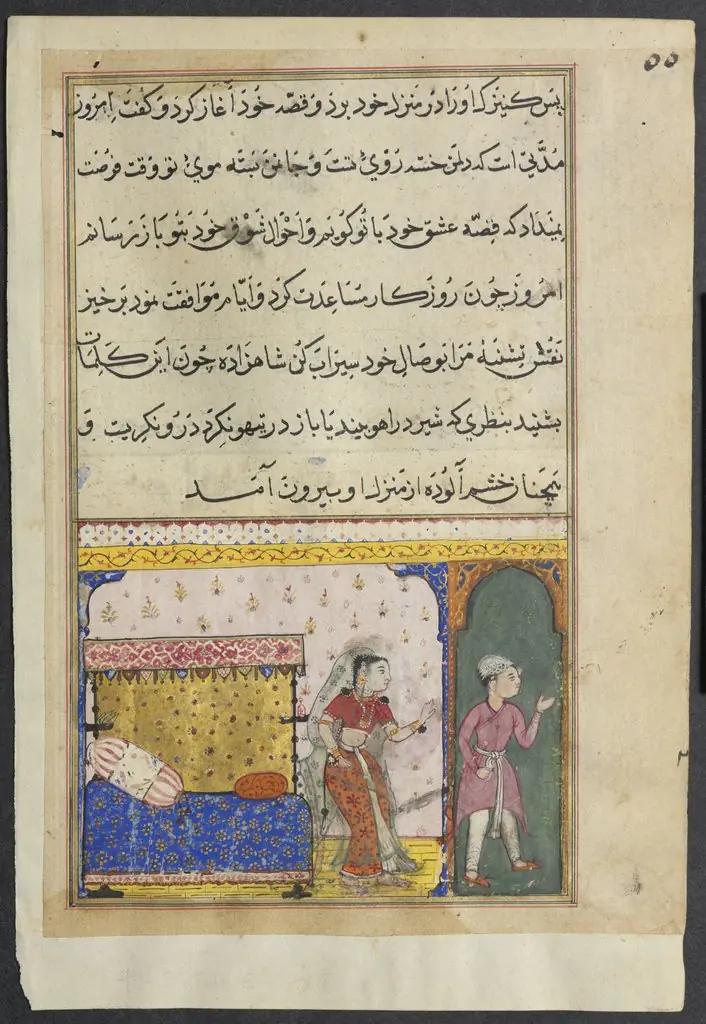
The prince rejects the amorous advances of the king’s handmaiden, from a Tuti-nama (Tales of a Parrot): Eighth Night
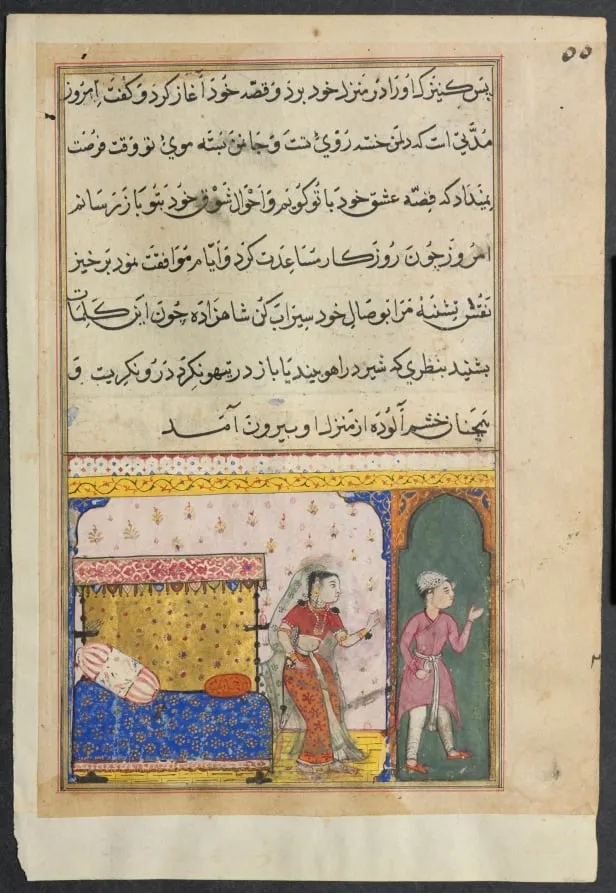
The prince rejects the amorous advances of the king’s handmaiden, from a Tuti-nama (Tales of a Parrot): Eighth Night is an unspecified painting by the Mughal Painting artist Unknown. It dates from 1560 and is held in the collection of the Cleveland Museum of Art. The miniature illustrates a scene from the eighth night of the Tuti‑nama, a Persian‑origin illustrated collection of tales.
About this work
Look up more paintings from mughal india, court of akbar (reigned 1556–1605) to see how artists brought these tales to life.
A prince turns away from a woman in a bright orange sari, his face set in cold disapproval. She kneels, hands pressed together, pleading with her eyes while he looks past her, unmoved.
This tiny painting once illustrated a story told night after night—like a medieval TV episode. The prince’s silence isn’t just rude; it’s dangerous. The woman’s lie later gets him sentenced to death, all because he refused her. The artist packed drama into every fold of fabric and flicker of expression.
Look up more paintings from mughal india, court of akbar (reigned 1556–1605) to see how artists brought these tales to life.
Overview
The miniature illustrates a scene from the eighth night of the Tuti‑nama, a Persian‑origin illustrated collection of tales. In the composition a princely figure, dressed in the characteristic Mughal tunic and trousers, turns away from a kneeling woman clad in an orange‑printed sari with a red blouse and a sheer headscarf. His expression is stern, while the woman pleads with clasped hands and a beseeching gaze.
Subject & Meaning
The narrative depicts the moment when the handmaiden, having invited the prince to her chambers, confesses her desire and proposes an illicit liaison. The prince rejects her silently and departs, prompting the woman to falsely accuse him of attempted assault. The story uses this encounter to explore themes of power, false testimony, and the lethal consequences of courtly intrigue.
Technique & Style
Executed in the miniature tradition of the Mughal court, the work employs fine brushwork and a limited palette dominated by bright orange, red, and muted earth tones. The figures are rendered with delicate linear detailing, while the textiles are depicted with intricate patterning that conveys the luxurious fabrics of the period. The composition is tightly framed, focusing attention on the emotional exchange.
History & Provenance
The painting originates from the Mughal era, likely produced in the workshop of the imperial atelier that flourished under Emperor Akbar (1556–1605). It formed part of a manuscript of the Tuti‑nama, a text that circulated widely among elite Persianate audiences and was frequently copied for courtly use.
Context
Mughal miniatures often visualized literary episodes from Persian and Indian sources, serving both decorative and didactic purposes within royal libraries. This particular scene reflects the court’s fascination with moralizing stories that warned of the perils of false accusations and the strict codes governing royal conduct.
Legacy
The illustration exemplifies how Mughal artists blended Persian narrative traditions with Indian visual motifs, influencing later South Asian manuscript production. Its vivid portrayal of court drama continues to inform contemporary understandings of Mughal artistic conventions and narrative illustration.
Artist & collection

 Domestic Scene
 Giacomo and Cardinal Marco, investing Andrea, Abbot of San Zeno, with his Benefice
 The Nymph of Fontainebleau
 Portrait of a Woman
 Madonna and Child with Saints in the Enclosed Garden
 Venus and Minerva
 Family Group of Four on Sofa
 Wall painting from Room H of the Villa of P. Fannius Synistor at Boscoreale
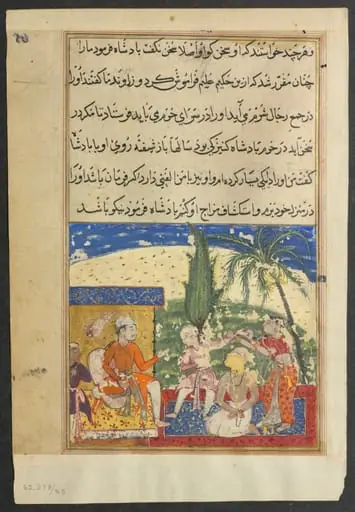 The king’s handmaiden takes the prince away to the harem, from a Tuti-nama (Tales of a Parrot): Eighth Night
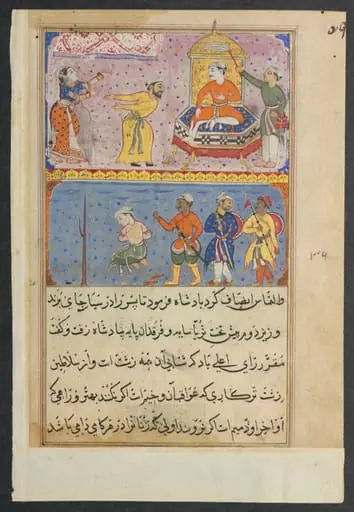 The prince, once reprieved, is returned to the palace of execution a second time on the plea of the king’s handmaiden, from a Tuti-nama (Tales of a Parrot): Eighth Night
 The prince rejects the amorous advances of the king’s handmaiden, from a Tuti-nama (Tales of a Parrot): Eighth Night
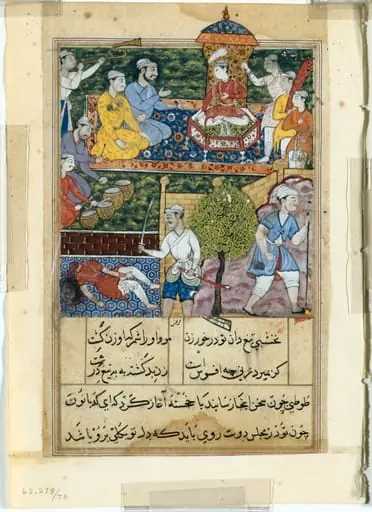 The young prince is crowned and the wicked handmaiden is executed, from a Tuti-nama (Tales of a Parrot): Eighth Night
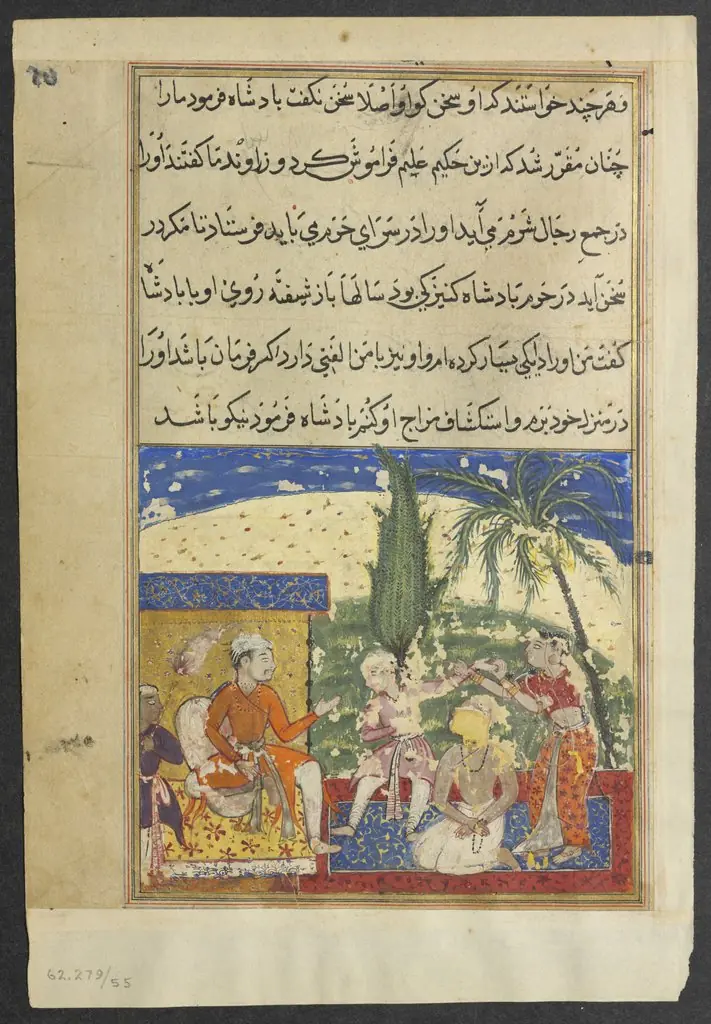 The king’s handmaiden takes the prince away to the harem, from a Tuti-nama (Tales of a Parrot): Eighth Night
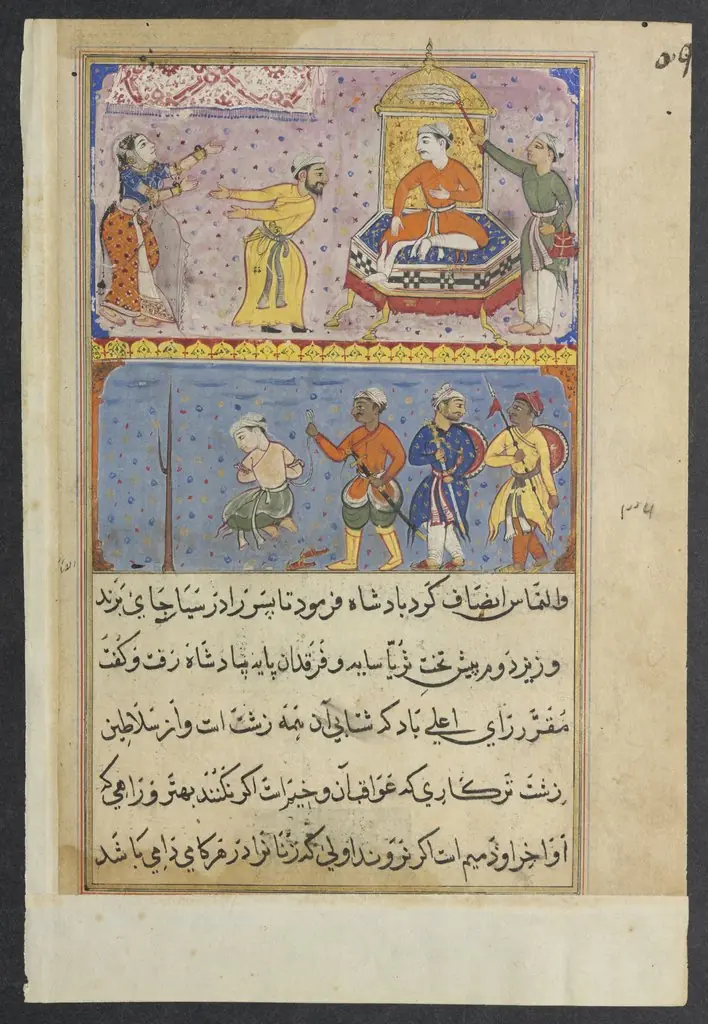 The prince, once reprieved, is returned to the palace of execution a second time on the plea of the king’s handmaiden, from a Tuti-nama (Tales of a Parrot): Eighth Night
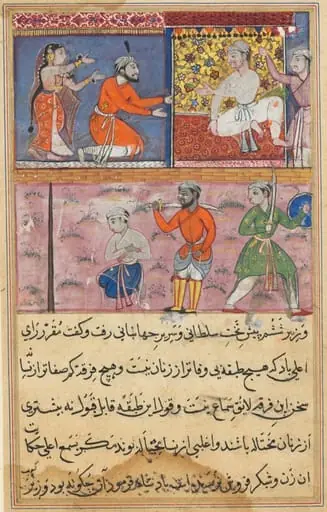 The prince sent back to the place of execution for the sixth time, from a Tuti-nama (Tales of a Parrot): Eighth Night
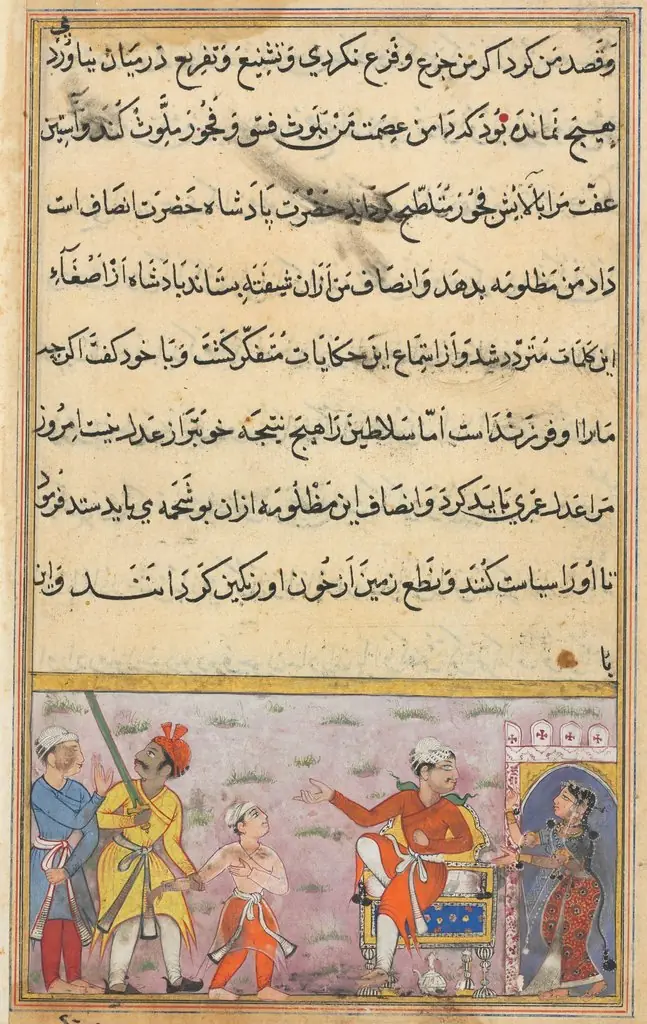 The prince being taken away for execution on the false complaint of the handmaiden, from a Tuti-nama (Tales of a Parrot): Eighth Night
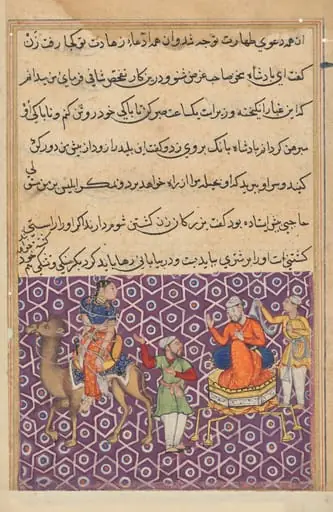 King Bahram, who has married Khassa’s daughter, has her tied to a camel to be abandoned in the desert as a result of false accusations made by Khulasa, from a Tuti-nama (Tales of a Parrot): Fifty-first Night
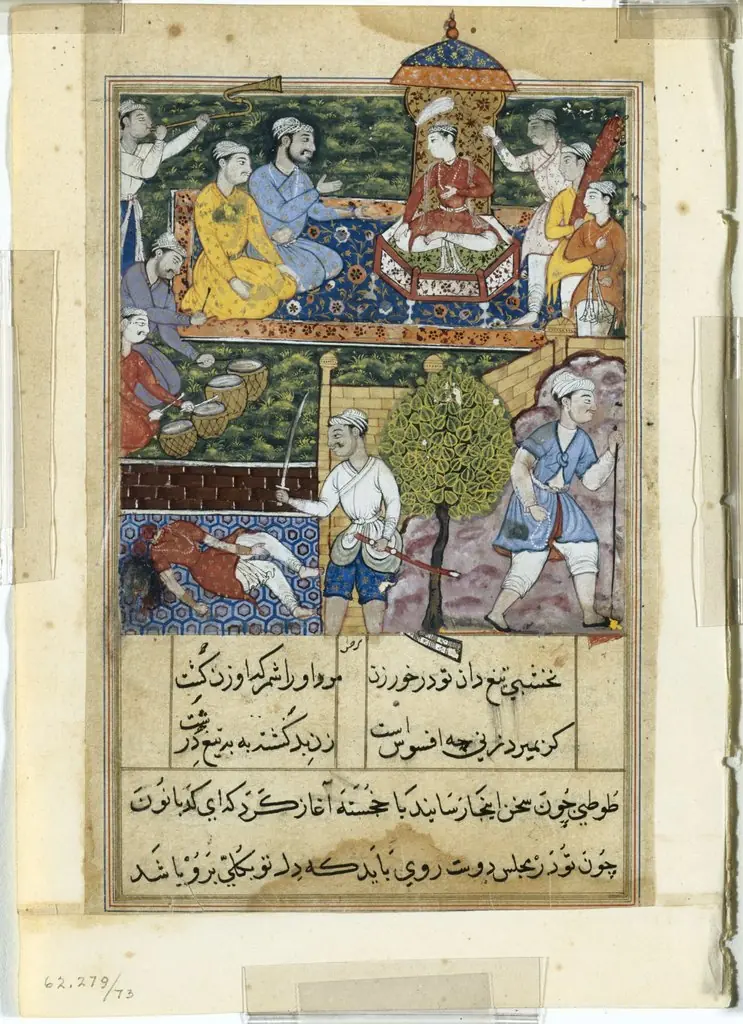 The young prince is crowned and the wicked handmaiden is executed, from a Tuti-nama (Tales of a Parrot): Eighth Night
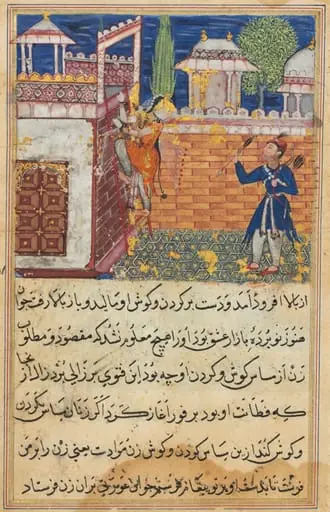 The deceitful wife returns to her terrace after caressing her lover, from a Tuti-nama (Tales of a Parrot): Eighth Night