Artwork
The prince, once reprieved, is returned to the palace of execution a second time on the plea of the king’s handmaiden, from a Tuti-nama (Tales of a Parrot): Eighth Night
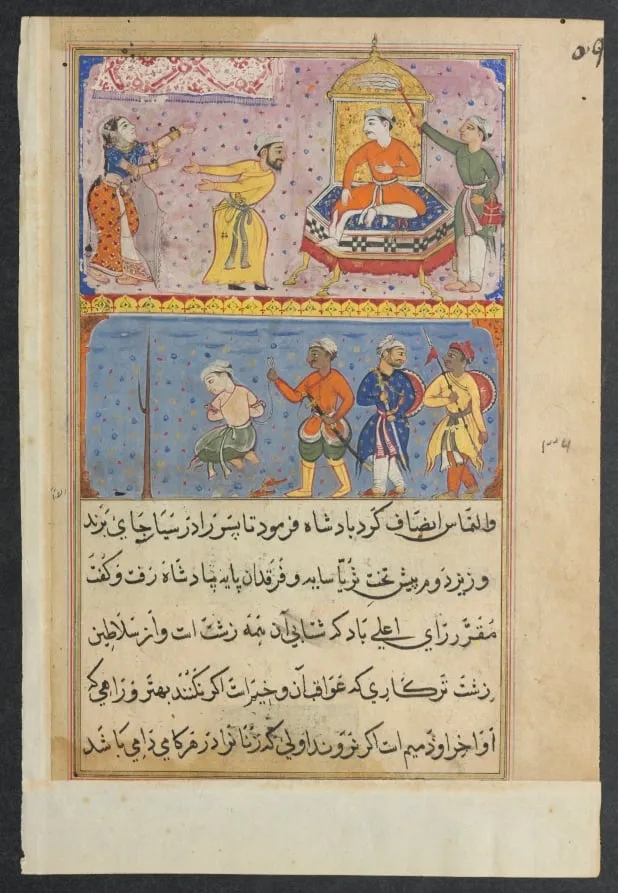
The prince, once reprieved, is returned to the palace of execution a second time on the plea of the king’s handmaiden, from a Tuti-nama (Tales of a Parrot): Eighth Night is an unspecified painting by the Patna School of Painting artist Gujarati. It dates from 1560 and is held in the collection of the Cleveland Museum of Art. The miniature illustrates a dramatic episode from a Mughal narrative manuscript, showing a royal court scene divided into two registers.
About this work
To see more paintings like this, look up mughal india, court of akbar (reigned 1556–1605).
You see a small, busy painting split into two scenes. At the top, a woman kneels before a king on a golden throne, pleading. Below, guards hold a bound prince on his knees, swords ready.
This is one page from a book of parrot tales told to Emperor Akbar. The story keeps changing—first the prince is saved, then doomed again. The bright colors and flat shapes make it feel like a comic strip from 1560.
To see more paintings like this, look up mughal india, court of akbar (reigned 1556–1605).
Overview
The miniature illustrates a dramatic episode from a Mughal narrative manuscript, showing a royal court scene divided into two registers. In the upper part a handmaiden kneels before the seated monarch, pleading for the life of a condemned prince. The lower part depicts the prince, bound and barefoot, surrounded by armed guards ready to carry out the execution, which is ultimately halted by a vizier.
Subject & Meaning
The composition captures a moment of tension between mercy and justice, as the handmaiden’s supplication contrasts with the imminent death of the prince. The intervention of a vizier at the last instant suggests the fickle nature of royal decisions and the precarious position of those caught in court intrigues.
Technique & Style
Rendered in the miniature tradition of the Mughal court, the painting employs bright pigments and flat, stylised figures that recall early modern comic panels. The use of clear outlines, intricate detailing on clothing and throne, and a two‑scene layout creates a narrative flow within a compact format.
History & Provenance
This work forms part of a Tuti‑nama, a collection of parrot tales compiled for Emperor Akbar (reigned 1556–1605). The manuscript was intended for royal entertainment, illustrating stories that shifted in outcome, as in this episode where the prince is alternately saved and condemned.
Context
Mughal miniatures often combined Persian artistic conventions with Indian motifs, serving both decorative and didactic purposes in courtly books. The scene reflects the political climate of Akbar’s reign, where court officials and servants could influence royal judgments.
Legacy
The painting exemplifies the narrative richness of Mughal manuscript art and contributes to our understanding of how storytelling and visual culture intersected in 16th‑century imperial India.
Artist & collection

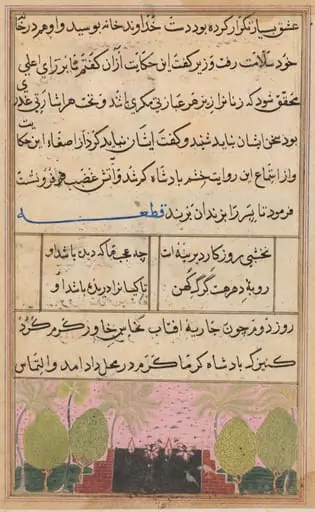 Landscape with a lotus pool, from a Tuti-nama (Tales of a Parrot), Eighth Night
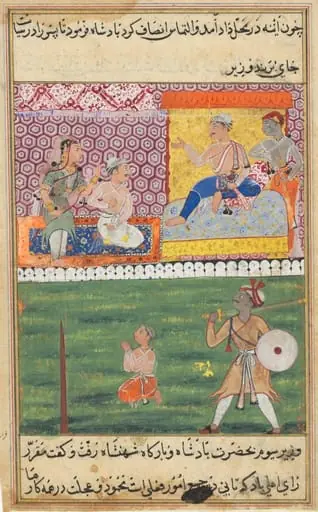 The handmaiden again appeals for justice and the prince is led to the place of execution for the third time, from a Tuti-nama (Tales of a Parrot): Eighth Night
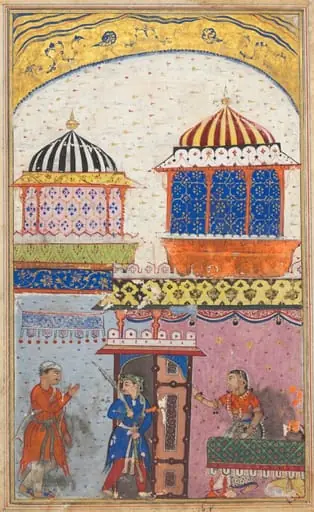 A woman asks her lover to leave her house, brandishing his sword and feigning rage in order to deceive her husband who has just arrived, from a Tuti-nama (Tales of a Parrot): Eighth Night
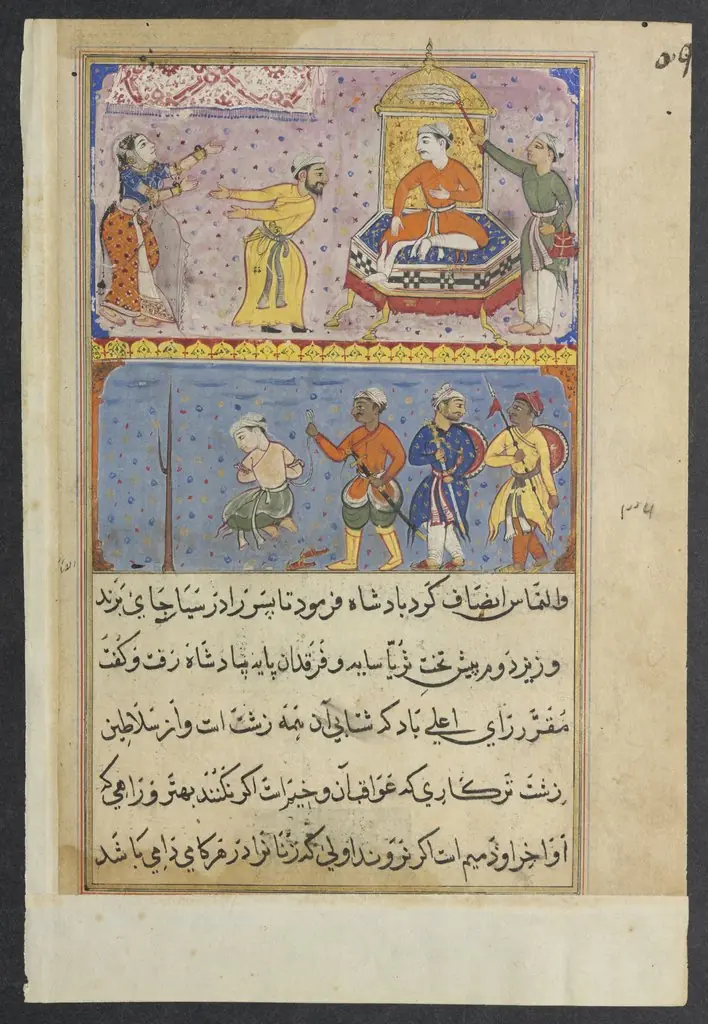 The prince, once reprieved, is returned to the palace of execution a second time on the plea of the king’s handmaiden, from a Tuti-nama (Tales of a Parrot): Eighth Night
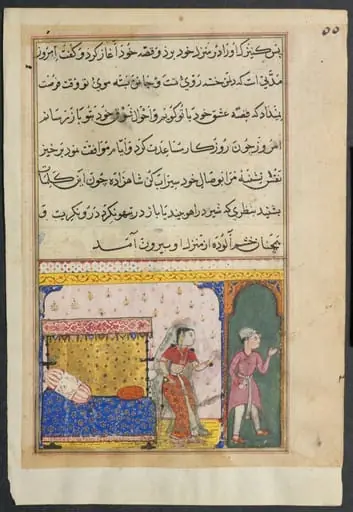 The prince rejects the amorous advances of the king’s handmaiden, from a Tuti-nama (Tales of a Parrot): Eighth Night
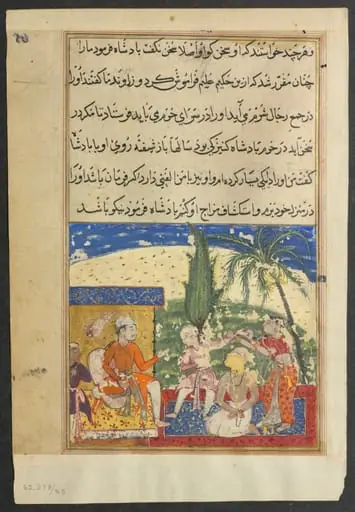 The king’s handmaiden takes the prince away to the harem, from a Tuti-nama (Tales of a Parrot): Eighth Night
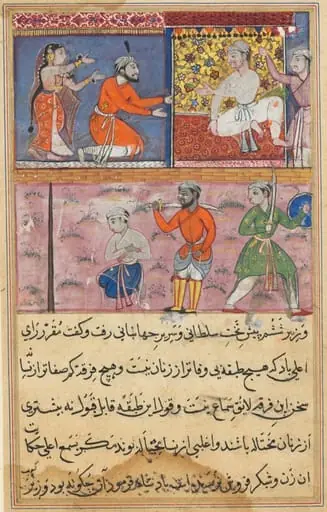 The prince sent back to the place of execution for the sixth time, from a Tuti-nama (Tales of a Parrot): Eighth Night
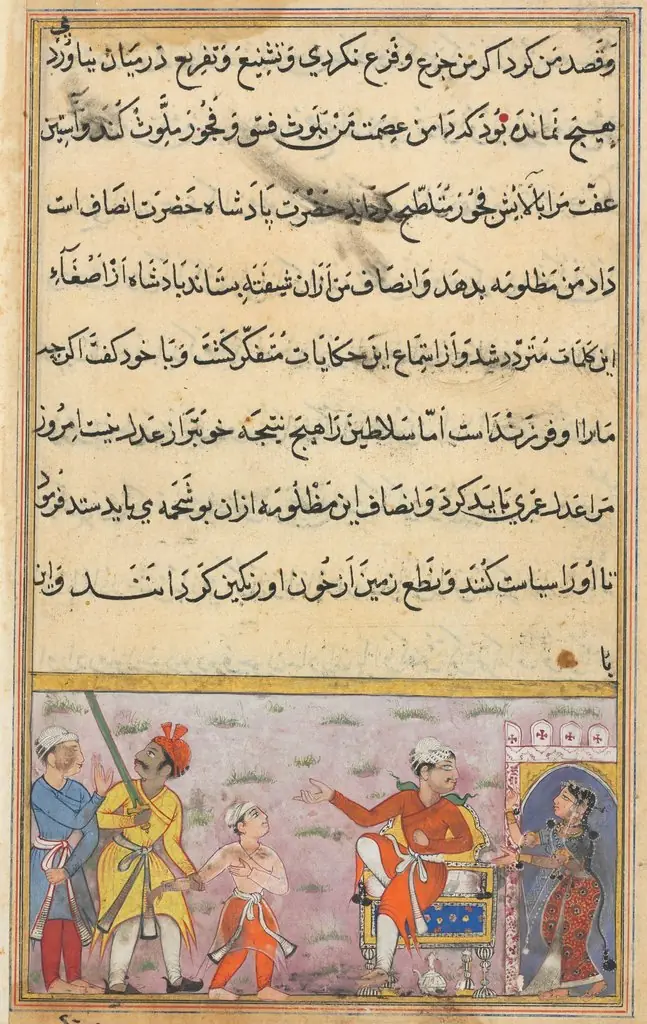 The prince being taken away for execution on the false complaint of the handmaiden, from a Tuti-nama (Tales of a Parrot): Eighth Night
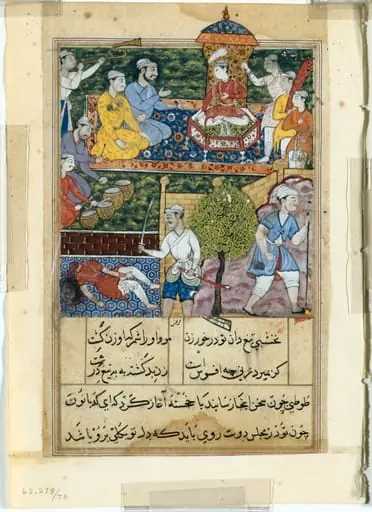 The young prince is crowned and the wicked handmaiden is executed, from a Tuti-nama (Tales of a Parrot): Eighth Night
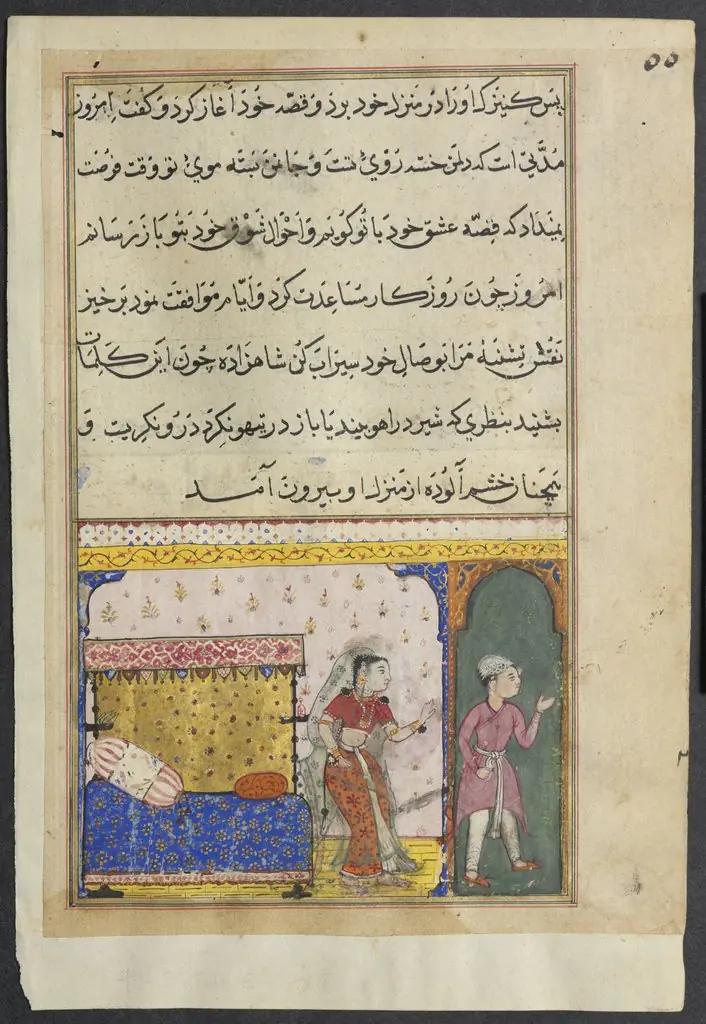 The prince rejects the amorous advances of the king’s handmaiden, from a Tuti-nama (Tales of a Parrot): Eighth Night
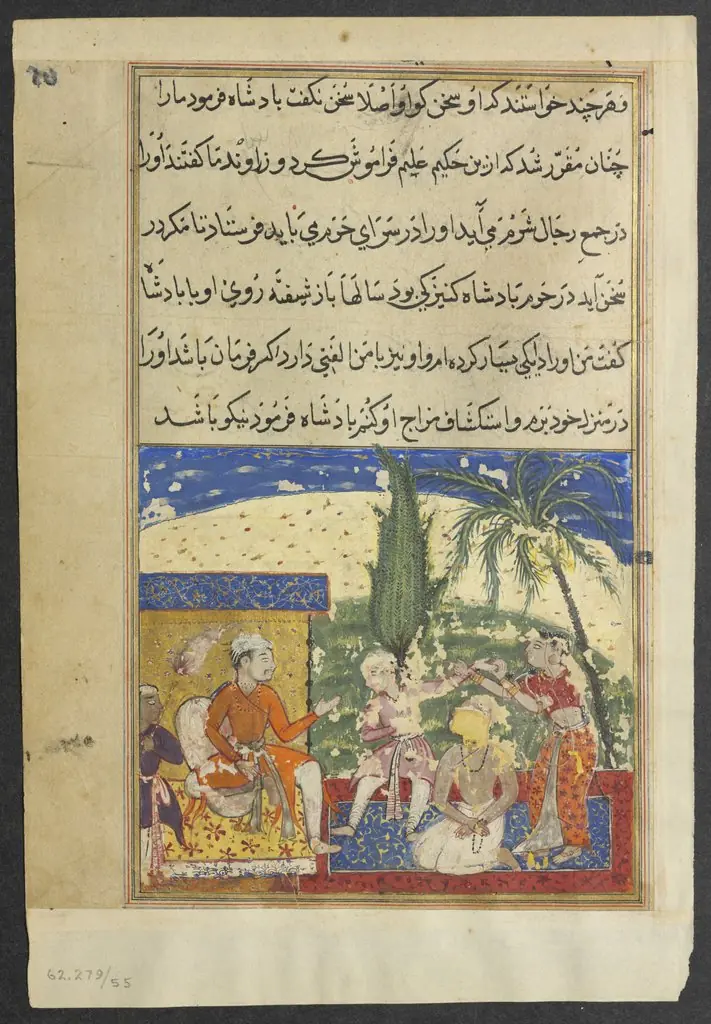 The king’s handmaiden takes the prince away to the harem, from a Tuti-nama (Tales of a Parrot): Eighth Night
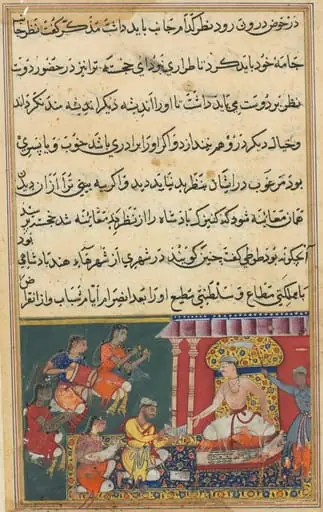 The astrologer predicts a calamity for the newly born prince in his thirteenth year, but one which he would be able to overcome, from a Tuti-nama (Tales of a Parrot): Eighth Night
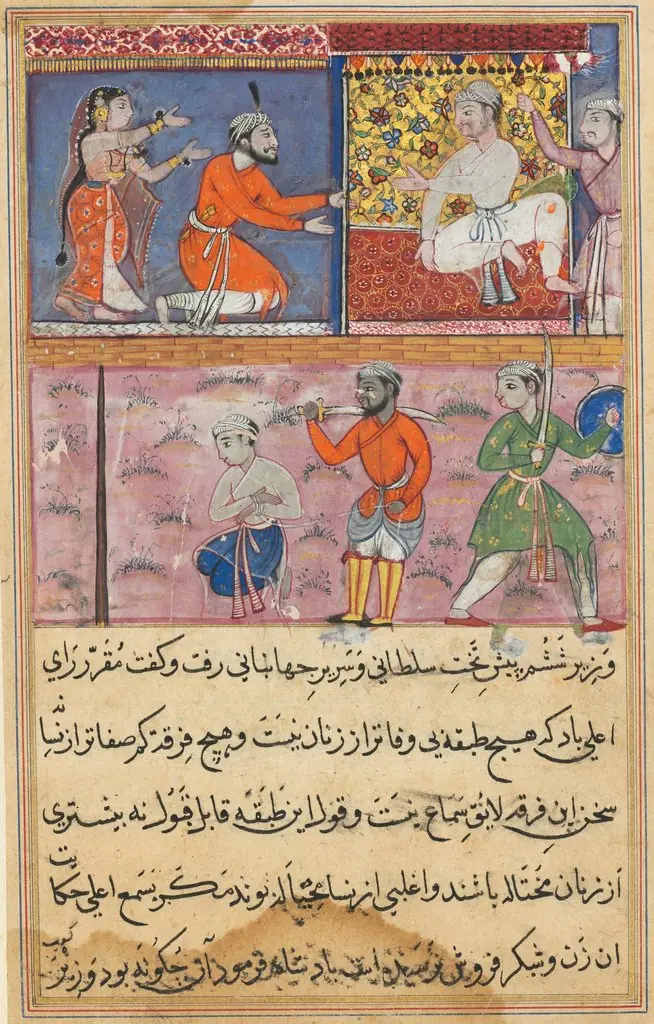 The prince sent back to the place of execution for the sixth time, from a Tuti-nama (Tales of a Parrot): Eighth Night
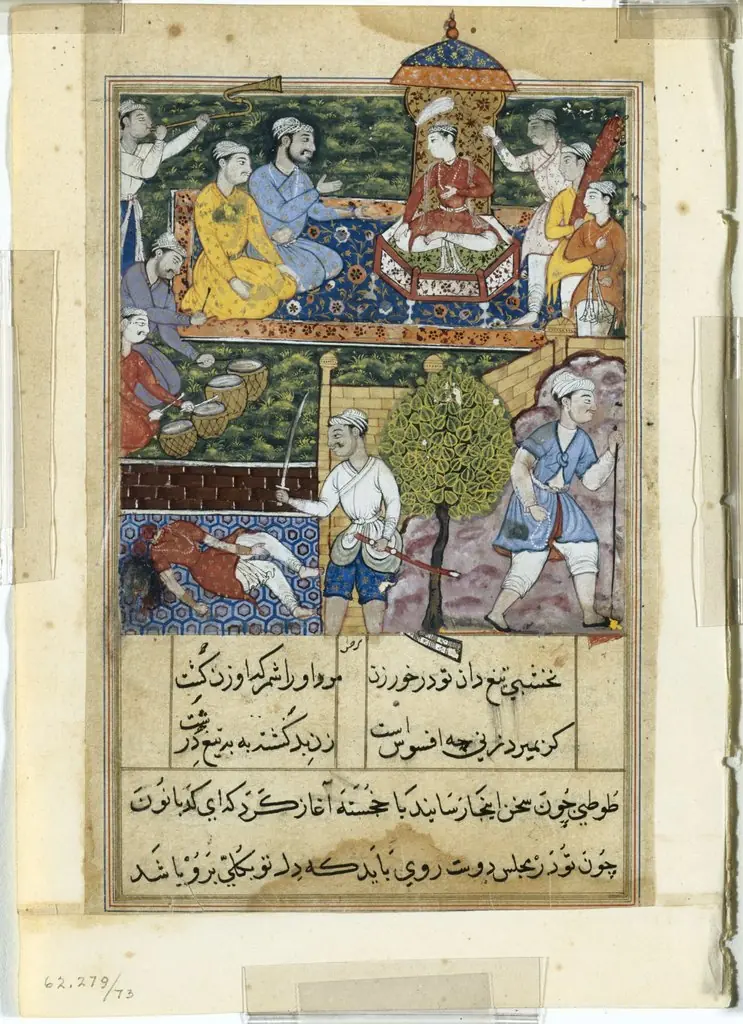 The young prince is crowned and the wicked handmaiden is executed, from a Tuti-nama (Tales of a Parrot): Eighth Night
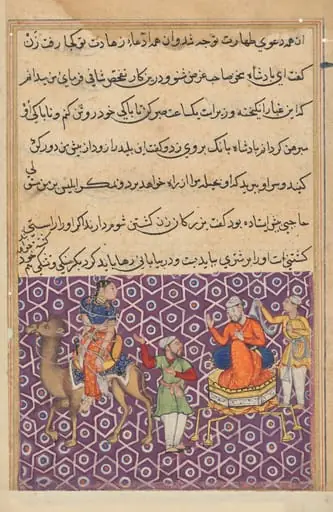 King Bahram, who has married Khassa’s daughter, has her tied to a camel to be abandoned in the desert as a result of false accusations made by Khulasa, from a Tuti-nama (Tales of a Parrot): Fifty-first Night