Artwork
The infant son of the king of Isfahan responds to music, from a Tuti-nama (Tales of a Parrot): Thirteenth Night
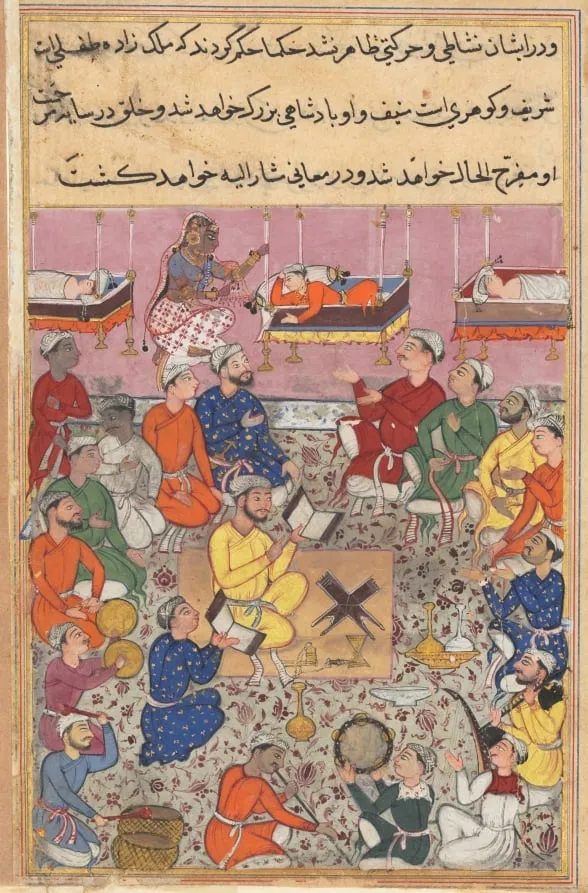
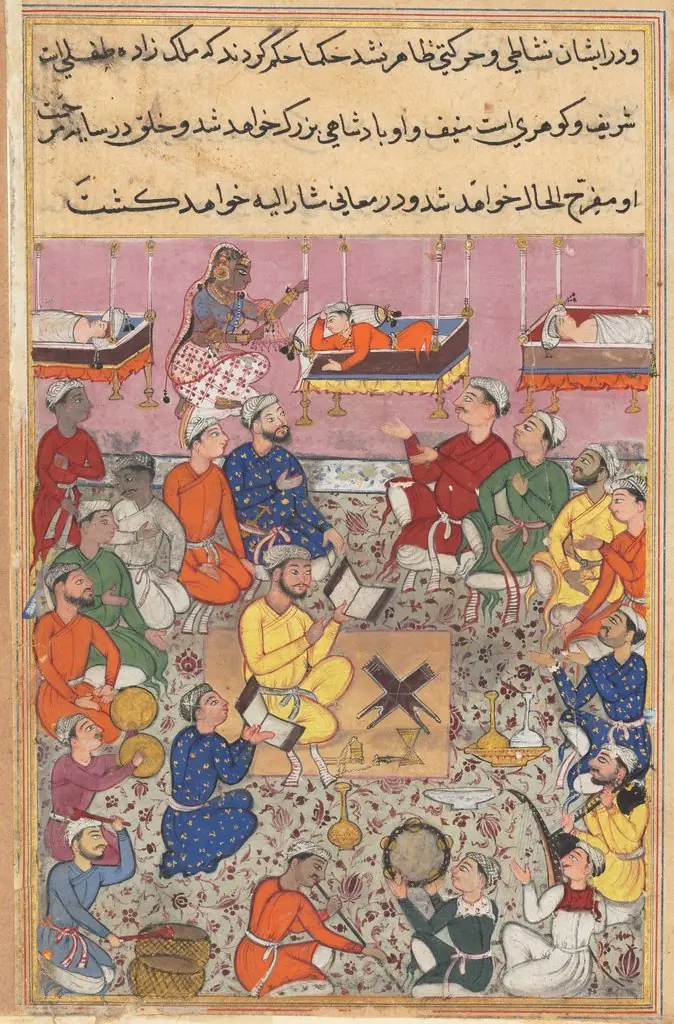
The infant son of the king of Isfahan responds to music, from a Tuti-nama (Tales of a Parrot): Thirteenth Night is an unspecified painting by the Mughal Painting artist Unknown. It dates from 1560 and is held in the collection of the Cleveland Museum of Art. This painting, 'The infant son of the king of Isfahan responds to music,' is an illustration from the Tuti-nama, a collection of tales.
About this work
Look up Mughal India, court of Akbar (reigned 1556–1605) to see more of these vivid, detailed scenes.
You see a baby prince in a golden crib, dressed in bright orange, sitting up to listen to musicians. Other children sleep around him. The room is rich with patterns—carpets, pillows, and instruments in every corner.
This painting comes from a book of parrot tales made for Emperor Akbar’s court. The artists worked in small teams, each specializing in one part—faces, fabrics, or flowers. The prince’s reaction isn’t just cute; it’s meant to show he’s destined to rule.
Look up Mughal India, court of Akbar (reigned 1556–1605) to see more of these vivid, detailed scenes.
Overview
This painting, 'The infant son of the king of Isfahan responds to music,' is an illustration from the Tuti-nama, a collection of tales. It depicts a young prince reacting to music played by a group of musicians.
Subject & Meaning
The scene shows a baby prince, dressed in orange, sitting up in a golden crib to listen to musicians, while other children around him remain asleep. The prince's response is meant to signify his noble nature and future greatness as a ruler.
Technique & Style
The painting is characterized by its rich patterns and detailed depiction of the room, including carpets, pillows, and instruments. The artists who created it worked in specialized teams, focusing on specific elements such as faces, fabrics, or flowers.
History & Provenance
The painting is part of a manuscript created for the court of Emperor Akbar, who reigned from 1556 to 1605. The Tuti-nama was produced during the Mughal period in India, known for its vivid and detailed artistic style.
Artist & collection

 Domestic Scene
 Giacomo and Cardinal Marco, investing Andrea, Abbot of San Zeno, with his Benefice
 The Nymph of Fontainebleau
 Portrait of a Woman
 Madonna and Child with Saints in the Enclosed Garden
 Venus and Minerva
 Family Group of Four on Sofa
 Wall painting from Room H of the Villa of P. Fannius Synistor at Boscoreale
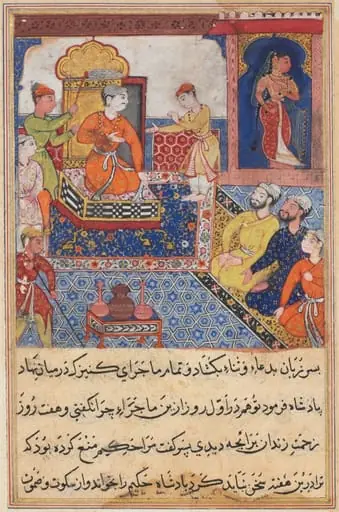 The young prince recounts his experiences to his father, the king, from a Tuti-nama (Tales of a Parrot): Eighth Night
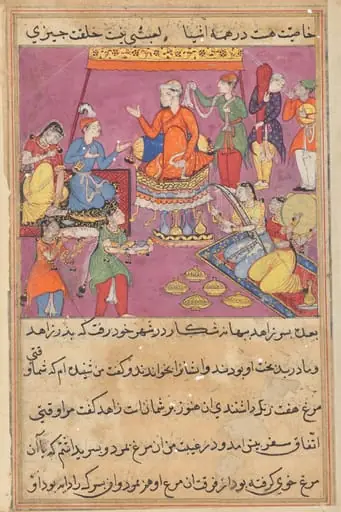 The king gives his daughter in marriage to the pious man’s son, from a Tuti-nama (Tales of a Parrot): Fifty-second Night
 The infant son of the king of Isfahan responds to music, from a Tuti-nama (Tales of a Parrot): Thirteenth Night
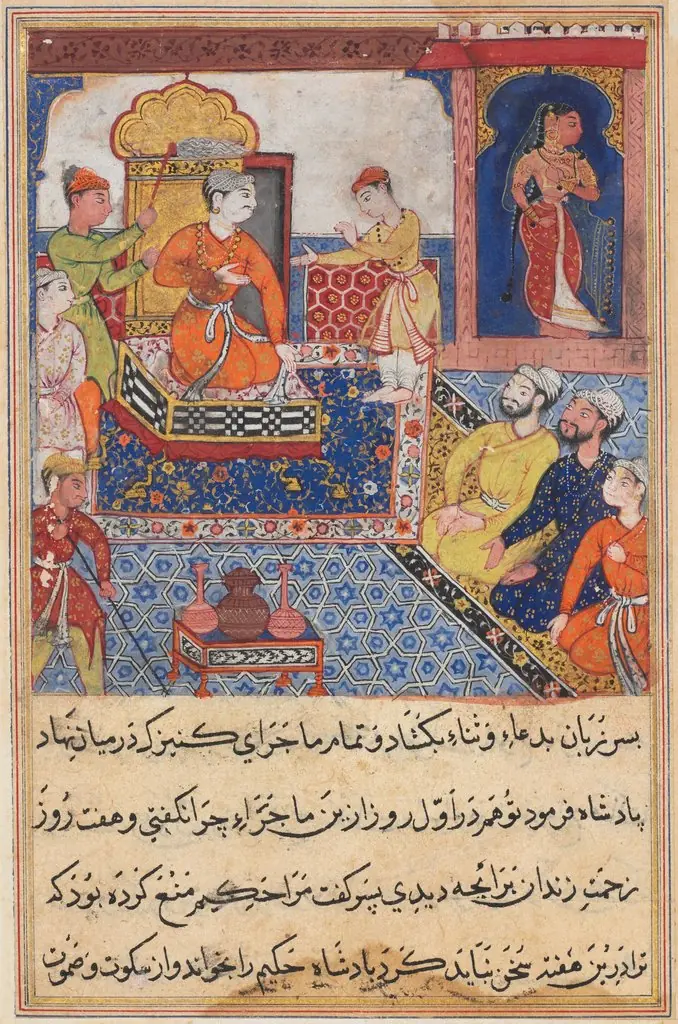 The young prince recounts his experiences to his father, the king, from a Tuti-nama (Tales of a Parrot): Eighth Night
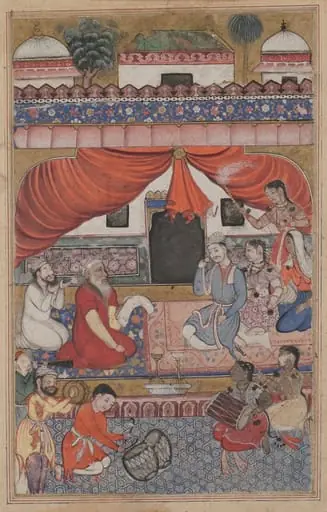 Preparation for the marriage of Mahmuda to the Young Vizier, from a Tuti-nama (Tales of a Parrot): Thirty-third Night
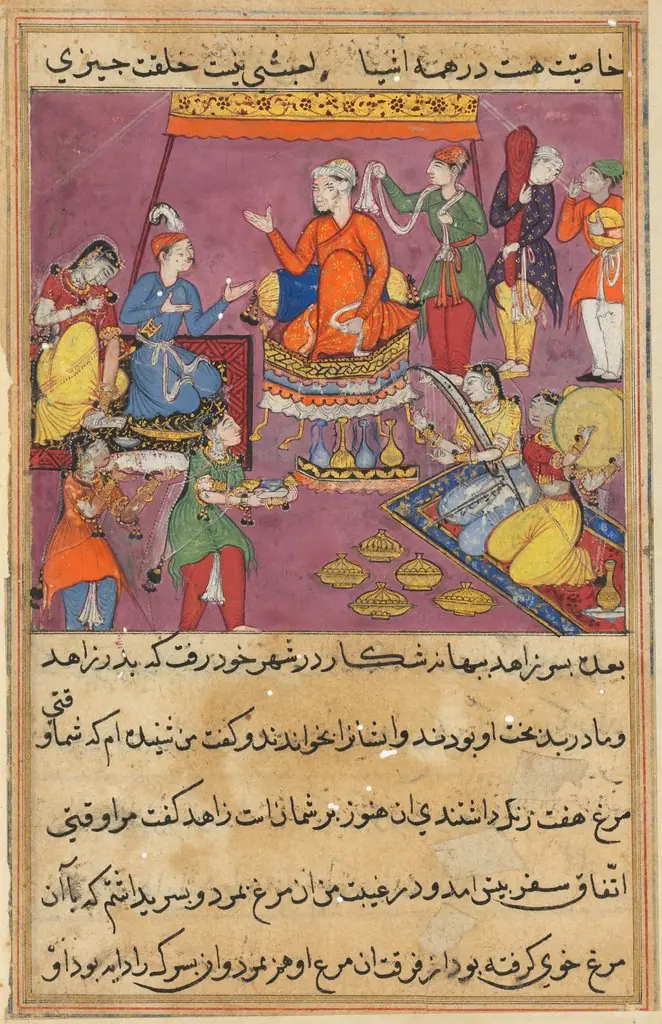 The king gives his daughter in marriage to the pious man’s son, from a Tuti-nama (Tales of a Parrot): Fifty-second Night
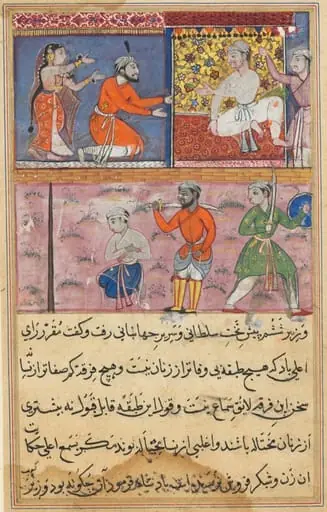 The prince sent back to the place of execution for the sixth time, from a Tuti-nama (Tales of a Parrot): Eighth Night
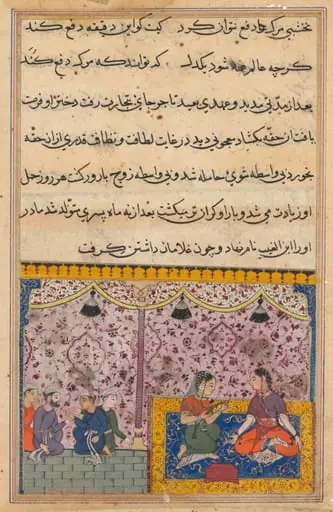 The merchant’s daughter gives birth to a son as a result of eating out of the box. The clever child recognizes the false gems from true, from a Tuti-nama (Tales of a Parrot): Twenty-third Night
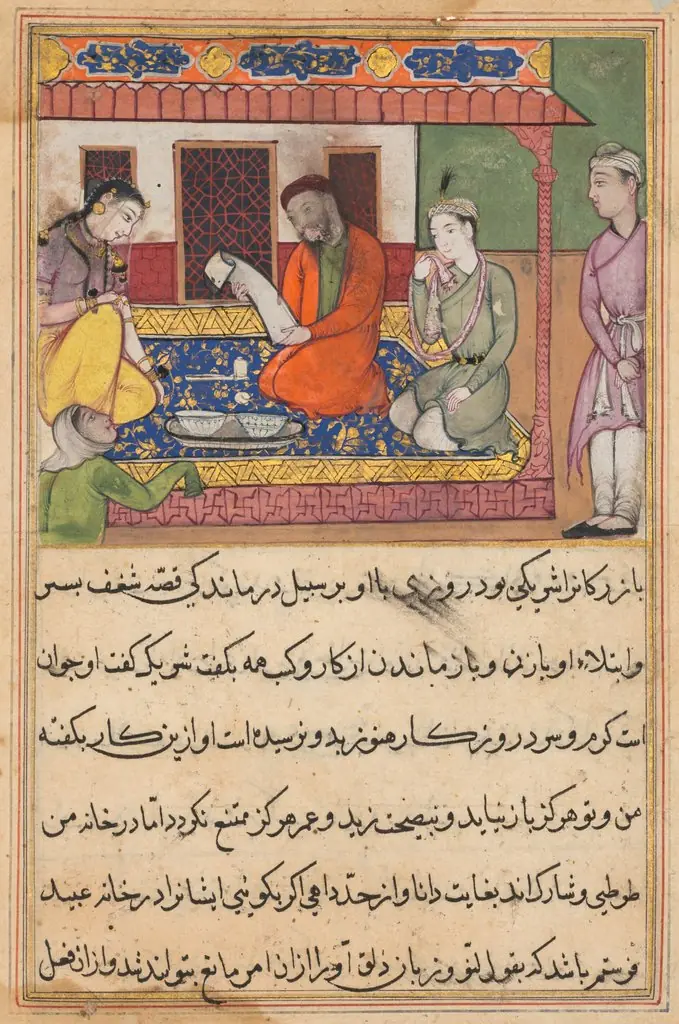 The marriage of ‘Ubaid, son of a merchant of Tirmiz, from a Tuti-nama (Tales of a Parrot): Forty-second Night