Artwork
The prince sent back to the place of execution for the sixth time, from a Tuti-nama (Tales of a Parrot): Eighth Night
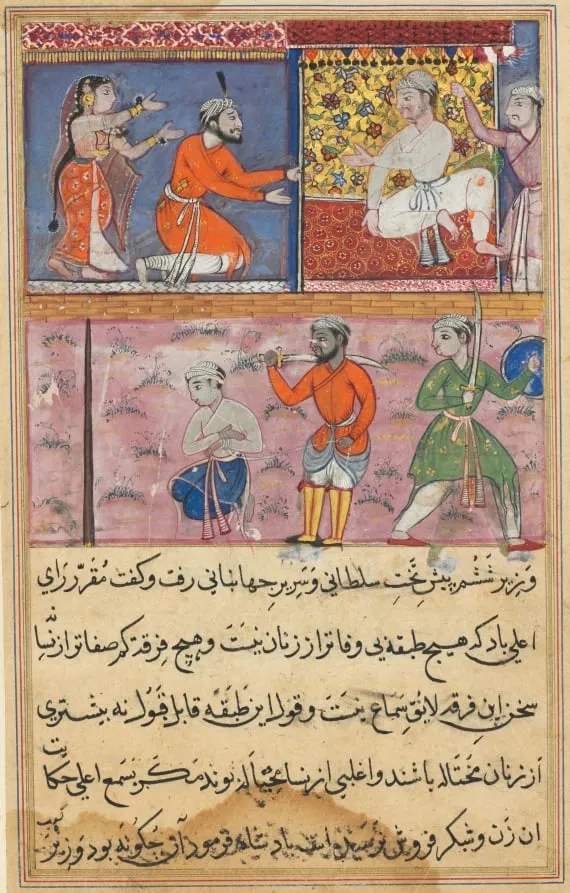
The prince sent back to the place of execution for the sixth time, from a Tuti-nama (Tales of a Parrot): Eighth Night is an unspecified painting by the Mughal Painting artist Suraju. It dates from 1560 and is held in the collection of the Cleveland Museum of Art. This painting illustrates a scene from the Tuti-nama, a collection of tales about a parrot.
About this work
You see a king on a throne, a handmaiden pleading, and a bound prince kneeling below, about to be executed—again.
You see a king on a throne, a handmaiden pleading, and a bound prince kneeling below, about to be executed—again.
This is the sixth time the king has ordered the prince’s death in this story. The artist shows every try in one frame: the handmaiden’s lies, the vizier’s delay, the prince’s quiet fear. It’s like a comic strip from 1560, packed into one small painting.
To see more stories like this, look up Mughal India, court of Akbar (reigned 1556–1605).
Overview
This painting illustrates a scene from the Tuti-nama, a collection of tales about a parrot. It depicts a dramatic moment from the Eighth Night's story, where a prince is about to be executed for the sixth time.
Subject & Meaning
The scene shows a king on a throne, a deceitful handmaiden pleading with him, and the prince kneeling below with bound hands, awaiting execution. The king's vizier, dressed in orange, attempts to stall the execution.
Technique & Style
The artist has condensed multiple elements of the story into a single frame, showcasing the handmaiden's deceit, the vizier's intervention, and the prince's fear. This composition is characteristic of Mughal Indian art from the court of Akbar.
Context
The painting is associated with the Mughal Indian court of Akbar, who reigned from 1556 to 1605. It reflects the artistic style and narrative techniques prevalent during his rule.
Artist & collection

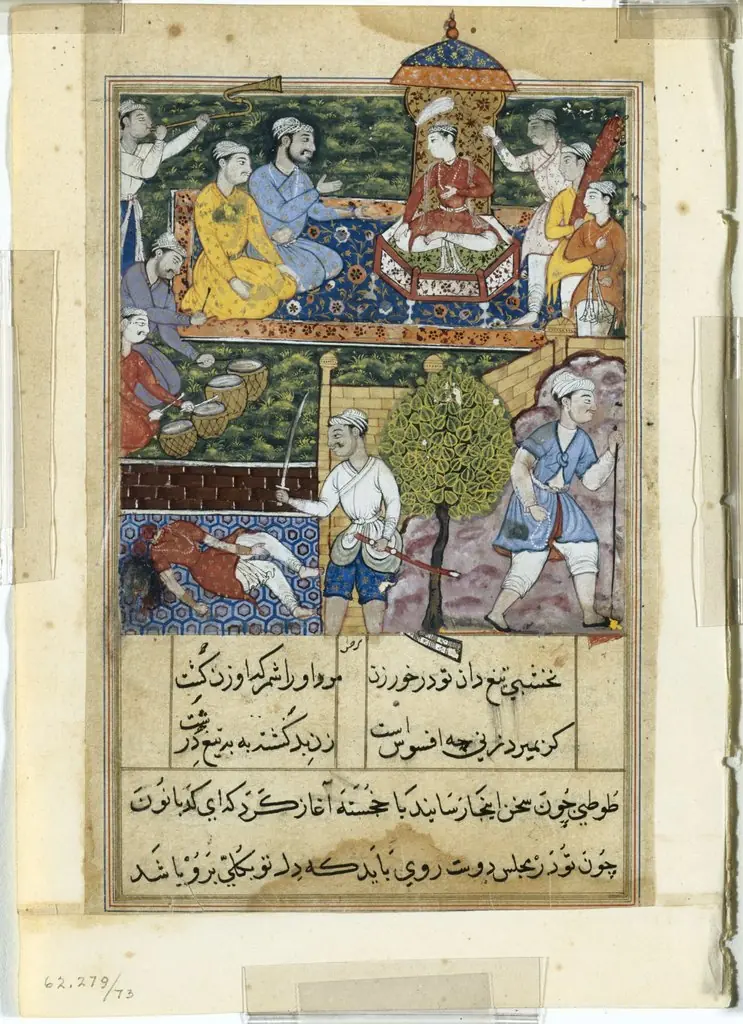 The young prince is crowned and the wicked handmaiden is executed, from a Tuti-nama (Tales of a Parrot): Eighth Night
 The young prince is crowned and the wicked handmaiden is executed, from a Tuti-nama (Tales of a Parrot): Eighth Night
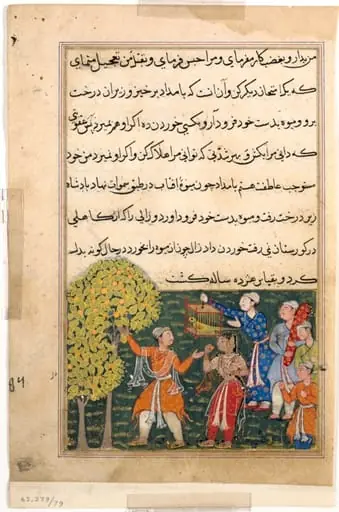 The king plucks fruit from the Tree of Life with his own hands and feeds it to a lady, from a Tuti-nama (Tales of a Parrot): Ninth Night
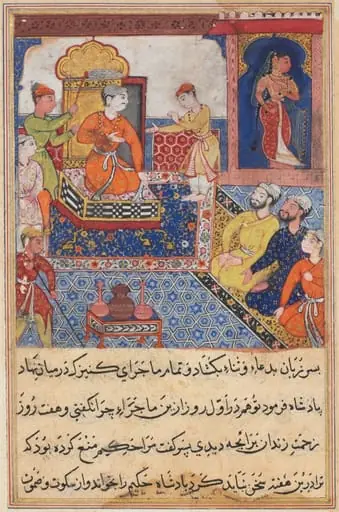 The young prince recounts his experiences to his father, the king, from a Tuti-nama (Tales of a Parrot): Eighth Night
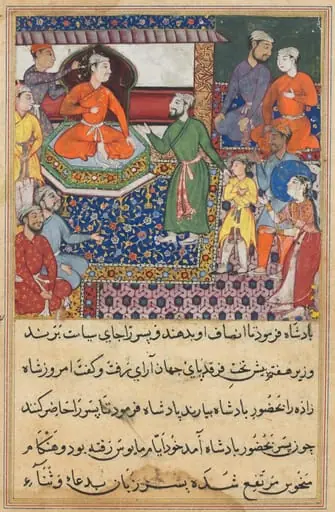 The handmaiden again pleads for the death of the prince, from a Tuti-nama (Tales of a Parrot): Eighth Night
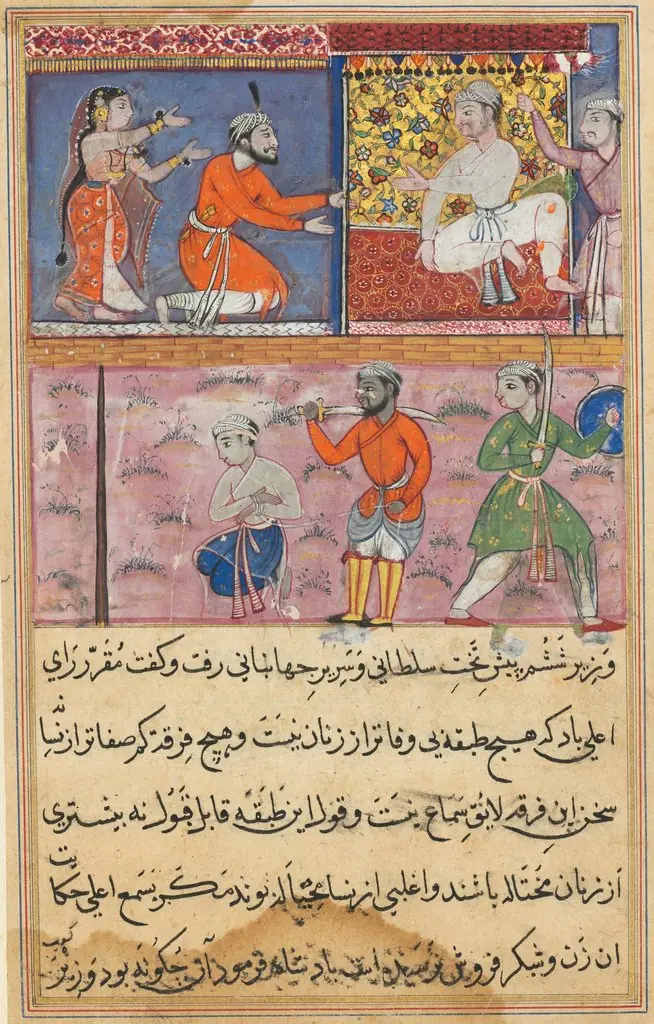 The prince sent back to the place of execution for the sixth time, from a Tuti-nama (Tales of a Parrot): Eighth Night
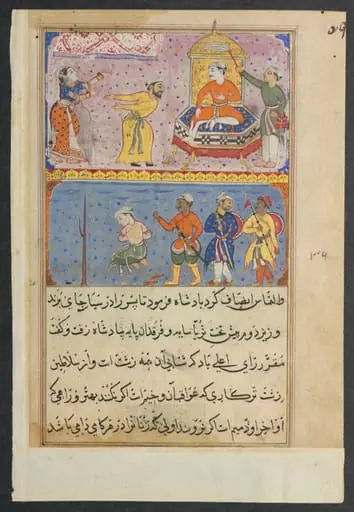 The prince, once reprieved, is returned to the palace of execution a second time on the plea of the king’s handmaiden, from a Tuti-nama (Tales of a Parrot): Eighth Night
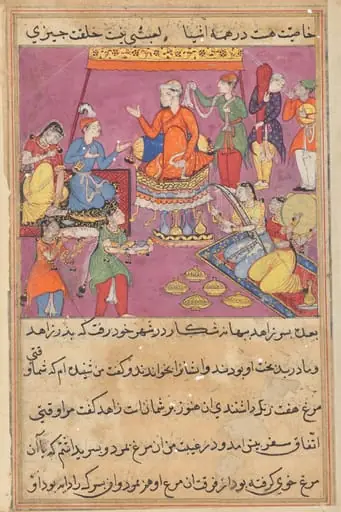 The king gives his daughter in marriage to the pious man’s son, from a Tuti-nama (Tales of a Parrot): Fifty-second Night
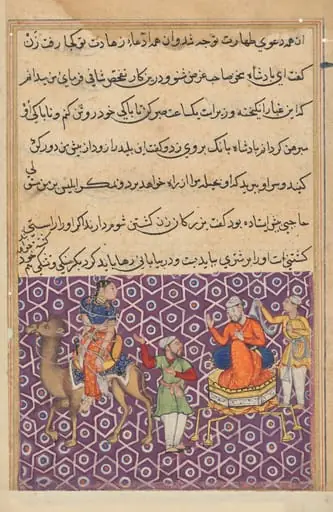 King Bahram, who has married Khassa’s daughter, has her tied to a camel to be abandoned in the desert as a result of false accusations made by Khulasa, from a Tuti-nama (Tales of a Parrot): Fifty-first Night
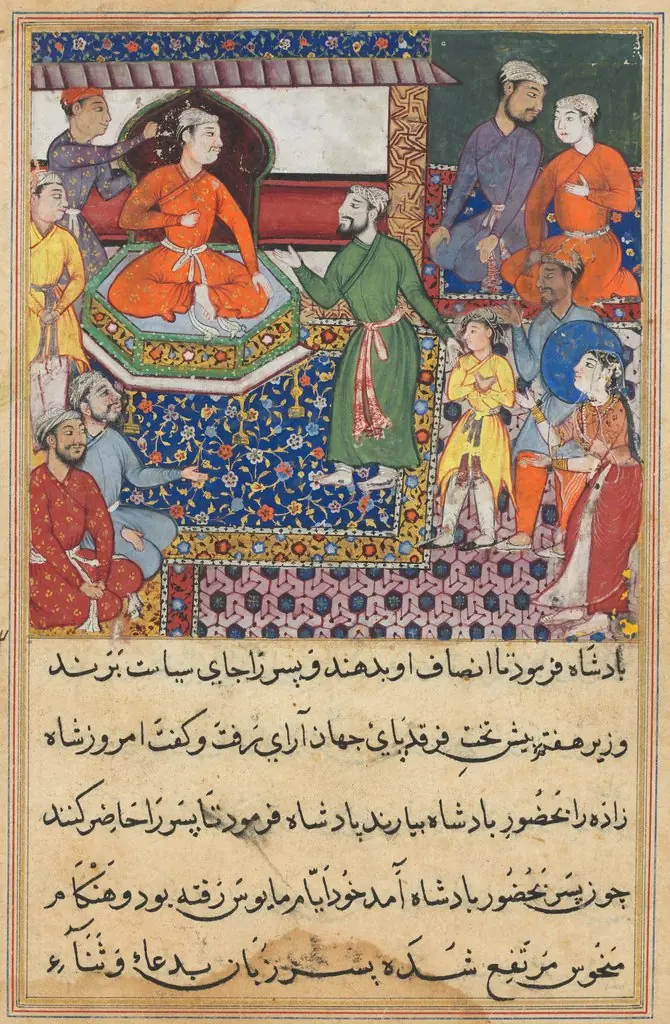 The handmaiden again pleads for the death of the prince, from a Tuti-nama (Tales of a Parrot): Eighth Night