Artwork
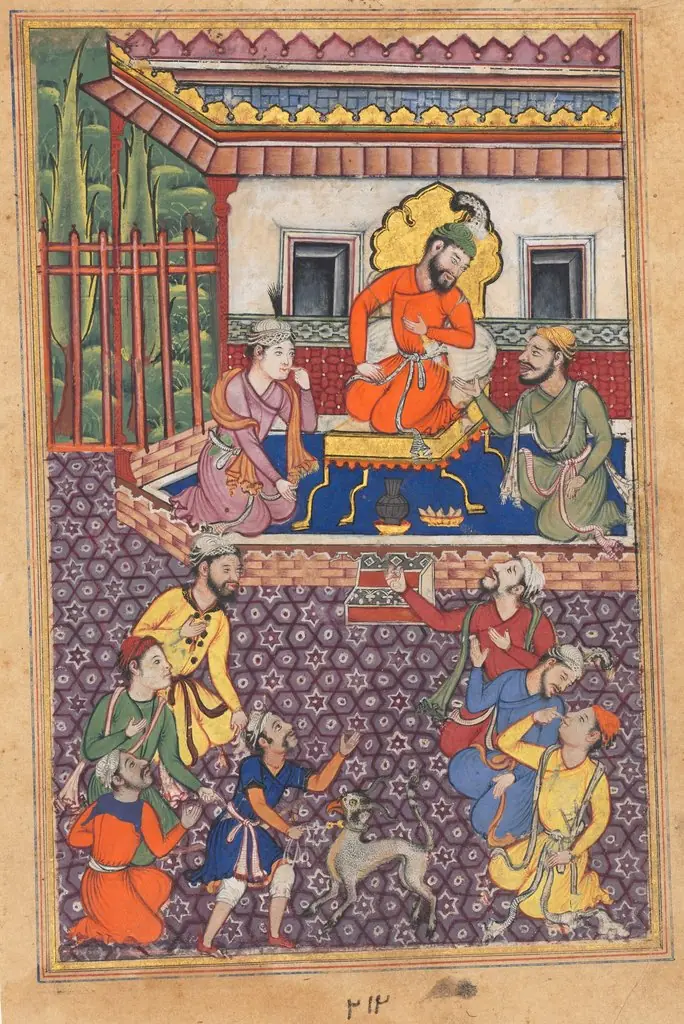
The king gives his daughter in marriage to the pious man’s son, from a Tuti-nama (Tales of a Parrot): Fifty-second Night
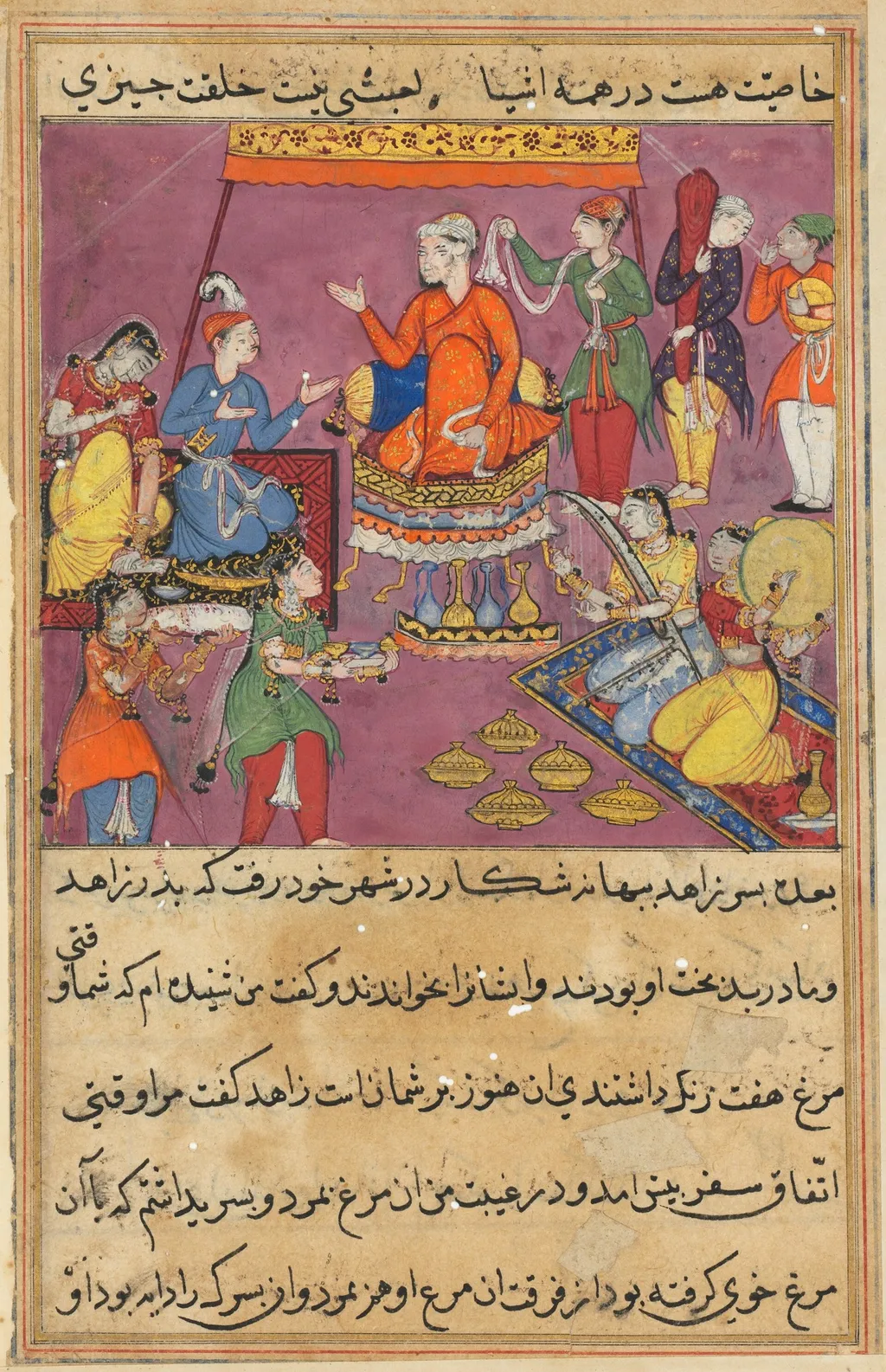
The king gives his daughter in marriage to the pious man’s son, from a Tuti-nama (Tales of a Parrot): Fifty-second Night is an unspecified painting. It dates from 1560 and is held in the collection of the Cleveland Museum of Art.
About this work
Overview
The composition is framed by a pink backdrop and a bright canopy, conveying a festive atmosphere through vivid hues and meticulous miniature detailing.
The work illustrates a royal wedding ceremony drawn from the fifty‑second night of the Tuti‑nama, a collection of Persian‑influenced Indian tales. A king seated on an elevated platform presents his daughter to the son of a devout man, surrounded by courtiers and attendants. The composition is framed by a pink backdrop and a bright canopy, conveying a festive atmosphere through vivid hues and meticulous miniature detailing.
Subject & Meaning
The narrative celebrates the union of two families of contrasting status: a sovereign lineage and a pious household, reflecting themes of virtue rewarded and social harmony common in the Tuti‑nama stories. The bride’s and groom’s blue and green garments signify youth and fertility, while the king’s orange robe underscores his authority and generosity in sanctioning the marriage.
Technique & Style
Executed in the Indian miniature tradition, the painting employs fine brushwork to render delicate facial expressions, intricate textiles, and ornamental architecture. A limited palette of pink, orange, yellow, blue and green creates visual contrast, while the flattened perspective and decorative borders emphasize narrative clarity over spatial realism, characteristic of courtly manuscript illustration.
Context
Created for a manuscript of the Tuti‑nama, the piece likely originated in a Mughal or regional Indian workshop during the 16th–18th centuries, when Persian literary motifs were adapted to local artistic conventions. Such miniatures were intended for elite patrons, serving both as literary accompaniment and as objects of visual prestige within royal libraries.
Artist & collection

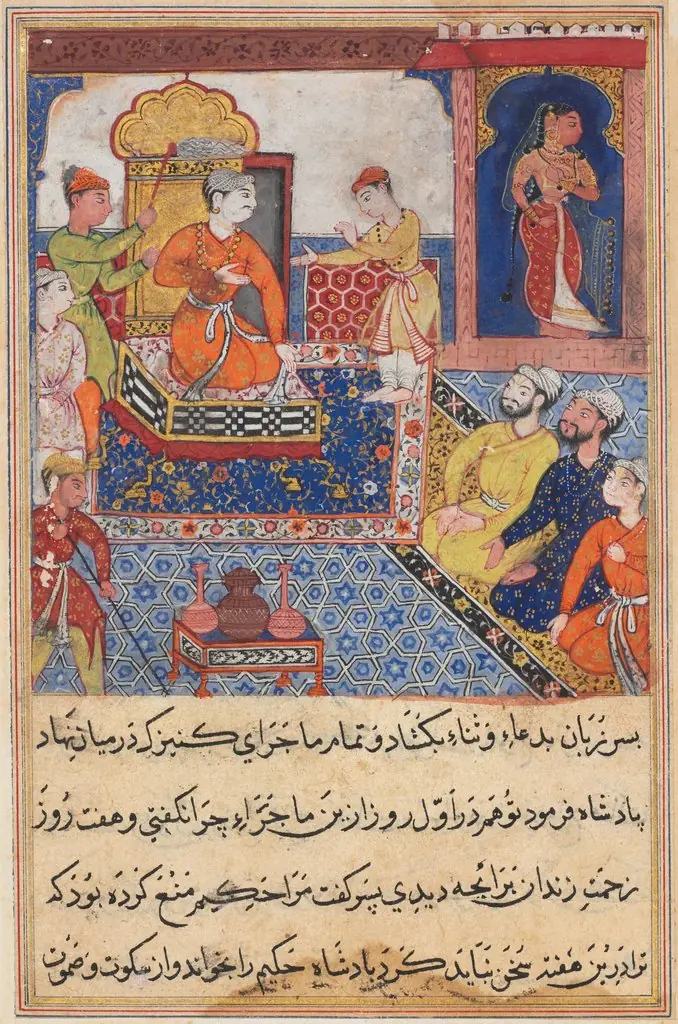 The young prince recounts his experiences to his father, the king, from a Tuti-nama (Tales of a Parrot): Eighth Night
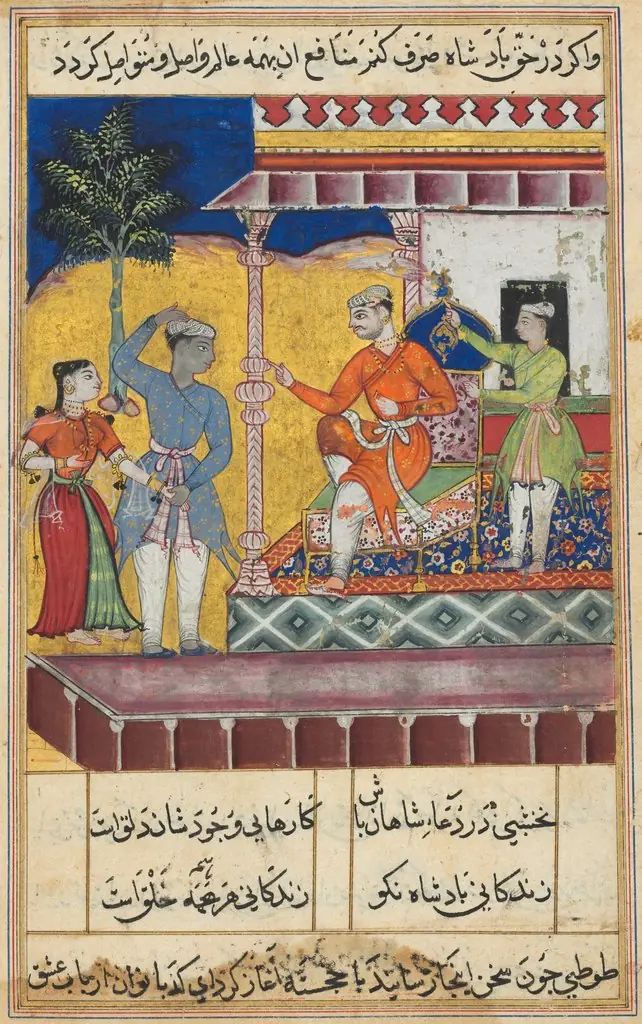 The rejuvenated old man and the daughter of the king of the jinns take leave of the King of Kings, from a Tuti-nama (Tales of a Parrot): Seventh Night
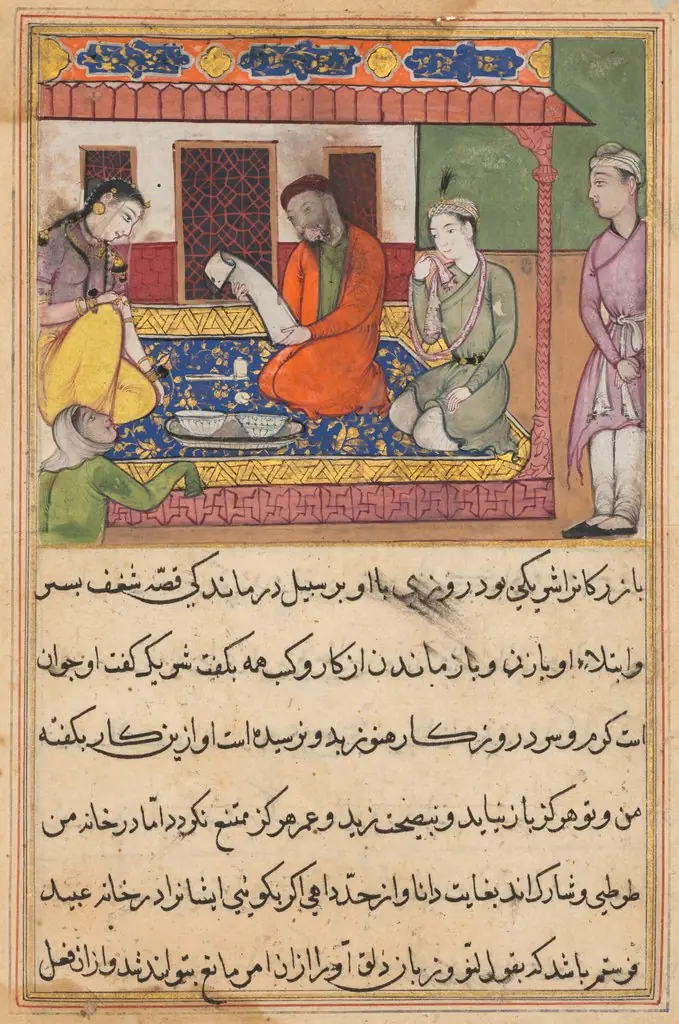 The marriage of ‘Ubaid, son of a merchant of Tirmiz, from a Tuti-nama (Tales of a Parrot): Forty-second Night
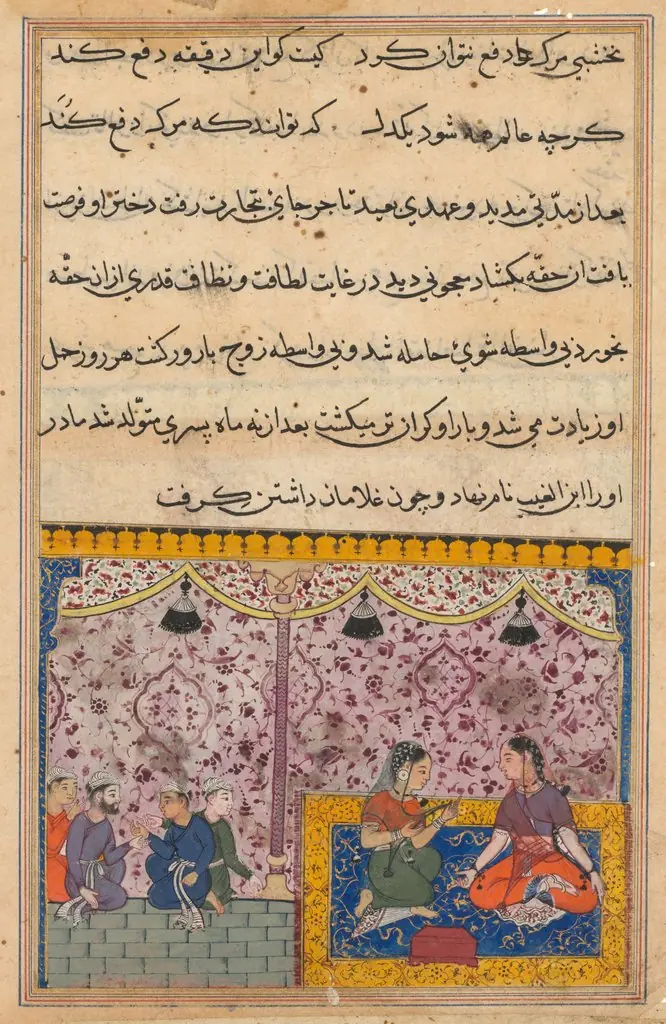 The merchant’s daughter gives birth to a son as a result of eating out of the box. The clever child recognizes the false gems from true, from a Tuti-nama (Tales of a Parrot): Twenty-third Night
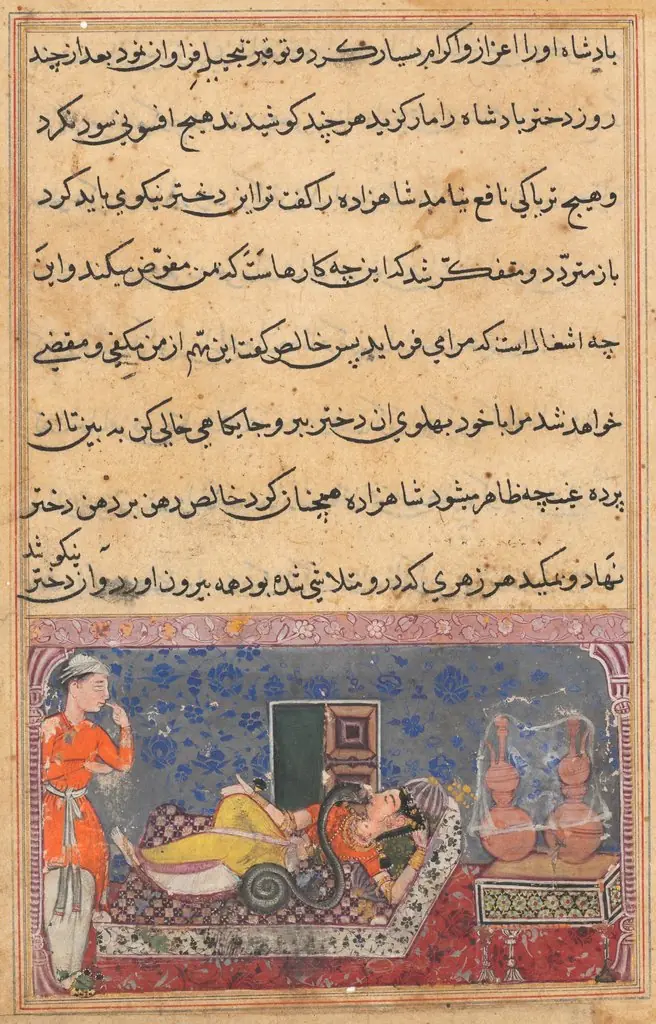 Khalis repays the prince for his kindness by changing into a snake and sucking the poison from the king’s daughter, from a Tuti-nama (Tales of a Parrot): Eighteenth Night
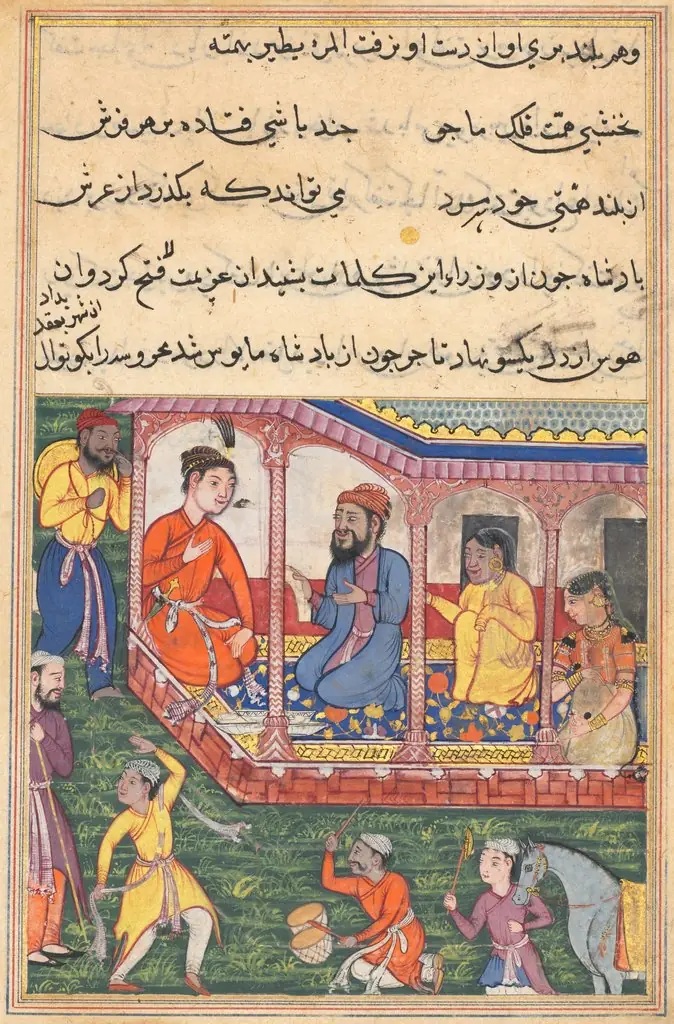 Mahrusa’s marriage to the prefect of the city, from a Tuti-nama (Tales of a Parrot): Thirty-sixth Night
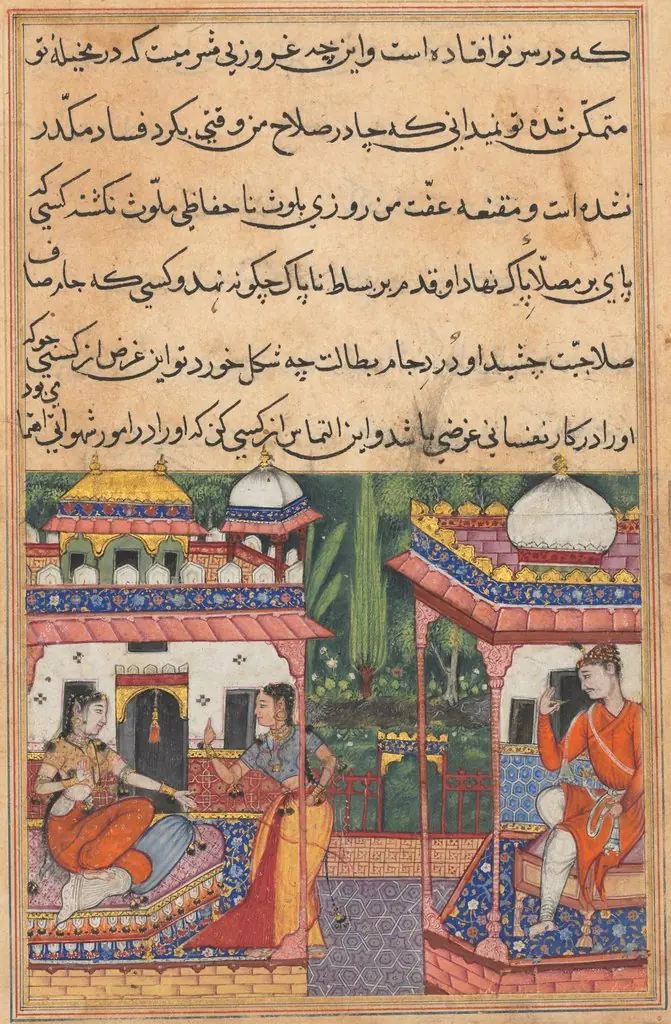 Kaiwan sends a message of love to Khurshid, wife of his brother Utarid who is away on a journey, from a Tuti-nama (Tales of a Parrot): Thirty-second Night
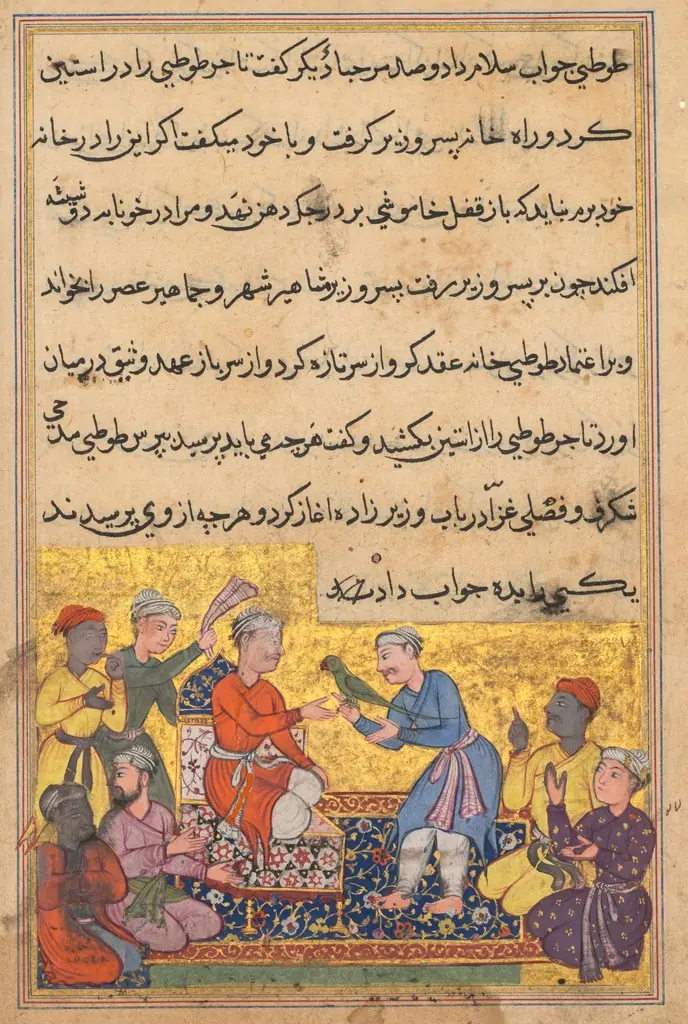 The magic parrot of the merchant talks to the vizier’s son, from a Tuti-nama (Tales of a Parrot): Tenth Night
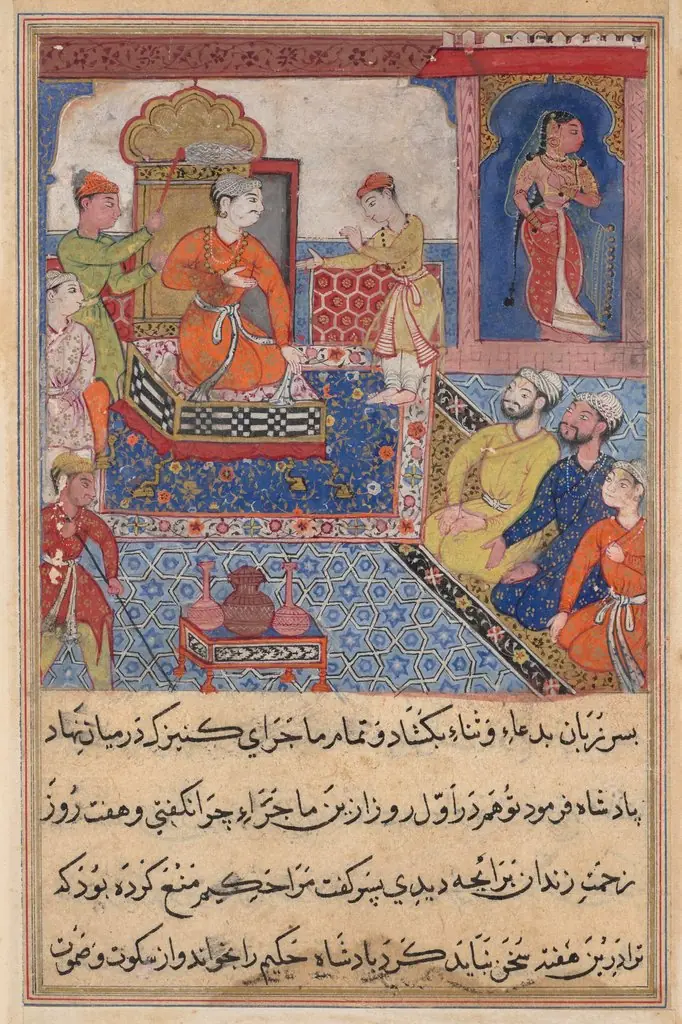 Page from Tales of a Parrot (Tuti-nama): text page
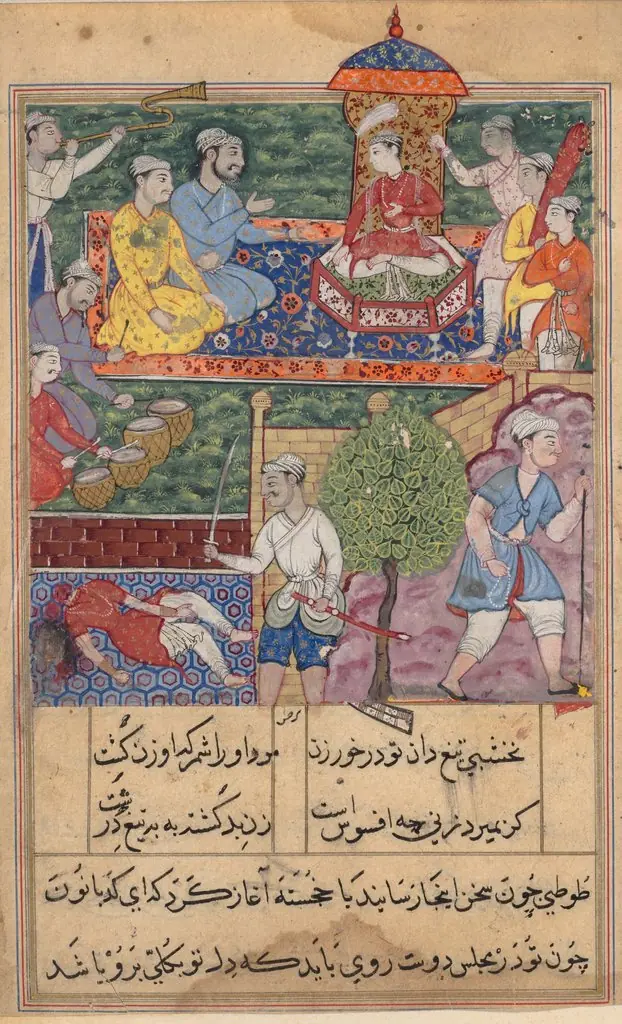 Page from Tales of a Parrot (Tuti-nama): text page
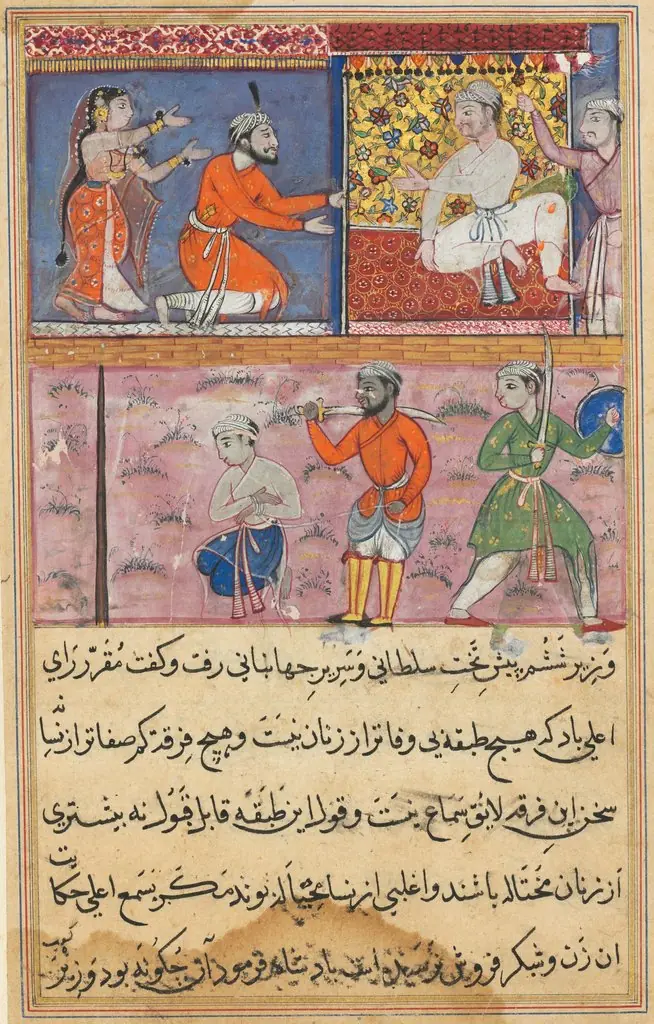 The prince sent back to the place of execution for the sixth time, from a Tuti-nama (Tales of a Parrot): Eighth Night
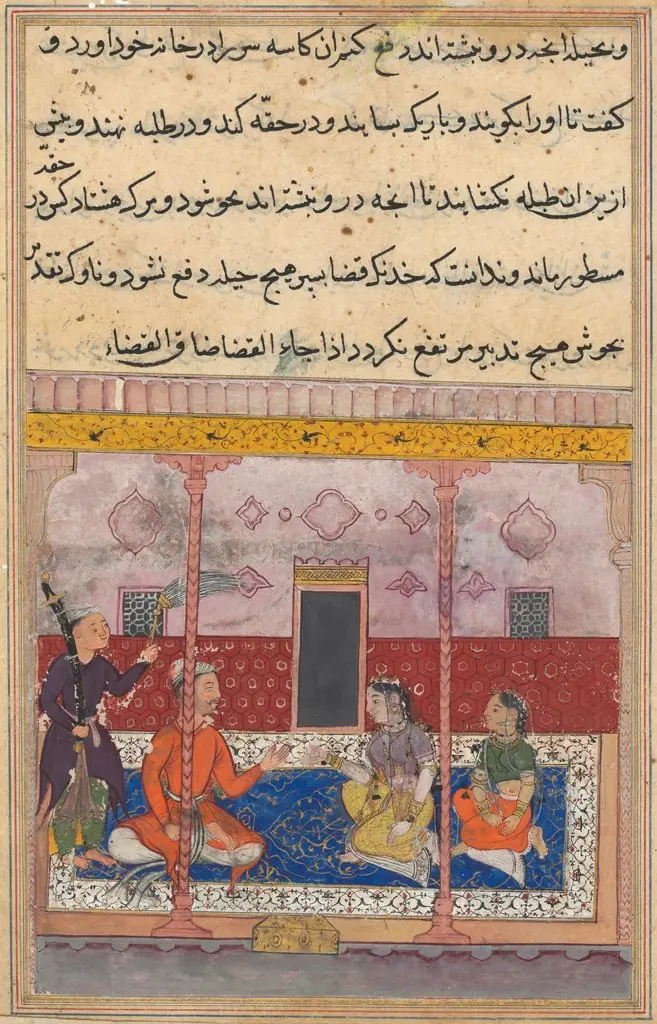 The merchant has the hateful skull ground and put into a box, from a Tuti-nama (Tales of a Parrot): Twenty-third Night
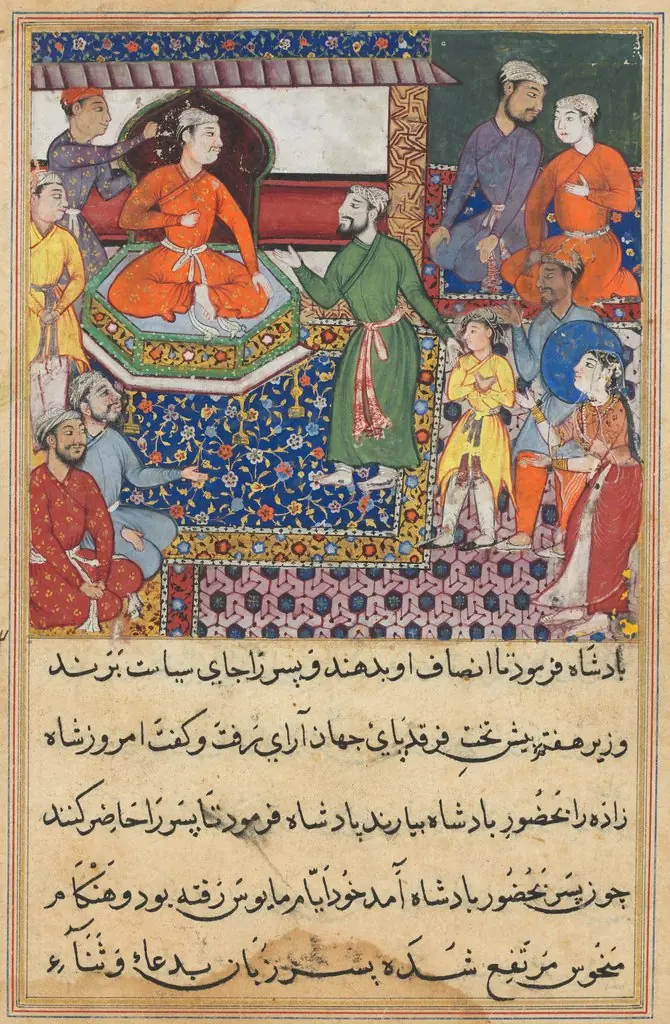 The handmaiden again pleads for the death of the prince, from a Tuti-nama (Tales of a Parrot): Eighth Night
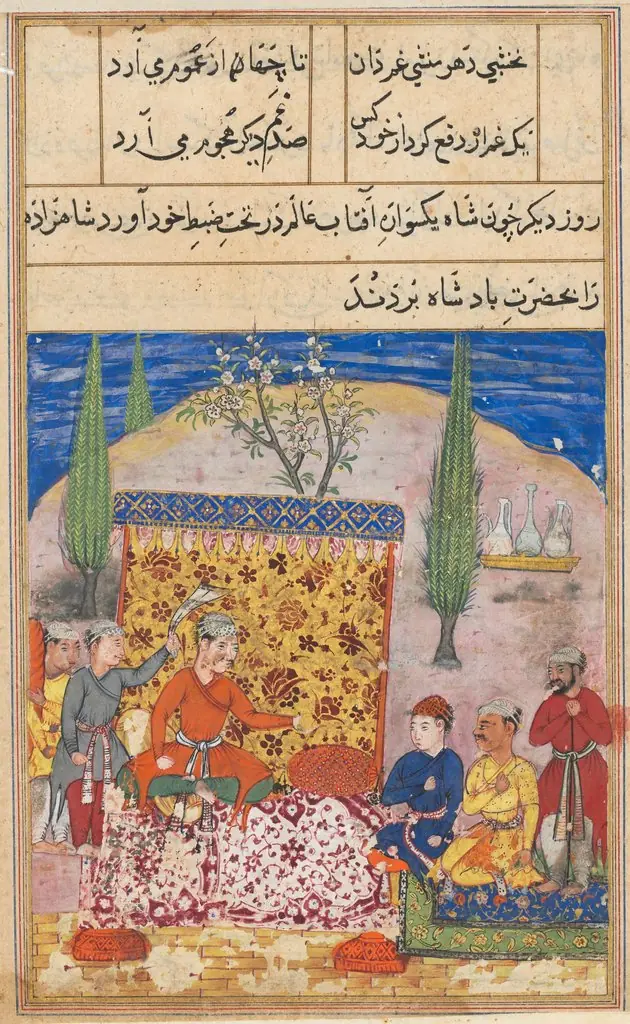 The young prince is presented to the king, his father, by his teacher, but refuses to speak, from a Tuti-nama (Tales of a Parrot): Eighth Night
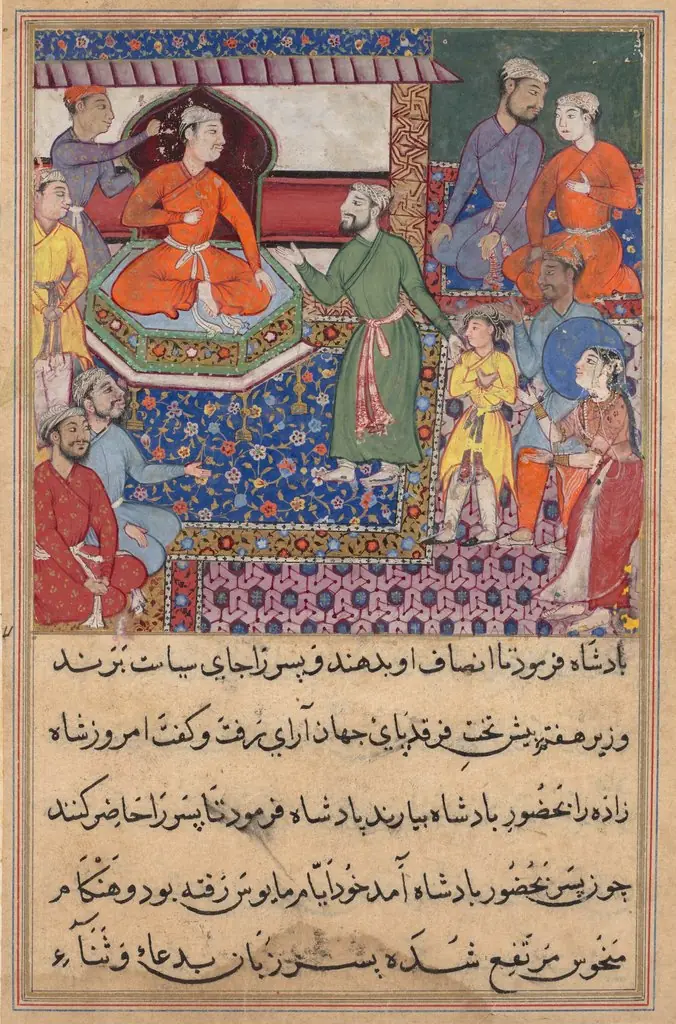 Page from Tales of a Parrot (Tuti-nama): text page
 The court of the Raja of Ujjain, from a Tuti-nama (Tales of a Parrot): Forty-sixth Night