Artwork
The young prince recounts his experiences to his father, the king, from a Tuti-nama (Tales of a Parrot): Eighth Night
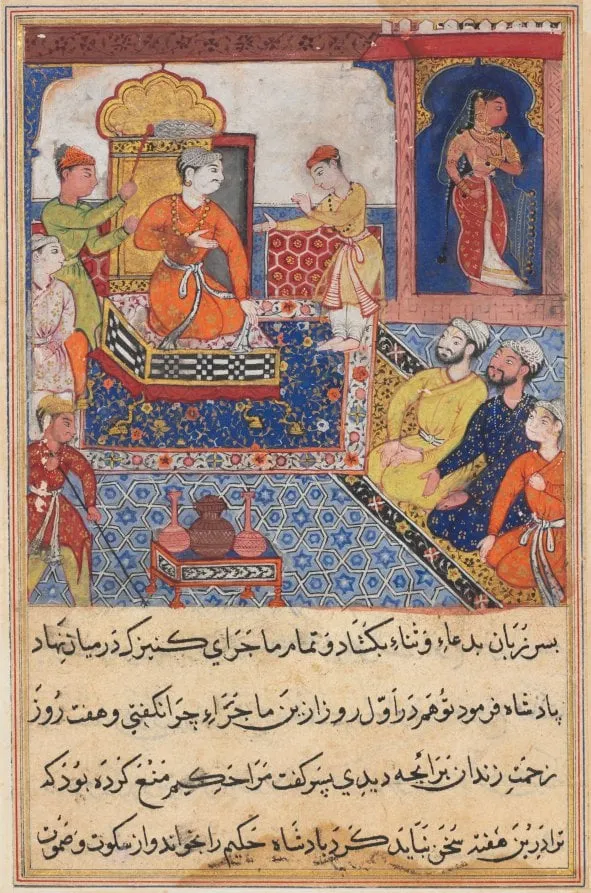
The young prince recounts his experiences to his father, the king, from a Tuti-nama (Tales of a Parrot): Eighth Night is an unspecified painting by the Mughal Painting artist Suraju. It dates from 1560 and is held in the collection of the Cleveland Museum of Art.
About this work
The prince has just broken a week-long vow of silence to clear his name—notice how everyone leans in, except the accuser, who stands apart.
You see a prince kneeling before a king on a golden throne, while courtiers watch and a woman in the corner glares.
This painting comes from a book of parrot tales told to a queen to pass the time. The prince has just broken a week-long vow of silence to clear his name—notice how everyone leans in, except the accuser, who stands apart.
Look up more paintings of mughal india, court of akbar (reigned 1556–1605) to see how royal stories were told in miniature.
Overview
This painting, 'The young prince recounts his experiences to his father, the king,' is an illustration from the Tuti-nama, a collection of tales about a parrot. It depicts a scene from the Eighth Night, where a prince breaks his silence to defend himself against false accusations.
Subject & Meaning
The scene shows a prince kneeling before his father, the enthroned king, as courtiers observe. The prince's accuser, a handmaiden, stands isolated in the upper right corner. The composition conveys the tension between the prince's protestation of innocence and the handmaiden's deceit.
Technique & Style
Executed in the style of Mughal miniature painting, the work features intricate detail and a rich color palette. The golden throne and ornate setting reflect the artistic conventions of the court of Akbar, who reigned from 1556 to 1605.
Context
The Tuti-nama was a popular literary work in Mughal India, comprising a series of stories told by a parrot to a queen. This painting is part of a larger tradition of illustrating royal narratives in miniature form.
Artist & collection

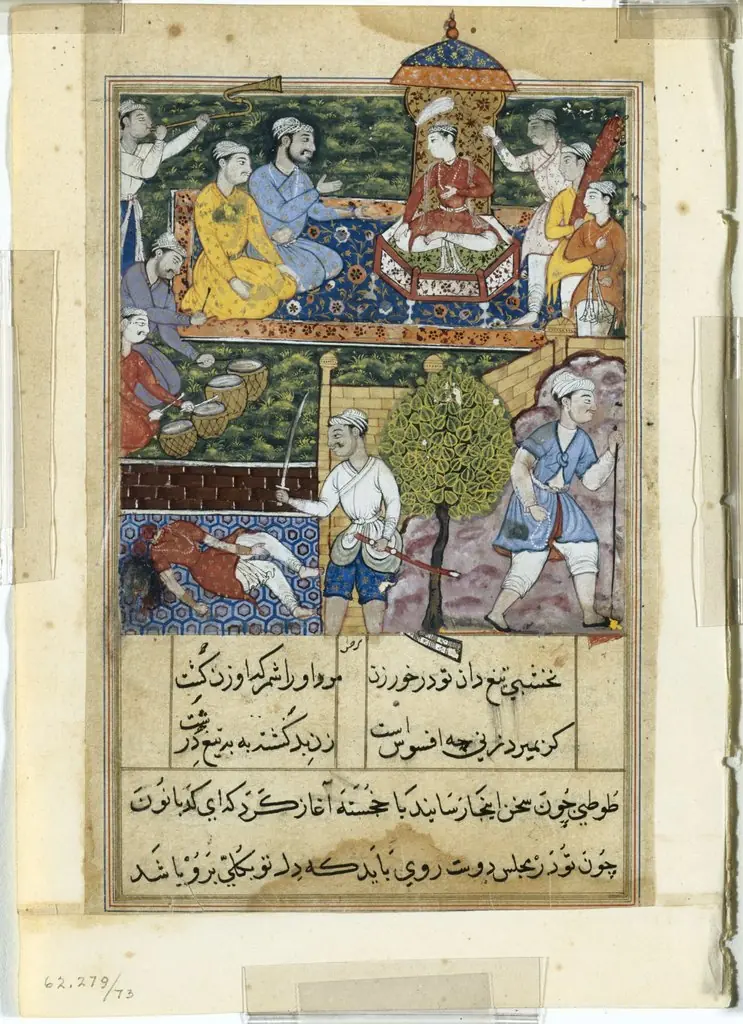 The young prince is crowned and the wicked handmaiden is executed, from a Tuti-nama (Tales of a Parrot): Eighth Night
 The young prince is crowned and the wicked handmaiden is executed, from a Tuti-nama (Tales of a Parrot): Eighth Night
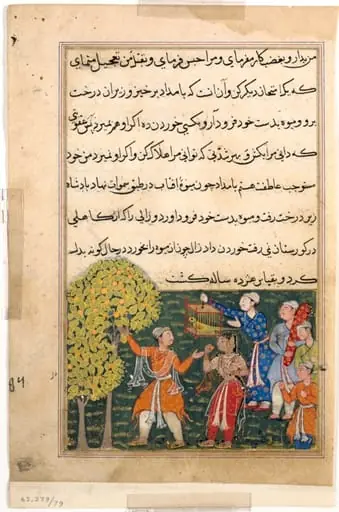 The king plucks fruit from the Tree of Life with his own hands and feeds it to a lady, from a Tuti-nama (Tales of a Parrot): Ninth Night
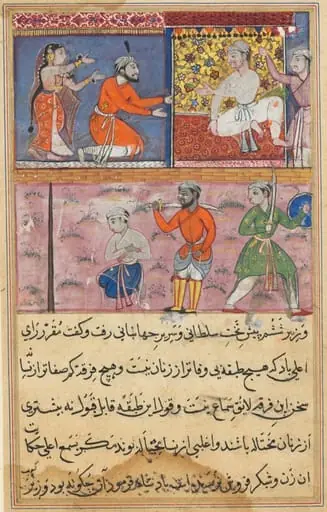 The prince sent back to the place of execution for the sixth time, from a Tuti-nama (Tales of a Parrot): Eighth Night
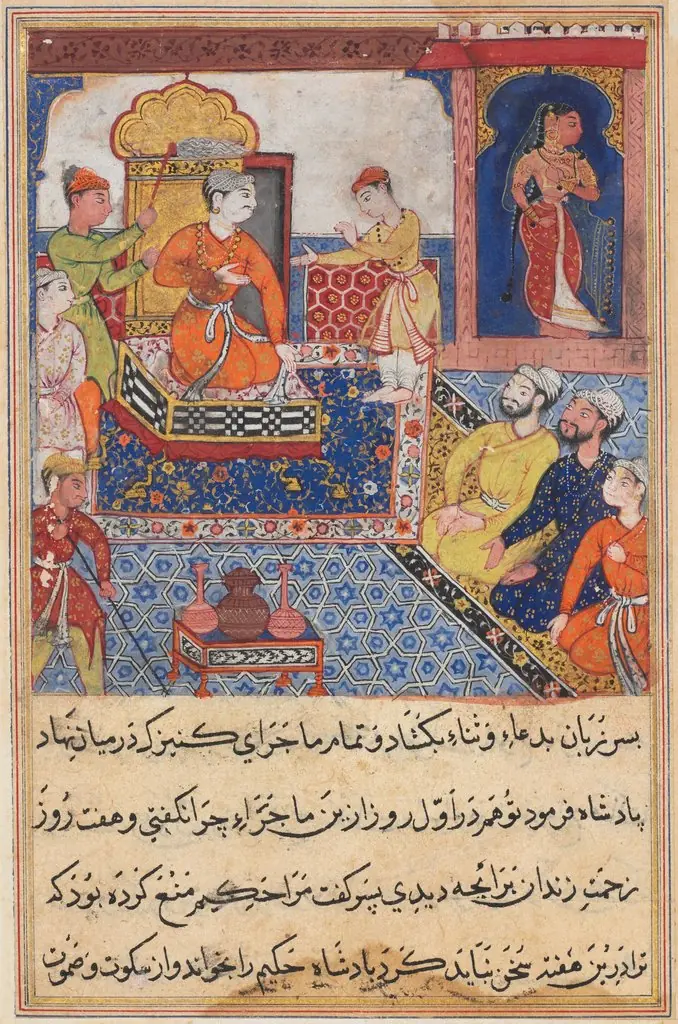 The young prince recounts his experiences to his father, the king, from a Tuti-nama (Tales of a Parrot): Eighth Night
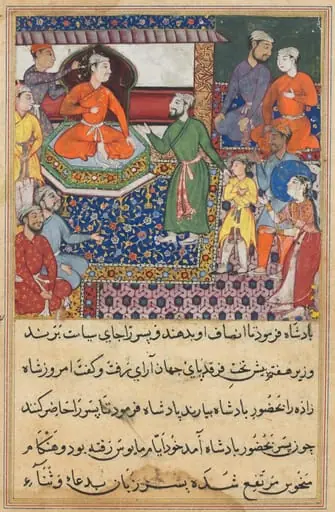 The handmaiden again pleads for the death of the prince, from a Tuti-nama (Tales of a Parrot): Eighth Night
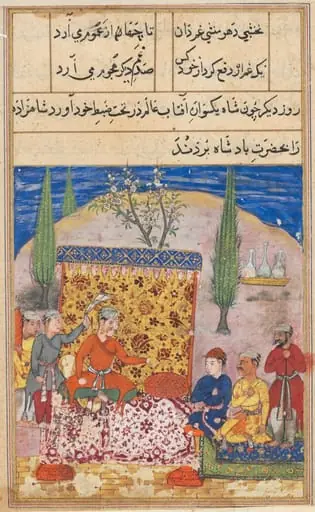 The young prince is presented to the king, his father, by his teacher, but refuses to speak, from a Tuti-nama (Tales of a Parrot): Eighth Night
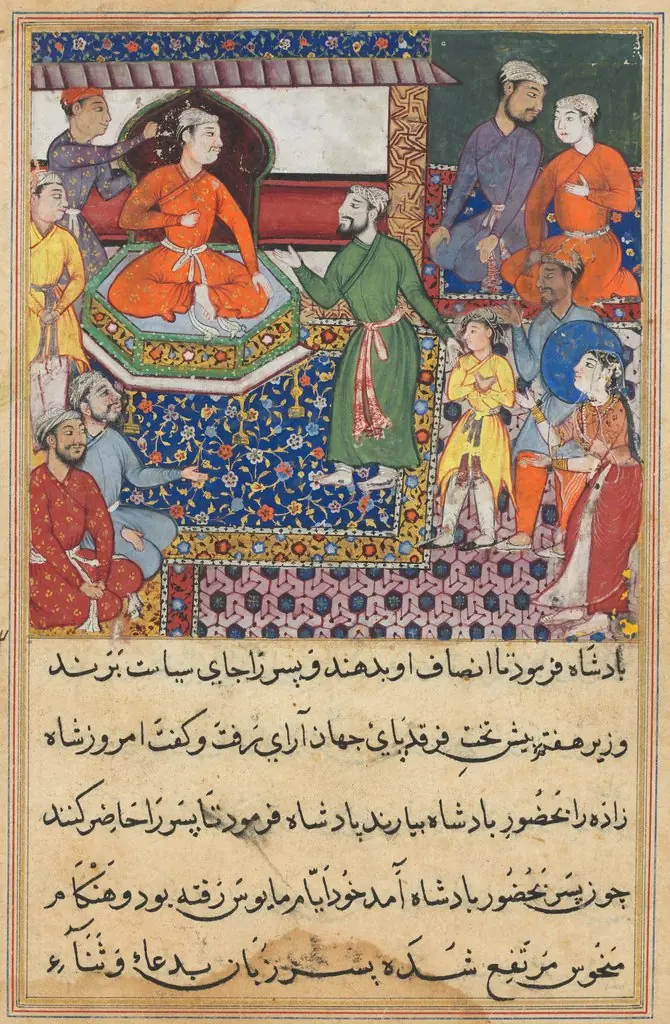 The handmaiden again pleads for the death of the prince, from a Tuti-nama (Tales of a Parrot): Eighth Night
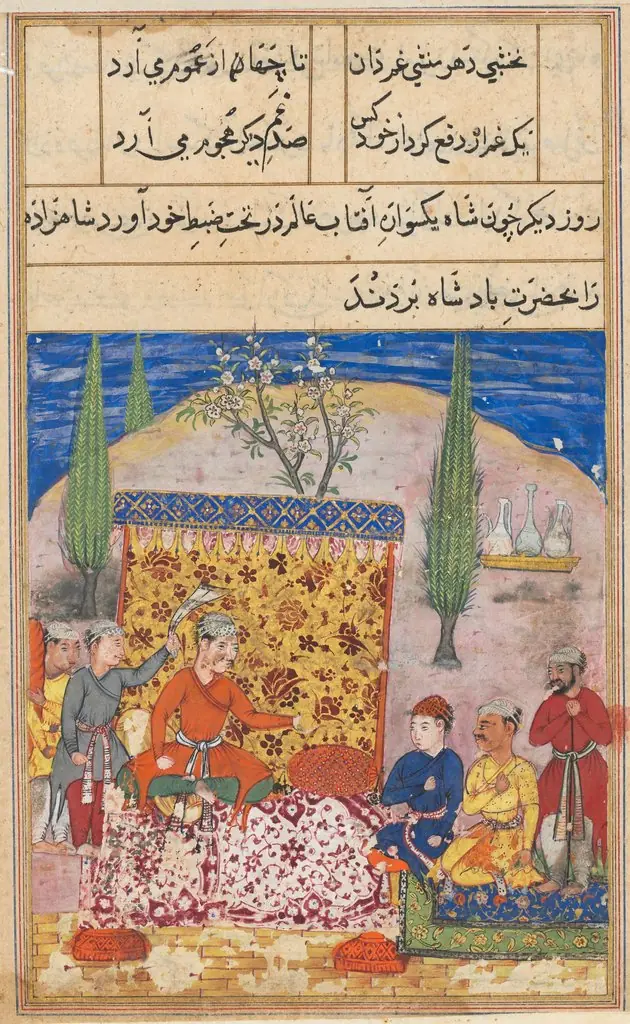 The young prince is presented to the king, his father, by his teacher, but refuses to speak, from a Tuti-nama (Tales of a Parrot): Eighth Night
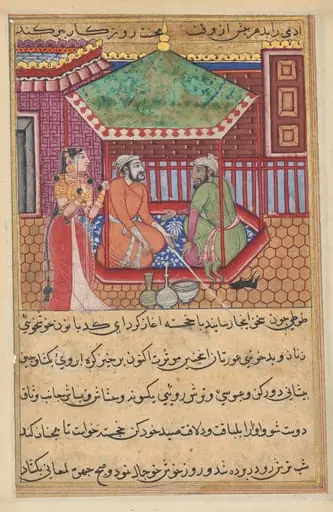 The eldest brother explains the reason for his youthful appearance, from a Tuti-nama (Tales of a Parrot): Forty-ninth Night
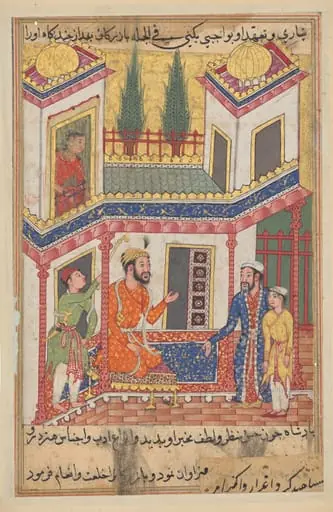 The merchant returns bringing a young slave who is really the son of the princess of Rum, now married to the king, from a Tuti-nama (Tales of a Parrot): Fiftieth Night
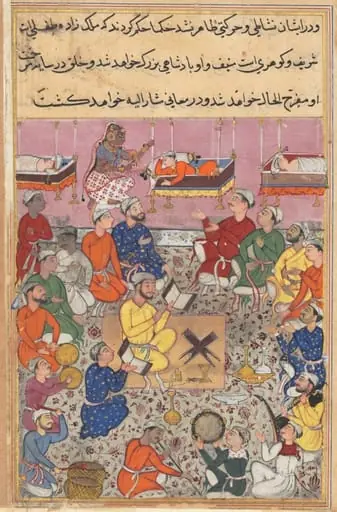 The infant son of the king of Isfahan responds to music, from a Tuti-nama (Tales of a Parrot): Thirteenth Night