Artwork
The merchant’s daughter gives birth to a son as a result of eating out of the box. The clever child recognizes the false gems from true, from a Tuti-nama (Tales of a Parrot): Twenty-third Night
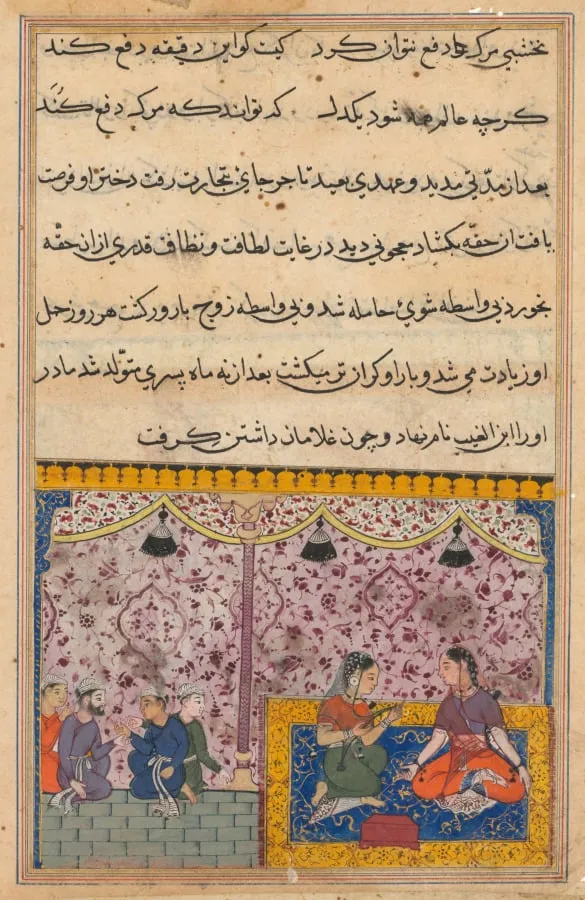
The merchant’s daughter gives birth to a son as a result of eating out of the box. The clever child recognizes the false gems from true, from a Tuti-nama (Tales of a Parrot): Twenty-third Night is an unspecified painting by the Mughal Painting artist Unknown. It dates from 1560 and is held in the collection of the Cleveland Museum of Art.
About this work
You see a busy market scene: merchants in turbans wave fake jewels at a small boy who points to the real ones.
You see a busy market scene: merchants in turbans wave fake jewels at a small boy who points to the real ones. Behind them, a woman and her mother sit on a patterned carpet beside a strange wooden box.
The boy is no ordinary child. His mother ate from that box and gave birth without ever marrying. The story comes from a book of parrot tales read aloud in the court of Emperor Akbar.
If you like this mix of magic and daily life, look up Mughal India, court of Akbar (reigned 1556–1605).
Overview
The painting portrays a bustling market where merchants in turbans display imitation jewels to a small boy who gestures toward authentic stones. To the side, a woman and her mother sit on a patterned carpet beside a wooden box that holds a mysterious skull. The scene combines everyday commerce with a supernatural narrative drawn from a Mughal court tale.
Subject & Meaning
At the center of the composition is a child described in the source story as a "child of fate," born to a virgin after she consumed remnants of a skull from the box. The boy’s discerning gesture—pointing out genuine gems—symbolizes wisdom and truth emerging from miraculous origins, contrasting with the merchants’ deceitful trade.
Technique & Style
Rendered in the detailed, miniature-like manner typical of Mughal court painting, the work employs fine brushwork and a rich palette to delineate textiles, jewelry, and architectural elements. The careful rendering of facial expressions and gestures conveys narrative nuance, while the flattened spatial arrangement reflects the Persian-influenced aesthetic of the period.
History & Provenance
The image illustrates a episode from the "Tuti-nama," a collection of parrot tales recited in Emperor Akbar’s court (1556–1605). Though the exact date of the painting is uncertain, its subject matter and stylistic traits align it with the late 16th‑early 17th‑century Mughal atelier that produced illustrated manuscripts for the imperial library.
Context
The narrative blends magical elements—such as a virgin mother and a skull that confers miraculous birth—with the ordinary setting of a market, reflecting the Mughal fascination with moral stories that juxtapose spiritual insight against material excess. Such works served both as entertainment and as didactic illustrations for courtly audiences.
Artist & collection

 Domestic Scene
 Giacomo and Cardinal Marco, investing Andrea, Abbot of San Zeno, with his Benefice
 The Nymph of Fontainebleau
 Portrait of a Woman
 Madonna and Child with Saints in the Enclosed Garden
 Venus and Minerva
 Family Group of Four on Sofa
 Wall painting from Room H of the Villa of P. Fannius Synistor at Boscoreale
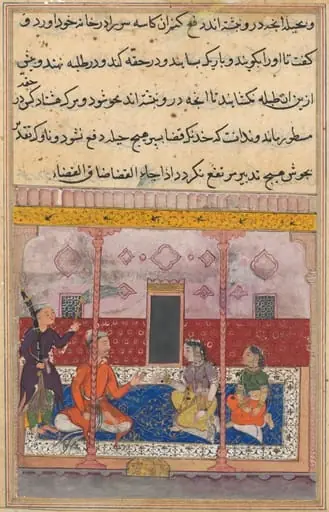 The merchant has the hateful skull ground and put into a box, from a Tuti-nama (Tales of a Parrot): Twenty-third Night
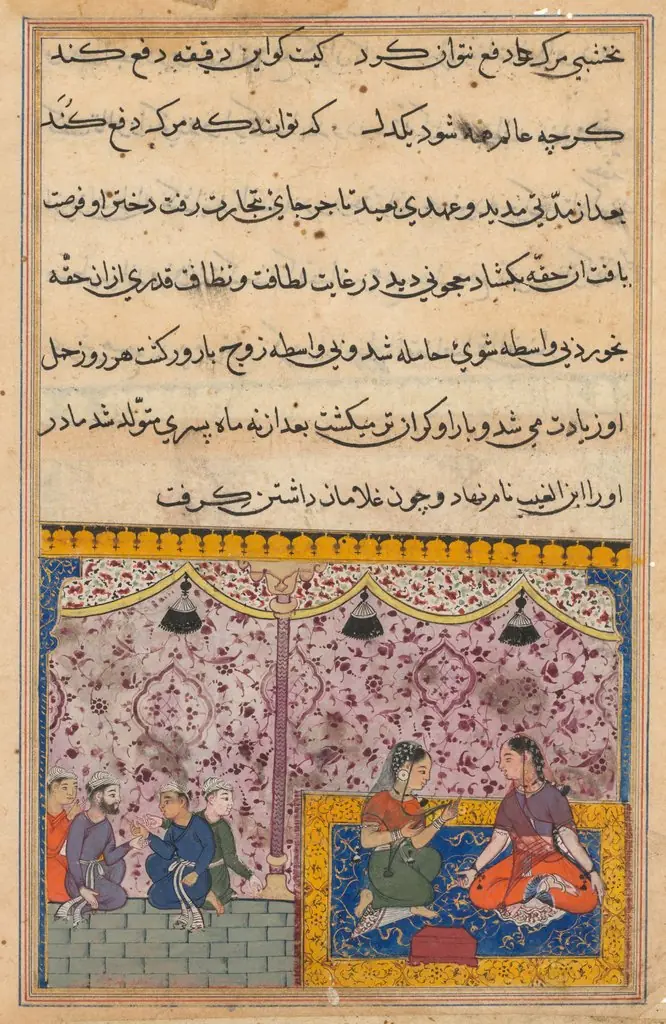 The merchant’s daughter gives birth to a son as a result of eating out of the box. The clever child recognizes the false gems from true, from a Tuti-nama (Tales of a Parrot): Twenty-third Night
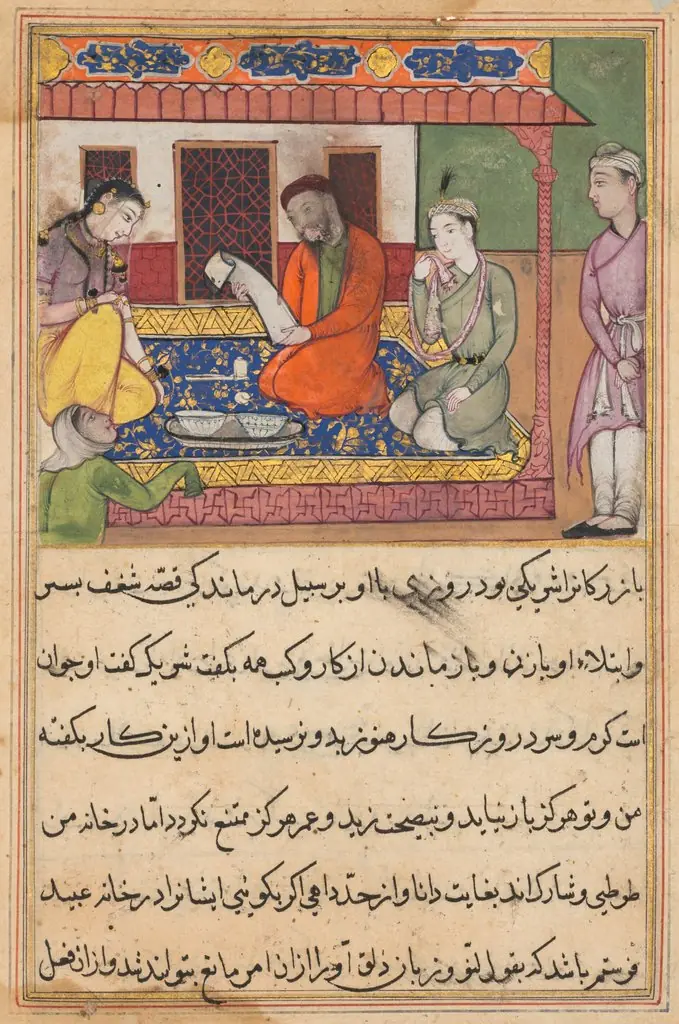 The marriage of ‘Ubaid, son of a merchant of Tirmiz, from a Tuti-nama (Tales of a Parrot): Forty-second Night
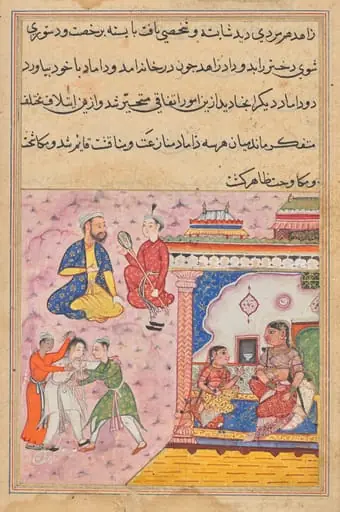 Three suitors fight amongst themselves for the hand of the devotee’s daughter, from a Tuti-nama (Tales of a Parrot): Twentieth Night
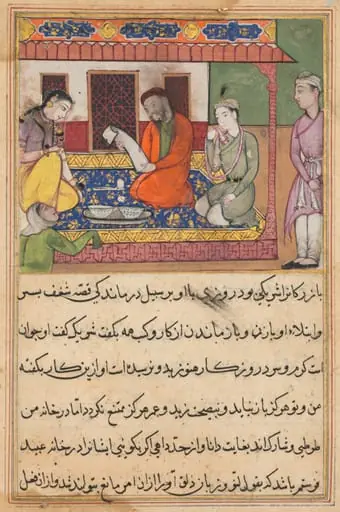 The marriage of ‘Ubaid, son of a merchant of Tirmiz, from a Tuti-nama (Tales of a Parrot): Forty-second Night
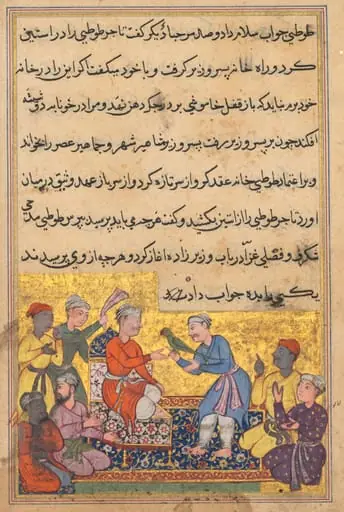 The magic parrot of the merchant talks to the vizier’s son, from a Tuti-nama (Tales of a Parrot): Tenth Night
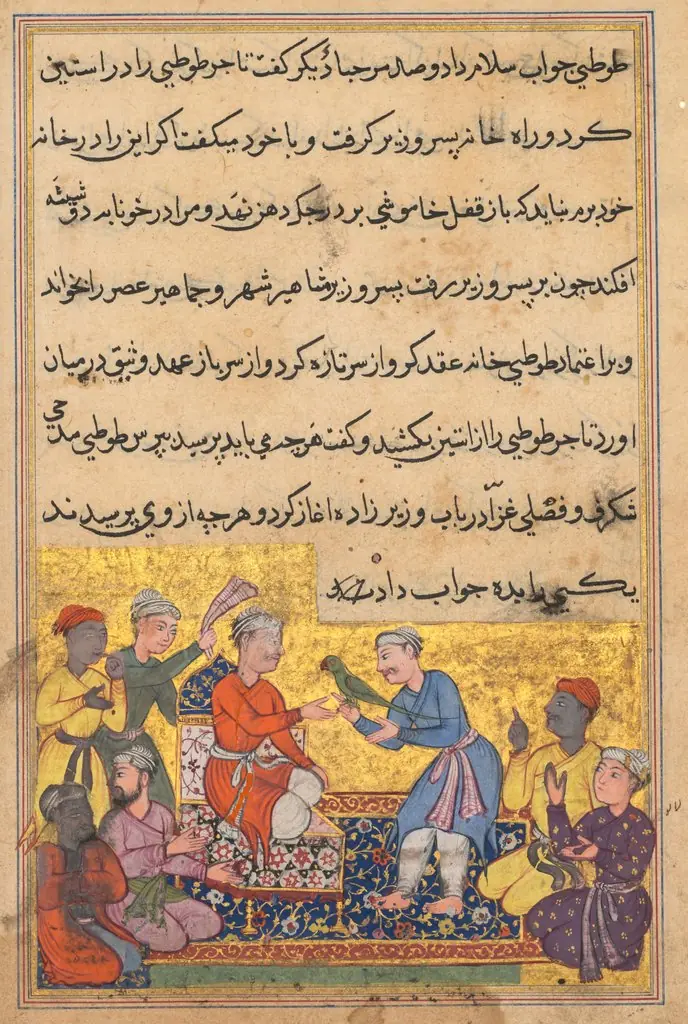 The magic parrot of the merchant talks to the vizier’s son, from a Tuti-nama (Tales of a Parrot): Tenth Night
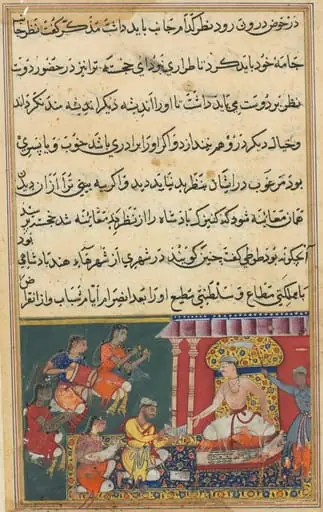 The astrologer predicts a calamity for the newly born prince in his thirteenth year, but one which he would be able to overcome, from a Tuti-nama (Tales of a Parrot): Eighth Night
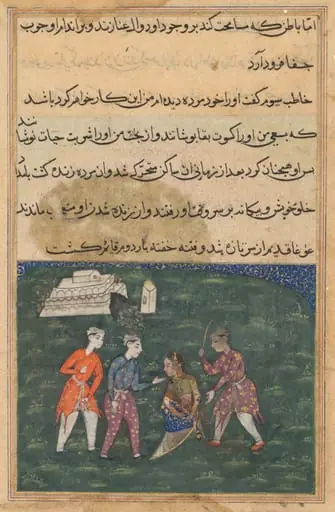 The third suitor strikes the devotee’s daughter and thus restores her to life, from a Tuti-nama (Tales of a Parrot): Twentieth Night
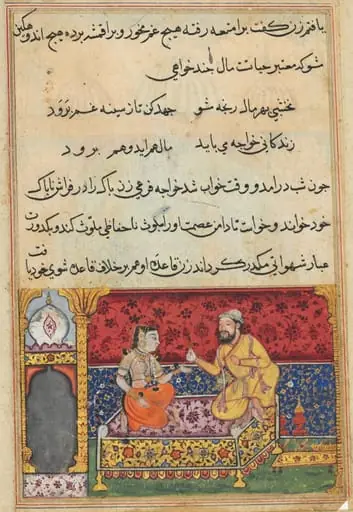 The young man changes himself to look like Mansur, and thus inveigles himself into the bed of Mansur’s wife, but is put off by her, from a Tuti-nama (Tales of a Parrot): Seventeenth Night