Artwork
King Bahram, who has married Khassa’s daughter, has her tied to a camel to be abandoned in the desert as a result of false accusations made by Khulasa, from a Tuti-nama (Tales of a Parrot): Fifty-first Night
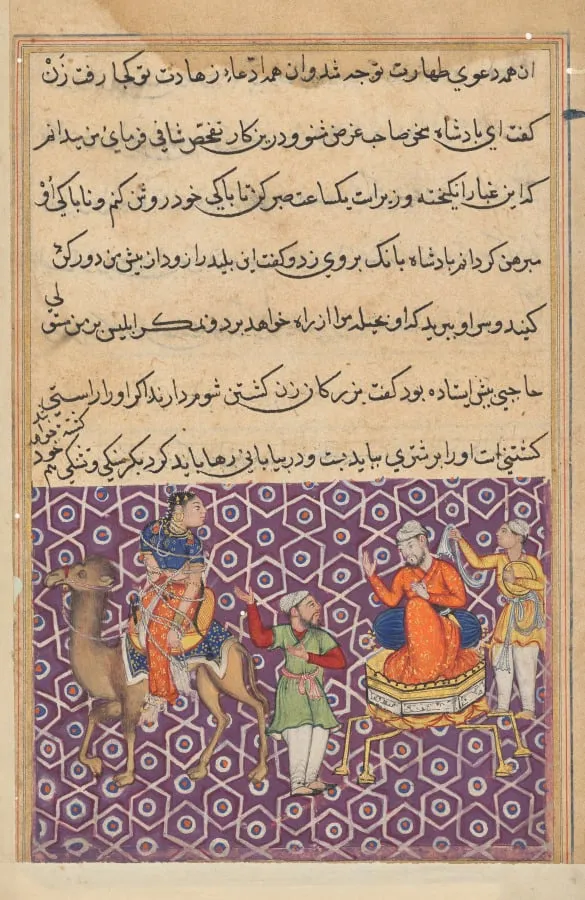
King Bahram, who has married Khassa’s daughter, has her tied to a camel to be abandoned in the desert as a result of false accusations made by Khulasa, from a Tuti-nama (Tales of a Parrot): Fifty-first Night is an unspecified painting by the Mughal Painting artist Unknown. It dates from 1560 and is held in the collection of the Cleveland Museum of Art. The painting illustrates a dramatic episode from the fifty‑first night of the Tuti‑nama, a collection of Persian tales narrated by a parrot.
About this work
The painting comes from a book of stories told by a parrot to delay a wife’s betrayal.
You see a king on a tall throne, pointing as soldiers tie his wife to a camel. The camel kneels in the center, surrounded by men in turbans and rich robes. One man pleads with the king, hands pressed together.
The painting comes from a book of stories told by a parrot to delay a wife’s betrayal. This scene shows a false accusation—revenge for a rejected advance. The bright colors and tiny details are typical of art made for Emperor Akbar’s court.
To see more like this, look up court of Akbar (reigned 1556–1605).
Overview
The painting illustrates a dramatic episode from the fifty‑first night of the Tuti‑nama, a collection of Persian tales narrated by a parrot. In the scene, a king seated on an elevated throne commands that his wife be abandoned in the desert, tied to a camel, after she is falsely accused of adultery.
Subject & Meaning
The narrative centers on a rejected vizier, Khulasa, who, after failing to seduce the queen, alleges her infidelity to the monarch. A pleading court official urges the king to spare her life, highlighting themes of jealousy, false accusation, and the peril of courtly intrigue.
Technique & Style
Executed in vivid pigments, the work features intricate detailing of turbans, robes, and the camel’s posture. The composition emphasizes verticality through the king’s tall throne and the kneeling animal, while the crowded foreground conveys the tension of the moment, characteristic of Mughal court paintings produced under Emperor Akbar.
History & Provenance
The image originates from a manuscript created for the court of Akbar (r. 1556–1605), reflecting the imperial workshop’s penchant for richly colored narrative scenes. The painting remains part of the illustrated Tuti‑nama, a text used to entertain and moralize through parrot‑told stories.
Context
Mughal artists frequently illustrated Persian literary sources, adapting their motifs to suit the aesthetic preferences of the Indian imperial court. This work exemplifies the synthesis of Persian storytelling with the detailed naturalism and decorative brilliance favored in Akbar’s atelier.
Artist & collection

 Domestic Scene
 Giacomo and Cardinal Marco, investing Andrea, Abbot of San Zeno, with his Benefice
 The Nymph of Fontainebleau
 Portrait of a Woman
 Madonna and Child with Saints in the Enclosed Garden
 Venus and Minerva
 Family Group of Four on Sofa
 Wall painting from Room H of the Villa of P. Fannius Synistor at Boscoreale
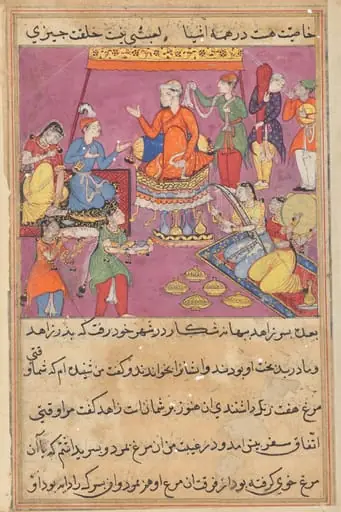 The king gives his daughter in marriage to the pious man’s son, from a Tuti-nama (Tales of a Parrot): Fifty-second Night
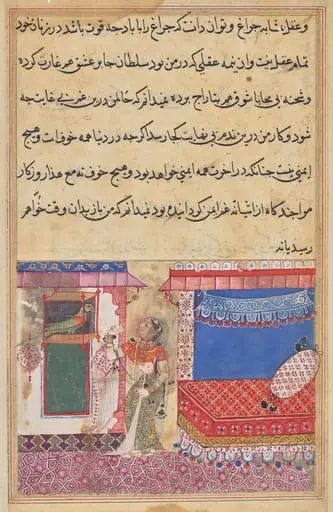 The Parrot Addresses Khujasta at the Beginning of the Eighteenth Night, from a Tuti-nama (Tales of a Parrot)
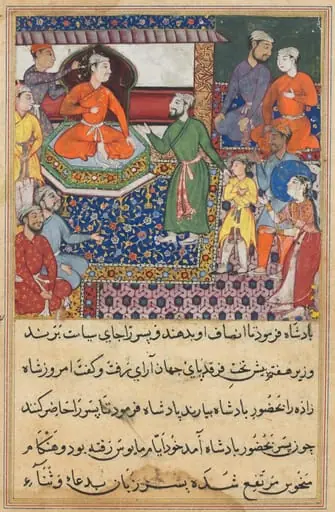 The handmaiden again pleads for the death of the prince, from a Tuti-nama (Tales of a Parrot): Eighth Night
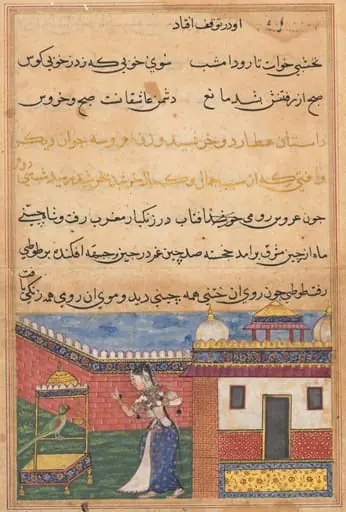 The parrot addresses Khujasta at the beginning of the thirty-second night, from a Tuti-nama (Tales of a Parrot)
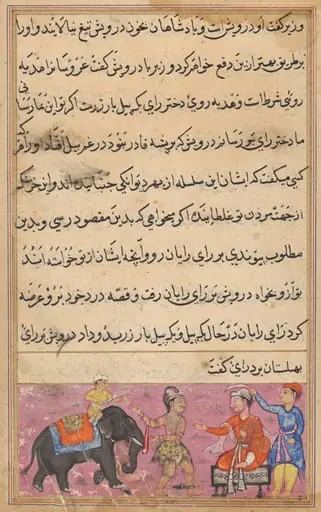 The dervish brings in as dowry an elephant laden with gold, from a Tuti-nama (Tales of a Parrot): Seventh Night
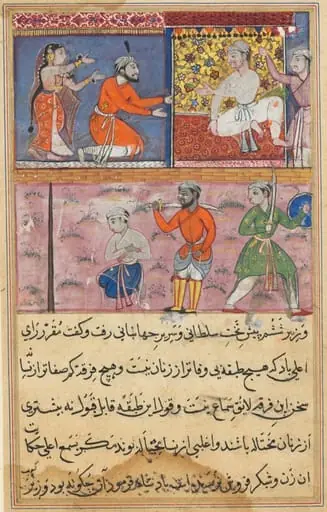 The prince sent back to the place of execution for the sixth time, from a Tuti-nama (Tales of a Parrot): Eighth Night
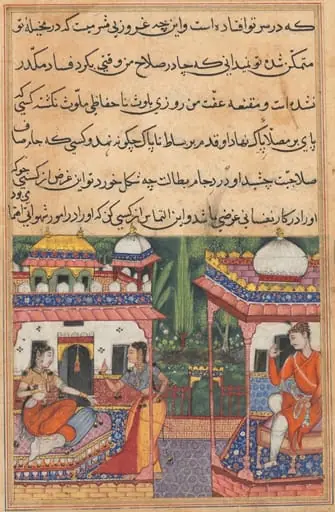 Kaiwan sends a message of love to Khurshid, wife of his brother Utarid who is away on a journey, from a Tuti-nama (Tales of a Parrot): Thirty-second Night
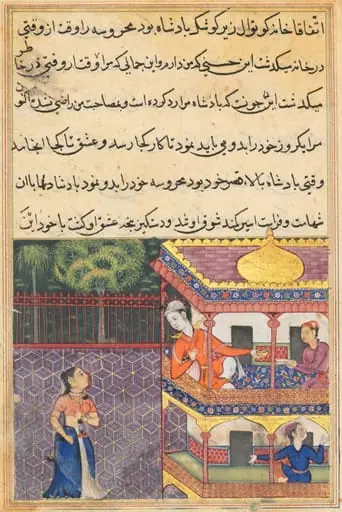 The king of Zabul sees Mahrusa from his palace balcony, from a Tuti-nama (Tales of a Parrot): Thirty-sixth Night
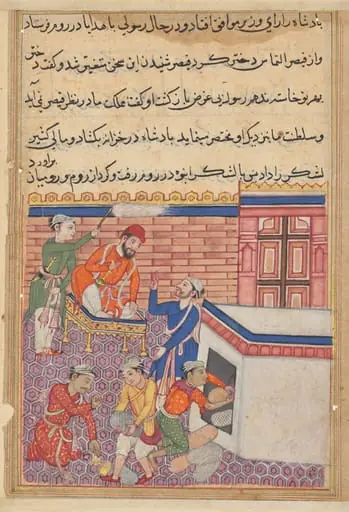 The king’s emissary being provided with gifts for his mission to Rum in order to seek the hand of the emperor’s daughter in marriage, from a Tuti-nama (Tales of a Parrot): Fiftieth Night