Artwork
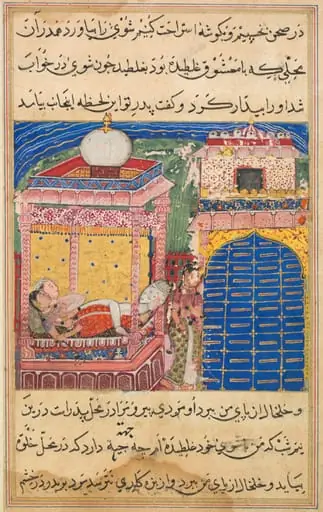
The deceitful wife returns to her terrace after caressing her lover, from a Tuti-nama (Tales of a Parrot): Eighth Night
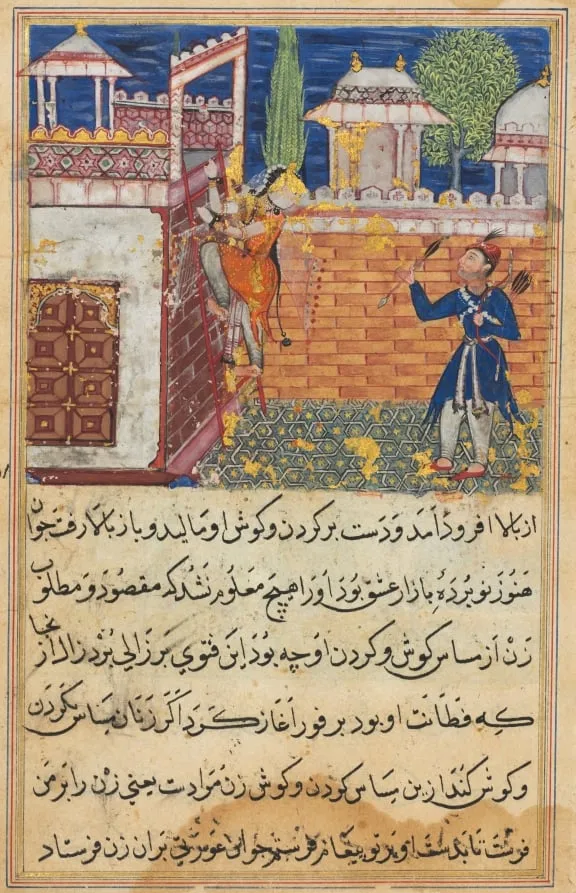
The deceitful wife returns to her terrace after caressing her lover, from a Tuti-nama (Tales of a Parrot): Eighth Night is an unspecified painting by the Mughal Painting artist Shravana. It dates from 1560 and is held in the collection of the Cleveland Museum of Art. This painting illustrates a scene from the Tuti-nama, a collection of tales told by a parrot to a king.
About this work
The artist shows the moment right after the woman’s betrayal, her face calm but her body tense.
A woman in a red dress steps back onto her balcony, adjusting her veil. Below, a man in green looks up, his hand still raised from their secret touch. The scene is small, packed with tiny details—flowers, tiles, even the folds of her sash.
This painting comes from a book of parrot tales told to a king. Each story warns against trusting accusations without proof. The artist shows the moment right after the woman’s betrayal, her face calm but her body tense.
To see more art like this, look up Mughal India, court of Akbar (reigned 1556–1605).
Overview
This painting illustrates a scene from the Tuti-nama, a collection of tales told by a parrot to a king. It depicts a moment from the story recounted by the fifth of seven viziers, who aim to dissuade the king from executing his son based on a servant's accusation.
Subject & Meaning
The scene shows a woman returning to her balcony after secretly caressing a lover below, exemplifying the theme of deceitful women that runs through the viziers' stories, cautioning against hasty judgments based on accusations.
Technique & Style
The artist, identified by a Persian inscription as Shravana, has densely populated the small composition with intricate details, including flowers, architectural tiles, and the folds of the woman's clothing, showcasing a high level of miniaturist skill.
History & Provenance
The painting is part of a manuscript from the court of Akbar in Mughal India, dating to his reign from 1556 to 1605, a period known for its rich cultural and artistic production.
Artist & collection

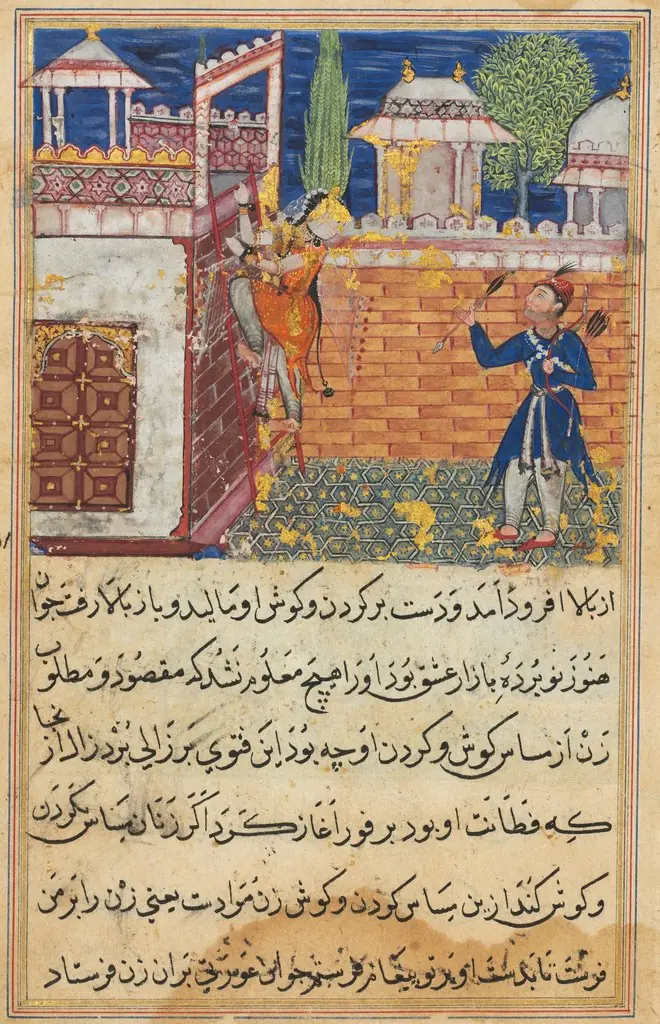 The deceitful wife returns to her terrace after caressing her lover, from a Tuti-nama (Tales of a Parrot): Eighth Night
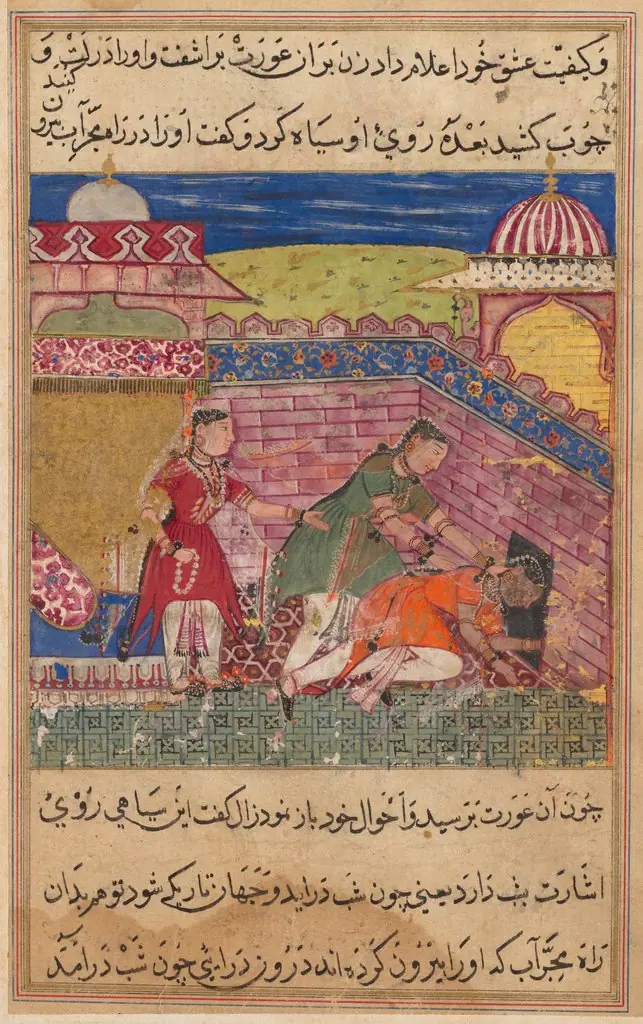 The deceitful wife ejects the procuress after blackening her face, from a Tuti-nama (Tales of a Parrot): Eighth Night
 The deceitful wife ejects the procuress after blackening her face, from a Tuti-nama (Tales of a Parrot): Eighth Night
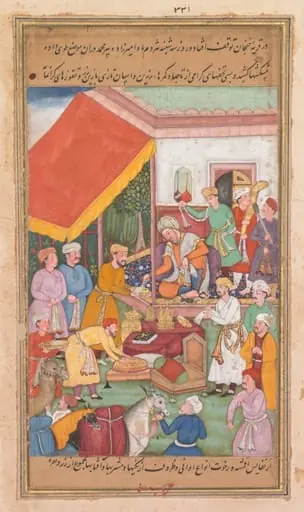 Timur distributes gifts from his grandson, the Prince of Multan, from a Zafar-nama (Book of Victories)
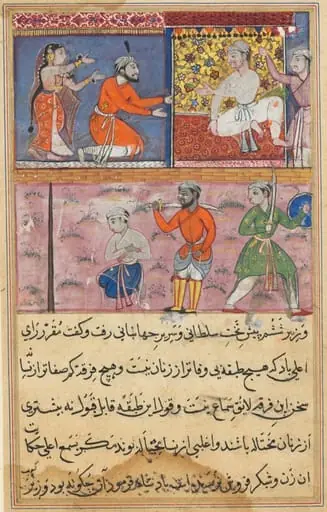 The prince sent back to the place of execution for the sixth time, from a Tuti-nama (Tales of a Parrot): Eighth Night
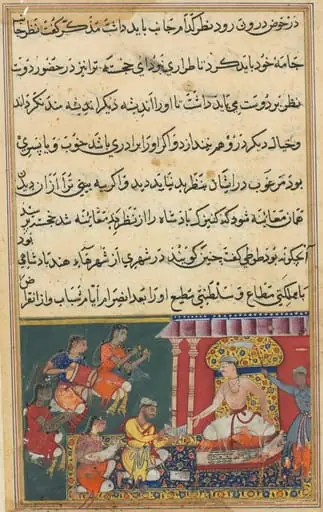 The astrologer predicts a calamity for the newly born prince in his thirteenth year, but one which he would be able to overcome, from a Tuti-nama (Tales of a Parrot): Eighth Night
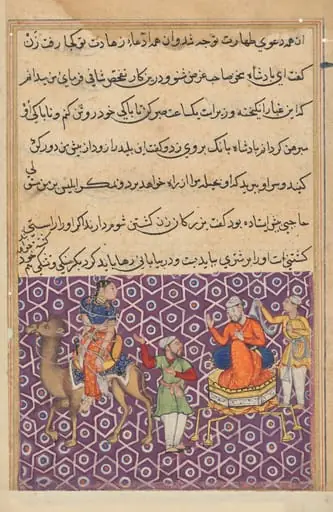 King Bahram, who has married Khassa’s daughter, has her tied to a camel to be abandoned in the desert as a result of false accusations made by Khulasa, from a Tuti-nama (Tales of a Parrot): Fifty-first Night
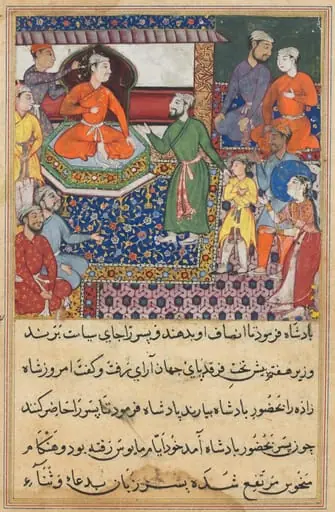 The handmaiden again pleads for the death of the prince, from a Tuti-nama (Tales of a Parrot): Eighth Night
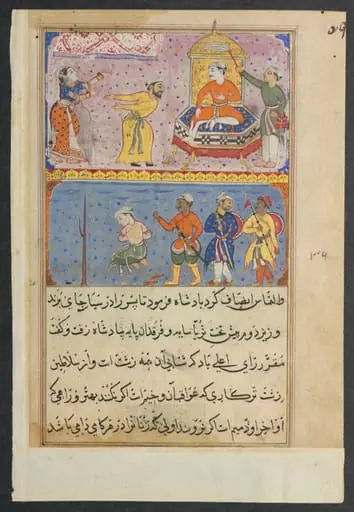 The prince, once reprieved, is returned to the palace of execution a second time on the plea of the king’s handmaiden, from a Tuti-nama (Tales of a Parrot): Eighth Night
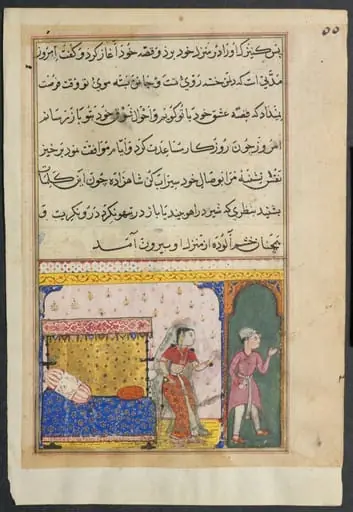 The prince rejects the amorous advances of the king’s handmaiden, from a Tuti-nama (Tales of a Parrot): Eighth Night
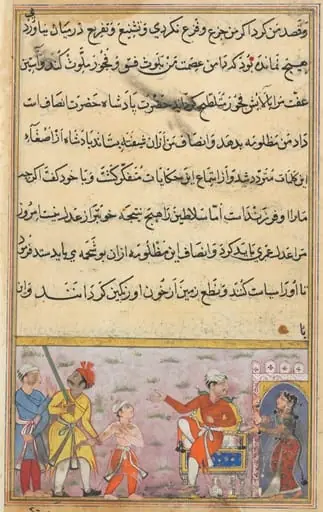 The prince being taken away for execution on the false complaint of the handmaiden, from a Tuti-nama (Tales of a Parrot): Eighth Night
 The deceitful wife persuades her husband to sleep in the same place where she had previously slept with her lover, from a Tuti-nama (Tales of a Parrot): Eighth Night