Artwork
Mahatta
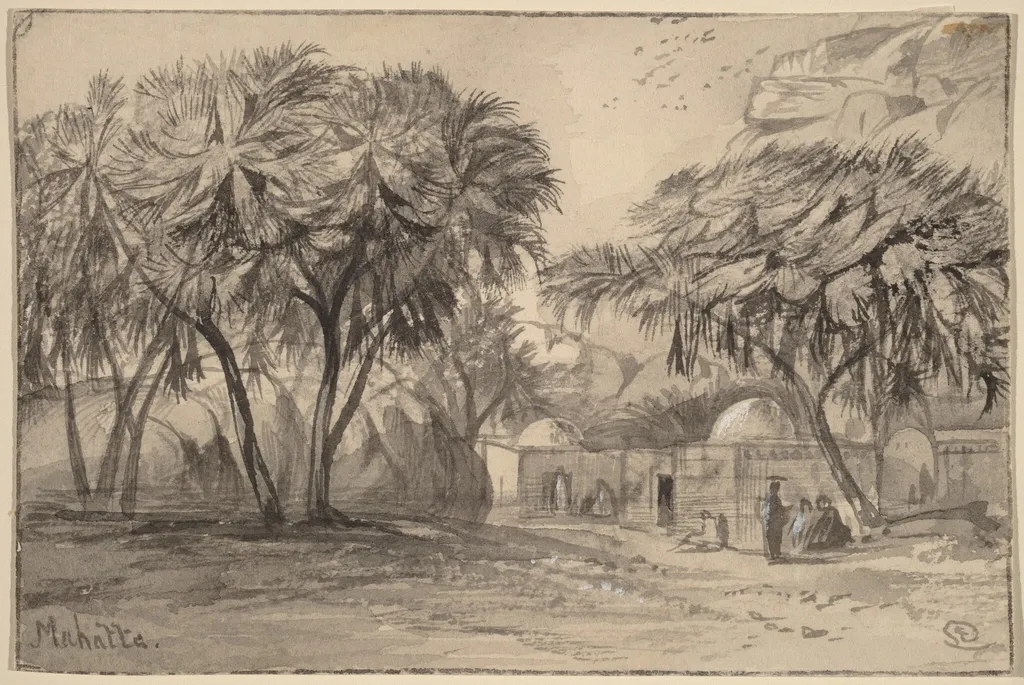
Mahatta is a drawing by the Impressionist artist Edward Lear. It dates from 1884 and is held in the collection of the National Gallery of Art.
About this work
Overview
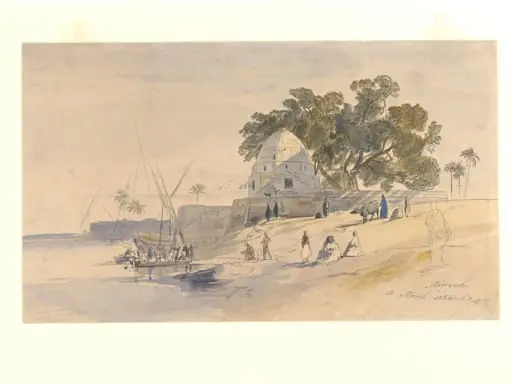
Mahatta is a drawing executed in 1884 by Edward Lear, rendered in a gray wash on wove paper. The work presents a tranquil courtyard scene, where palm trees arch over a low wall, figures linger near a doorway, and a dirt path leads past rounded domes and arched structures. The monochrome palette gives the composition a subdued, atmospheric quality.
Subject & Meaning
The composition depicts a peaceful Middle‑Eastern courtyard, suggesting a moment of everyday life amid architectural elements such as domes and arches. The presence of seated and strolling figures conveys a sense of casual activity, while the swaying palms and muted tones evoke a warm yet restrained ambience, inviting contemplation of place and passage of time.
Technique & Style
Lear employed a loose, sketch‑like approach, applying gray wash in a manner akin to rapid watercolor. The handling emphasizes tonal variations of light and shadow rather than precise line work, creating a sense of immediacy. The lack of polish is intentional, allowing the drawing to retain a lively, spontaneous character.
History & Provenance
Created during Lear’s later period of travel sketching, Mahatta reflects his ongoing interest in documenting foreign locales. Though primarily known for his literary nonsense, Lear produced numerous field drawings that were later collected and exhibited. The work remains part of the artist’s drawing oeuvre, illustrating his dual role as illustrator and observer.
Context
Mahatta belongs to a body of work produced while Lear journeyed through the Middle East, a region that inspired many of his travel illustrations. The drawing aligns with 19th‑century European fascination with Orientalist subjects, yet Lear’s treatment is more observational than exoticized, focusing on everyday architectural and social details.
Artist & collection
Artist
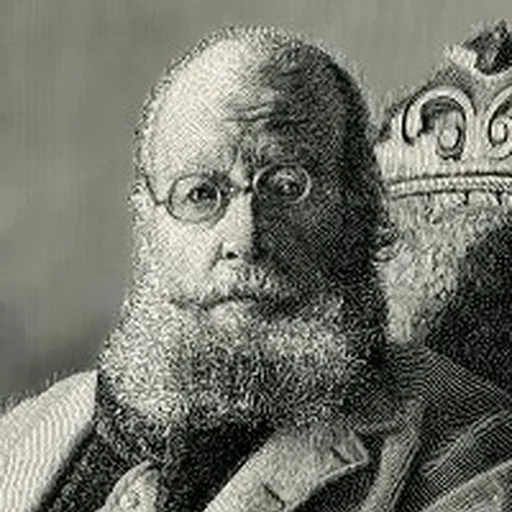
Edward Lear (12 May 1812 – 29 January 1888) was an English artist, illustrator, musician, author and poet, who is known mostly for his literary nonsense in poetry and prose and especially his limericks, a form he popularised but which term…

 A Scene in the Desert Wady Gharendl
 Distant View of Bushire in the Persian Gulf
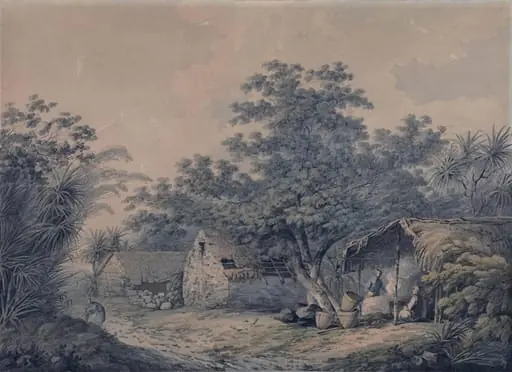 View in Krakatoa Island, near the Straits of Sunda
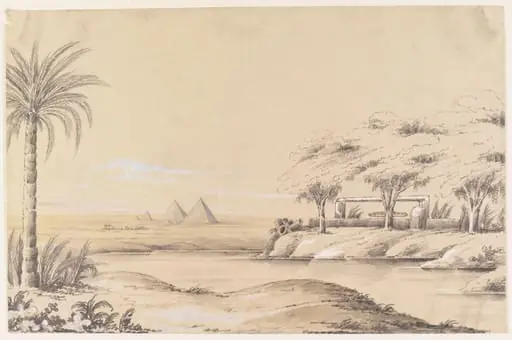 Pyramids of Geezeh. Egypt
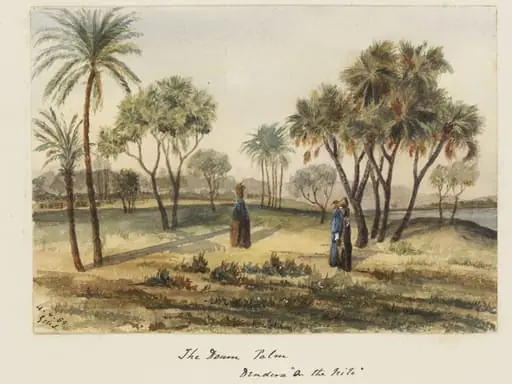 `The Doum Palm Dendera "On the Nile"
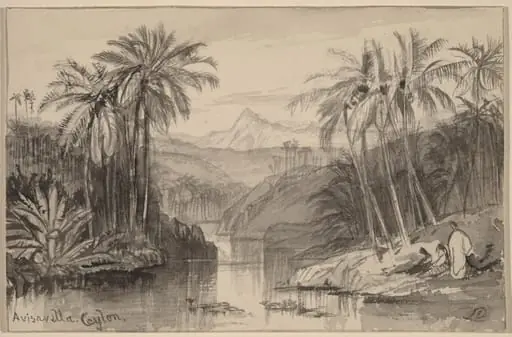 Avisavella, Ceylon
 Minyeh, Egypt
 Liber Studiorum: A Study
 The manner of treading out the Corn
 Gebel El Marga 10 miles from Thebes
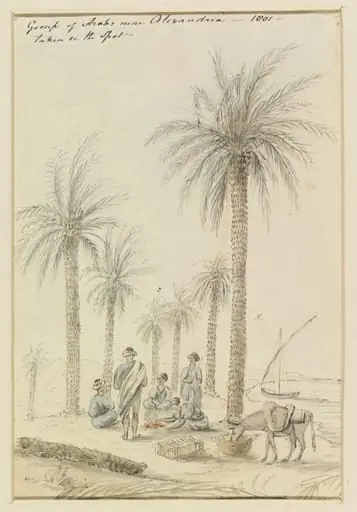 Group of Arabs near Alexandria - 1801 - taken on the Spot