Artwork
The vizier’s son receives the magic wooden parrot from the wife of the merchant, who is drunk, and has a replica made by a carpenter, from a Tuti-nama (Tales of a Parrot): Tenth Night
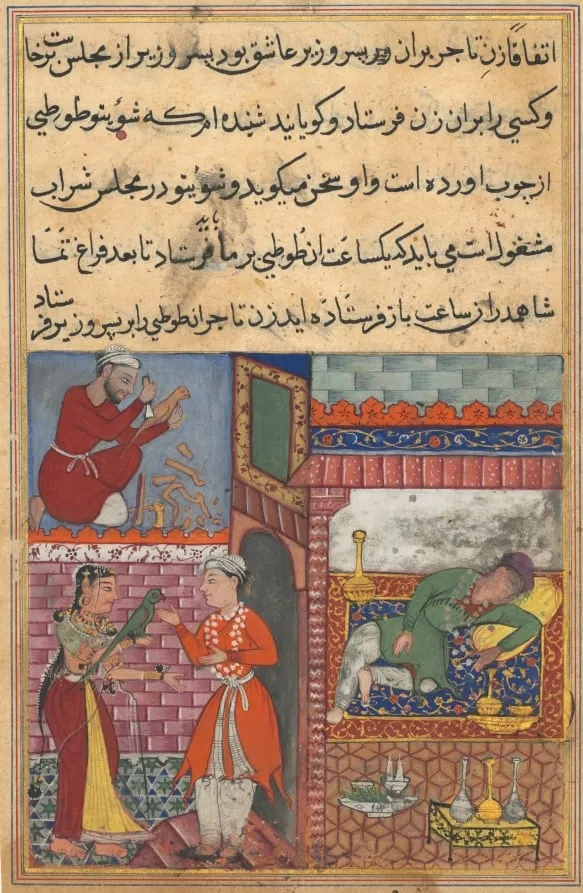
The vizier’s son receives the magic wooden parrot from the wife of the merchant, who is drunk, and has a replica made by a carpenter, from a Tuti-nama (Tales of a Parrot): Tenth Night is an unspecified painting by the Mughal Painting artist Lalu. It dates from 1560 and is held in the collection of the Cleveland Museum of Art. The work illustrates a moment from the tenth night of the Tuti‑nama, a collection of parrot‑told tales.
About this work
You see a busy scene: a drunk merchant sprawled on the floor, his wife handing a wooden parrot to a young man, and a carpenter above them carving an exact copy.
You see a busy scene: a drunk merchant sprawled on the floor, his wife handing a wooden parrot to a young man, and a carpenter above them carving an exact copy.
This painting comes from a book of stories told by a parrot to keep its owner from sneaking out at night. The tiny details—like the carpenter’s tools and the merchant’s flushed face—show how artists in Mughal India brought stories to life. It’s like a comic strip from the 1500s.
To see more art like this, look up Mughal India, court of Akbar (reigned 1556–1605).
Overview
The work illustrates a moment from the tenth night of the Tuti‑nama, a collection of parrot‑told tales. In the foreground a drunken merchant lies prostrate while his wife passes a carved wooden parrot to the vizier’s son, who is engaged in an illicit liaison with her. Above them a carpenter, positioned in a higher register, meticulously reproduces the same bird, foreshadowing its later exchange.
Subject & Meaning
The scene captures a complex web of deceit and loyalty: the merchant’s inebriation, the secret affair between his wife and the vizier’s heir, and the symbolic transfer of the parrot—a messenger of truth in the narrative. The carpenter’s duplication underscores themes of replication and the persistence of secrets across social strata.
Technique & Style
Executed in the refined Mughal miniature tradition, the painting combines delicate brushwork with vibrant pigments to render intricate details such as the carpenter’s tools, the merchant’s flushed complexion, and the texture of the wooden bird. The composition employs a bifurcated register, allowing simultaneous depiction of the earthly transaction below and its preparatory act above.
Context
Created during the reign of Emperor Akbar (1556–1605), the piece reflects the court’s patronage of illustrated manuscripts that blended Persian literary forms with Indian visual sensibilities. The Tuti‑nama itself served as moral entertainment, and its illustrated pages illustrate how Mughal artists transformed narrative episodes into vivid, almost cinematic, visual narratives.
Artist & collection

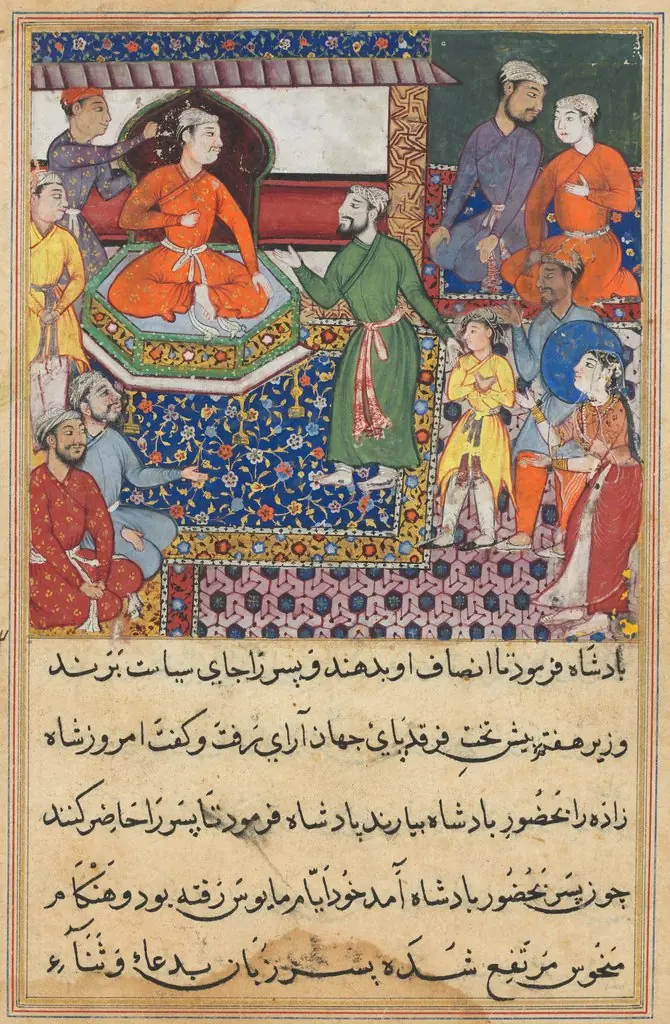 The handmaiden again pleads for the death of the prince, from a Tuti-nama (Tales of a Parrot): Eighth Night
 The handmaiden again pleads for the death of the prince, from a Tuti-nama (Tales of a Parrot): Eighth Night
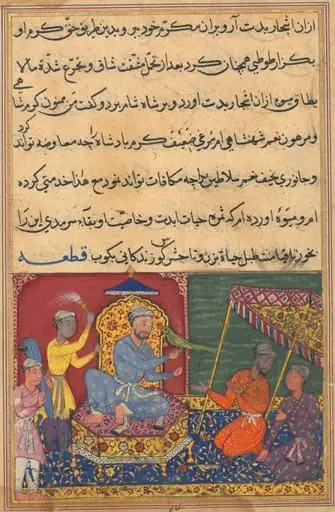 The parrot brings a fruit from the Tree of Life to the king of Syria, from a Tuti-nama (Tales of a Parrot): Ninth Night
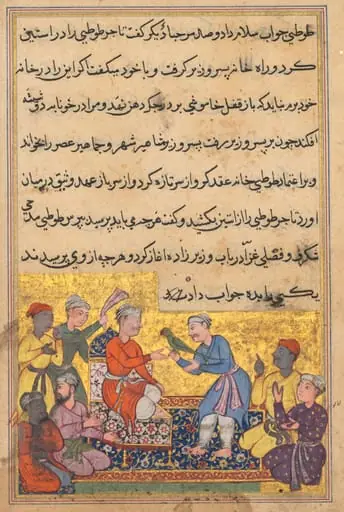 The magic parrot of the merchant talks to the vizier’s son, from a Tuti-nama (Tales of a Parrot): Tenth Night
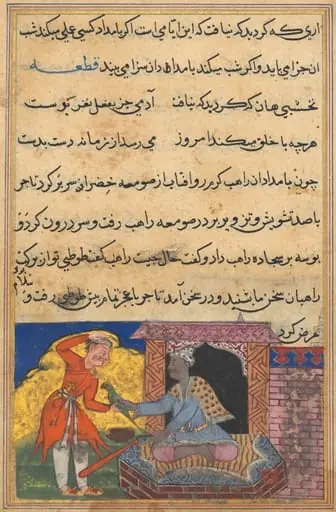 The monk returns the magic parrot to its rightful owner, the merchant, from a Tuti-nama (Tales of a Parrot): Tenth Night
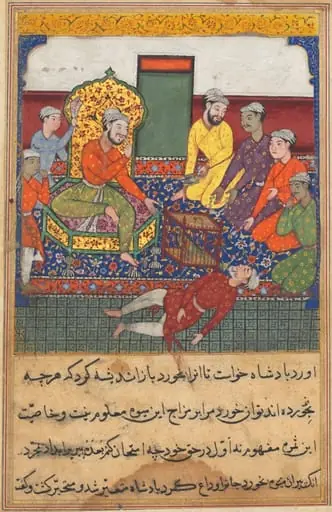 The old man eats of the fruit of the Tree of Life, but drops dead, from a Tuti-nama (Tales of a Parrot): Ninth Night
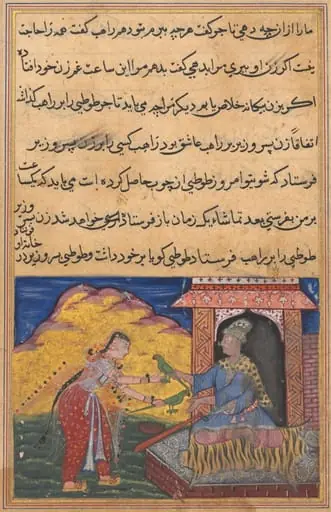 The wife of the son of the vizier brings the magic wooden parrot to her lover, the monk, who exchanges it for the replica, from a Tuti-nama (Tales of a Parrot): Tenth Night
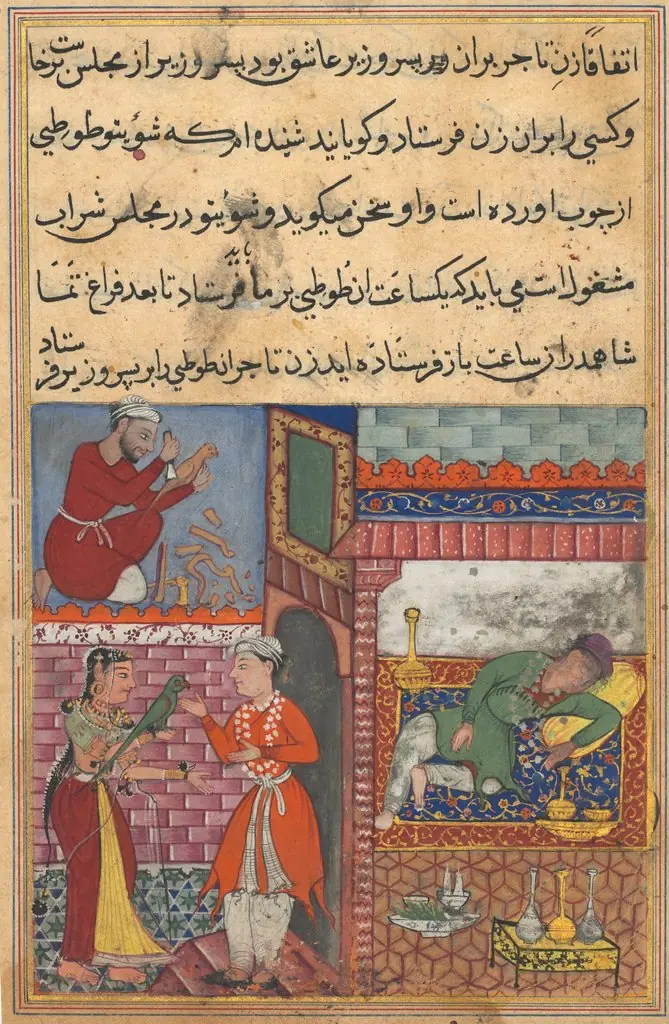 The vizier’s son receives the magic wooden parrot from the wife of the merchant, who is drunk, and has a replica made by a carpenter, from a Tuti-nama (Tales of a Parrot): Tenth Night
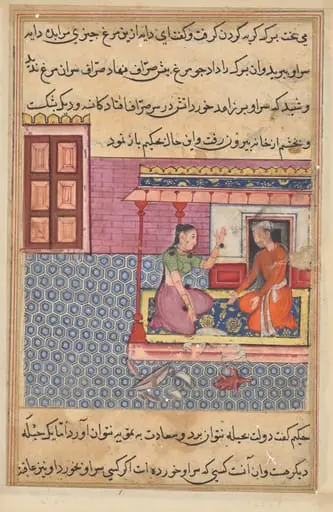 The pious man’s wife offers the seven-colored bird as food to her lover, but not finding its head, he breaks the pot and bowl in anger, from a Tuti-nama (Tales of a Parrot): Fifty-second Night
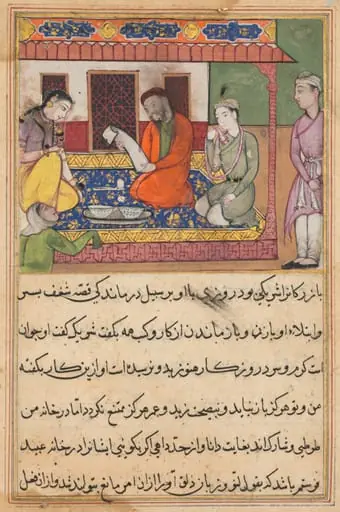 The marriage of ‘Ubaid, son of a merchant of Tirmiz, from a Tuti-nama (Tales of a Parrot): Forty-second Night
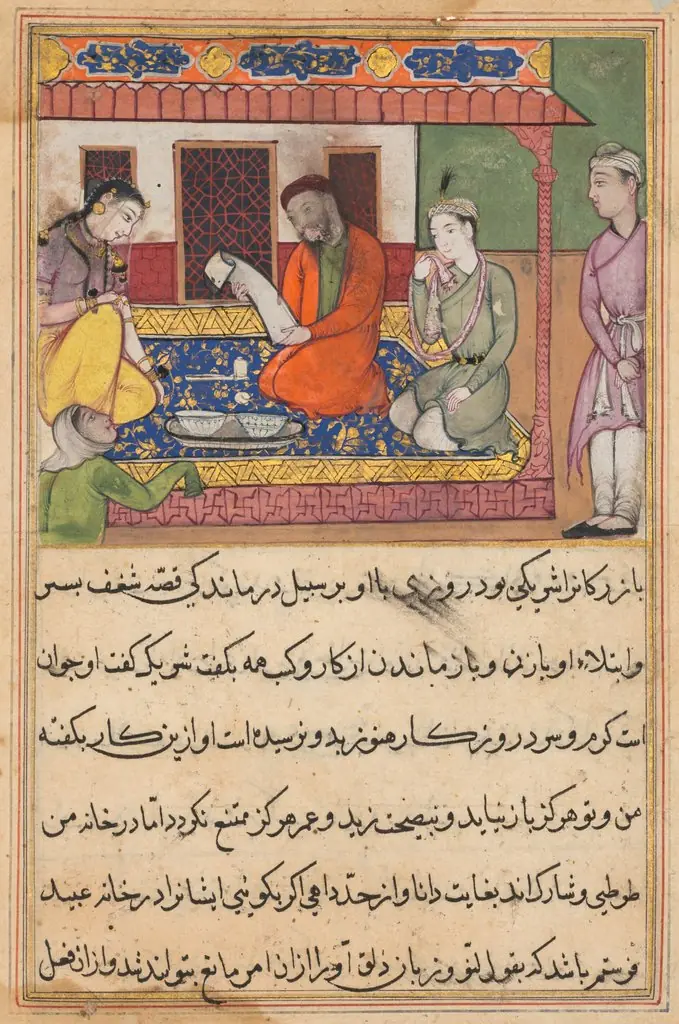 The marriage of ‘Ubaid, son of a merchant of Tirmiz, from a Tuti-nama (Tales of a Parrot): Forty-second Night
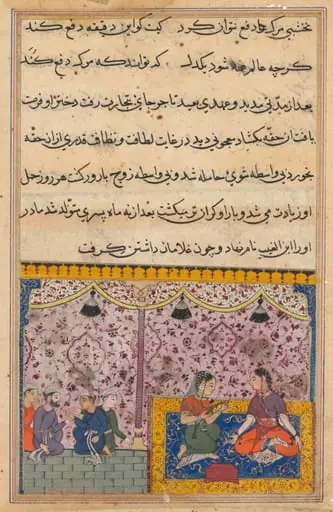 The merchant’s daughter gives birth to a son as a result of eating out of the box. The clever child recognizes the false gems from true, from a Tuti-nama (Tales of a Parrot): Twenty-third Night
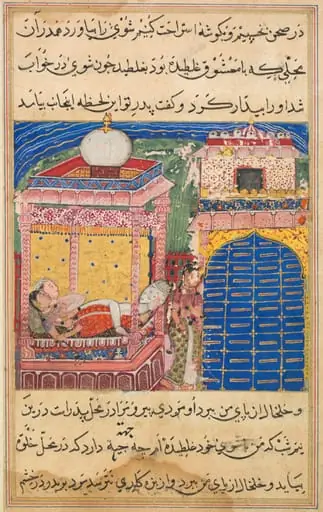 The deceitful wife persuades her husband to sleep in the same place where she had previously slept with her lover, from a Tuti-nama (Tales of a Parrot): Eighth Night
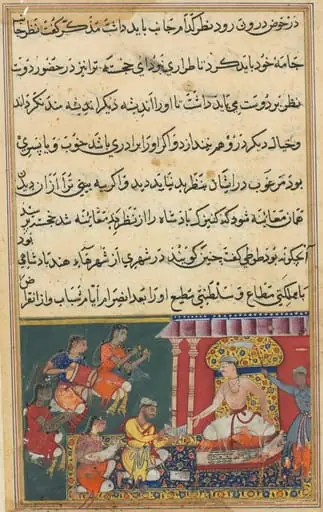 The astrologer predicts a calamity for the newly born prince in his thirteenth year, but one which he would be able to overcome, from a Tuti-nama (Tales of a Parrot): Eighth Night