Artwork
The Parrot Addresses Khujasta at the Beginning of the Twenty-seventh Night, form a Tuti-nama (Tales of a Parrot)
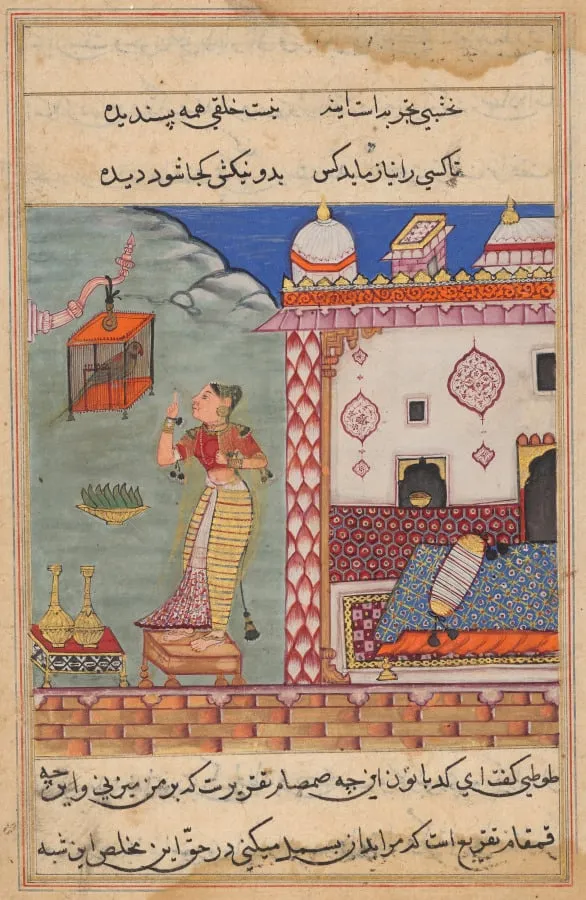
The Parrot Addresses Khujasta at the Beginning of the Twenty-seventh Night, form a Tuti-nama (Tales of a Parrot) is an unspecified painting by the Mughal Painting artist Unknown. It dates from 1560 and is held in the collection of the Cleveland Museum of Art.
About this work
This painting is from a book of stories told by a parrot to keep its owner from sneaking out at night.
A woman in a red dress sits on the floor, her hand raised as if listening. A bright green parrot perches on a stand beside her, beak open like it’s mid-sentence. A small dish of wrapped leaves sits nearby.
This painting is from a book of stories told by a parrot to keep its owner from sneaking out at night. The parrot’s tales are so good, she stays put until dawn. The details—like the chewed betel leaves—show how people lived and passed time in royal courts.
To see more of these lively scenes, look up mughal india, court of akbar (reigned 1556–1605).
Overview
The miniature depicts a nocturnal scene in which a woman in a vivid red garment sits on the floor, hand raised as if listening intently to a bright‑green parrot perched on a nearby stand. The bird’s beak is open, suggesting it is mid‑narration, while a small dish of betel‑leaf packets rests at the woman’s side, indicating a moment of pause in a larger story.
Subject & Meaning
The composition illustrates a moment from a Tuti‑nama, a collection of tales in which the parrot Tuti narrates a story to delay Khujasta’s secret nightly departure to meet a lover. The parrot’s captivating storytelling holds her attention until dawn, symbolising the power of narrative to intervene in personal affairs.
Technique & Style
Rendered in the refined Mughal miniature tradition, the work combines delicate brushwork with a rich palette of reds, greens and golds. Fine linear detailing defines the textiles and the bird’s plumage, while the shallow interior space is suggested through subtle shading, characteristic of courtly paintings produced for illuminated manuscripts.
Context
Created for a Mughal manuscript of the early seventeenth century, the scene reflects courtly customs of Akbar’s reign, including the social practice of chewing paan—a mixture of betel leaf, areca nut and slaked lime—used for refreshment and hospitality. Such details provide insight into the daily life and leisure activities of the imperial elite.
Legacy
The illustration exemplifies how narrative art functioned within Mughal books to convey moral or entertaining episodes, and it continues to inform scholars about the interplay between literature, visual culture, and courtly etiquette in early modern South Asia.
Artist & collection

 Domestic Scene
 Giacomo and Cardinal Marco, investing Andrea, Abbot of San Zeno, with his Benefice
 The Nymph of Fontainebleau
 Portrait of a Woman
 Madonna and Child with Saints in the Enclosed Garden
 Venus and Minerva
 Family Group of Four on Sofa
 Wall painting from Room H of the Villa of P. Fannius Synistor at Boscoreale
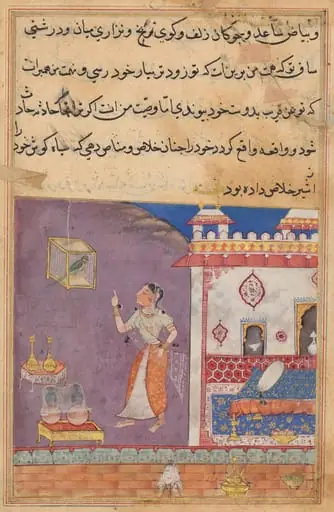 The Parrot Addresses Khujasta at the Beginning of the Twenty-ninth Night, from a Tuti-nama (Tales of a Parrot)
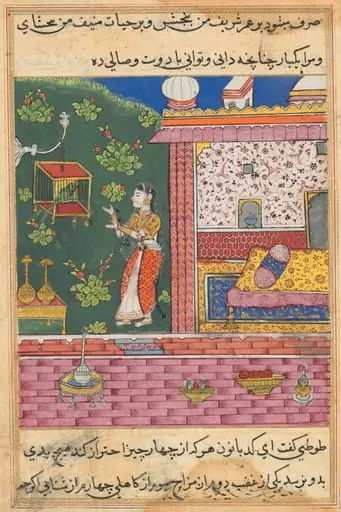 The Parrot Addresses Khujasta at the Beginning of the Thirtieth Night, from a Tuti-nama (Tales of a Parrot)
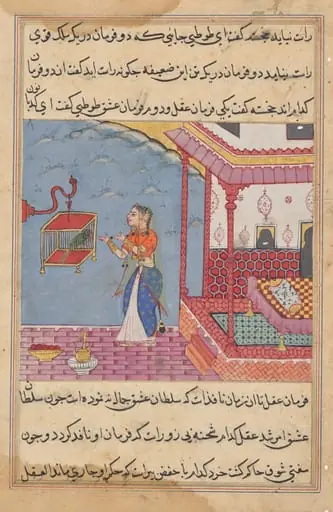 The Parrot Addresses Khujasta at the Beginning of the Twenty-Fourth Night, from a Tuti-nama (Tales of a Parrot)
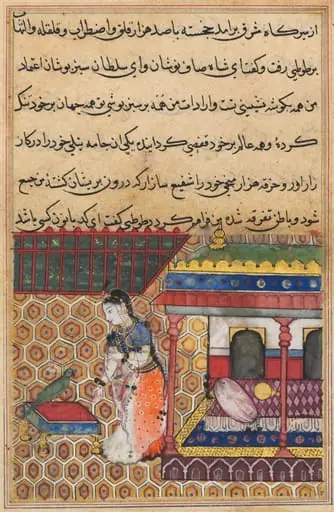 The parrot addresses Khujasta at the beginning of the thirty-eighth night, from a Tuti-nama (Tales of a Parrot)
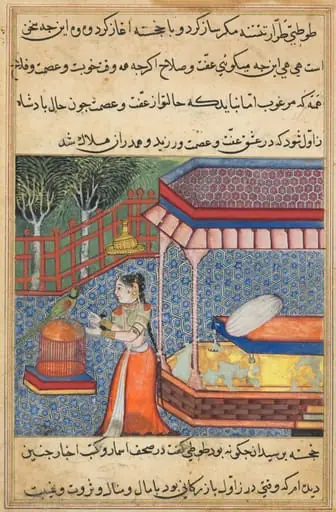 The parrot addresses Khujasta at the beginning of the thirty-sixth night, from a Tuti-nama (Tales of a Parrot)
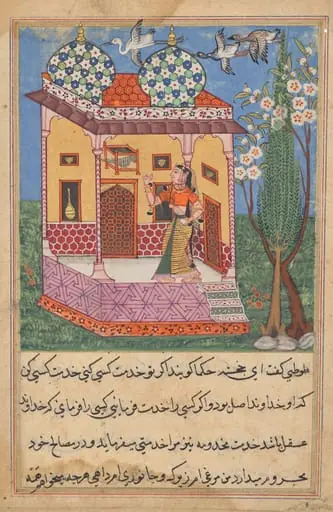 The Parrot Addresses Khujasta at the Beginning of the Twenty-sixth Night, from a Tuti-nama (Tales of a Parrot)
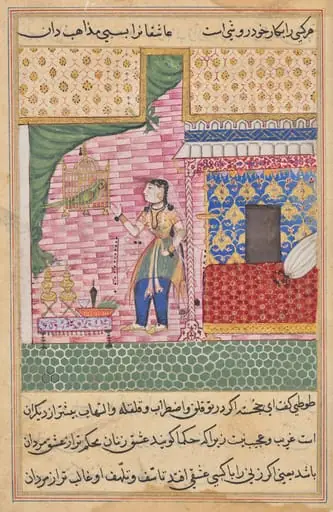 The Parrot Addresses Khujasta at the Beginning of the Seventeenth Night, from a Tuti-nama (Tales of a Parrot)
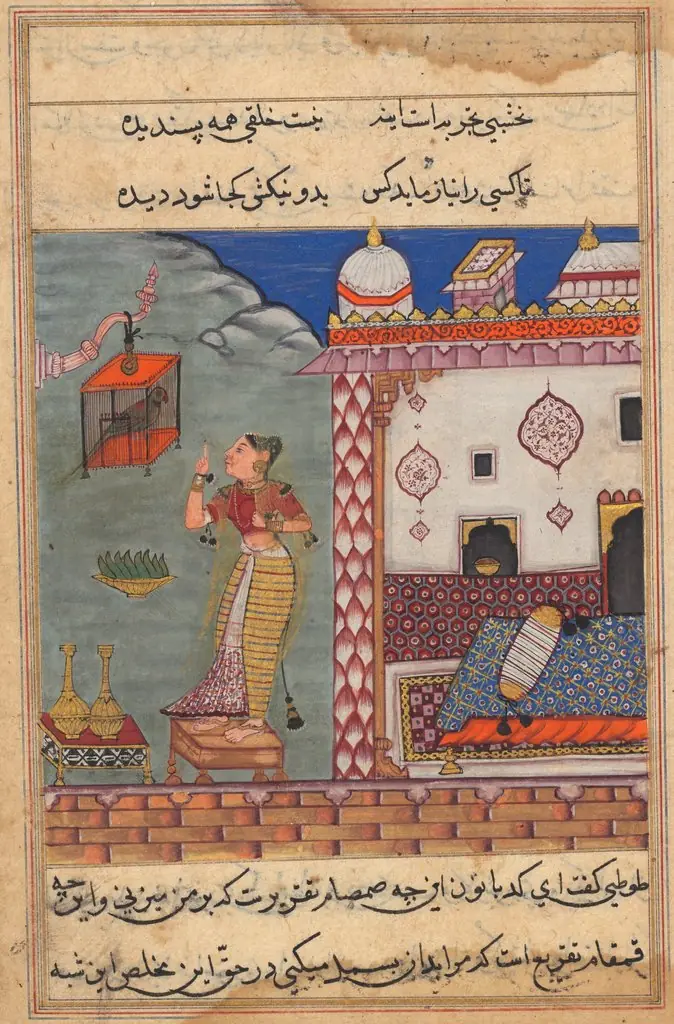 The Parrot Addresses Khujasta at the Beginning of the Twenty-seventh Night, form a Tuti-nama (Tales of a Parrot)
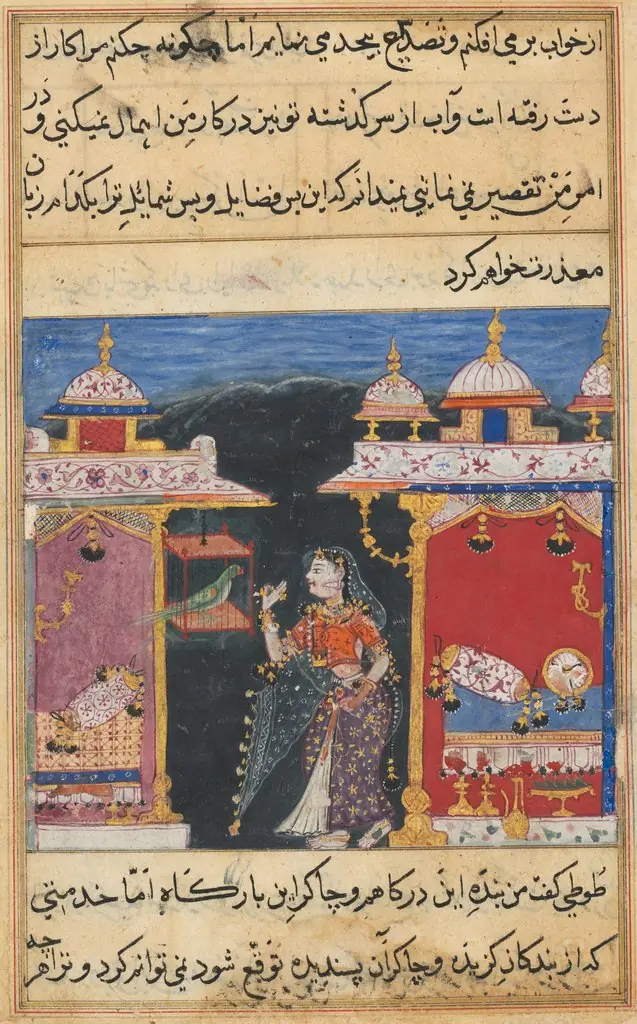 The Parrot Addresses Khujasta at the Beginning of the Seventh Night, from a Tuti-nama (Tales of a Parrot)
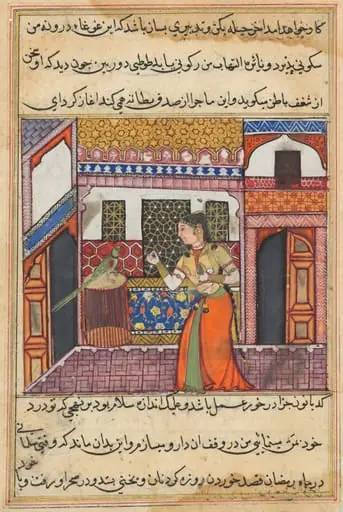 The parrot addresses Khujasta at the beginning of the forty-third night, from a Tuti-nama (Tales of a Parrot)