Artwork
The farmer, father of the son with the deceitful wife, steals away with her anklet while she is in bed with her lover, from a Tuti-nama (Tales of a Parrot): Eighth Night
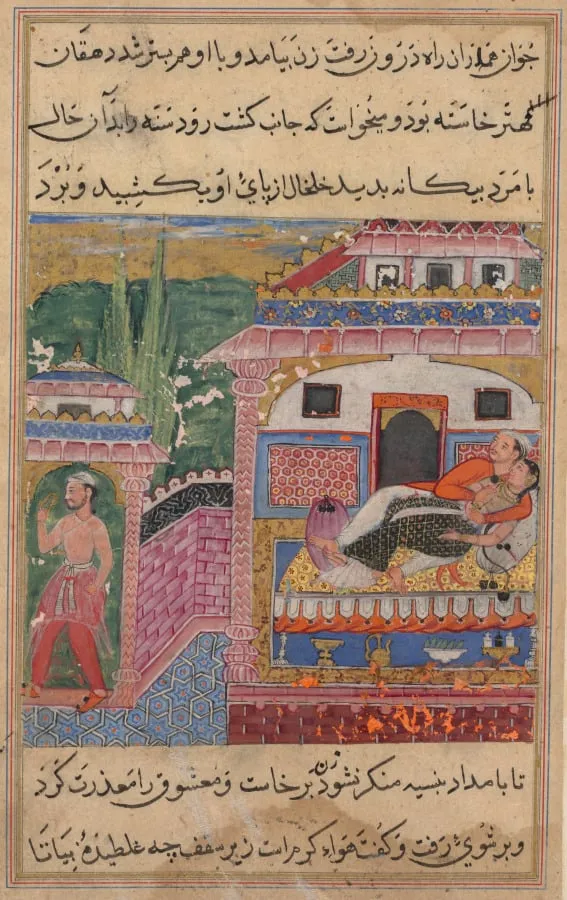
The farmer, father of the son with the deceitful wife, steals away with her anklet while she is in bed with her lover, from a Tuti-nama (Tales of a Parrot): Eighth Night is an unspecified painting by the Mughal Painting artist Unknown. It dates from 1560 and is held in the collection of the Cleveland Museum of Art. This painting illustrates a scene from the Tuti-nama, a collection of parrot tales created for Emperor Akbar.
About this work
You see a man tiptoeing out of a room, holding a woman’s anklet while she and her lover lie in bed, half-hidden by curtains.
You see a man tiptoeing out of a room, holding a woman’s anklet while she and her lover lie in bed, half-hidden by curtains.
This painting comes from a book of parrot tales made for Emperor Akbar. The story is a mix of gossip and warning—about trust, secrets, and what happens when they unravel. The little details, like the pan leaves and perfume bottles under the bed, show how carefully the scene was set up.
To see more art like this, look up mughal india, court of akbar (reigned 1556–1605).
Overview
This painting illustrates a scene from the Tuti-nama, a collection of parrot tales created for Emperor Akbar. It depicts a moment of discovery and deception in a story about infidelity and its consequences.
Subject & Meaning
The scene shows a farmer stealing an anklet from his son's unfaithful wife while she is in bed with her lover. The act is a pivotal moment in the narrative, revealing the wife's infidelity and setting the stage for further conflict.
Technique & Style
The painting features intricate details, such as a pitcher, basin, pan leaves, and perfume bottles under the bed, which suggest a carefully prepared romantic encounter. The composition is characterized by its use of curtains to partially conceal the lovers, adding a sense of intimacy and secrecy.
Context
The Tuti-nama was produced during the reign of Emperor Akbar (1556–1605), a period of significant cultural and artistic development in Mughal India. The manuscript is a testament to the artistic and literary tastes of the Mughal court.
Artist & collection

 Domestic Scene
 Giacomo and Cardinal Marco, investing Andrea, Abbot of San Zeno, with his Benefice
 The Nymph of Fontainebleau
 Portrait of a Woman
 Madonna and Child with Saints in the Enclosed Garden
 Venus and Minerva
 Family Group of Four on Sofa
 Wall painting from Room H of the Villa of P. Fannius Synistor at Boscoreale
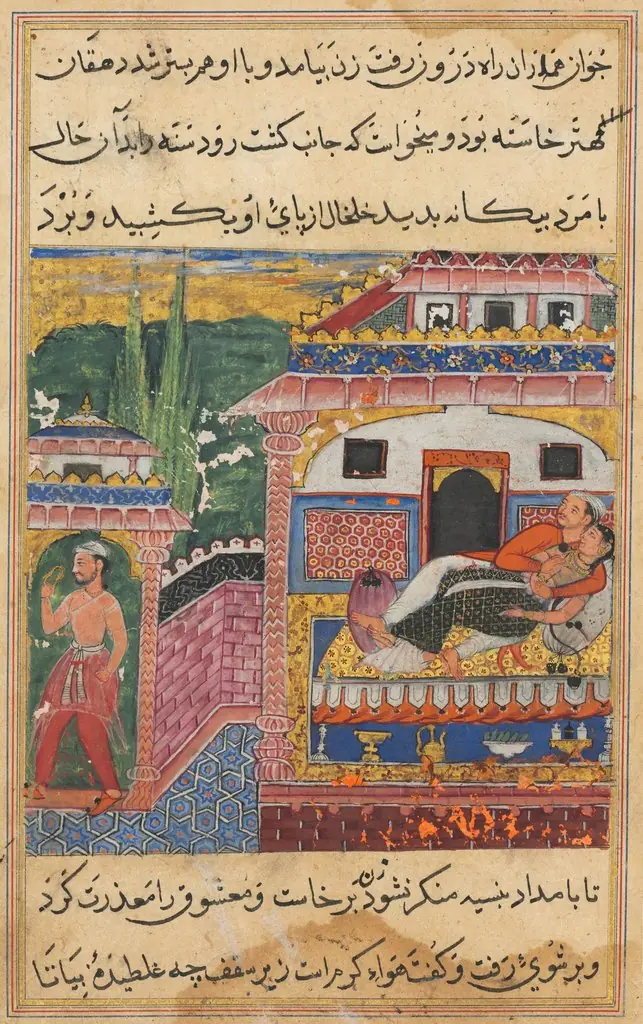 The farmer, father of the son with the deceitful wife, steals away with her anklet while she is in bed with her lover, from a Tuti-nama (Tales of a Parrot): Eighth Night
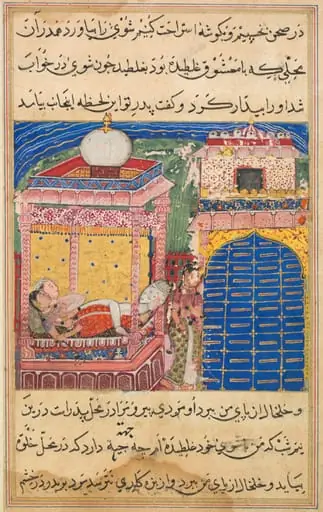 The deceitful wife persuades her husband to sleep in the same place where she had previously slept with her lover, from a Tuti-nama (Tales of a Parrot): Eighth Night
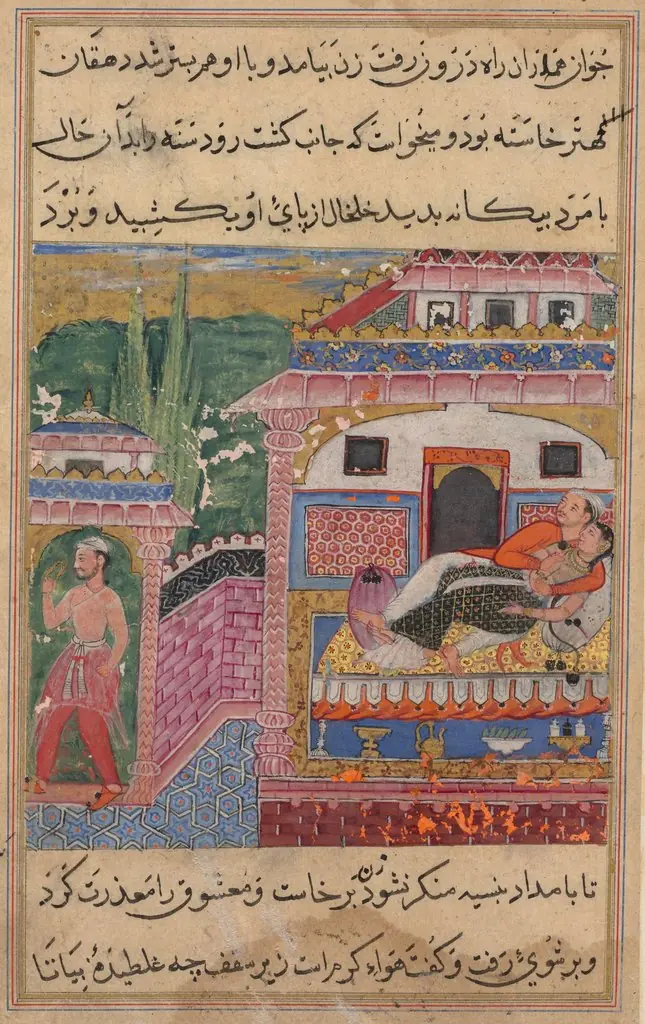 The deceitful wife persuades her husband to sleep in the same place where she had previously slept with her lover, from a Tuti-nama (Tales of a Parrot): Eighth Night
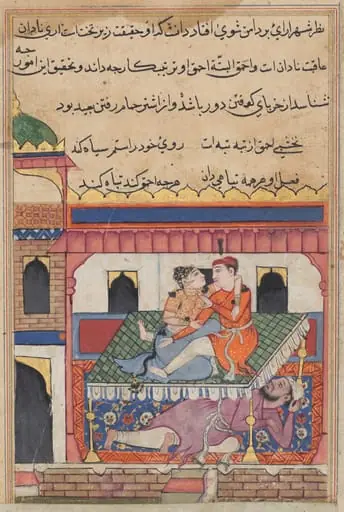 Shahr-Arai and her lover dallying on a bed beneath which is concealed her husband, from a Tuti-nama (Tales of a Parrot): Fortieth Night
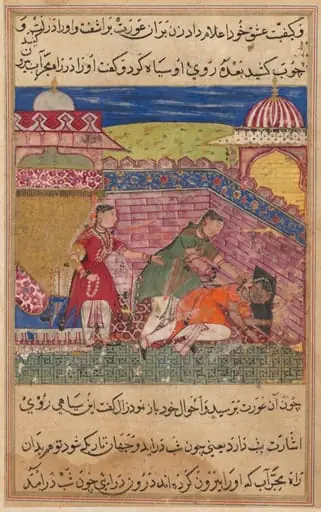 The deceitful wife ejects the procuress after blackening her face, from a Tuti-nama (Tales of a Parrot): Eighth Night
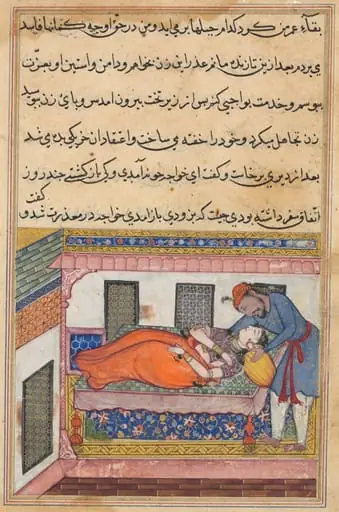 Shahr-Arai’s husband bends to kiss his wife who feigns sleep, from a Tuti-nama (Tales of a Parrot): Fortieth Night
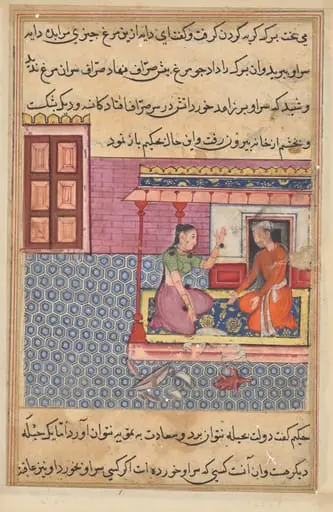 The pious man’s wife offers the seven-colored bird as food to her lover, but not finding its head, he breaks the pot and bowl in anger, from a Tuti-nama (Tales of a Parrot): Fifty-second Night
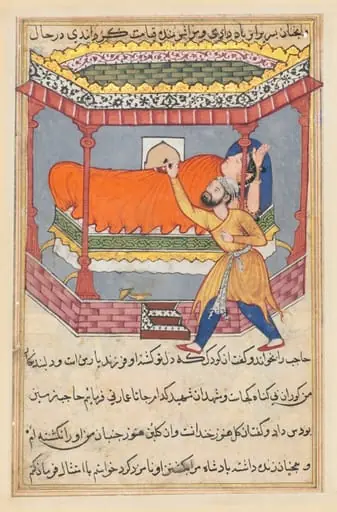 The king places the talisman on his sleeping wife, from a Tuti-nama (Tales of a Parrot): Fiftieth Night
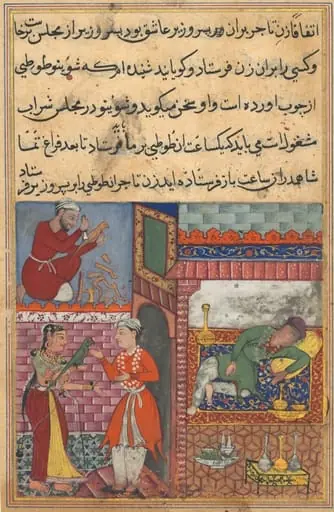 The vizier’s son receives the magic wooden parrot from the wife of the merchant, who is drunk, and has a replica made by a carpenter, from a Tuti-nama (Tales of a Parrot): Tenth Night
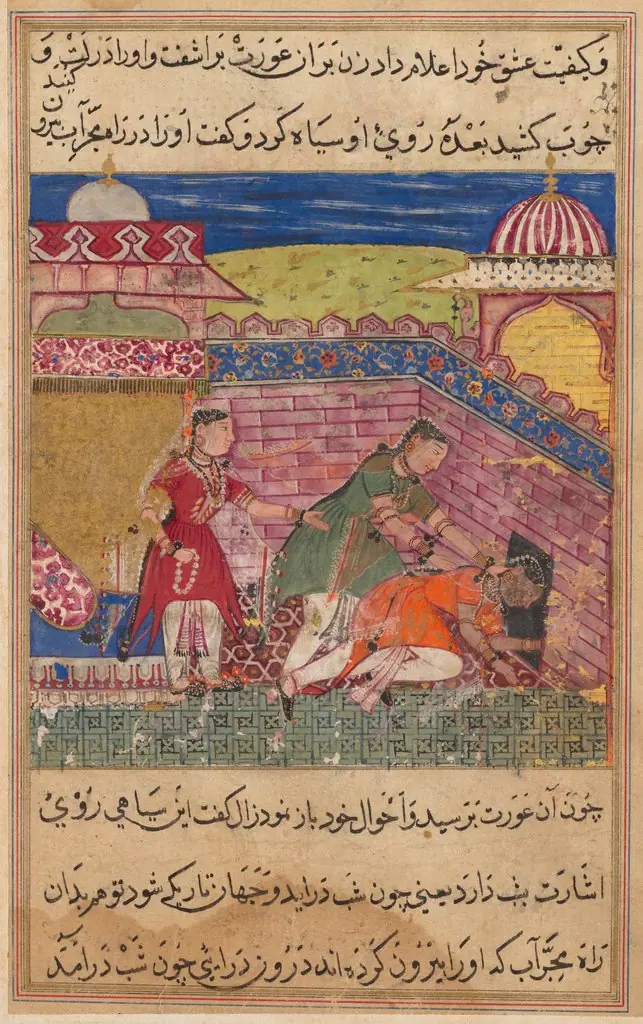 The deceitful wife ejects the procuress after blackening her face, from a Tuti-nama (Tales of a Parrot): Eighth Night