Artwork
The Yildirim Beyazit Camii and Medrese, Bursa
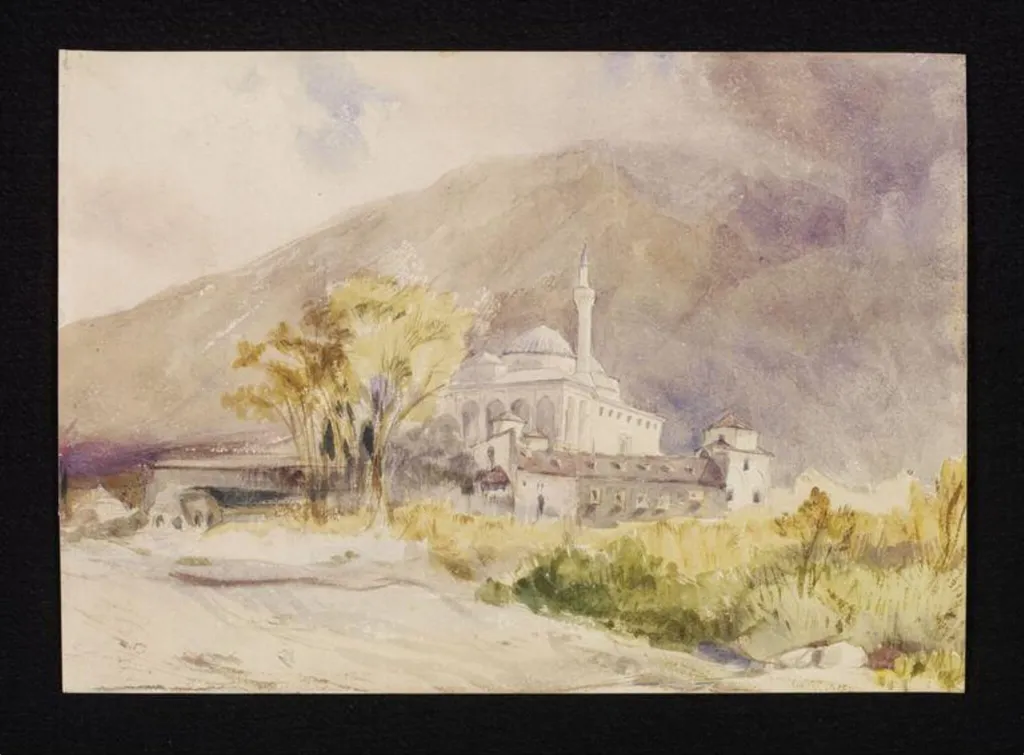
The Yildirim Beyazit Camii and Medrese, Bursa is a watercolor work on paper by Unknown. It dates from 1850 and is held in the collection of the Victoria and Albert Museum. This watercolor, dated 1850, portrays the Yildirim Beyazit Mosque and its associated medrese in Bursa.
About this work
Overview
Executed by an unidentified artist, the work is part of the Searight Archive, where it was once tentatively linked to F.
This watercolor, dated 1850, portrays the Yildirim Beyazit Mosque and its associated medrese in Bursa. Executed by an unidentified artist, the work is part of the Searight Archive, where it was once tentatively linked to F. C. Lewis Junior. Acquired by the archive in July 1971 from R. Grey for £30, it remains a modest but carefully observed record of Ottoman architecture in the mid-nineteenth century.
Subject & Meaning
The composition centers on the mosque complex, its white stone walls and dominant dome rising beside a slender minaret. The medrese, a scholarly institution, lies adjacent, suggesting the integration of worship and learning. Set against a quiet riverside with palm trees and dry, rolling terrain, the scene evokes a sense of stillness and continuity, reflecting the mosque’s role as a spiritual and civic anchor in the city.
Technique & Style
The artist employed light, translucent watercolor washes to render form without harsh definition. Soft gradients in the distant mountains and delicate outlines of the buildings convey atmosphere over detail. The palette is restrained—ochres, pale blues, and off-whites—enhancing the tranquil mood. The brushwork is controlled, favoring gentle textures over sharp lines, aligning with 19th-century topographical traditions.
History & Provenance
The watercolor entered the Searight Archive in 1971 after being purchased from R. Grey. Earlier attribution to F. C. Lewis Junior was speculative and has not been confirmed. No documentation exists regarding its creation context or the artist’s identity. Its survival as a private record suggests it may have been made for personal or educational use rather than public display.
Context
In 1850, Bursa was a city of historical significance but diminished political prominence under Ottoman rule. The Yildirim Beyazit complex, built in the late 14th century, remained a key landmark. This watercolor captures the site in a period of quiet endurance, before widespread modernization. Such works were often produced by travelers or local artisans documenting architectural heritage.
Legacy
The watercolor contributes to a broader corpus of 19th-century visual records of Ottoman architecture, valued for their observational accuracy rather than artistic ambition. It is held in institutional archives rather than public collections, indicating its role as a documentary artifact. Its preservation supports ongoing study of how historical sites were perceived and recorded during a time of transition.
Artist & collection

 Domestic Scene
 Giacomo and Cardinal Marco, investing Andrea, Abbot of San Zeno, with his Benefice
 The Nymph of Fontainebleau
 Portrait of a Woman
 Madonna and Child with Saints in the Enclosed Garden
 Venus and Minerva
 Family Group of Four on Sofa
 Wall painting from Room H of the Villa of P. Fannius Synistor at Boscoreale
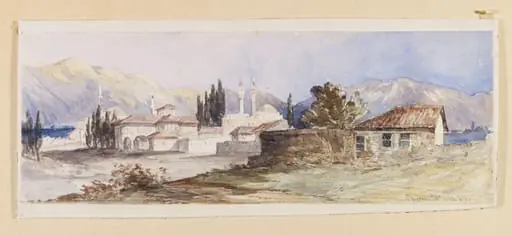 Smyrne
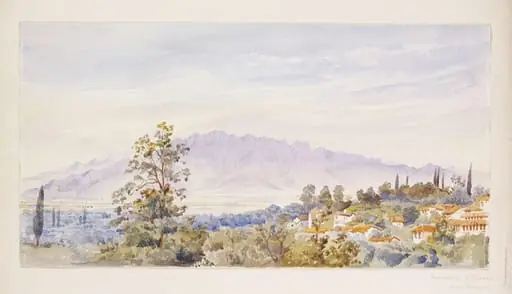 Mountains of Nicaea from Broussa
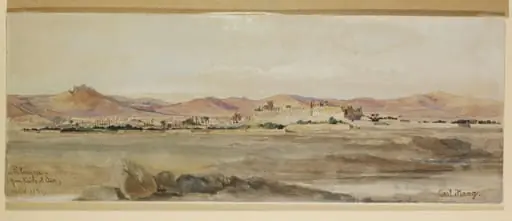 Palmyra (from Kasr el Ain)
 Untitled
 The Convent, Mount Sinai
![`River. 3 Mile [N] of Saboua Nubia "On the Nile", by George de Sausmarez](https://artifactworldgallery.com/img/george-de-sausmarez--river-3-mile-n-of-saboua-nubia-on-the-nile--4584718b99edc50f-w320.webp) `River. 3 Mile [N] of Saboua Nubia "On the Nile"
`River. 3 Mile [N] of Saboua Nubia "On the Nile" Mosque of the Ascension on the Mount of Olives
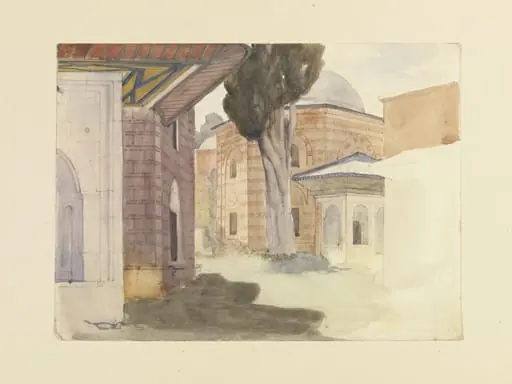 Türbes in the Royal Cemetery of the Muradiye (Murad II), Bursa
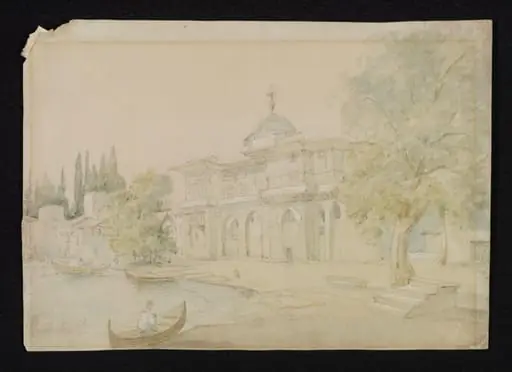 Constantinople
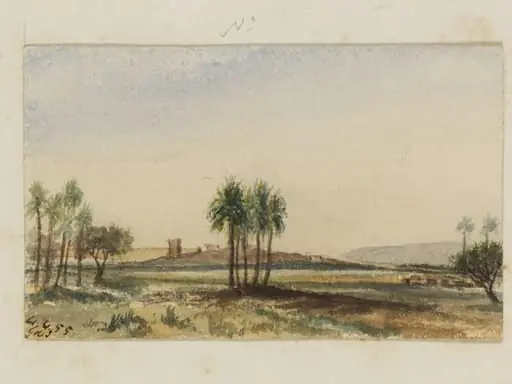 `Temple of Denderah. Distant view from bank of River. Upper Egypt'
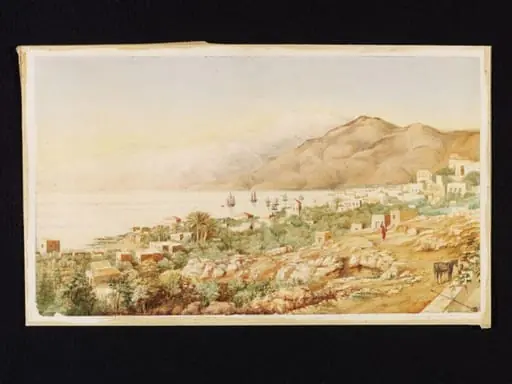 The Town and Bay of Beirut
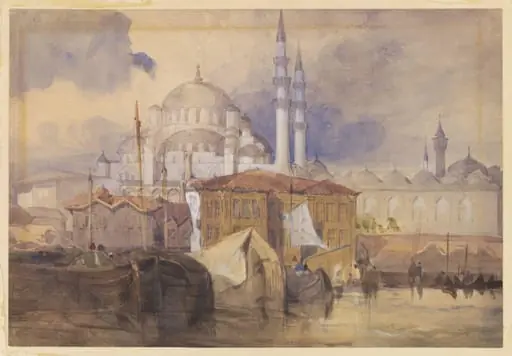 The Yeni Valide Camii