Artwork
Todi Ragini
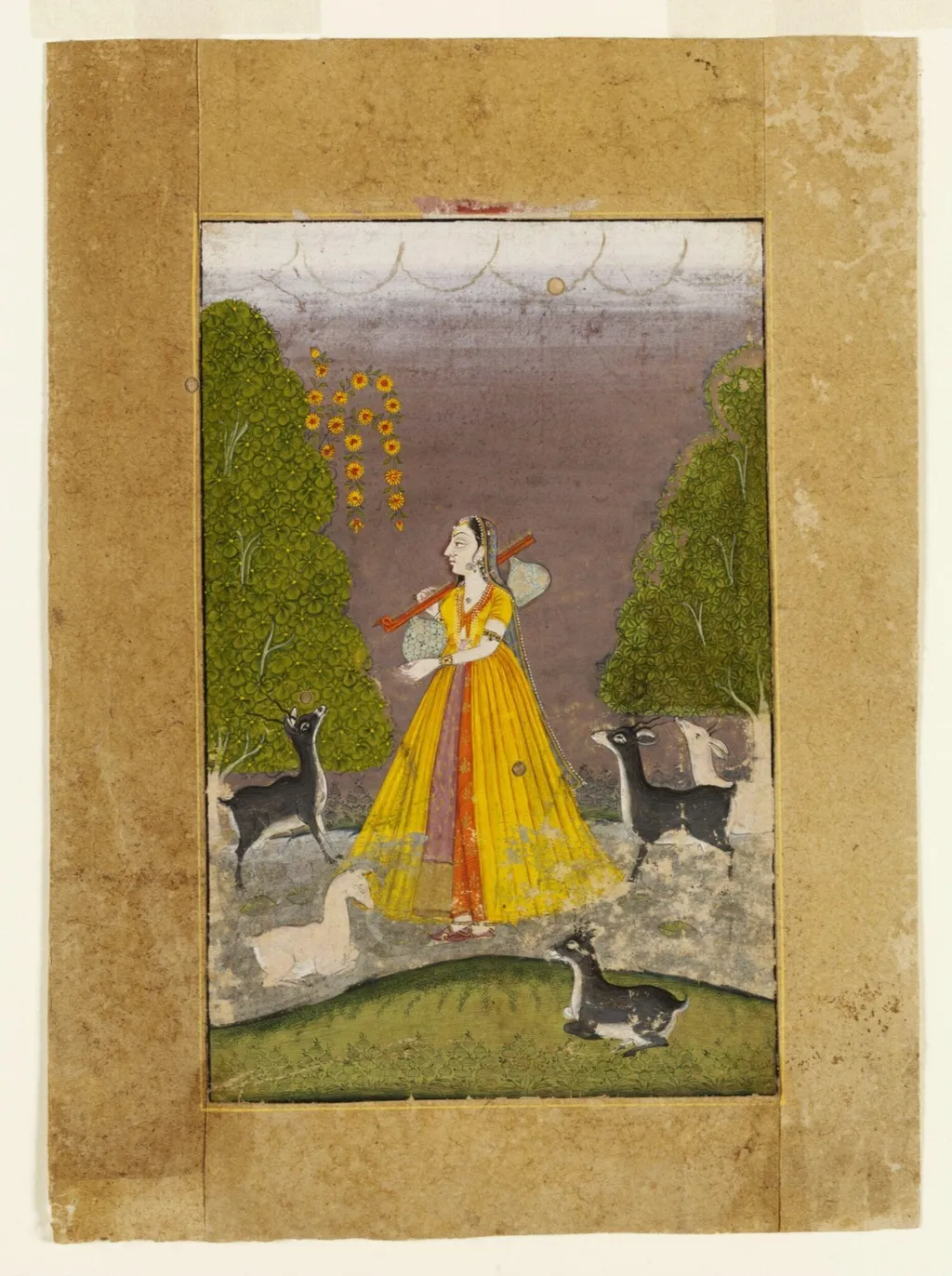
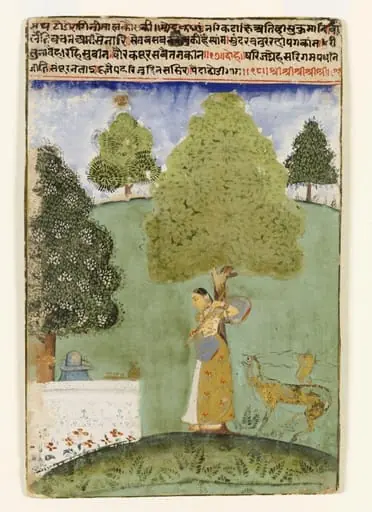
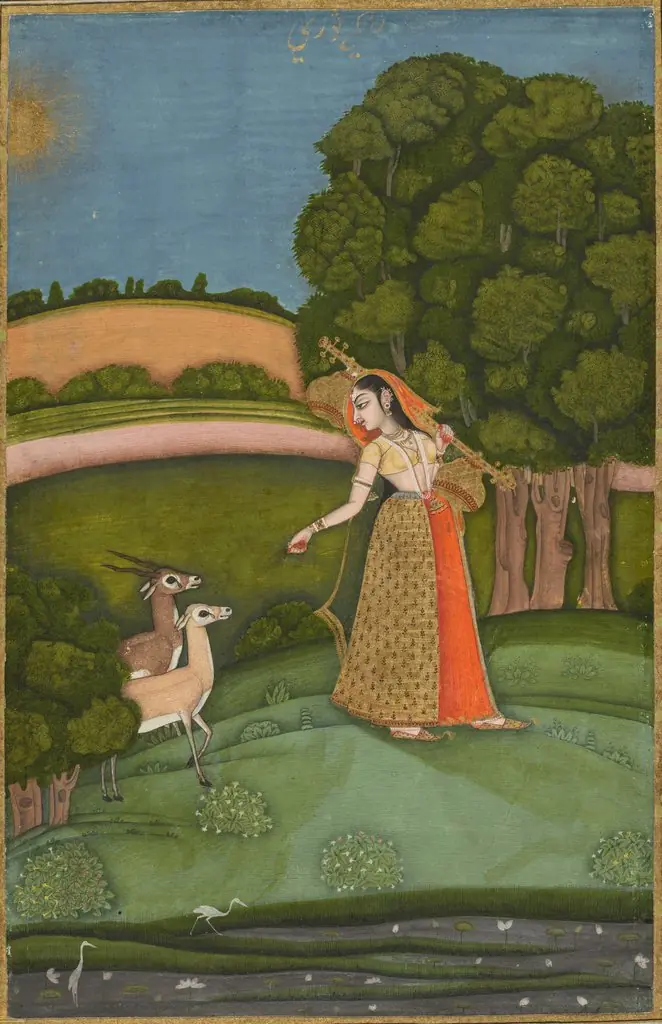
Todi Ragini is a paint painting by the Rococo painting artist Unknown. It dates from 1770 and is held in the collection of the Victoria and Albert Museum.
About this work
Overview
Its delicate execution reflects the Pahari school’s refined aesthetic, blending regional Indian elements with subtle Persian influences.
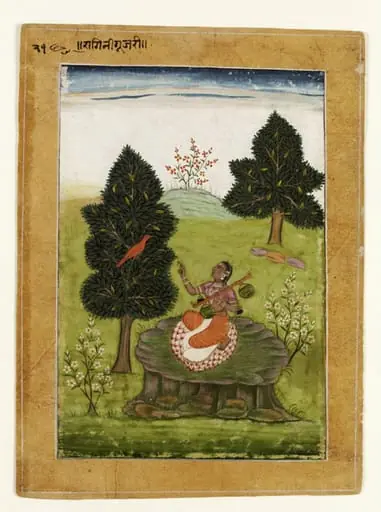
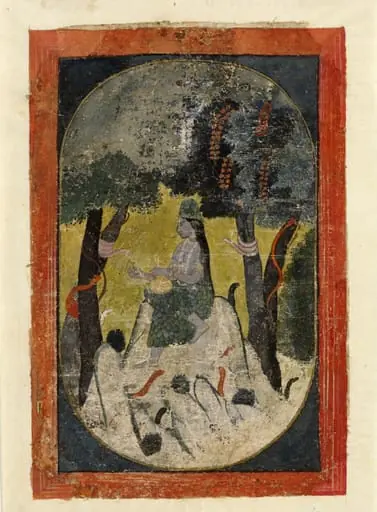
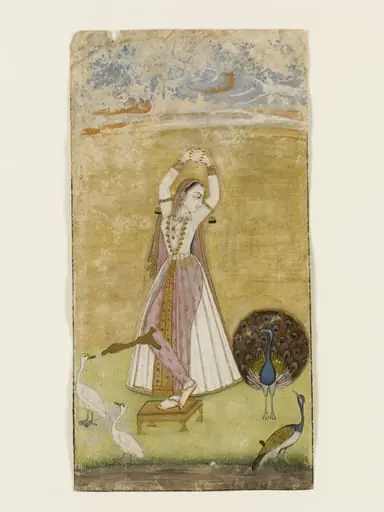
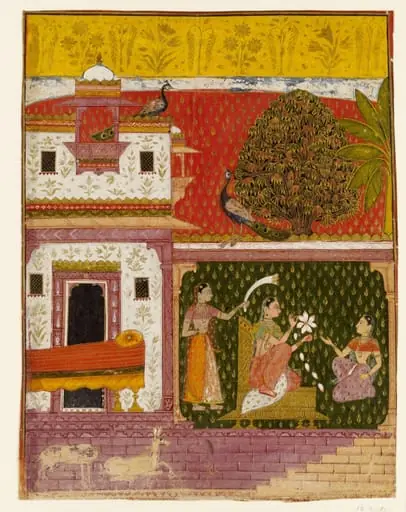
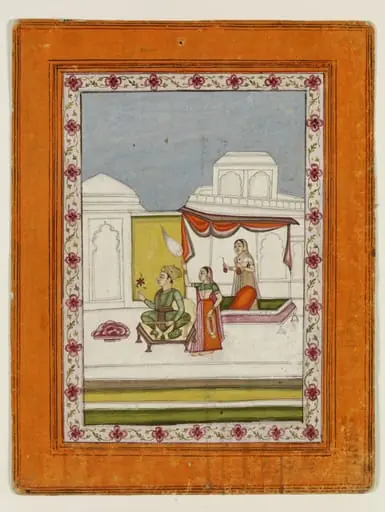
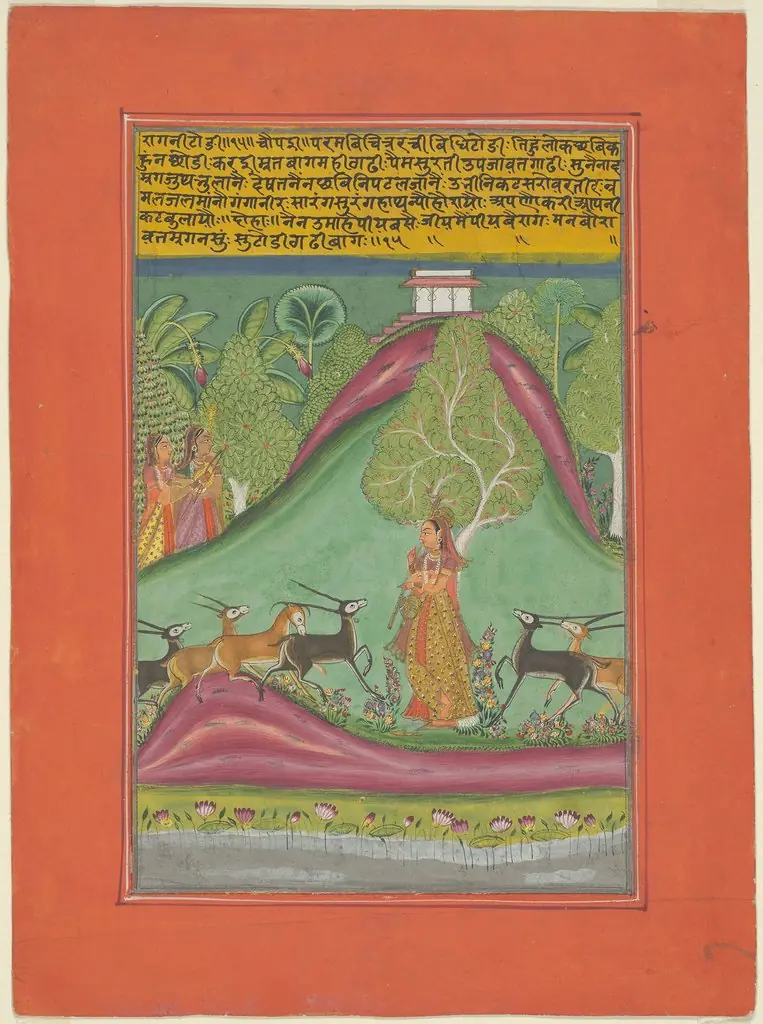
Created in 1770, this opaque watercolour and gold painting on paper illustrates the Todi Ragini, one of a series of musical modes personified in Indian miniature art. It depicts a woman in a garden, engaged with a vina, surrounded by deer. The work belongs to a tradition linking ragas with visual narratives, each evoking a specific time of day, season, or emotional state. Its delicate execution reflects the Pahari school’s refined aesthetic, blending regional Indian elements with subtle Persian influences.
Subject & Meaning
The central figure represents the Todi Ragini, a musical mode associated with late morning and a mood of devotion. Her presence amid deer suggests harmony between human artistry and nature, a common theme in ragini imagery. The vina, an ancient stringed instrument, symbolizes spiritual resonance, while the garden setting reinforces the connection between music and the natural world. The scene is not literal but symbolic, translating sonic emotion into visual form.
Technique & Style
The artist employed fine brushwork to render intricate details: gold leaf highlights on clothing, delicate jewelry, and finely drawn flora. Opaque watercolour allowed for rich, layered tones, particularly in the woman’s yellow garment and red trousers. The background features soft, atmospheric greens, contrasting with the figure’s vivid attire. Persian-inspired softness in the landscape complements the precise Indian rendering of textiles and ornamentation.
History & Provenance
This painting originates from the Pahari region of northern India, likely produced in a royal atelier during the late 18th century. It was part of a larger set illustrating raginis, commissioned by patrons interested in both music and visual poetry. While its exact provenance before entering museum collections is undocumented, similar works from this period are held in institutions such as the Victoria and Albert Museum, suggesting shared artistic networks across north Indian courts.
Context
The ragini paintings emerged from a broader cultural practice in which Hindu musical modes were personified as female figures, each tied to a mood, season, or time of day. These works were often created as illustrated manuscripts or single folios for courtly contemplation. The fusion of local iconography with Persian stylistic elements reflects the syncretic artistic environment of 18th-century north Indian courts, where Mughal and regional traditions intersected.
Legacy
Though no longer performed in their original ritual context, ragini paintings remain important for understanding how Indian classical music was visualized and internalized. They influenced later regional styles and continue to inform contemporary interpretations of Indian aesthetics. Their preservation in major collections ensures ongoing scholarly engagement with the interplay of sound, symbol, and image in pre-colonial South Asian art.
Artist & collection

 Domestic Scene
 Giacomo and Cardinal Marco, investing Andrea, Abbot of San Zeno, with his Benefice
 The Nymph of Fontainebleau
 Portrait of a Woman
 Madonna and Child with Saints in the Enclosed Garden
 Venus and Minerva
 Family Group of Four on Sofa
 Wall painting from Room H of the Villa of P. Fannius Synistor at Boscoreale