Artwork
ulcică - puișor
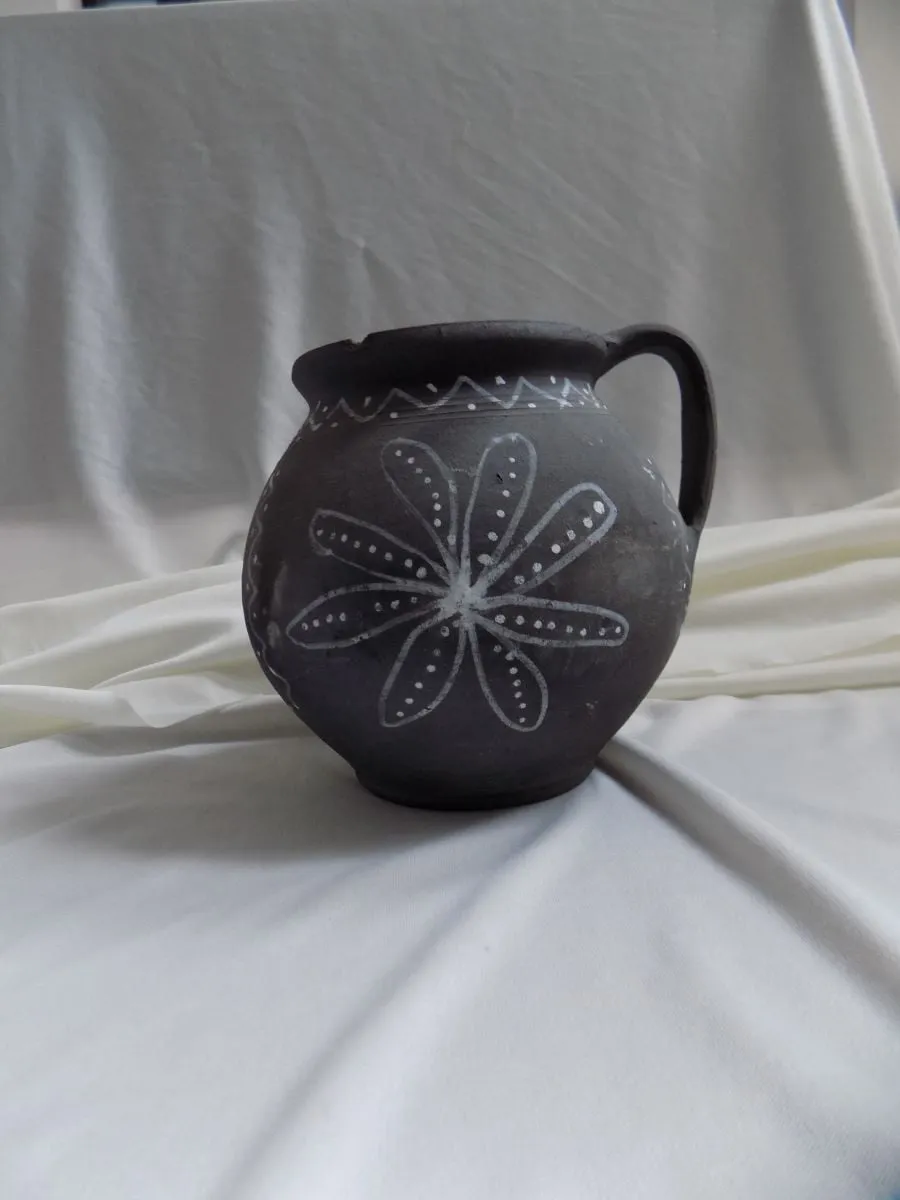
ulcică - puișor is a photography by Unknown. It dates from 1969 and is held in the collection of the Moldova National Museum Complex.
About this work
Overview
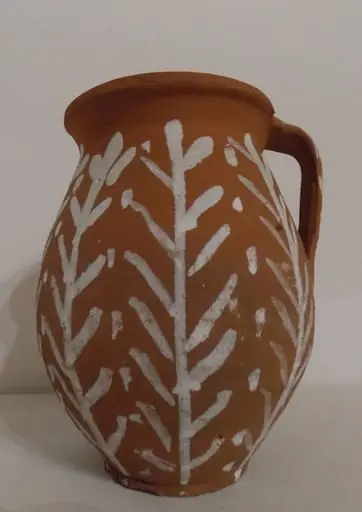
Its form is simple, with a single handle and an uneven, hand-thrown silhouette that suggests handmade production.
This black ceramic pitcher, known as ulcică - puișor, is a modest utilitarian object with minimal ornamentation. Its form is simple, with a single handle and an uneven, hand-thrown silhouette that suggests handmade production. The surface retains subtle irregularities, and the white painted decoration contrasts sharply against the dark clay, drawing attention to the central motif without elaborate embellishment.
Subject & Meaning
The primary decoration is a white starburst pattern, resembling a sun or stylized flower, with clustered dots within its radiating arms. This symbol may reflect natural or cosmic themes common in folk traditions, possibly signifying protection, fertility, or seasonal cycles. Its placement on the vessel’s front suggests it was intended for visual emphasis during use or display, though its exact symbolic meaning remains unrecorded.
Technique & Style
The pitcher was formed by hand, resulting in a slightly asymmetrical body and rough texture. The white pigment, applied thickly in places, creates a tactile surface that catches light differently than the smooth clay. The design is rendered with loose, direct brushwork, avoiding precision in favor of expressive simplicity. The lack of glaze or refined finish underscores its domestic, non-elite origins.
History & Provenance
The object originates from a regional folk pottery tradition, likely produced in rural Eastern Europe during the late 19th or early 20th century. It was probably made for everyday use in a household, not for ceremonial or commercial purposes. No documented ownership history exists, and its survival appears accidental, preserved as a representative example of vernacular ceramic practice.
Context
This pitcher belongs to a broader category of folk ceramics where functional vessels carried symbolic motifs passed through generations. Similar starburst designs appear in other regional pottery, often linked to pre-Christian symbols adapted into domestic life. The absence of glaze and the use of locally sourced clay align with limited resources and self-sufficient craft practices common in agrarian communities of the time.
Legacy
Though not widely known outside regional collections, this pitcher exemplifies how ordinary objects carried cultural expression through form and decoration. It contributes to the understanding of non-elite artistic production, where aesthetics emerged from necessity and tradition rather than formal training. Its preservation offers insight into the visual language of everyday life in rural communities.
Artist & collection
 Domestic Scene
 Giacomo and Cardinal Marco, investing Andrea, Abbot of San Zeno, with his Benefice
 The Nymph of Fontainebleau
 Portrait of a Woman
 Madonna and Child with Saints in the Enclosed Garden
 Venus and Minerva
 Family Group of Four on Sofa
 Wall painting from Room H of the Villa of P. Fannius Synistor at Boscoreale
 Puișor
 Puisor
 lăptăreț
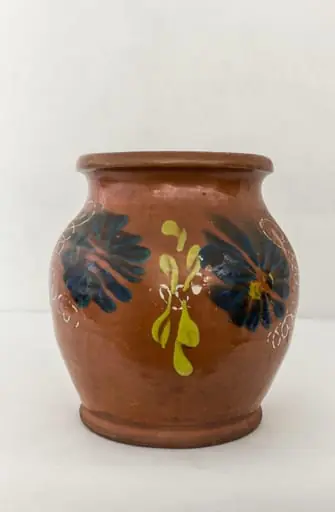 Vas cu corp bombat, cu buza răsfrântă, cu o toartă prinsă în două puncte, smălțuit în exterior și parțial în interior, decorat pe suprafața exterioară prin pictare cu motive fitomorfe (frunze) și florale (albăstrele), încadrate de linii spiralate. Cromatică: albastru, alb, galben, verde, maro, cărămiziu.
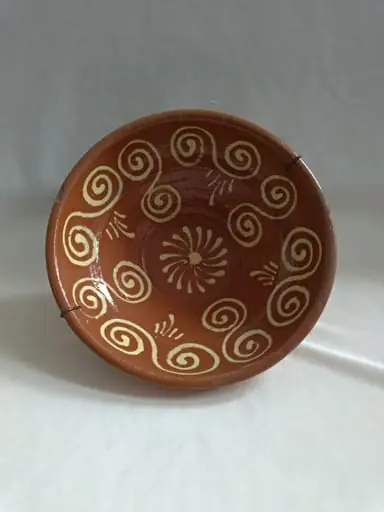 strachină
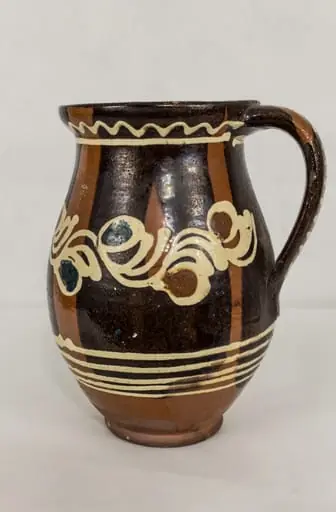 Vas cu corpul ușor curbat în partea centrală, prevăzut cu toartă laterală prinsă în două puncte, cu buza ușor răsfrântă spre exterior, smălțuit în exterior și interior, decorat pe toată suprafața în mai multe registre: pe gâtul piesei, un motiv circular peste care se suprapune motivul geometric valul; pe pântecul piesei, un motiv floral stilizat (ramură cu flori și frunze); spre baza piesei, o succesiune de cinci motive circulare concentrice; pe toartă, motive punctiforme. Cromatică: alb, albastru, cărămiziu, maro.
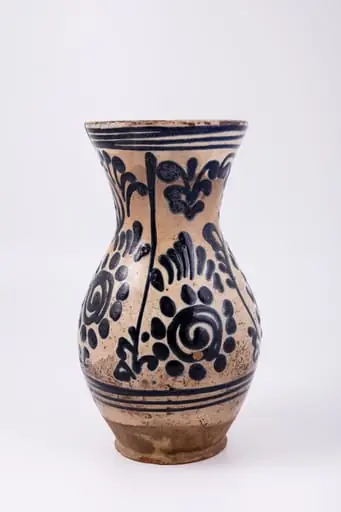 Cană cu corpul bombat, gât scurt, puternic evazat, toarta dispusă de la gât la diametrul maxim al vasului. Suprafața decorativă a vasului este încadrată între linii subțiri dispuse în partea superioară și inferioare. Decorul central reprezintă calea cu sori stilizată alcătuită din lujeri și floarea-soarelui. Cromatica: alb și albastru cobalt.
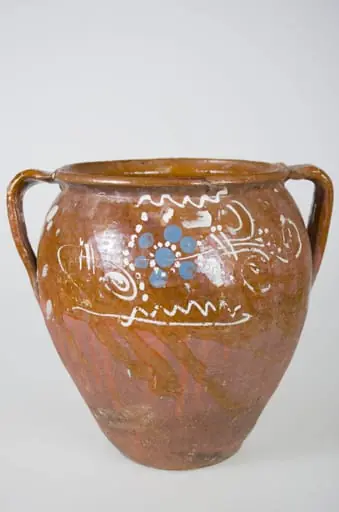 Vas de formă bitronconică și buză răsfrântă, smălțuit în partea superioară. Prezintă două toarte ce unesc partea cu gabarit maxim cu buza vasului. Decorații realizate în partea superioară, prin pictare cu pensula, într-un registru delimitat de o linie albă ondulată dispusă circular sub buză și o alta dublată de o linie dreaptă în zona diametrului maxim a vasului. Motive floral-vegetale, punctiforme și liniare, ilustrând două flori, câte una pe fiecare parte, cu petale albastre sugerate de puncte. Cromatică: fond: brun; motive: albastru; alb.
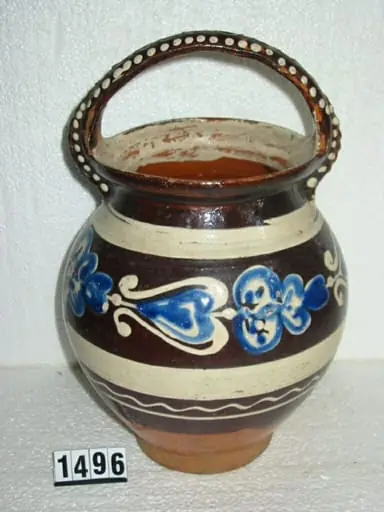 oală de lapte cu mănușar
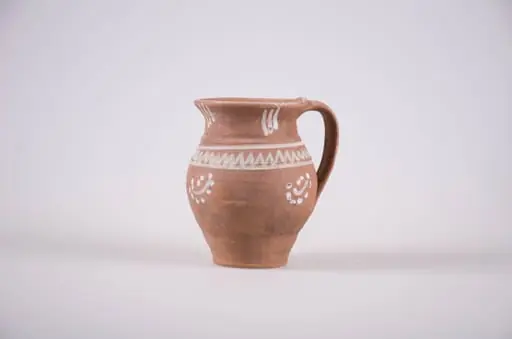 Recipient bitronconic cu gura largă. Prezintă toartă laterală care pleacă din buză până la diametrul maxim al vasului. Decor geometrizant pe partea superioară a vasului și pe toartă; linii paralele, cercuri, linie ondulată, puncte. Cromatică: fond: cărămiziu; motive trasate cu angobă albă. Vasul este nesmălțuit.
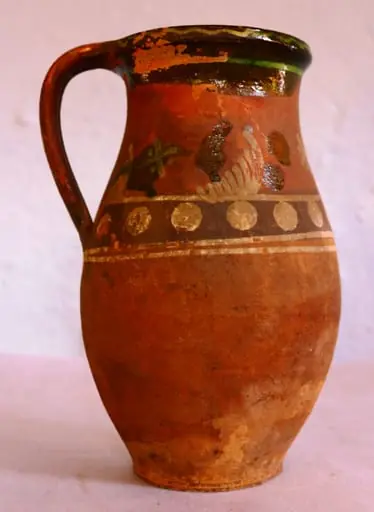 Vas cu corpul bombat, gura largă și o toartă laterală. Central, între două cercuri la bază și unul deasupra, un șir de buline. În partea superioară, patru grupuri de linii curbe, grupate cu o creastă de cocoș. Cruci de punte între brațe. O linie în zig-zag pe gura vasului și una orizontală pe toartă. Cromatică: cărămiziu, brun, alb-gălbui, verde. Timp de lucru: circa două spătămâni.
 Moșoaică - ulcică de moși