Artwork
Untitled
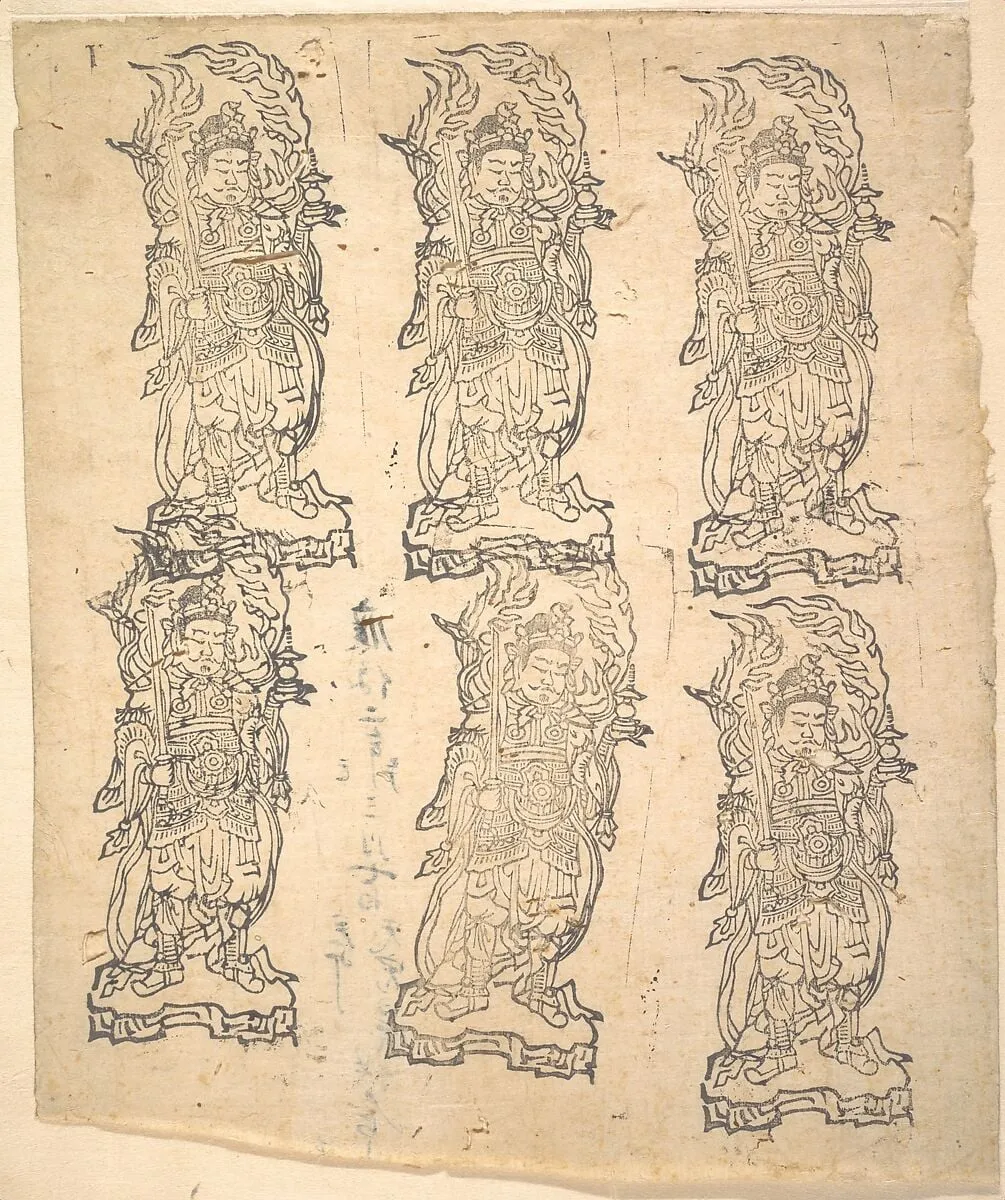
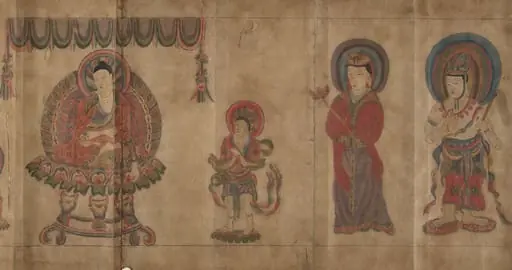
Untitled is an ink print by Unknown. It dates from 1162 and is held in the collection of the Metropolitan Museum of Art. This woodblock print on paper presents three elongated figures standing atop rocky pedestals.
About this work
Overview
No color or shading is used, yet the intricate detailing in robes and hair creates a strong sense of volume and spatial presence.
This woodblock print on paper presents three elongated figures standing atop rocky pedestals. Rendered entirely in black ink, the composition relies on precise line work to define form and texture. No color or shading is used, yet the intricate detailing in robes and hair creates a strong sense of volume and spatial presence. The figures are arranged in a vertical alignment, emphasizing their solemn, statuesque posture.
Subject & Meaning
The three figures, nearly identical in facial structure and expression, suggest a symbolic or ritualistic role rather than individual portraits. Their layered robes, elaborate headdresses, and halo-like crowns imply spiritual or divine status. The calm, neutral expressions and uniformity across the figures may indicate an idealized representation, possibly of deities, ancestors, or enlightened beings within a religious or mythological framework.
Technique & Style
The artist employs fine, controlled lines to construct form through cross-hatching and contouring, demonstrating mastery of monochrome woodblock printing. The folds in the robes are rendered with dense, intersecting strokes that suggest weight and movement without tonal gradation. Sharp, clean edges and rhythmic patterns in the hair and fabric enhance visual rhythm, while the absence of color focuses attention on line quality and compositional balance.
History & Provenance
The work is a traditional Japanese woodblock print, likely produced during the Edo period, when such prints were widely circulated among urban populations. Its technical precision and subject matter align with religious or literary themes common in ukiyo-e and devotional prints of the time. Exact origin and maker remain undocumented, but its style reflects the conventions of artisan workshops specializing in ink-based prints.
Context
Created in a cultural milieu where printmaking served both artistic and devotional purposes, this piece reflects the influence of Buddhist and Shinto iconography. Similar figures appear in temple art and illustrated scriptures, where repetition and serenity convey transcendence. The use of ink alone, without color, may indicate a connection to scholarly or monastic aesthetics that valued restraint and precision over ornamentation.
Legacy
This print exemplifies the enduring capacity of line-based printmaking to convey spiritual presence without reliance on color or realism. Its influence can be traced in later modernist artists who explored minimalism and the expressive potential of line. Though not widely known outside specialized collections, it remains a quiet testament to the precision and symbolic power of traditional Japanese print techniques.
Artist & collection

 Domestic Scene
 Giacomo and Cardinal Marco, investing Andrea, Abbot of San Zeno, with his Benefice
 The Nymph of Fontainebleau
 Portrait of a Woman
 Madonna and Child with Saints in the Enclosed Garden
 Venus and Minerva
 Family Group of Four on Sofa
 Wall painting from Room H of the Villa of P. Fannius Synistor at Boscoreale
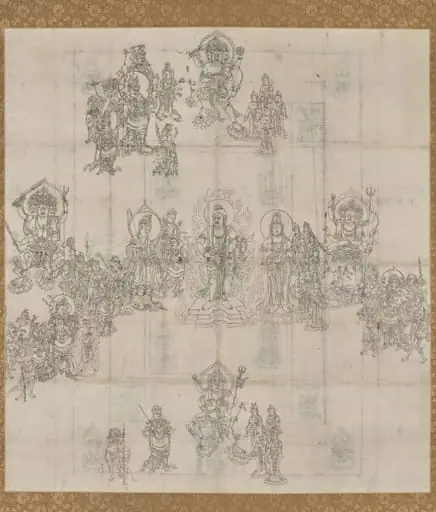 Iconographical Sketch (Zuzō) for the "Benevolent Kings Sutra Mandala"
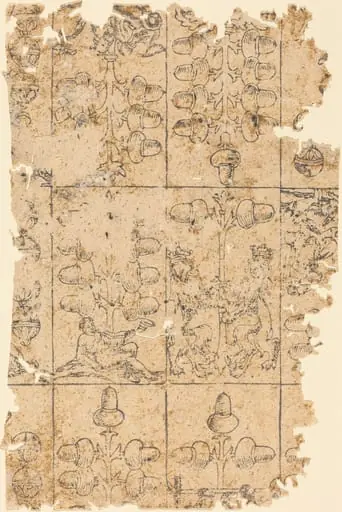 Playing Card
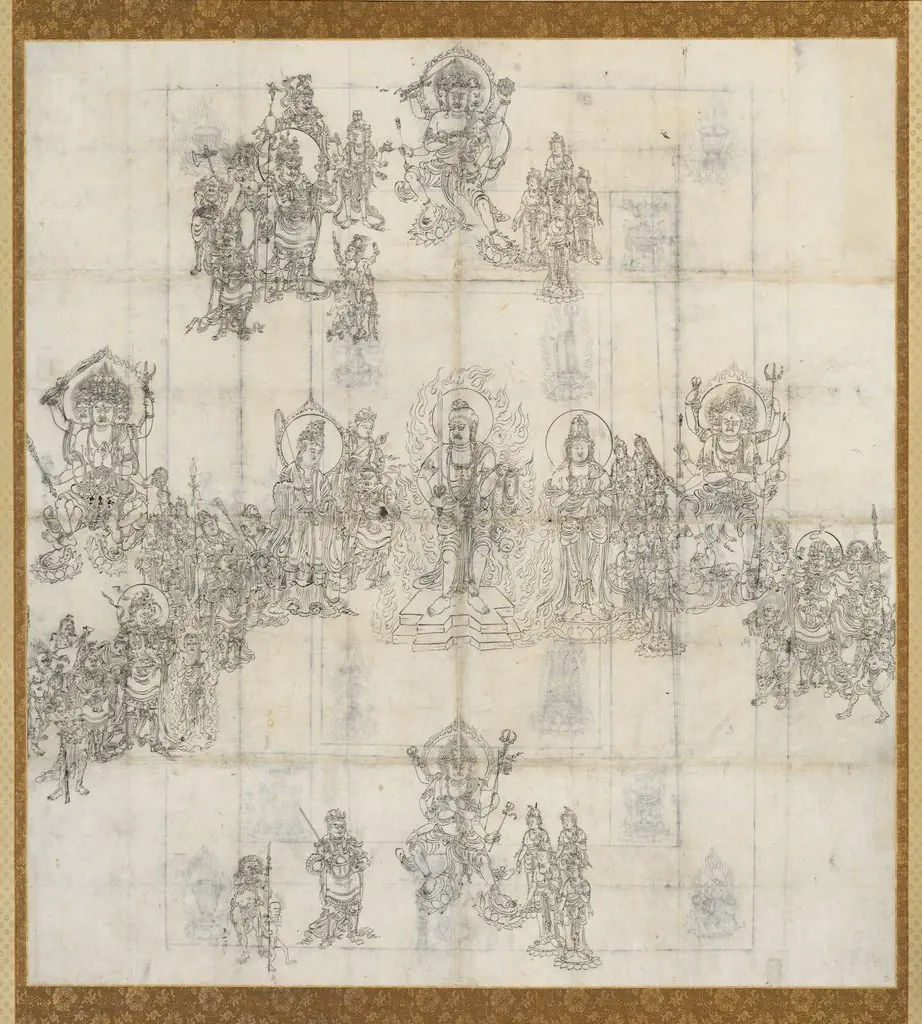 Iconographical Sketch (Zuzō) for the Benevolent Kings Sutra Mandala
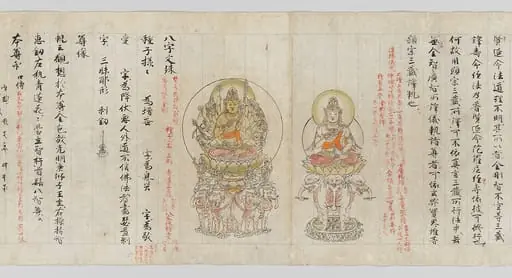 真言諸尊図像抄|Scroll from the Compendium of Iconographic Drawings (Zuzōshō)
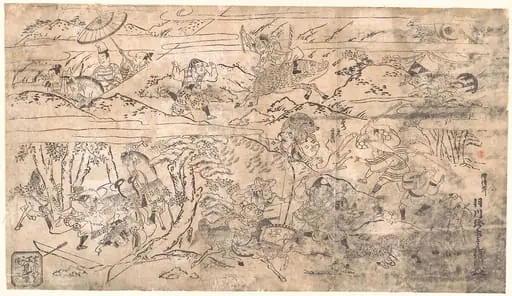 Untitled
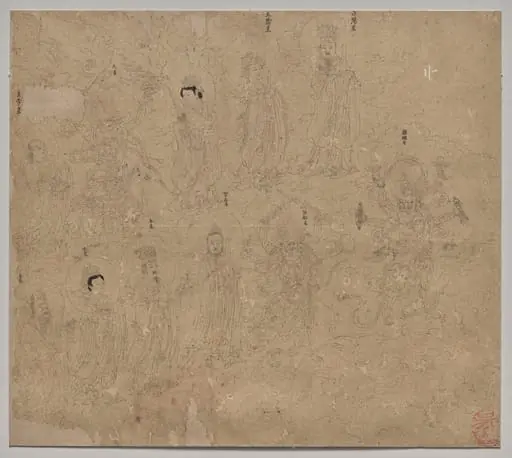 Album of Daoist and Buddhist Themes: Procession of Daoist Deities: Leaf 21
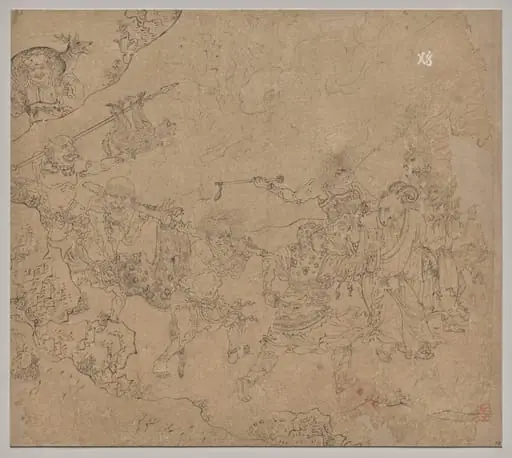 Album of Daoist and Buddhist Themes: Search the Mountain: Leaf 45
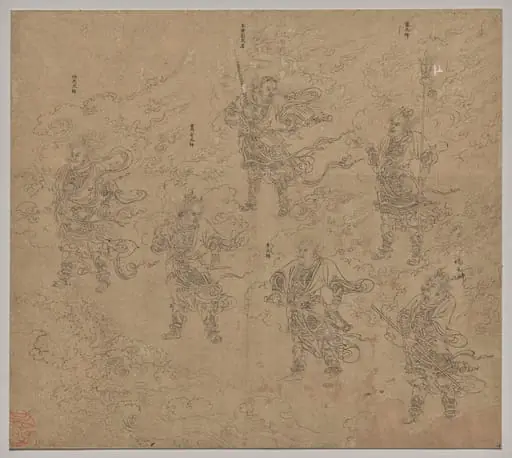 Album of Daoist and Buddhist Themes: Procession of Daoist Deities: Leaf 16
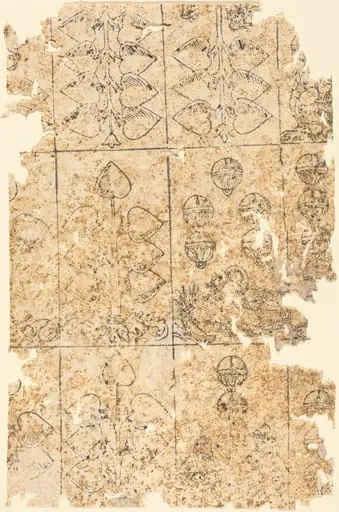 Playing Card
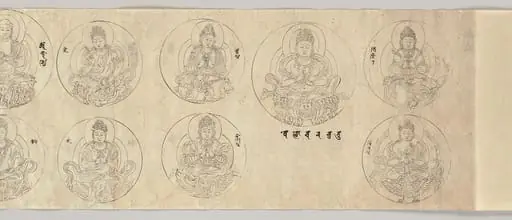 金剛界曼荼羅諸尊図像|Scroll of Deities of the Diamond World Mandala
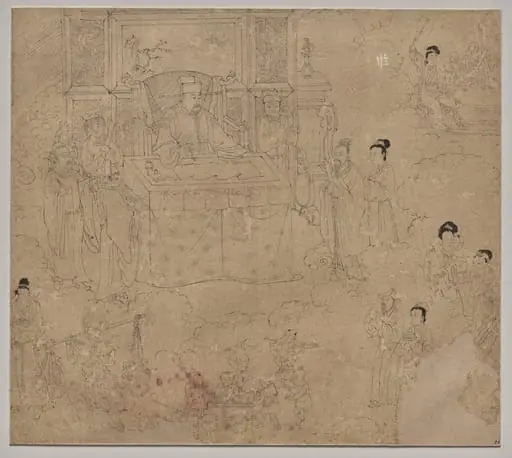 Album of Daoist and Buddhist Themes: Kings of Hells: Leaf 28
 Untitled