Artwork
Untitled
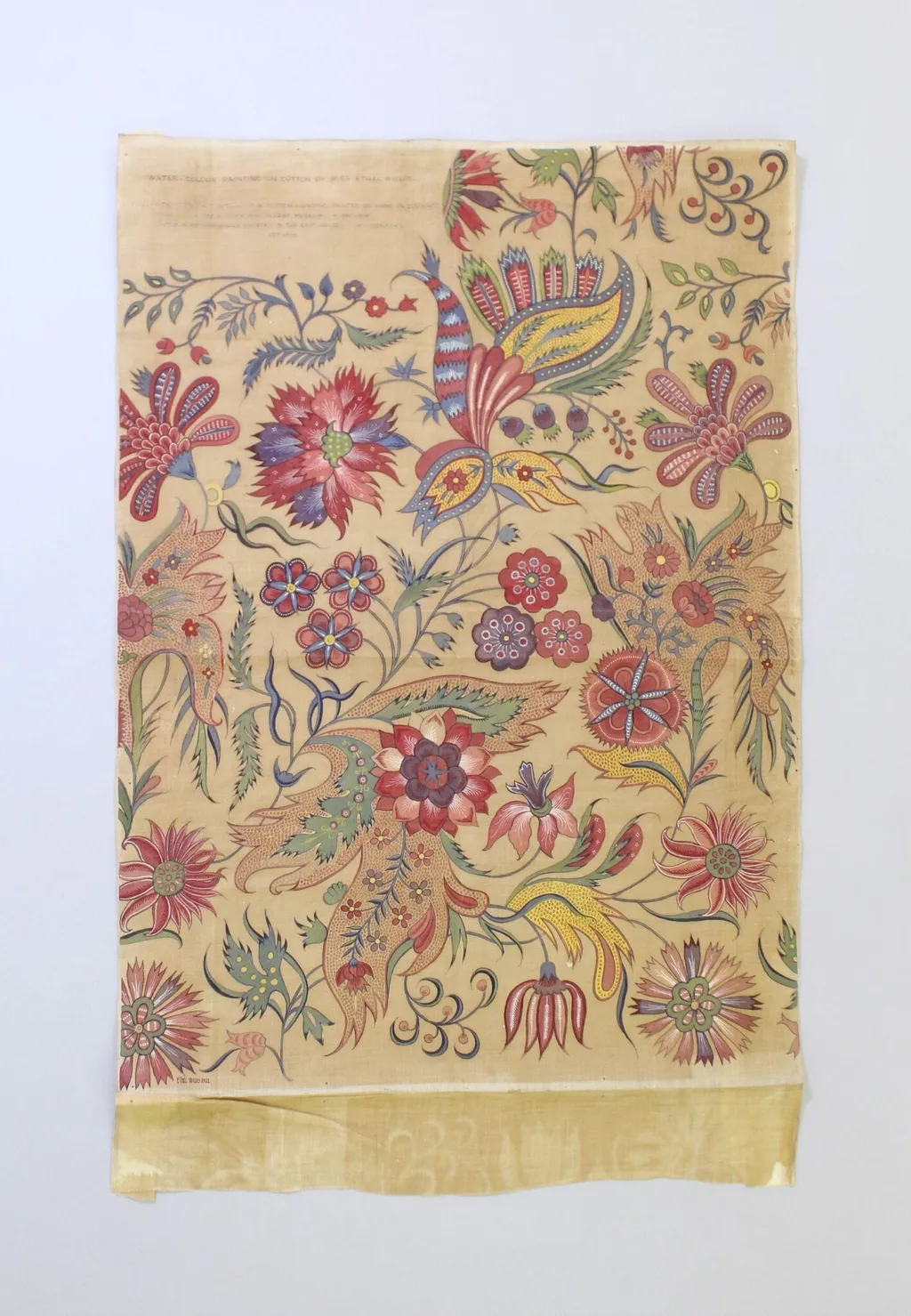
Untitled is a paint painting by the Post-Impressionist artist Unknown. It dates from 1902 and is held in the collection of the Victoria and Albert Museum. This early twentieth‑century work is a watercolour executed on a cotton fabric, measuring the full size of the original textile it imitates.
About this work
Overview
This early twentieth‑century work is a watercolour executed on a cotton fabric, measuring the full size of the original textile it imitates.
This early twentieth‑century work is a watercolour executed on a cotton fabric, measuring the full size of the original textile it imitates. The piece reproduces an eighteenth‑century Dutch‑style hand‑painted cotton hanging, a type of decorative textile that was produced in the East Indies and later imported to Europe. The copy bears the signature of Ethel Willis, indicating her role in its creation.
Subject & Meaning
The painted surface is densely populated with stylised foliage, featuring scrolling stems that bear large, boldly rendered blossoms. The botanical motif combines a variety of flower forms and leaves, arranged in a rhythmic, almost ornamental pattern that suggests both natural abundance and decorative intent, typical of textile designs meant to enliven interior spaces.
Technique & Style
Using watercolour pigments applied directly onto cotton, the artist achieved vivid hues of red, yellow, green, with accents of blue and purple. The brushwork varies between broad washes for background fields and fine, linear strokes for details such as dots and stripes on the stems. The edges of the fabric are finished in a uniform yellow band, framing the intricate central design.
History & Provenance
The original Dutch‑influenced hanging dates to the eighteenth century and was likely produced in the East Indies before reaching European collections. In 1902 Ethel Willis produced this full‑scale replica, which now forms part of the Victoria and Albert Museum’s holdings. The museum acquired the piece as an example of cross‑cultural textile art and its nineteenth‑century reinterpretation.
Context
Such painted cotton hangings were commonly employed as wall decorations or ceremonial textiles in colonial households, where they added colour and exotic flair to interiors. The replication by Willis reflects a period interest in preserving and studying historic decorative arts, providing contemporary viewers with a tangible reference to the original East Indies production.
Artist & collection

 Domestic Scene
 Giacomo and Cardinal Marco, investing Andrea, Abbot of San Zeno, with his Benefice
 The Nymph of Fontainebleau
 Portrait of a Woman
 Madonna and Child with Saints in the Enclosed Garden
 Venus and Minerva
 Family Group of Four on Sofa
 Wall painting from Room H of the Villa of P. Fannius Synistor at Boscoreale
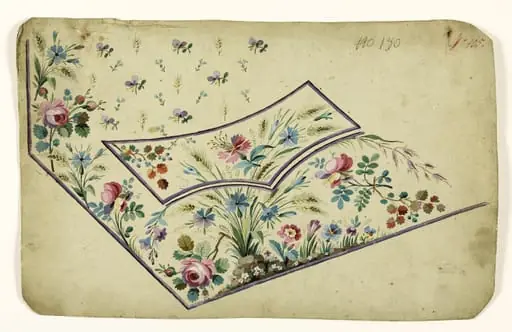 Composition de fleurs sauvages, d'épis et d'amoncellement de galets, projets de broderies de gilet, XVIIIème siècle
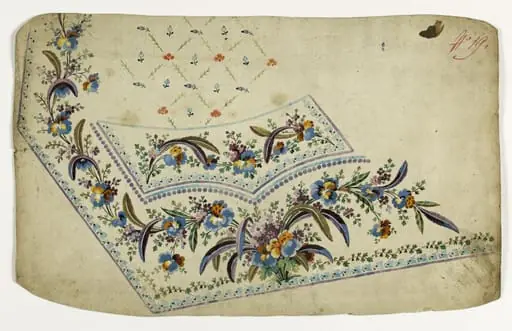 Gilet fleurs bleues et orange, projets de broderies de gilet, XVIIIème siècle
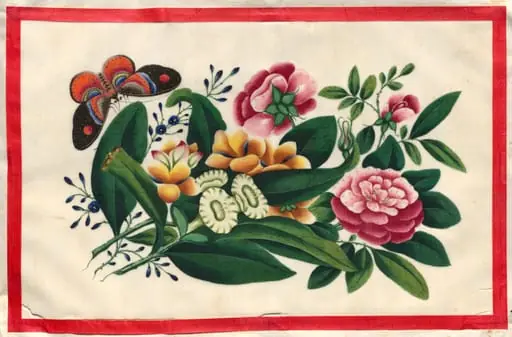 Painting Eight from Illustrated Book of Flowers and Butterflies
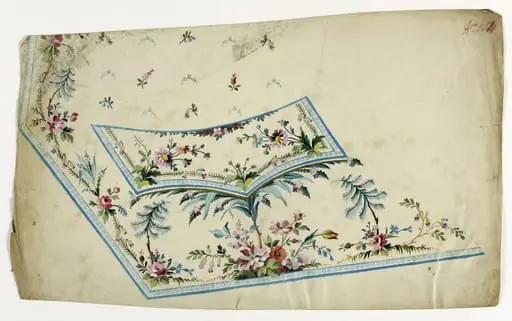 Gilet aux perles bleues, projets de broderies de gilet, XVIIIème siècle
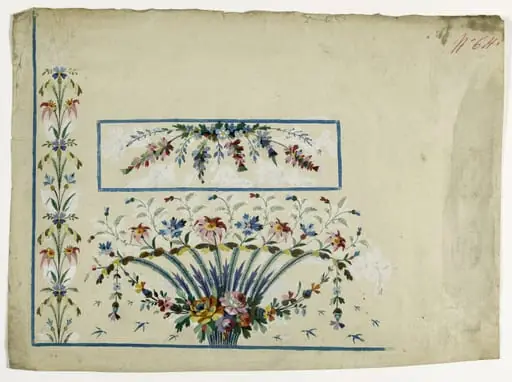 Gilet décor bouquet oeillets et églantines, projets de broderies de gilet, XVIIIème siècle
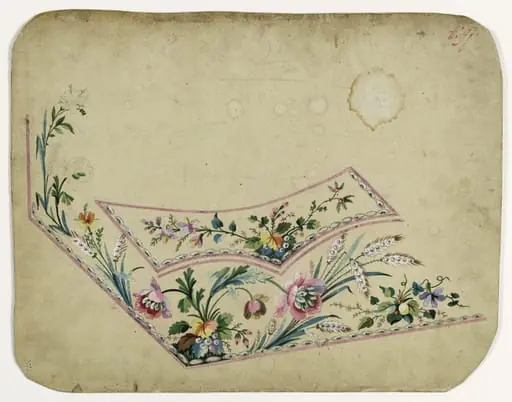 Gilet à la bordure rose, projets de broderies de gilet, XVIIIème siècle
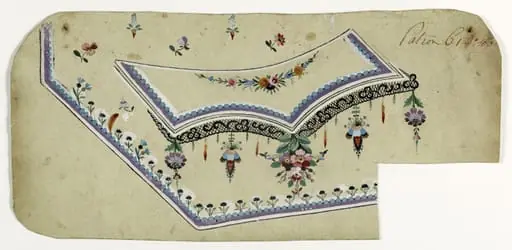 Gilet à la dentelle noire, projets de broderies de gilet, XVIIIème siècle
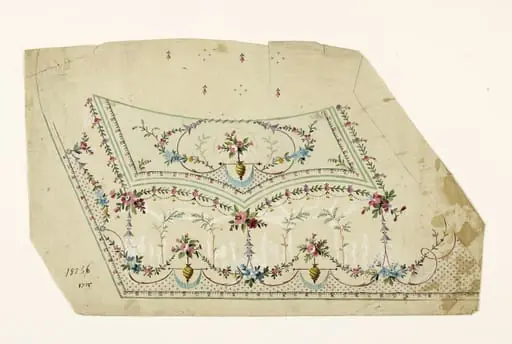 Composition de guirlandes de fleurs, de clochettes et de perles, motifs de culots torsadés et suspendus, projets de broderies de gilet, XVIIIème siècle
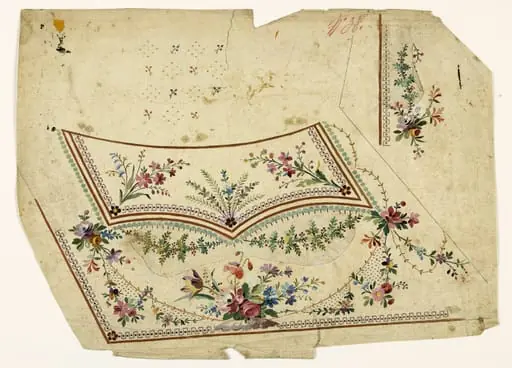 Composition avec bouquets de fleurs, frises de perles amandes et de grecques mauves, projets de broderies de gilet, XVIIIème siècle
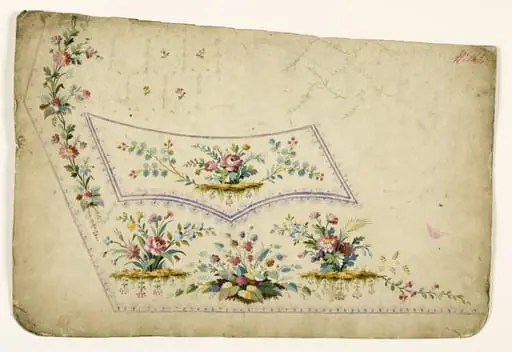 Compositions florales sur tertre et guirlandes de fleurs, projets de broderies de gilet, XVIIIème siècle
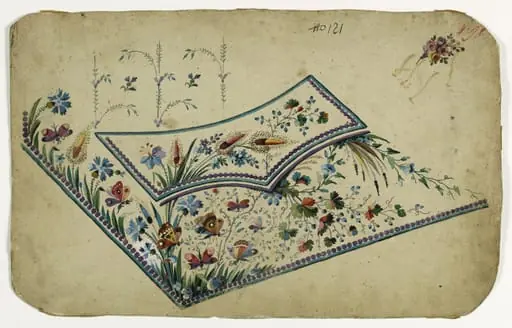 Gilet aux papillons multicolores, projets de broderies de gilet, XVIIIème siècle
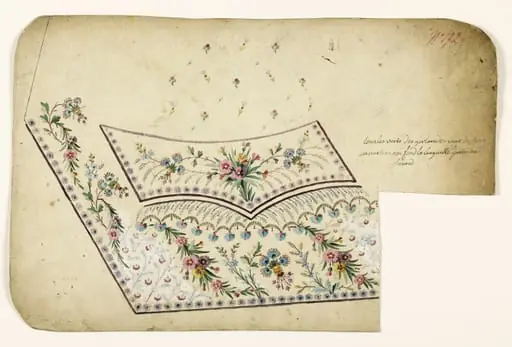 Composition de guirlandes de fleurs, frises de fleurs étoilées mauves et semis de fleurs, projets de broderies de gilet, XVIIIème siècle