Artwork
Varuna, god of the water and the ocean and guardian of the west, riding on a makara (mythological water creature).
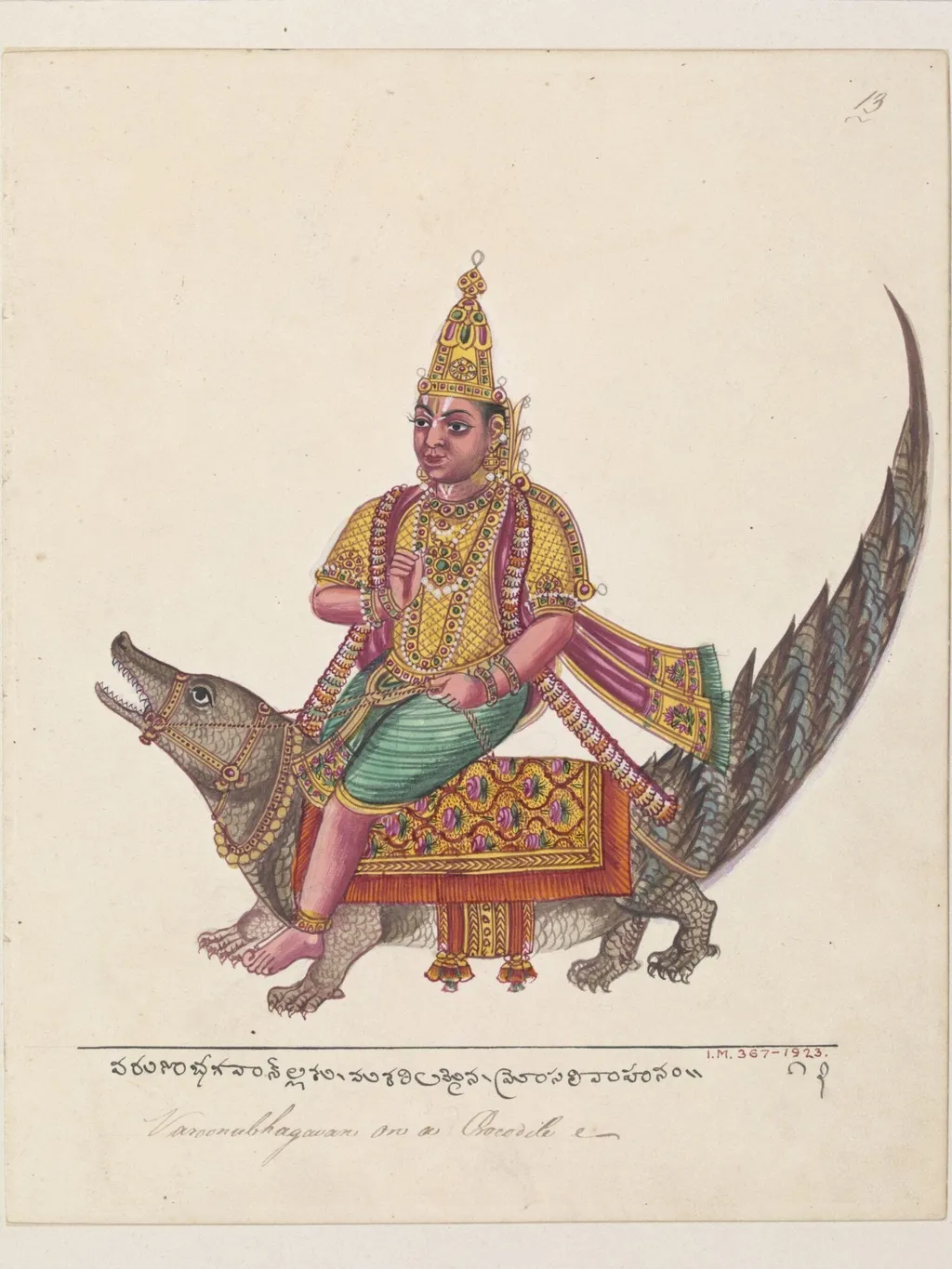
Varuna, god of the water and the ocean and guardian of the west, riding on a makara (mythological water creature). is a paint painting by the Romanticist artist Unknown. It dates from 1820 and is held in the collection of the Victoria and Albert Museum.
About this work
Overview
This painting portrays Varuna, the Vedic deity associated with water, the ocean, and the western direction, mounted atop a makara—a hybrid aquatic creature.
This painting portrays Varuna, the Vedic deity associated with water, the ocean, and the western direction, mounted atop a makara—a hybrid aquatic creature. Rendered in vivid pigments and precise outlines, the composition reflects a tradition of Indian miniature painting that blends divine imagery with elaborate ornamentation. The scene is framed as a celestial procession, emphasizing ritual grandeur over naturalism.
Subject & Meaning
Varuna, as guardian of cosmic order and aquatic realms, is depicted in regal attire to signify his authority over waters and moral law. The makara, a composite of crocodile, fish, and serpent features, symbolizes the untamed forces of the deep. Together, they represent the divine control over nature’s cycles, reinforcing Varuna’s role as both protector and enforcer of dharma.
Technique & Style
The work employs bold, flat areas of color—yellow, red, and gold—with fine linear detailing to define garments and scales. Facial features and anatomy are stylized, not anatomically accurate, aligning with conventions of pre-modern Indian painting. The makara’s tail curls dynamically, its body adorned with decorative stripes, enhancing the mythic tone through rhythmic patterns rather than realistic texture.
History & Provenance
Created during the late Mughal or early Rajput period, this painting likely originated in a royal atelier where Hindu deities were frequently illustrated for devotional or courtly use. Its preservation in the Victoria and Albert Museum suggests it was collected during the British colonial era, possibly as part of a broader effort to document Indian artistic traditions.
Context
Artists of this era often fused mythological narratives with ornamental excess, reflecting a cultural preference for symbolic richness over naturalistic representation. Such images served religious, educational, and aesthetic purposes, appearing in manuscripts or as standalone devotional pieces. The inclusion of textual cues confirms the painting’s function as a visual aid to sacred stories.
Legacy
This painting exemplifies the enduring influence of Vedic iconography in South Asian visual culture. Its stylistic choices influenced later regional schools and continue to inform contemporary interpretations of Hindu deities in art. As a preserved artifact, it offers insight into how divine figures were visually codified across centuries of artistic practice.
Artist & collection

 Domestic Scene
 Giacomo and Cardinal Marco, investing Andrea, Abbot of San Zeno, with his Benefice
 The Nymph of Fontainebleau
 Portrait of a Woman
 Madonna and Child with Saints in the Enclosed Garden
 Venus and Minerva
 Family Group of Four on Sofa
 Wall painting from Room H of the Villa of P. Fannius Synistor at Boscoreale
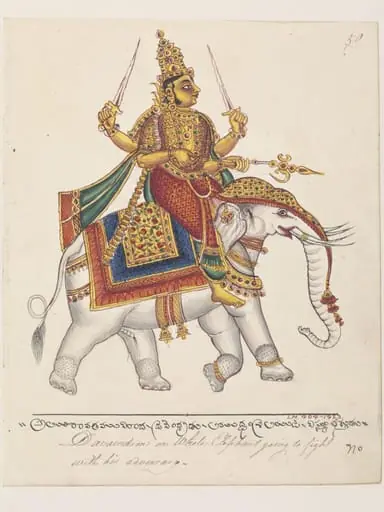 Indra, chief of the gods and the guardian of the east, on his elephant, Airavata.
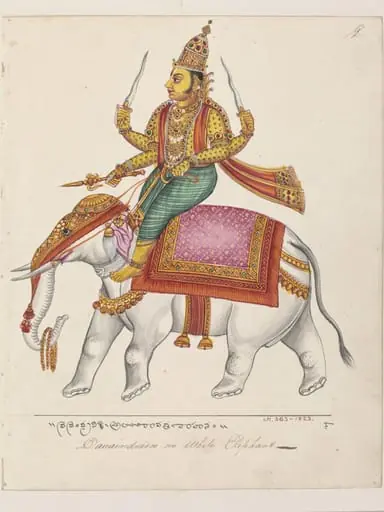 Indra, the god of storms, riding on a white elephant, Airavata.
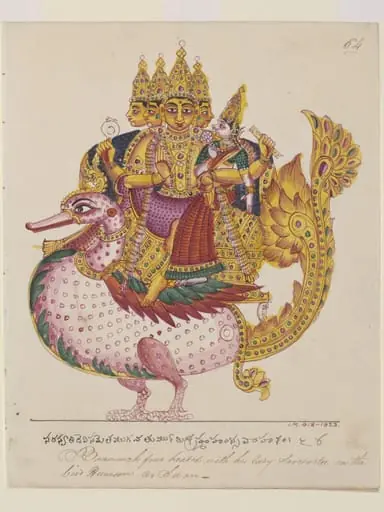 Brahma
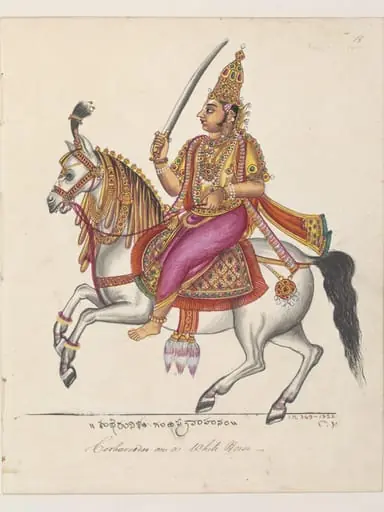 Kubera, the god of wealth and guardian of the north, riding on a horse
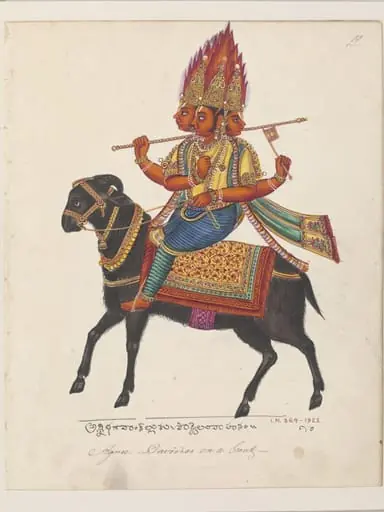 The Vedic god Agni, the god of fire and guardian of the south-east
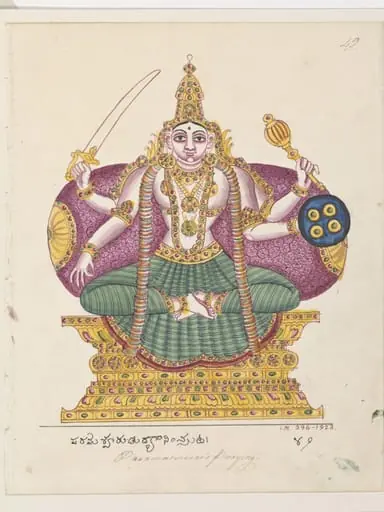 Shiva holding a sword, mace and shield.
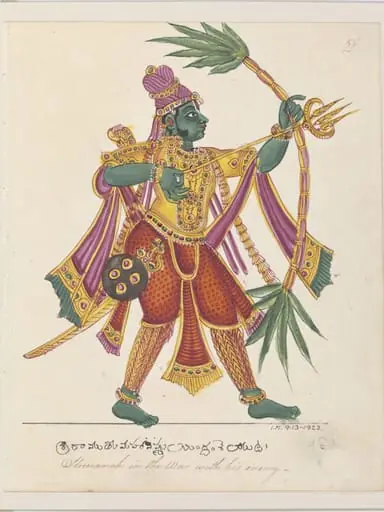 A green-skinned warrior
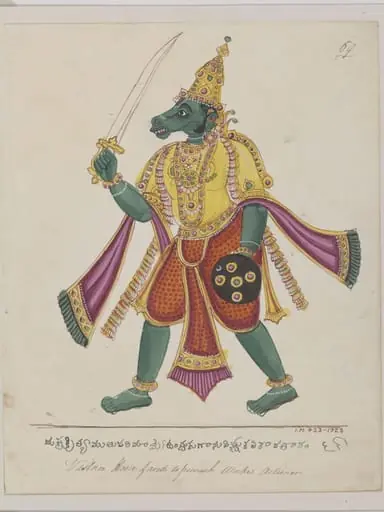 Kalki, the tenth and last avatara of Vishnu
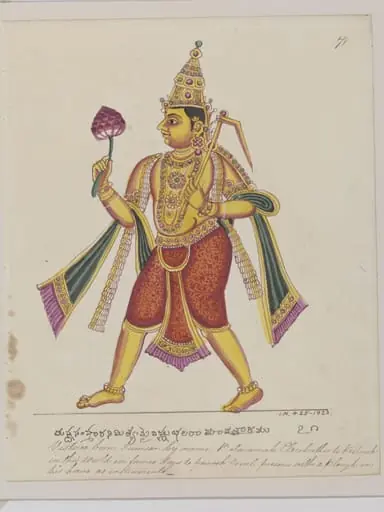 Balarama
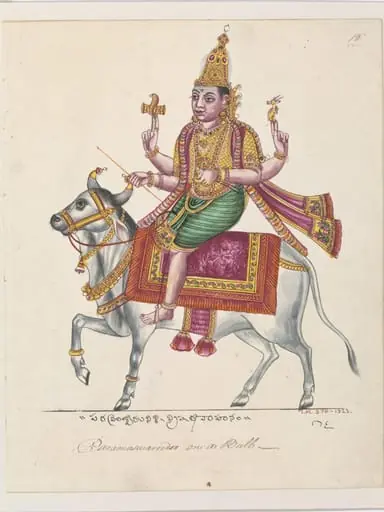 Mahadeva in his form as Isana, guardian of the north-east, riding on a white bull
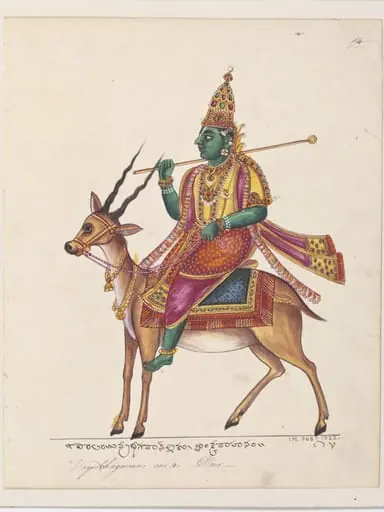 Vayu, the god of the wind and guardian of the north-west, riding on a deer.
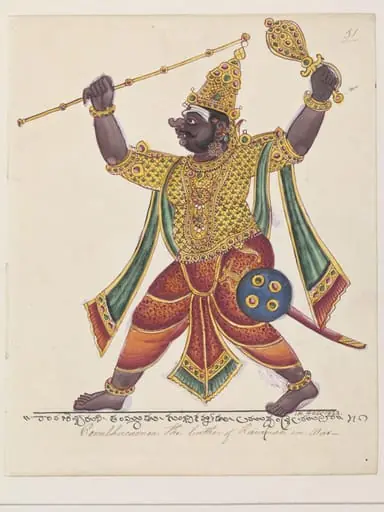 The demon Kumbhakarna.