Artwork
Wady Feiran
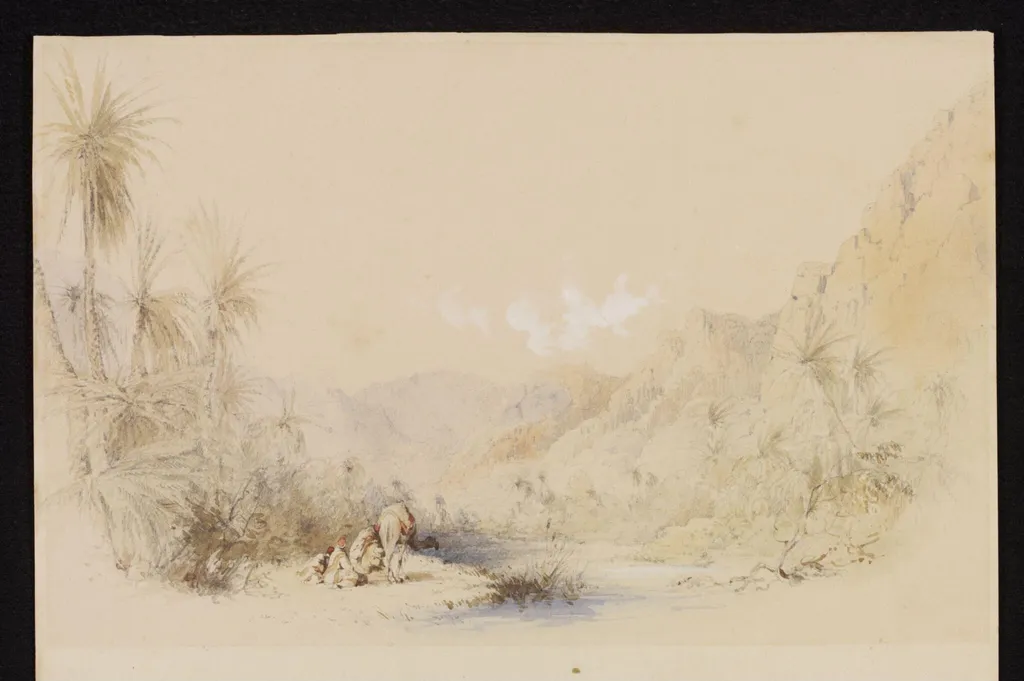
Wady Feiran is a watercolor work on paper by the Romanticist artist Unknown. It dates from 1847 and is held in the collection of the Victoria and Albert Museum.
About this work
Overview
Wady Feiran is a watercolour sketch from 1847, part of a series of eight landscape views documenting sites in Turkey and Egypt.
Wady Feiran is a watercolour sketch from 1847, part of a series of eight landscape views documenting sites in Turkey and Egypt. Though attributed to a single artist in some records, evidence suggests multiple hands may have contributed to the group. Originally compiled in a bound album, the sheets were later separated, leaving physical traces of their former arrangement, such as offset marks and inscriptions referencing adjacent pages.
Subject & Meaning
The scene depicts a arid valley in Wady Feiran, a region in the Sinai Peninsula. Two figures are shown near a shallow stream—one collecting water, the other resting—suggesting quiet daily labor amid a harsh environment. The presence of palm trees and the absence of architecture emphasize the landscape’s natural, unaltered character, conveying a sense of stillness and endurance rather than narrative drama.
Technique & Style
The artist employed loose, rapid watercolour strokes to capture the effects of sunlight and heat. Washes of warm tones suggest the dryness of the air and the glow of midday, while minimal detail in the figures and foliage implies spontaneity. The technique reflects on-site observation, prioritizing atmospheric impression over precision, characteristic of travel sketches made under challenging conditions.
History & Provenance
The watercolour was once part of a cohesive album, likely assembled during or shortly after a journey through the region in 1847. Its separation from the original binding occurred at an unknown date, possibly during later dispersal or reorganization of collections. Inscriptions on the mounts confirm its original context, though the full sequence of the series remains incomplete.
Context
Created during a period of growing European interest in the Middle East, the sketch reflects the tradition of topographical drawing by travelers and artists. These works served both documentary and aesthetic purposes, offering glimpses of distant lands to audiences unfamiliar with the region. Wady Feiran belongs to a broader practice of recording landscapes as cultural and geographic records.
Legacy
Though not widely exhibited, the sketch contributes to a body of 19th-century travel watercolours that inform modern understanding of how Western artists perceived and recorded the landscapes of Egypt and the Near East. Its survival as a single sheet, detached from its original context, underscores the fragility of such collections and the importance of preserving their historical arrangement.
Artist & collection

 Domestic Scene
 Giacomo and Cardinal Marco, investing Andrea, Abbot of San Zeno, with his Benefice
 The Nymph of Fontainebleau
 Portrait of a Woman
 Madonna and Child with Saints in the Enclosed Garden
 Venus and Minerva
 Family Group of Four on Sofa
 Wall painting from Room H of the Villa of P. Fannius Synistor at Boscoreale
 Wady Firan, Sinai
 Pyramid of Abu Roash from the Village of Kerdassy
 The Ruins of Hierapolis
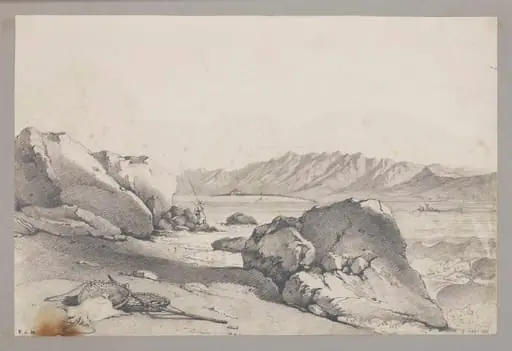 The Barrier, Macao, from Crysilia's Bay
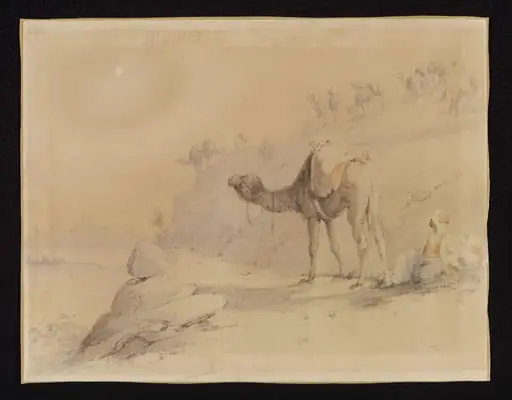 On the Road from Smyrna to Brussa
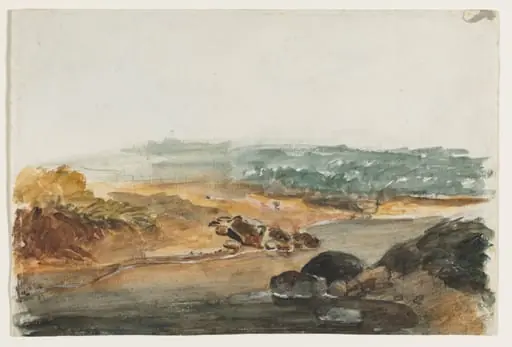 Landscape (recto)
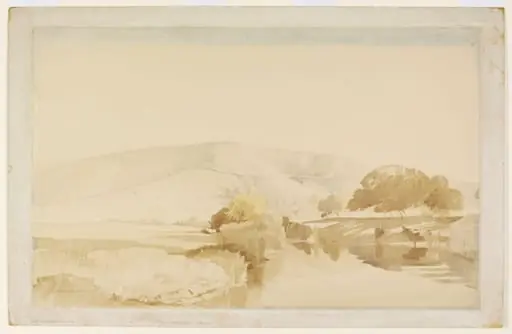 The Southdown, Underhill Road; Ditchling Beacon, from the Meadows near Westmeston
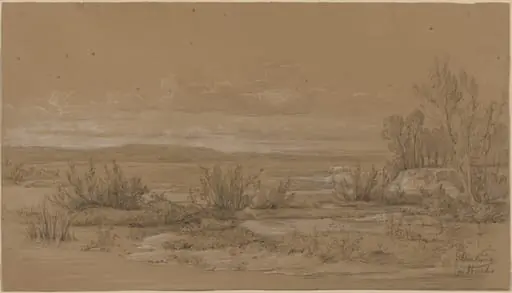 Landscape near Vourlis
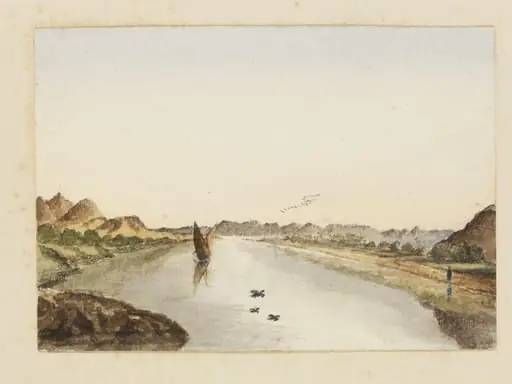 View of the Nile
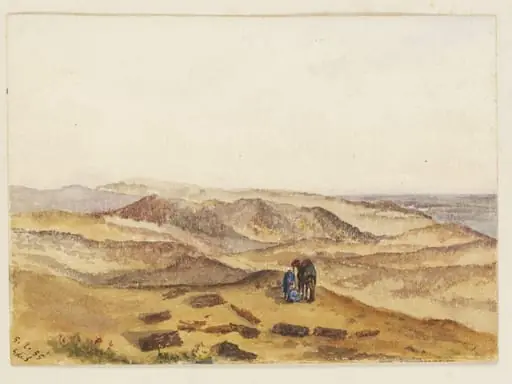 `Petrified Forest Desert near Cairo'
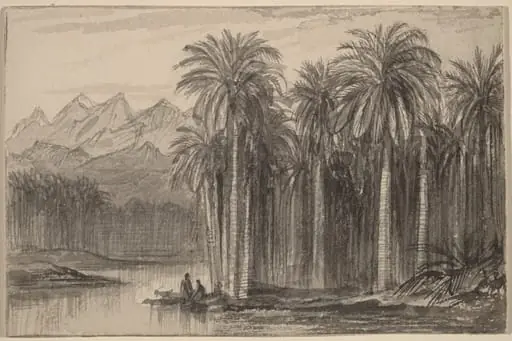 Figures Setting Out in Canoes from a Palm Grove (Wady Feiran)
![The Cape of the Veil [Sinai], by William Edward Dighton](https://artifactworldgallery.com/img/william-edward-dighton--the-cape-of-the-veil-sinai--972bd1edd967dc98-w320.webp) The Cape of the Veil [Sinai]
The Cape of the Veil [Sinai]