Artwork
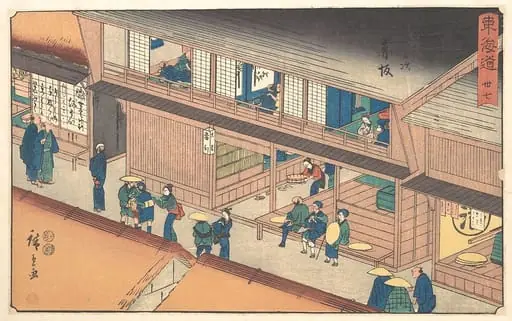
東海道五十三次之内 赤阪 旅舎招婦の図|Akasaka, Ryosha Sho-fu
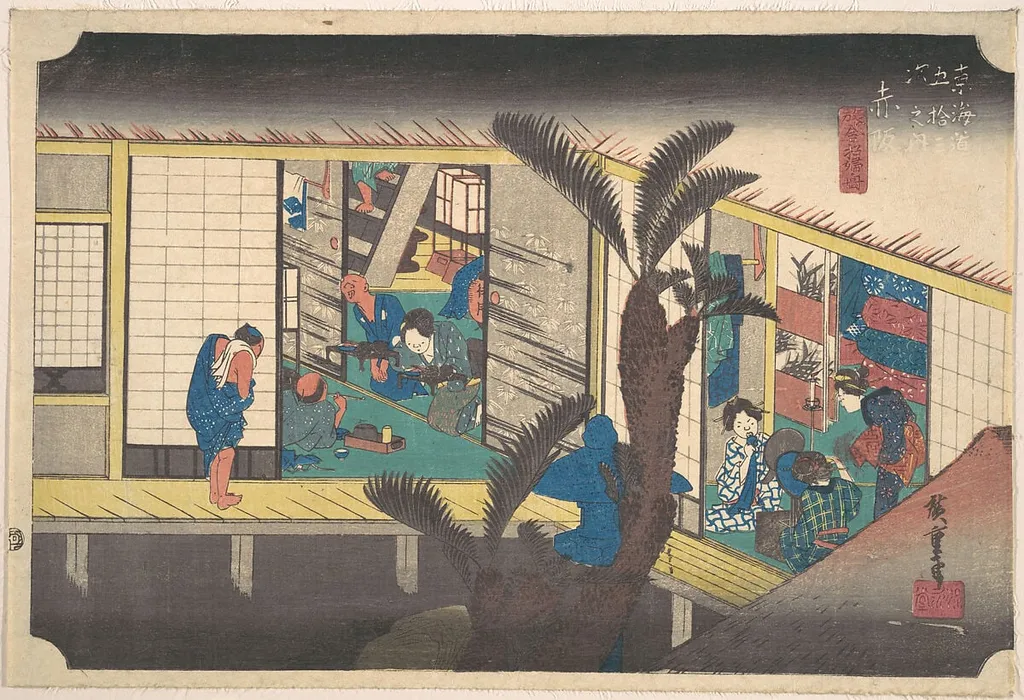
東海道五十三次之内 赤阪 旅舎招婦の図|Akasaka, Ryosha Sho-fu is an ink print by the Romanticist artist Utagawa Hiroshige. It dates from 1834 and is held in the collection of the Metropolitan Museum of Art.
About this work
Overview
Created around 1834 by Utagawa Hiroshige, this woodblock print is one of fifty-three scenes in the series *The Fifty-three Stations of the Tōkaidō*.
Created around 1834 by Utagawa Hiroshige, this woodblock print is one of fifty-three scenes in the series *The Fifty-three Stations of the Tōkaidō*. It captures a moment at Akasaka, a post station along the major road connecting Edo and Kyoto. Unlike many ukiyo-e works focused on city life, Hiroshige emphasized the quiet rhythms of travel and rest, rendering the landscape with careful attention to atmosphere and structure.
Subject & Meaning
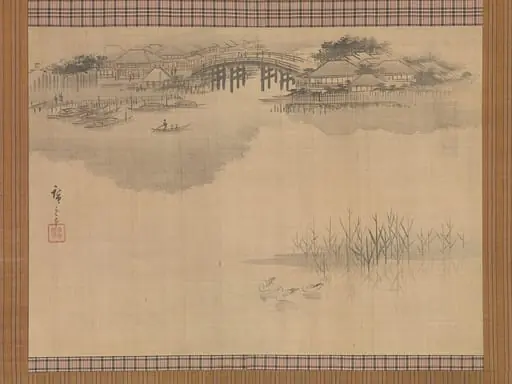
The scene depicts an inn complex with two connected buildings linked by a bridge, where travelers and staff move through daily routines. Figures sit indoors on mats or at low tables, engaged in quiet tasks. A woman in blue stands near the entrance, while another in a checkered garment sits nearby, suggesting the presence of service workers. The palm tree, unusual in Japan, hints at regional variation and the journey’s diversity, grounding the image in real travel experience.
Technique & Style
Hiroshige employed traditional ukiyo-e methods: ink and color applied to paper using carved woodblocks. Bold black outlines define forms, while flat areas of color create clarity. Cross-hatching—fine, layered lines—is used subtly to suggest texture in fabric and foliage, adding depth without modeling. The composition balances vertical and horizontal elements, guiding the eye across the scene with restrained precision.
History & Provenance
The print was produced during Hiroshige’s early rise as a landscape artist, part of a commercially successful series commissioned by the publisher Hoeidō. Original impressions were widely distributed among middle-class travelers and collectors. Surviving examples are held in major collections, including the Museum of Fine Arts, Boston, and the British Museum, reflecting its enduring presence in the ukiyo-e canon.
Context
The Tōkaidō road was a vital artery of Edo-period Japan, traveled by merchants, pilgrims, and samurai. Hiroshige’s series documented each station with observational detail, offering viewers a visual journey without leaving home. This print reflects the growing popularity of travel literature and the cultural fascination with place, blending topography with human activity in a way that resonated with urban audiences.
Legacy
Hiroshige’s *Tōkaidō* series influenced later generations of artists, both in Japan and abroad, particularly in the development of Western landscape printmaking. His focus on transient moments and natural elements helped redefine ukiyo-e beyond portraiture and theater scenes. The quiet dignity of this print, like others in the series, continues to inform modern understandings of Japanese visual culture.
Artist & collection
Artist
Utagawa Hiroshige (歌川 広重) or Andō Hiroshige (安藤 広重), born Andō Tokutarō (安藤 徳太郎; 1797 – 12 October 1858), was a Japanese ukiyo-e artist, considered the last great master of that tradition.