Artwork
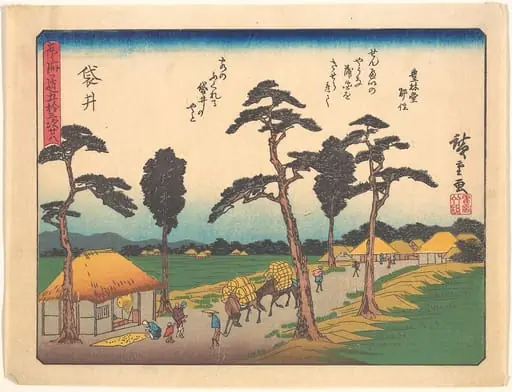
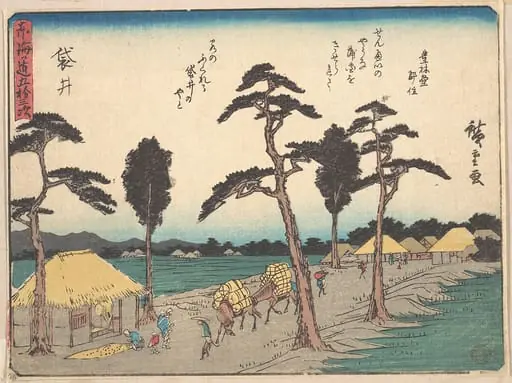
東海道五十三次之内 袋井 出茶屋の図|Fukuroi; De Chaya
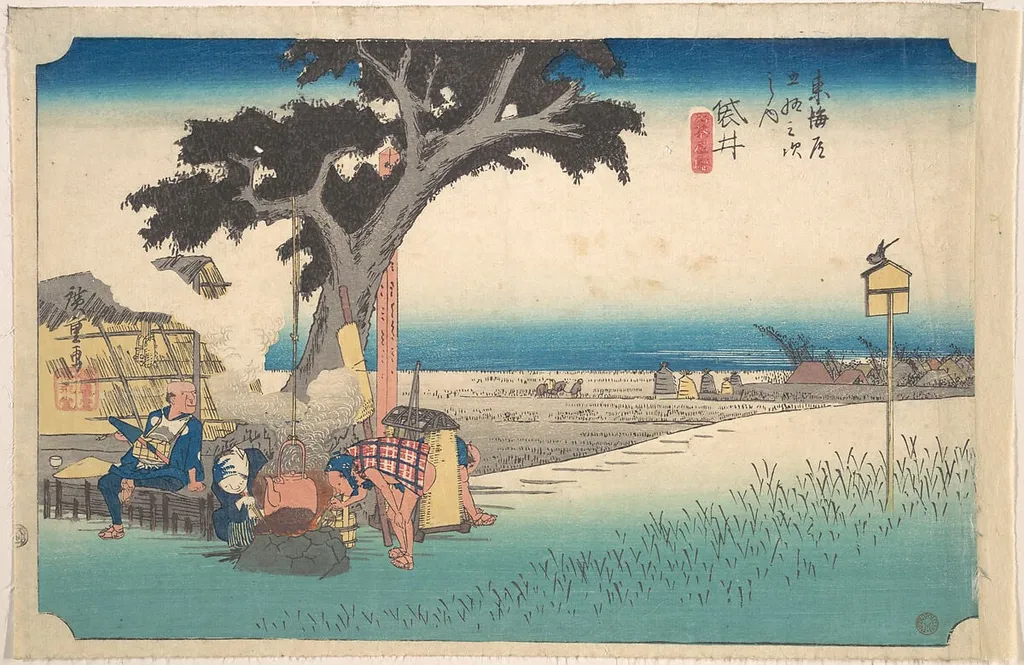
東海道五十三次之内 袋井 出茶屋の図|Fukuroi; De Chaya is an ink print by the Romanticist artist Utagawa Hiroshige. It dates from 1834 and is held in the collection of the Metropolitan Museum of Art.
About this work
Overview
Fukuroi; De Chaya is a woodblock print created by Utagawa Hiroshige around 1834, as part of The Fifty-three Stations of the Tōkaidō series. It captures a serene roadside scene at Fukuroi, highlighting a teahouse and travelers.
Subject & Meaning
The print focuses on a resting area along the Tōkaidō road, depicting travelers at rest and in transit. A teahouse, a common motif in Hiroshige's travel series, is prominently featured, emphasizing the importance of such stops for weary travelers.
Technique & Style
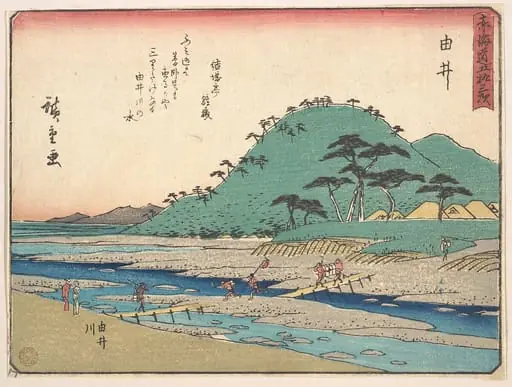
Hiroshige employed bold outlines and flat colors to maintain clarity and simplicity. Notable techniques include the expressive, sharply twisted tree branches and the use of cross-hatching to achieve shading, characteristic of his ukiyo-e style.
History & Provenance
Created circa 1834 by Utagawa Hiroshige for The Fifty-three Stations of the Tōkaidō series, marking a departure from typical ukiyo-e subjects of the Edo period by focusing on landscapes and everyday travel scenes.
Context
Part of a broader artistic shift in Edo period ukiyo-e, Hiroshige's work reflected a growing interest in capturing Japan's natural beauty and the experiences of common travelers along the Tōkaidō.
Legacy
Fukuroi; De Chaya contributes to Hiroshige's reputation as a pioneer in landscape ukiyo-e, influencing subsequent generations of artists with its simple yet expressive depiction of everyday Japanese life and scenery.
Artist & collection
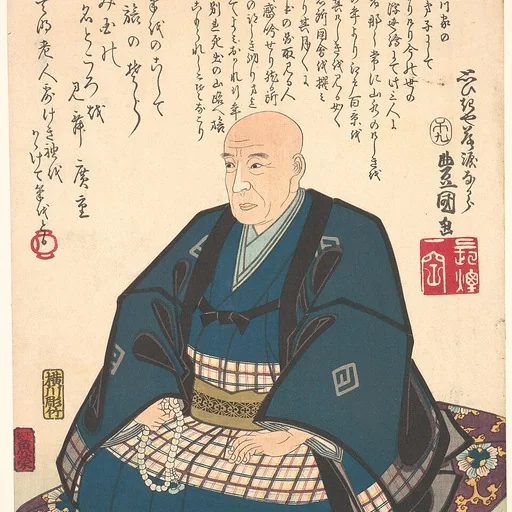
Artist
Utagawa Hiroshige (歌川 広重) or Andō Hiroshige (安藤 広重), born Andō Tokutarō (安藤 徳太郎; 1797 – 12 October 1858), was a Japanese ukiyo-e artist, considered the last great master of that tradition.