Artwork
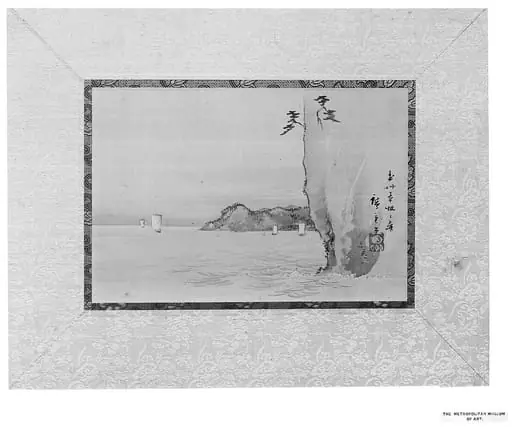
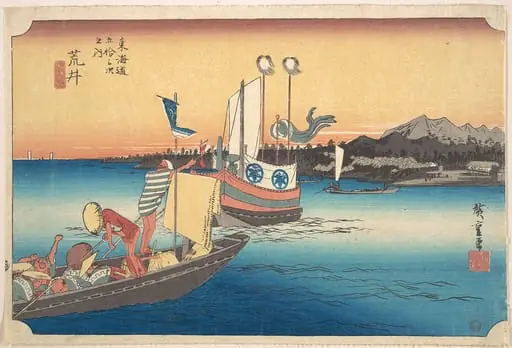
東海道五十三次之内 荒井 海上壹リ半舟渡之図|Arai
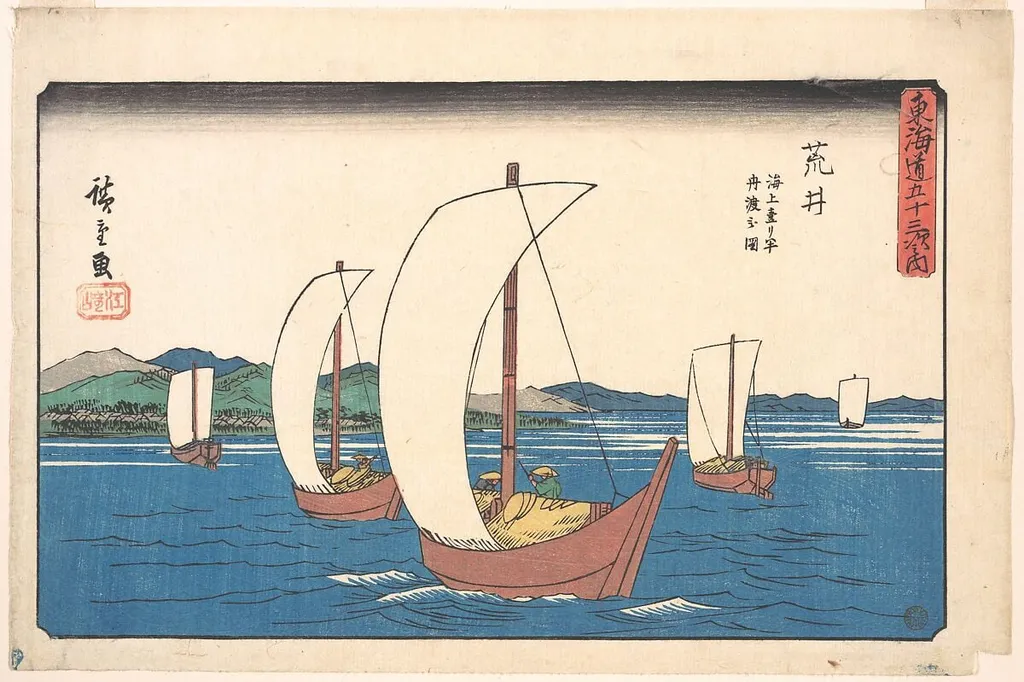
東海道五十三次之内 荒井 海上壹リ半舟渡之図|Arai is an ink print by the Romanticist artist Utagawa Hiroshige. It dates from 1842 and is held in the collection of the Metropolitan Museum of Art.
About this work
Overview
Arai is a woodblock print created by Utagawa Hiroshige around 1842, as part of his renowned series, The Fifty-three Stations of the Tōkaidō. This work captures a serene coastal scene near the Arai station along the historic Tōkaidō road.
Subject & Meaning
The print depicts four boats with tall masts and curved sails navigating towards land, set against a backdrop of a green hillside and a light, flat sky. The scene conveys a sense of gentle movement and tranquility.
Technique & Style
Hiroshige employed simple lines and flat colors to achieve depth in the composition. Characteristic of his landscape-focused ukiyo-e style, the smooth waves and subtly tilted boats create a dynamic sense of motion.
History & Provenance
Created circa 1842 for The Fifty-three Stations of the Tōkaidō series, Arai represents Hiroshige's deviation from ukiyo-e's typical urban themes, instead emphasizing the natural beauty of Japan's historic routes.
Context
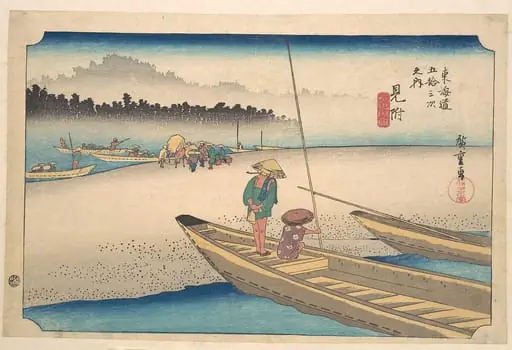
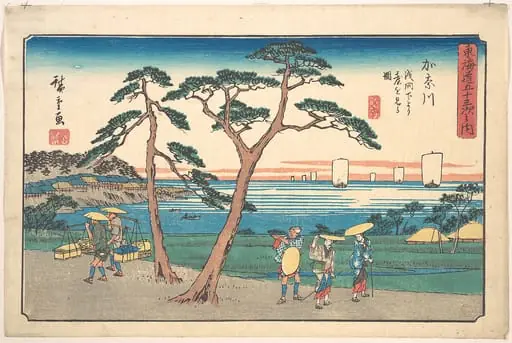
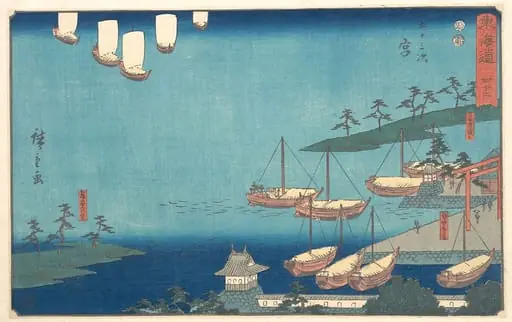
Part of a larger series documenting the Tōkaidō's fifty-three stations, Arai reflects 19th-century interest in this major travel route, blending artistic expression with the everyday life of travelers.
Legacy
As a piece of Hiroshige's celebrated series, Arai contributes to the enduring popularity of ukiyo-e landscapes, influencing subsequent generations of artists with its harmonious balance of nature and human activity.
Artist & collection
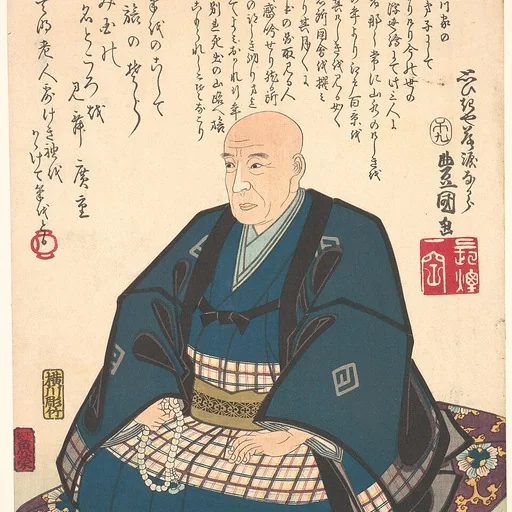
Artist
Utagawa Hiroshige (歌川 広重) or Andō Hiroshige (安藤 広重), born Andō Tokutarō (安藤 徳太郎; 1797 – 12 October 1858), was a Japanese ukiyo-e artist, considered the last great master of that tradition.