Artwork
東海道五十三次 日本橋|Nihon Bashi
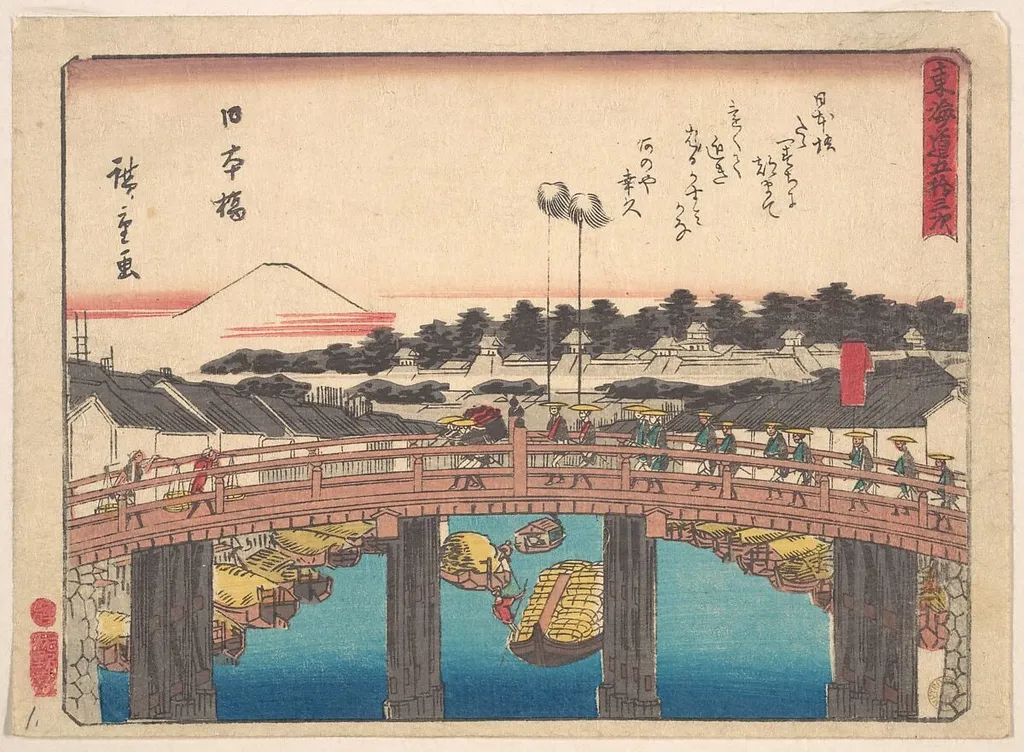
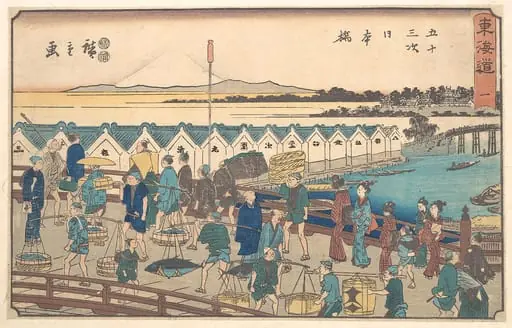
東海道五十三次 日本橋|Nihon Bashi is an ink print by the Romanticist artist Utagawa Hiroshige. It dates from 1838 and is held in the collection of the Metropolitan Museum of Art.
About this work
Overview
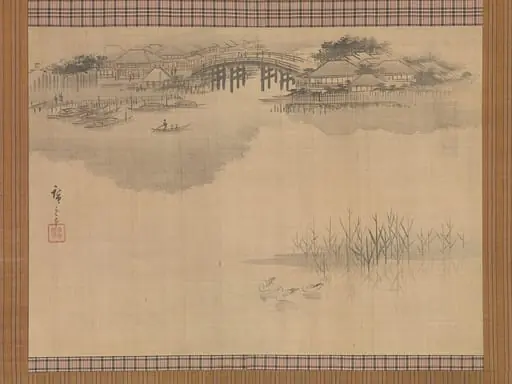
Nihon Bashi is a woodblock print from Utagawa Hiroshige's *The Fifty-three Stations of the Tōkaidō* series, created circa 1838. It depicts a vibrant scene of everyday life at Nihon Bridge in Edo, showcasing the artist's ability to capture dynamic urban landscapes within a traditionally nature-focused genre.
Subject & Meaning
The print focuses on Nihon Bridge, a pivotal stop on Japan's historic Tōkaidō coastal route. The bustling activity of people crossing the bridge, set against a backdrop of buildings, trees, and a distant mountain, highlights the bridge's importance as a hub of commerce and travel.
Technique & Style
Hiroshige's signature atmospheric style is evident in the soft pinkish-gray sky and the composition's depth. The interplay of figures in various poses on the bridge conveys a sense of movement and energy, achieved through meticulous use of color and spatial arrangement.
History & Provenance
Created around 1838 for *The Fifty-three Stations of the Tōkaidō*, *Nihon Bashi* is part of Hiroshige's late Edo period work, solidifying his position as a major ukiyo-e artist. Specific provenance details are not provided.
Context
Within the *Fifty-three Stations* series, *Nihon Bashi* stands out for its urban theme, diverging from Hiroshige's more common landscape subjects. It reflects the artist's versatility and the series' broader goal of depicting life along the Tōkaidō.
Legacy
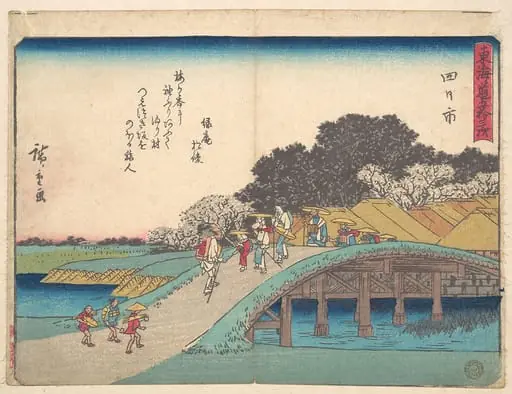
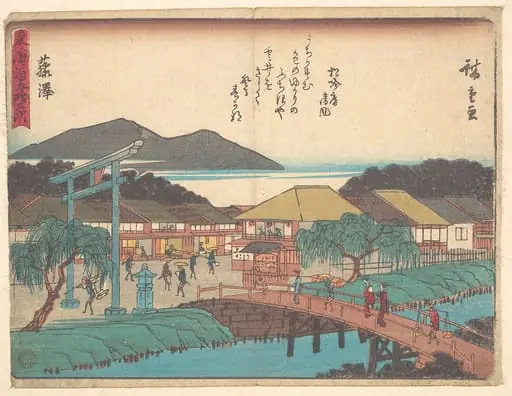
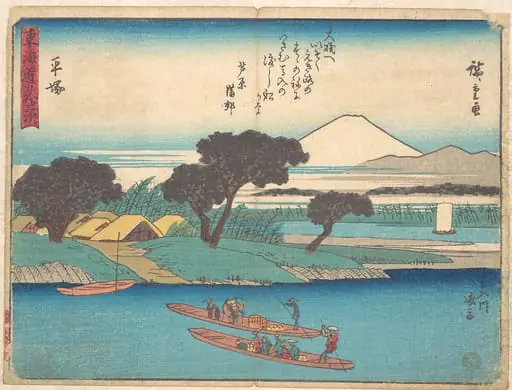
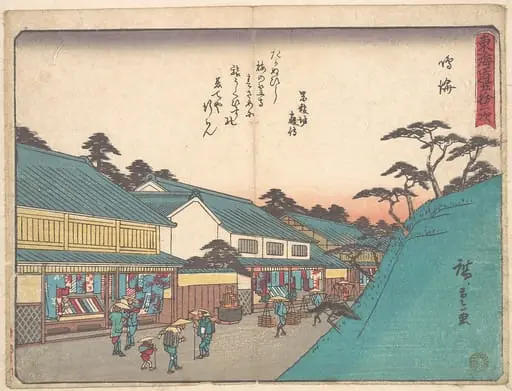
*Nihon Bashi* contributes to Hiroshige's reputation as the final major master of the ukiyo-e tradition, admired for his atmospheric landscapes and, in this case, his captivating portrayal of urban life in late Edo period Edo.
Artist & collection
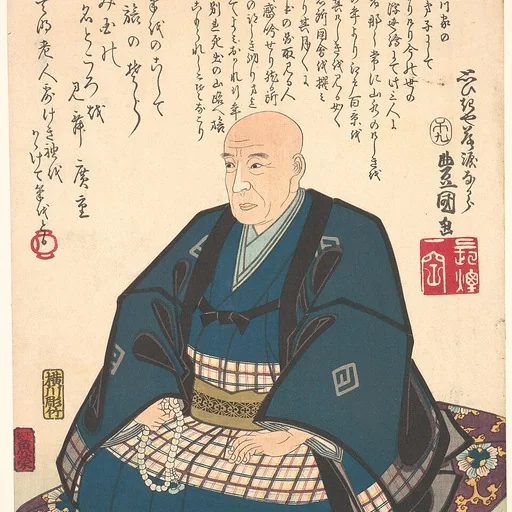
Artist
Utagawa Hiroshige (歌川 広重) or Andō Hiroshige (安藤 広重), born Andō Tokutarō (安藤 徳太郎; 1797 – 12 October 1858), was a Japanese ukiyo-e artist, considered the last great master of that tradition.