Artwork
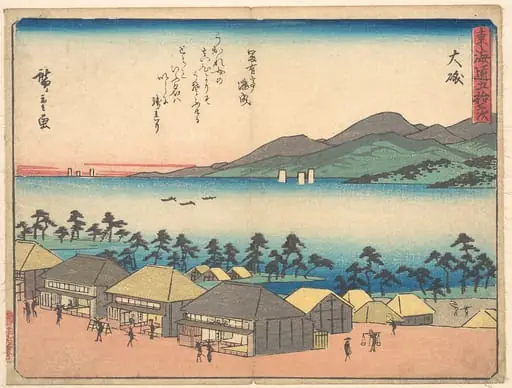
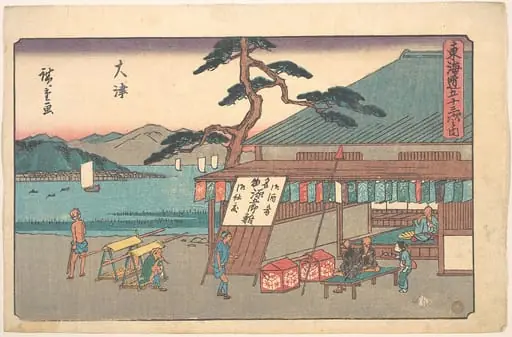
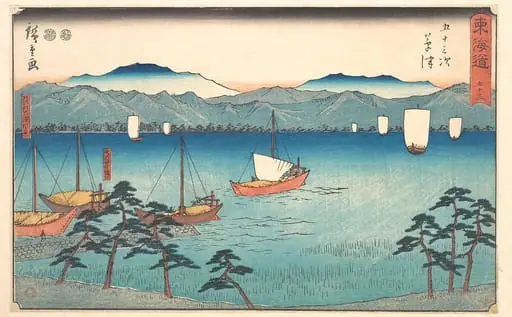
東海道五十三次 大津|Otsu
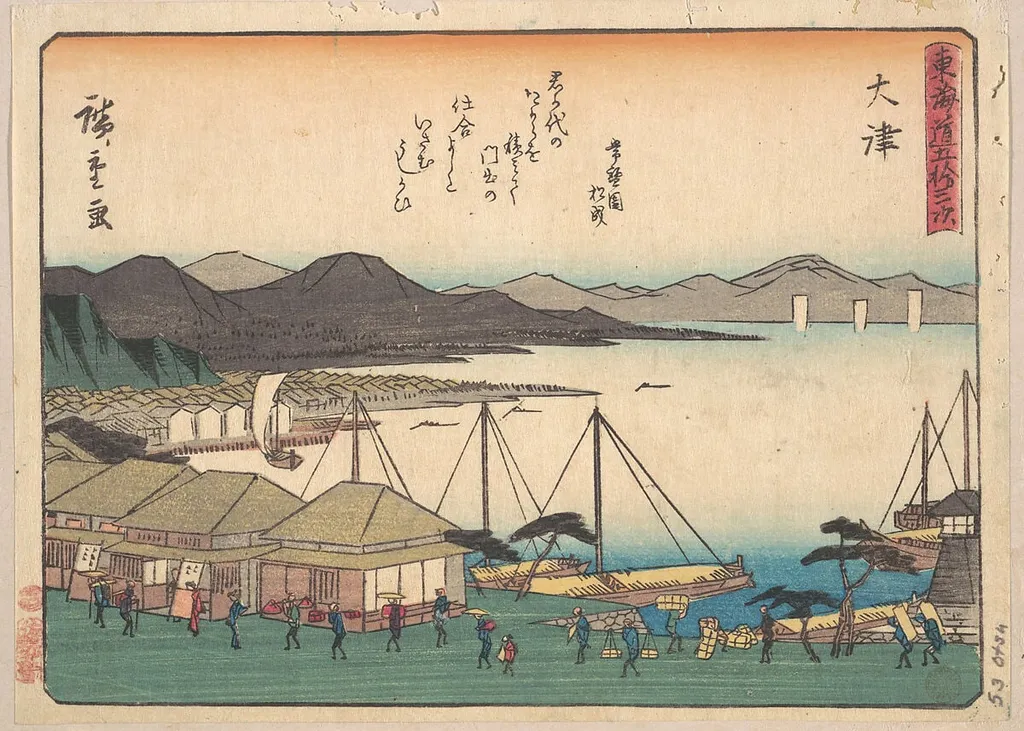
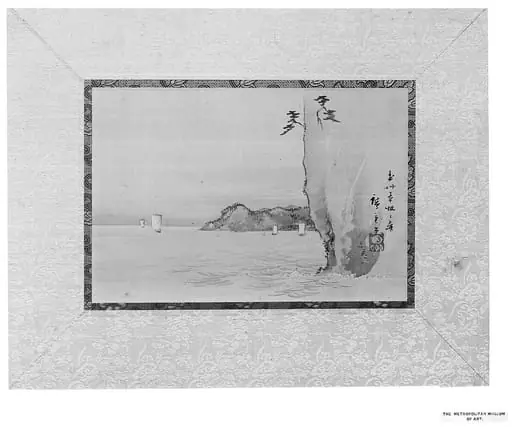
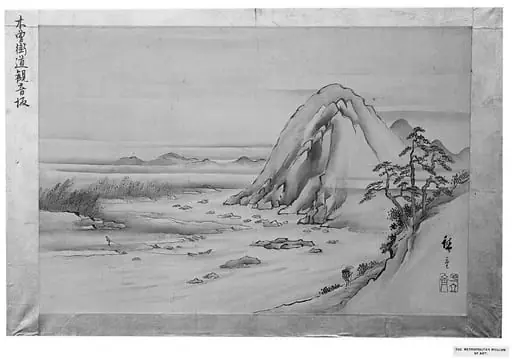
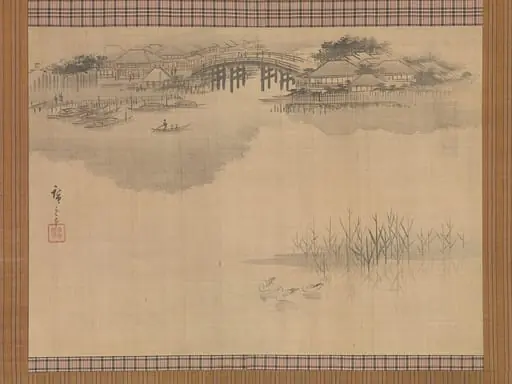
東海道五十三次 大津|Otsu is an ink print by the Romanticist artist Utagawa Hiroshige. It dates from 1838 and is held in the collection of the Metropolitan Museum of Art.
About this work
Overview
Created around 1838 by Utagawa Hiroshige, this woodblock print is one of fifty-three scenes in the series *The Fifty-three Stations of the Tōkaidō*.
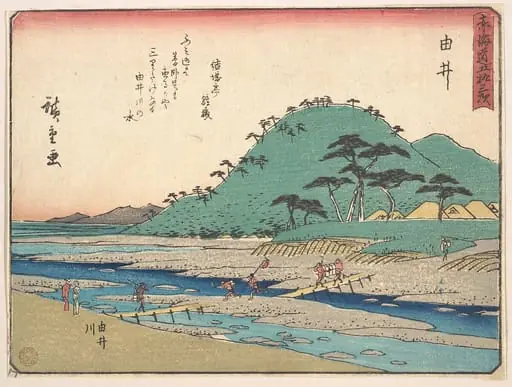
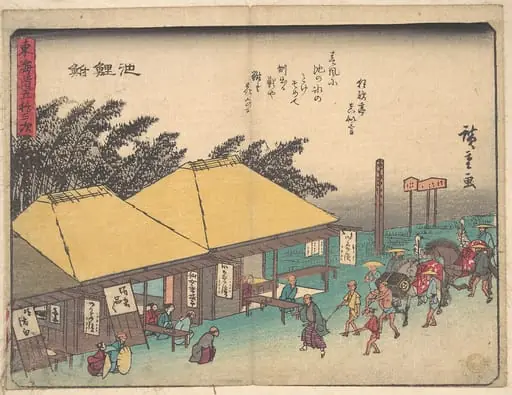
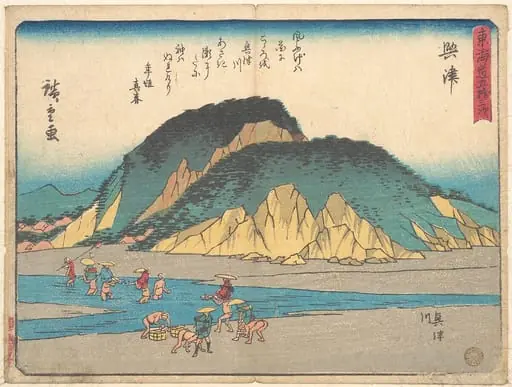
Created around 1838 by Utagawa Hiroshige, this woodblock print is one of fifty-three scenes in the series *The Fifty-three Stations of the Tōkaidō*. It captures the post town of Otsu, a key stop along the road linking Edo and Kyoto. Executed in ink and color on paper, the print follows the horizontal format typical of the series. Hiroshige, originally named Andō Tokutarō, shifted ukiyo-e’s focus from urban pleasure quarters to serene landscapes, establishing a new visual language for Japanese printmaking.
Subject & Meaning
The scene depicts Otsu’s bustling riverside, where travelers, merchants, and laborers move along a path beside the water. Docked boats with tall masts suggest commercial activity, while low-roofed buildings and distant hills frame the composition. The print conveys the rhythm of daily life on a major travel route, emphasizing movement and quiet industry rather than grandeur. It reflects the Tōkaidō’s role as a conduit for commerce, pilgrimage, and regional connection during the Edo period.
Technique & Style
Hiroshige employed bold, flat areas of color outlined in clean black ink to define forms, minimizing detail in favor of clarity and structure. Buildings, hills, and trees are rendered with simplified shapes, while cross-hatching suggests texture and depth without realism. The composition balances horizontal bands of land, water, and sky, guiding the viewer’s eye across the scene. This restrained yet expressive approach became a hallmark of his landscape prints, distinguishing them from the more ornate styles of his contemporaries.
History & Provenance
The print was produced during the late Edo period as part of a commercially successful series commissioned by the publisher Hoeidō. It circulated widely, making Hiroshige’s vision of Japan’s landscapes accessible beyond elite circles. The Metropolitan Museum of Art acquired the print as part of its broader collection of Japanese prints, preserving it as an example of mid-19th-century print culture and Hiroshige’s influence on both Japanese and Western art.
Context
The Tōkaidō was the most traveled road in Japan, connecting political, economic, and cultural centers. Otsu, located at the western end near Lake Biwa, served as a gateway to Kyoto and a hub for travelers and goods. Hiroshige’s series documented each station with subtle variations in season, weather, and activity, offering a collective portrait of Japan’s infrastructure and social life under the Tokugawa shogunate’s stable rule.
Legacy
Hiroshige’s *Tōkaidō* series redefined landscape representation in ukiyo-e, influencing later artists in Japan and abroad. His use of atmospheric perspective and everyday subjects inspired 19th-century European Impressionists and Post-Impressionists. The print’s quiet observation of routine travel and natural setting helped shift artistic priorities from spectacle to contemplation, cementing his place as a pivotal figure in the evolution of Japanese visual culture.
Artist & collection
Artist
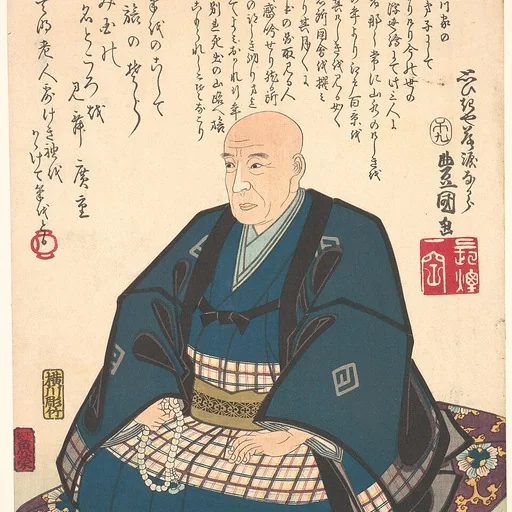
Utagawa Hiroshige (歌川 広重) or Andō Hiroshige (安藤 広重), born Andō Tokutarō (安藤 徳太郎; 1797 – 12 October 1858), was a Japanese ukiyo-e artist, considered the last great master of that tradition.