Artwork
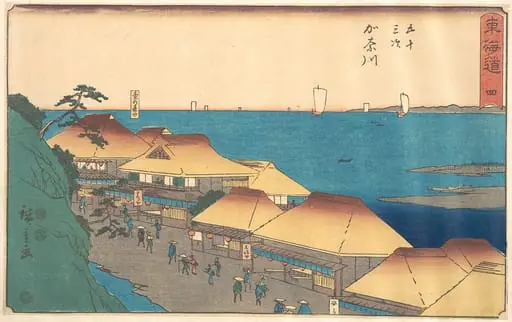
東海道五十三次之内 神奈川 浅間下より台を見る図|Kanazawa
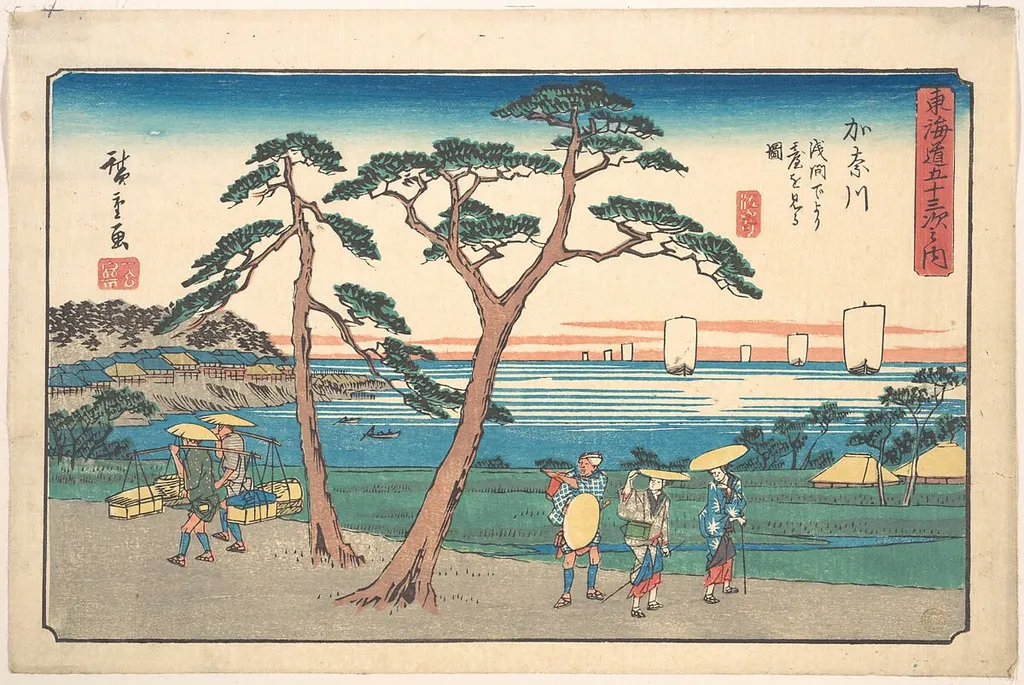
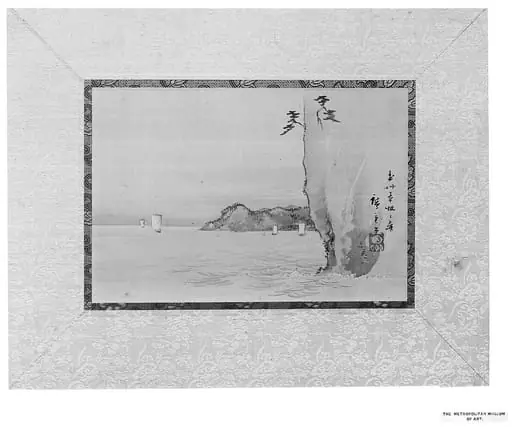
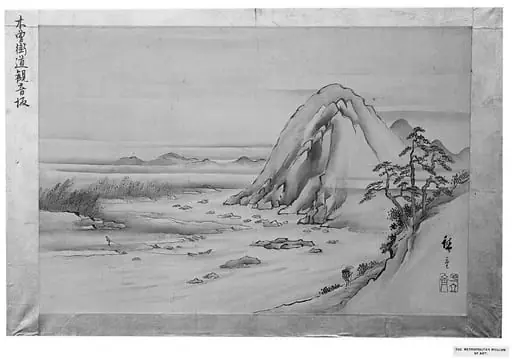
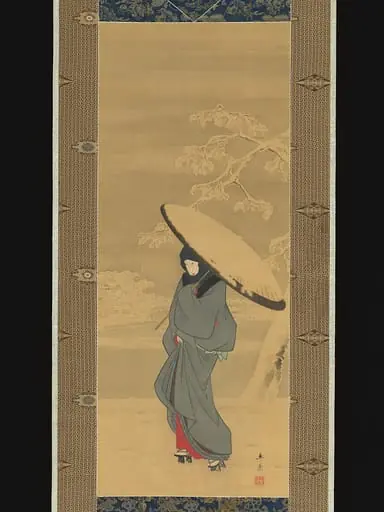
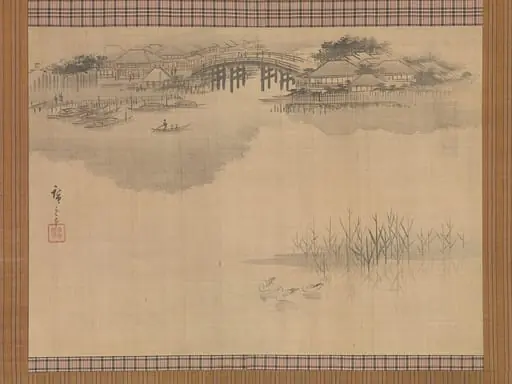
東海道五十三次之内 神奈川 浅間下より台を見る図|Kanazawa is an ink print by the Romanticist artist Utagawa Hiroshige. It dates from 1842 and is held in the collection of the Metropolitan Museum of Art.
About this work
Overview
The print captures a serene riverside moment near Kanazawa, rendered in ink and color on paper, and is now in the collection of The Metropolitan Museum of Art.
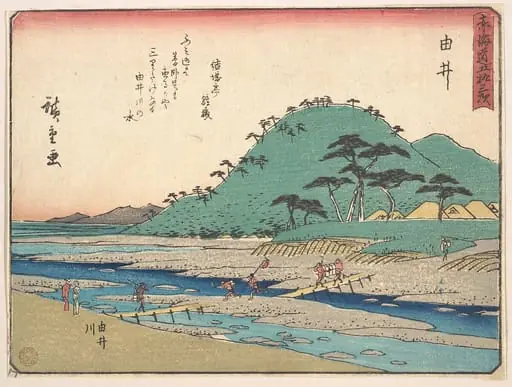
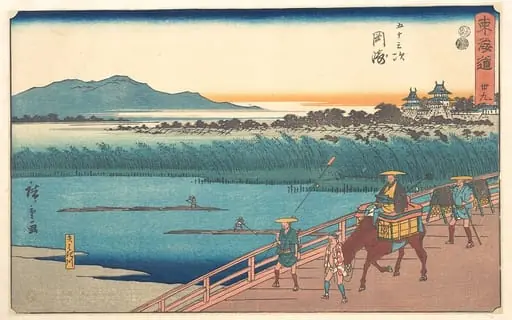
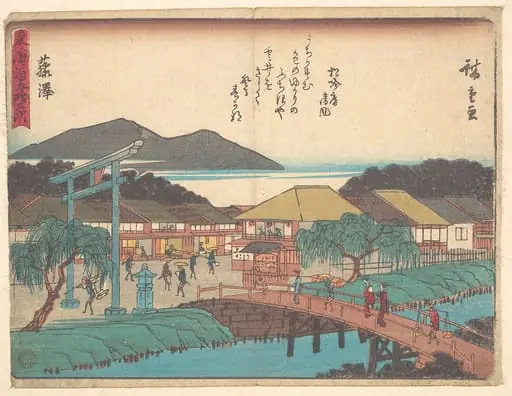
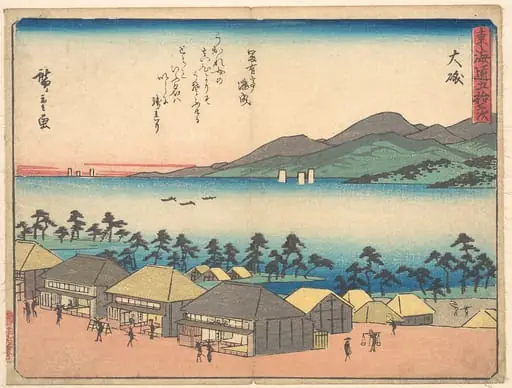
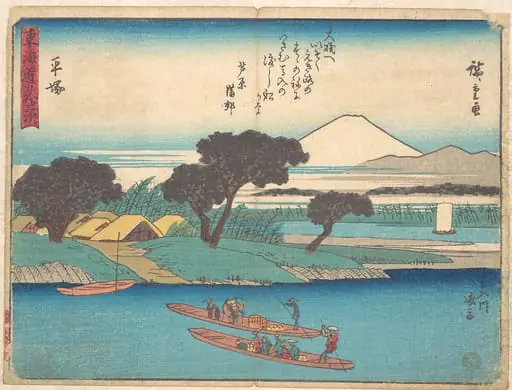
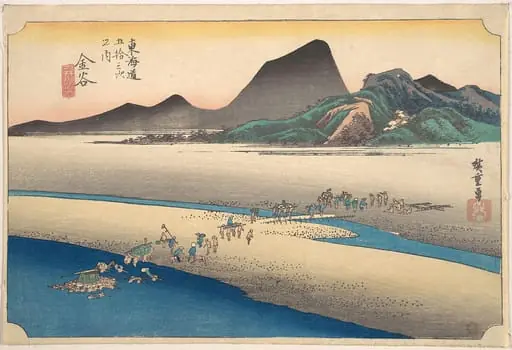
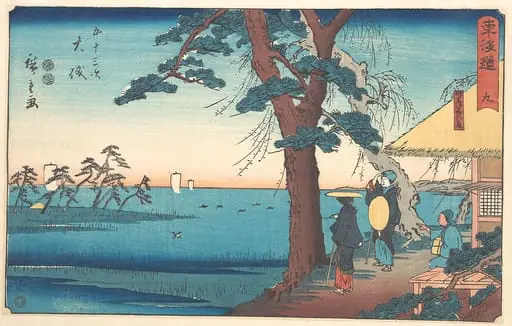
Created around 1842 by Utagawa Hiroshige, this woodblock print is part of the series *The Fifty-three Stations of the Tōkaidō*, which documents travel along Japan’s main coastal highway. Unlike typical ukiyo-e subjects centered on city life, Hiroshige focused on quiet, natural landscapes. The print captures a serene riverside moment near Kanazawa, rendered in ink and color on paper, and is now in the collection of The Metropolitan Museum of Art.
Subject & Meaning
The scene portrays ordinary travelers moving along a path beside a calm river. A man pushes a cart laden with goods, while three others—two men and a woman—walk in tandem. The composition avoids drama, instead emphasizing the rhythm of daily movement through the countryside. The presence of distant buildings suggests the proximity of settlement, grounding the image in lived experience rather than idealized nature.
Technique & Style
Hiroshige employed flat areas of color and clear, bold outlines to define figures and trees, contrasting with the soft, unmodulated sky and water. The simplified forms and deliberate lack of perspective create a decorative harmony, characteristic of ukiyo-e. The palette is restrained yet deliberate, with muted blues and earth tones enhancing the tranquil mood. The print’s structure reflects the collaborative woodblock process, balancing artist’s design with artisanal craftsmanship.
History & Provenance
Produced during Hiroshige’s peak years, the print was part of a widely distributed series that helped popularize landscape prints in Edo-period Japan. It entered the collection of The Metropolitan Museum of Art through documented acquisitions, likely in the early 20th century, as Western interest in Japanese prints grew. Its preservation reflects its status as a representative example of mid-19th-century Japanese printmaking.
Context
The Tōkaidō road connected Edo with Kyoto, serving as a vital artery for merchants, pilgrims, and officials. Hiroshige’s series responded to public fascination with travel, offering viewers a visual journey through provincial stations. This print, like others in the series, shifted focus from pleasure quarters to the quiet dignity of rural transit, aligning with broader cultural interest in nature and place during the late Edo period.
Legacy
Hiroshige’s *Tōkaidō* series influenced later generations of artists, both in Japan and abroad, particularly in the development of Western landscape painting and printmaking. Its emphasis on atmosphere, seasonal nuance, and everyday movement contributed to the global appreciation of Japanese aesthetics. The print remains a key reference in studies of Edo-period visual culture and the evolution of print as a medium for public imagination.
Artist & collection
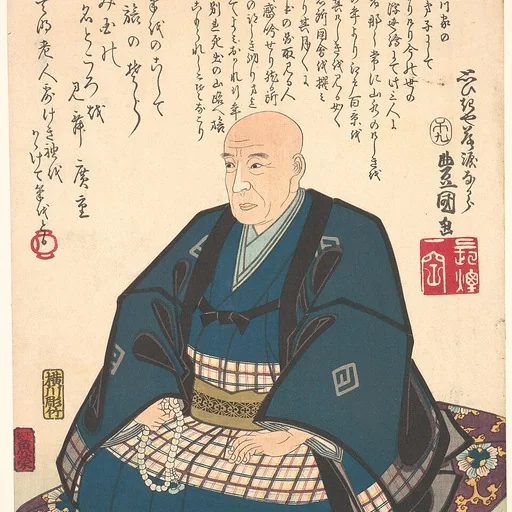
Artist
Utagawa Hiroshige (歌川 広重) or Andō Hiroshige (安藤 広重), born Andō Tokutarō (安藤 徳太郎; 1797 – 12 October 1858), was a Japanese ukiyo-e artist, considered the last great master of that tradition.