Artwork
木曽海道六拾九次之内 あし田|Ashida Station
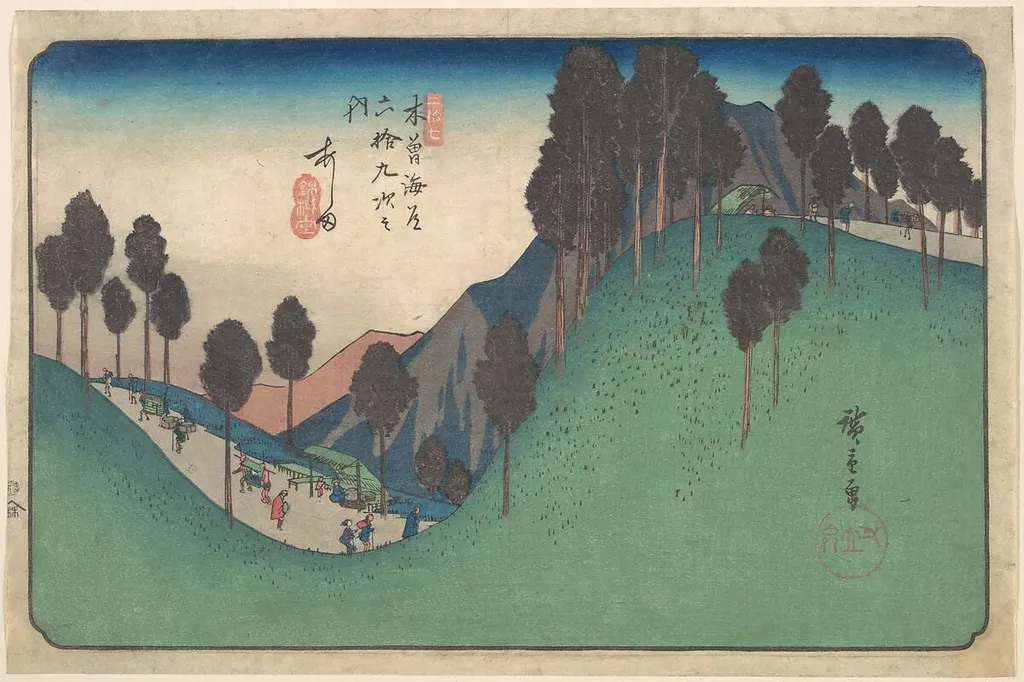
木曽海道六拾九次之内 あし田|Ashida Station is an ink print by the Romanticist artist Utagawa Hiroshige. It dates from 1836 and is held in the collection of the Metropolitan Museum of Art.
About this work
Overview
Ashida Station is a woodblock print created by Utagawa Hiroshige around 1836, as part of The Sixty-Nine Stations of the Kisokaidō series. Executed in ink and color on paper, it exemplifies Hiroshige's deviation from traditional ukiyo-e subjects, instead focusing on landscapes along ancient travel routes.
Subject & Meaning
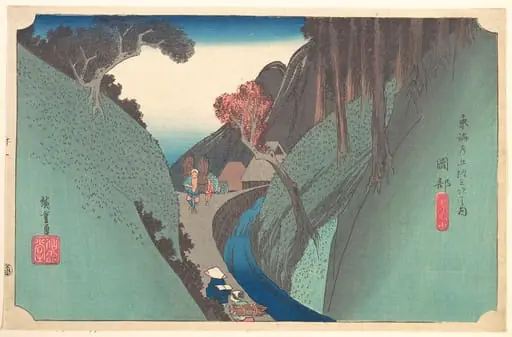
The print depicts a serene scene along the Kisokaidō road, featuring a winding river path lined with tall black trees, travelers on foot, a distant mountain under a blue sky, and a hilltop village. The composition captures a moment of everyday life along a historic route.
Technique & Style
Hiroshige employed traditional woodblock print techniques, combining soft, muted colors (greens, blues, muted pinks) with bold elements, such as the black trees and a red stamp identifying the location. The overall aesthetic is characteristic of Hiroshige's landscape-focused approach to ukiyo-e.
History & Provenance
Created circa 1836 for The Sixty-Nine Stations of the Kisokaidō series, specific provenance details for this individual print are not provided in the available information.
Context
Part of a larger series documenting stations along the Kisokaidō, Ashida Station reflects Hiroshige's interest in capturing the beauty of Japan's natural landscapes and the daily activities of its people, contrasting with the more common ukiyo-e themes of urban entertainment and celebrity.
Legacy
As part of Hiroshige's renowned series, Ashida Station contributes to the artist's lasting impact on Japanese ukiyo-e, particularly in popularizing landscape themes, and influencing subsequent artistic movements both in Japan and internationally.
Artist & collection
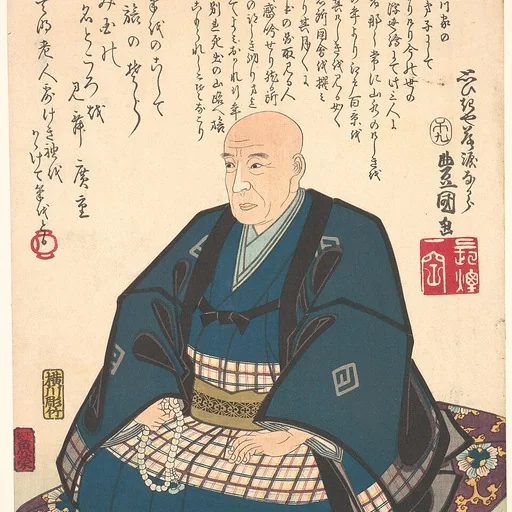
Artist
Utagawa Hiroshige (歌川 広重) or Andō Hiroshige (安藤 広重), born Andō Tokutarō (安藤 徳太郎; 1797 – 12 October 1858), was a Japanese ukiyo-e artist, considered the last great master of that tradition.

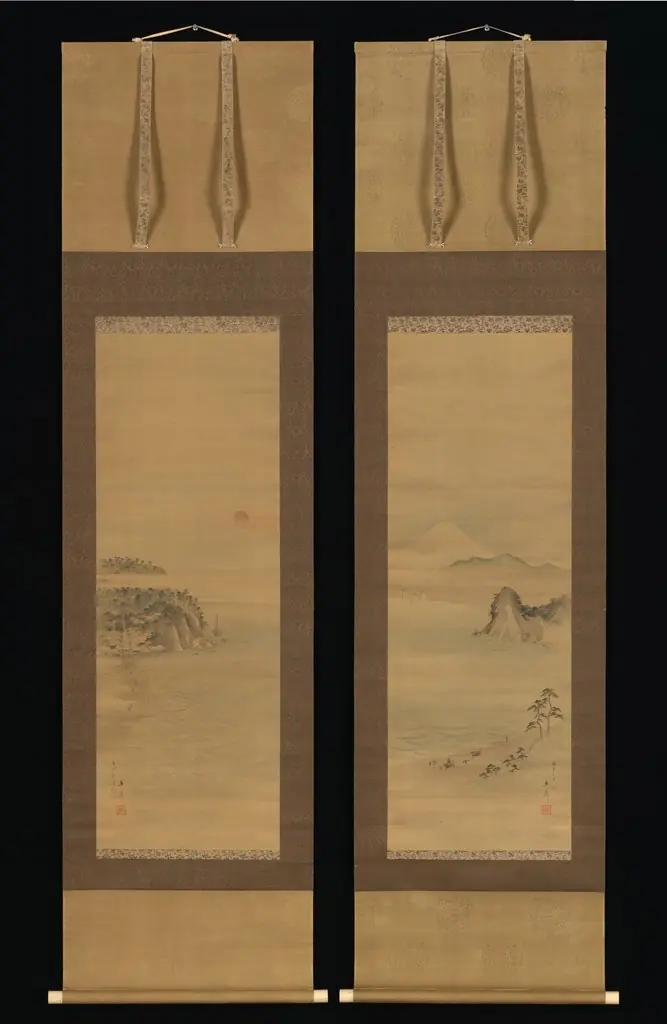
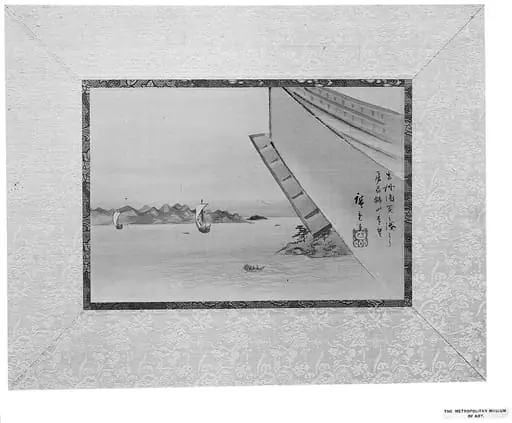
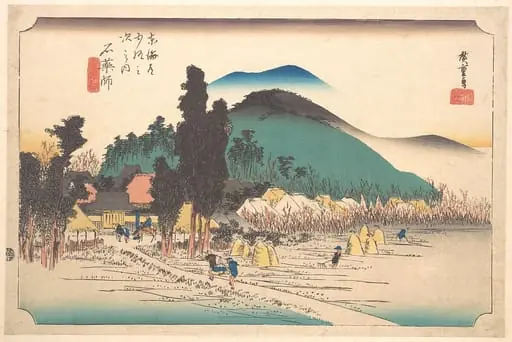 東海道五十三次之内 石薬師 石薬師寺|The Ishiyakushi Temple at Ishiyakushi
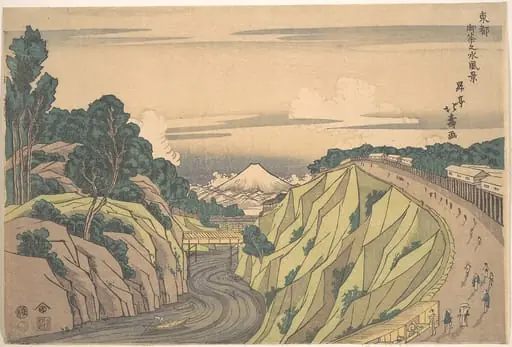 Untitled
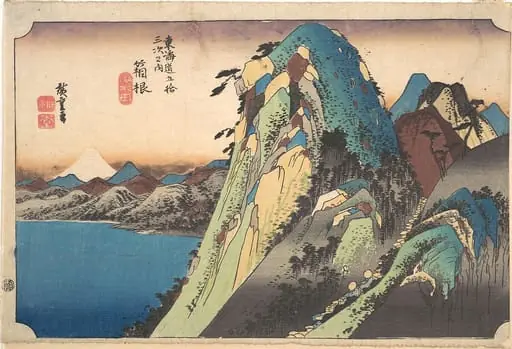 東海道五十三次之内 箱根 湖水図|Hakone; Kosui
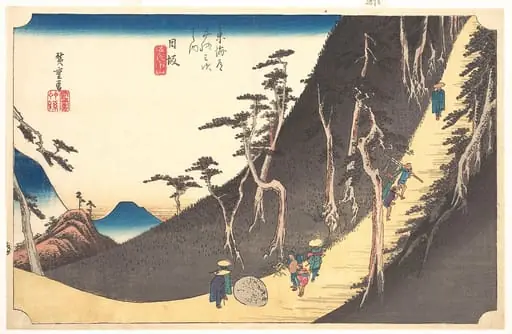 Nissaka-sayo no Naka Yama|東海道五十三次之内 日坂 佐夜の中山|Station Twenty-six: Nissaka, Sayo no Nakayama, from the Fifty-three Stations of the Tokaido
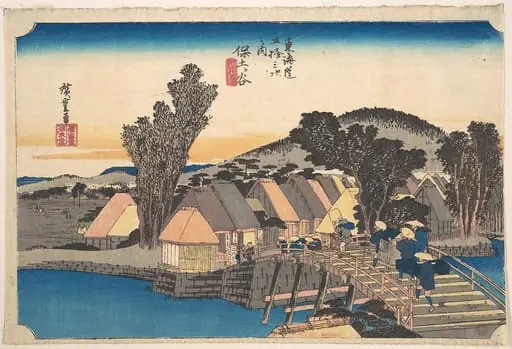 東海道五十三次之内 保土ヶ谷 新町橋|Hodogaya Station and Shinkame Bridge
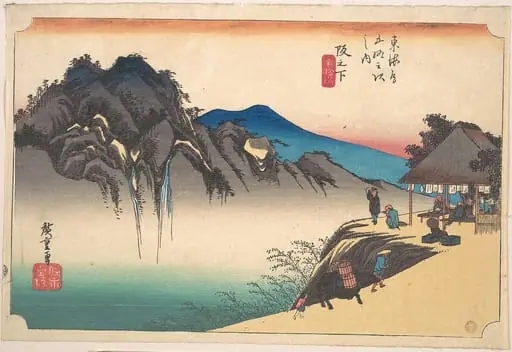 東海道五十三次之内 阪之下 筆捨嶺|Saka-no-shita, Fude-sute Mine
 東海道五十三次之内 岡部 宇津の山|Utsu Hill at Okabe