Artwork
江都名所 飛鳥山はな見|Asukayama Hanami
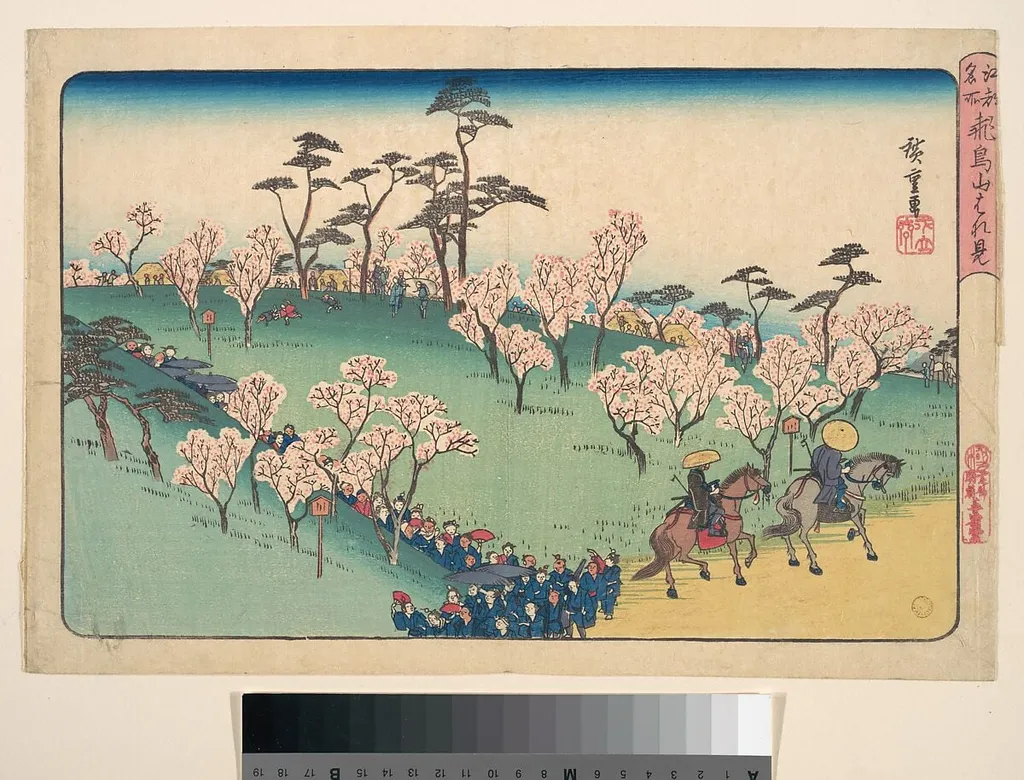
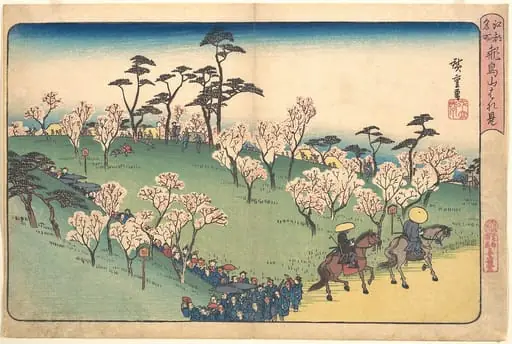
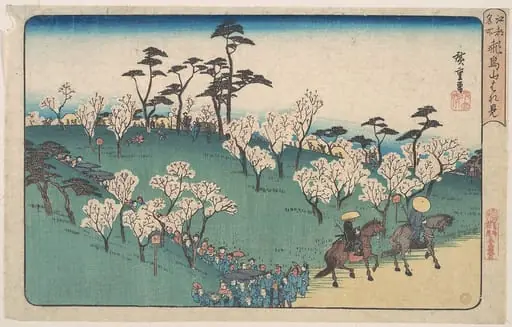
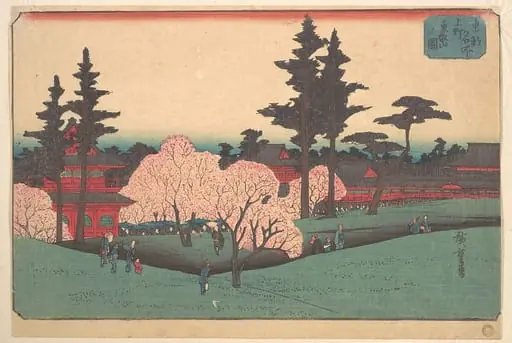
江都名所 飛鳥山はな見|Asukayama Hanami is an ink print by the Romanticist artist Utagawa Hiroshige. It dates from 1828 and is held in the collection of the Metropolitan Museum of Art.
About this work
Overview
Asukayama Hanami is a woodblock print created by Utagawa Hiroshige in 1828, characterized by ink and color on paper. It represents a scenic depiction of a spring outing, diverging from the common ukiyo-e themes of urban life.
Subject & Meaning
The print captures a lively spring scene at Asukayama Hill, featuring cherry blossoms in full bloom, mixed tree foliage, and a diverse group of people, including those gathered under an umbrella and horseback riders, highlighting the transient beauty of the season.
Technique & Style
Hiroshige employs vibrant colors against a serene blue sky and bright green grass, blending natural beauty with everyday life in a dynamic, snapshot-like composition, typical of his landscape-focused approach within ukiyo-e.
History & Provenance
Created in 1828, Asukayama Hanami is part of Hiroshige's series on Edo views, reflecting the artist's penchant for natural and seasonal themes, contrasting with the predominant urban focus of his contemporaries.
Context
As part of a series depicting Edo, this work showcases a popular springtime activity, situating it within the cultural practices of the time, where hanami (cherry blossom viewing) was a cherished tradition.
Legacy
Asukayama Hanami contributes to Hiroshige's reputation as a foremost ukiyo-e artist, known for landscapes that emphasize the interplay between human activity and natural, seasonal beauty, influencing subsequent artistic interpretations of Japanese landscapes.
Artist & collection
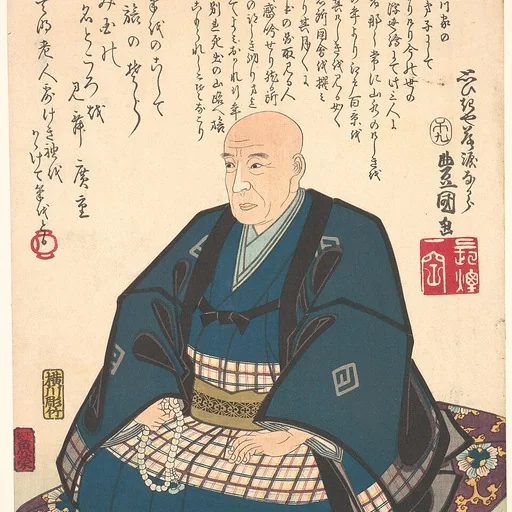
Artist
Utagawa Hiroshige (歌川 広重) or Andō Hiroshige (安藤 広重), born Andō Tokutarō (安藤 徳太郎; 1797 – 12 October 1858), was a Japanese ukiyo-e artist, considered the last great master of that tradition.