Artwork
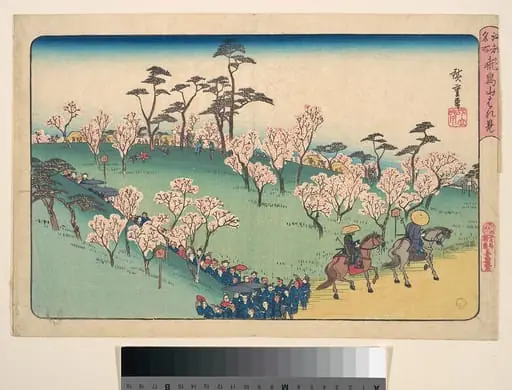
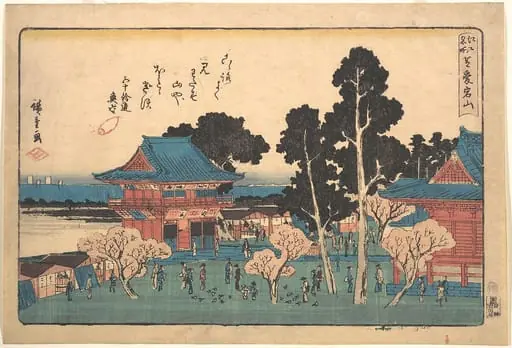
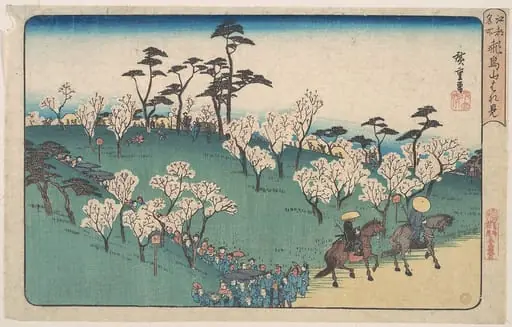
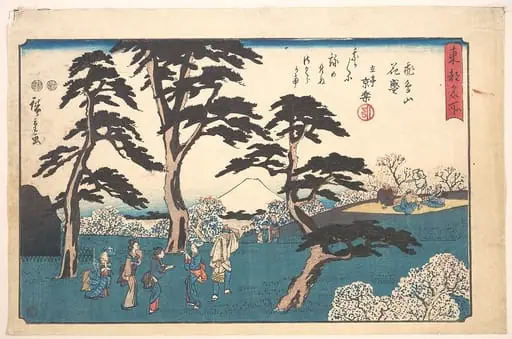
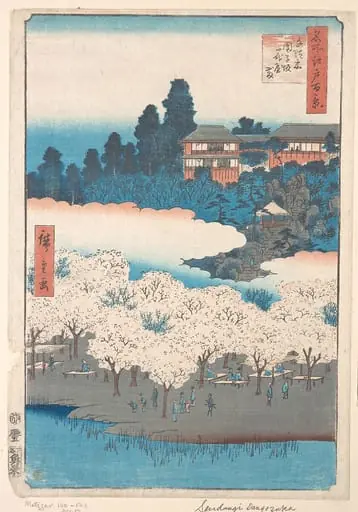
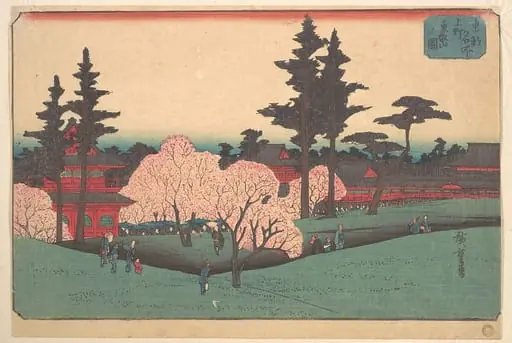
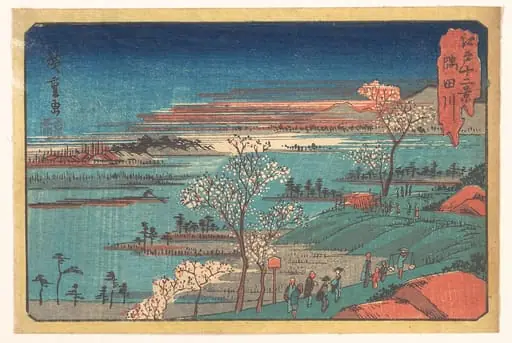
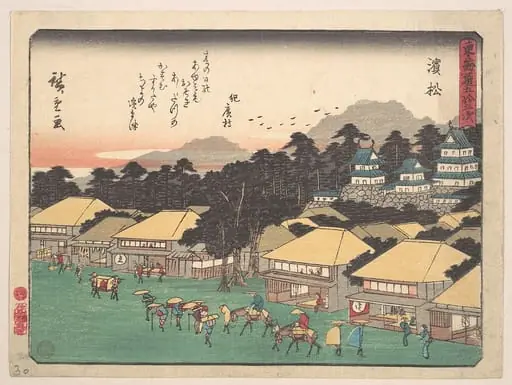
江都名所 飛鳥山はな見|Asukayama Hanami
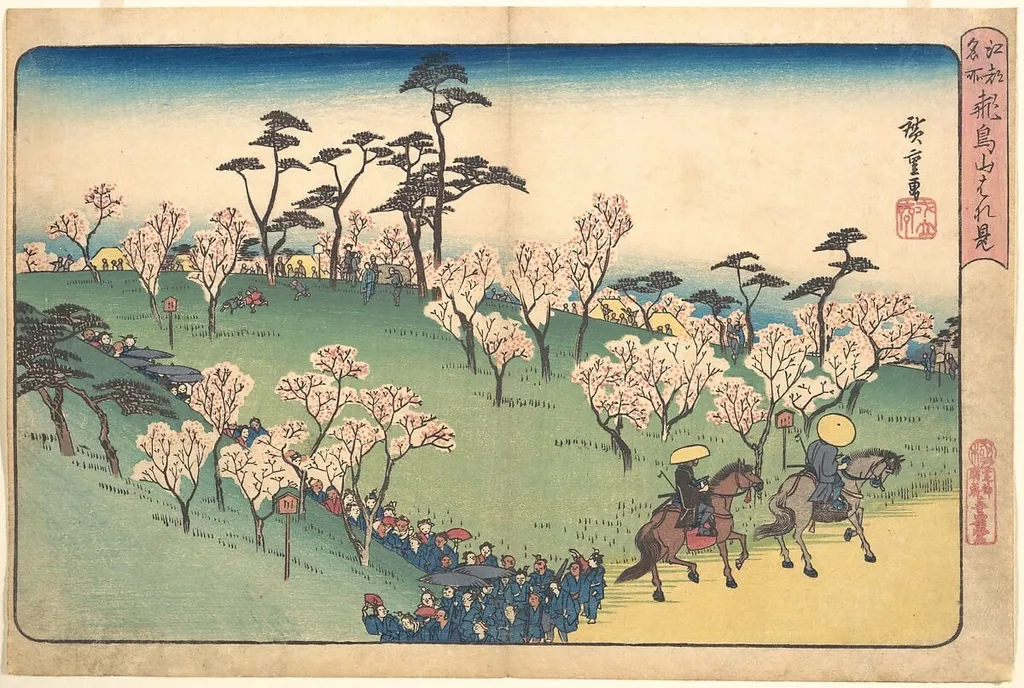
江都名所 飛鳥山はな見|Asukayama Hanami is an ink print by the Baroque artist Utagawa Hiroshige. It dates from 1742 and is held in the collection of the Metropolitan Museum of Art.
About this work
Overview
This woodblock print by Utagawa Hiroshige depicts a spring outing at Asukayama, a popular cherry-blossom viewing site in Edo.
This woodblock print by Utagawa Hiroshige depicts a spring outing at Asukayama, a popular cherry-blossom viewing site in Edo. Created in the early 19th century, it belongs to a series capturing famous locations in the region. Unlike many ukiyo-e works focused on theater or courtesans, Hiroshige turned his attention to quiet natural settings and seasonal rituals, reflecting a broader cultural appreciation for transience and landscape.
Subject & Meaning
The scene captures hanami, the traditional custom of gathering beneath blooming cherry trees to observe their fleeting beauty. Figures are arranged in relaxed postures—some seated, others walking or riding—emphasizing communal participation in nature’s cycle. The two riders on horseback suggest social distinction, while the dense clusters of blossoms and sparse foliage underscore the brief, delicate peak of spring. The image conveys harmony between human activity and the natural world.
Technique & Style
Hiroshige employed precise linework and layered color blocks to define forms and spatial depth. The sky is rendered in a pale wash of blue, contrasting with the soft pinks of the blossoms and vivid greens of the grass. Figures are rendered with subtle variation in posture and attire, adding narrative detail without clutter. The composition guides the eye along a winding path, using perspective and scale to create a sense of depth within the flat print medium.
History & Provenance
The print was produced during Hiroshige’s mature period, when he was refining his landscape series for a growing urban audience. Asukayama was a well-known public park in Edo, frequently visited during sakura season. The work was likely part of a commercial print run, distributed widely through publishers. Surviving impressions are held in major collections, including the Museum of Fine Arts, Boston, and the British Museum, confirming its circulation and enduring interest.
Context
In early 19th-century Edo, urban dwellers increasingly sought respite in designated natural spaces. Asukayama, once a daimyo’s garden, had become a public pleasure ground. The rise of leisure culture and print media allowed such scenes to be widely consumed. Hiroshige’s focus on seasonal change aligned with Buddhist-influenced aesthetics of mono no aware—the awareness of impermanence—making his landscapes resonate beyond mere topography.
Legacy
Hiroshige’s approach to landscape influenced later Japanese and Western artists, including the Impressionists, who admired his use of color and composition. His series of famous places helped standardize the visual representation of Edo’s geography in popular culture. While not the first to depict hanami, his calm, observant style set a benchmark for how nature and daily life could be rendered with quiet dignity in woodblock printing.
Artist & collection
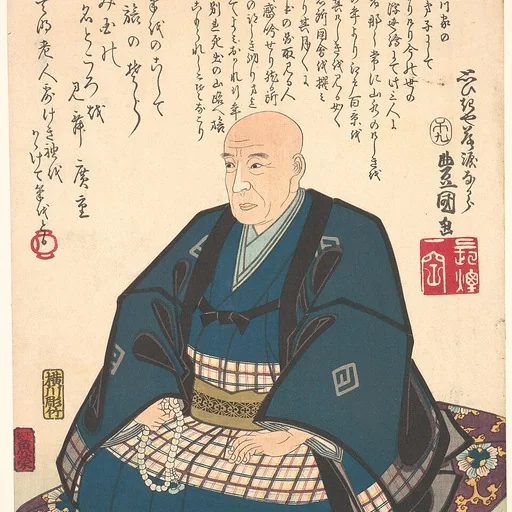
Artist
Utagawa Hiroshige (歌川 広重) or Andō Hiroshige (安藤 広重), born Andō Tokutarō (安藤 徳太郎; 1797 – 12 October 1858), was a Japanese ukiyo-e artist, considered the last great master of that tradition.