Artwork
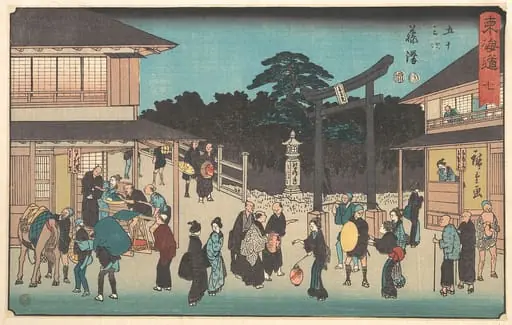
東海道五十三次之内 藤枝 人馬継立|Fujieda; Hito Uma Keitatsu
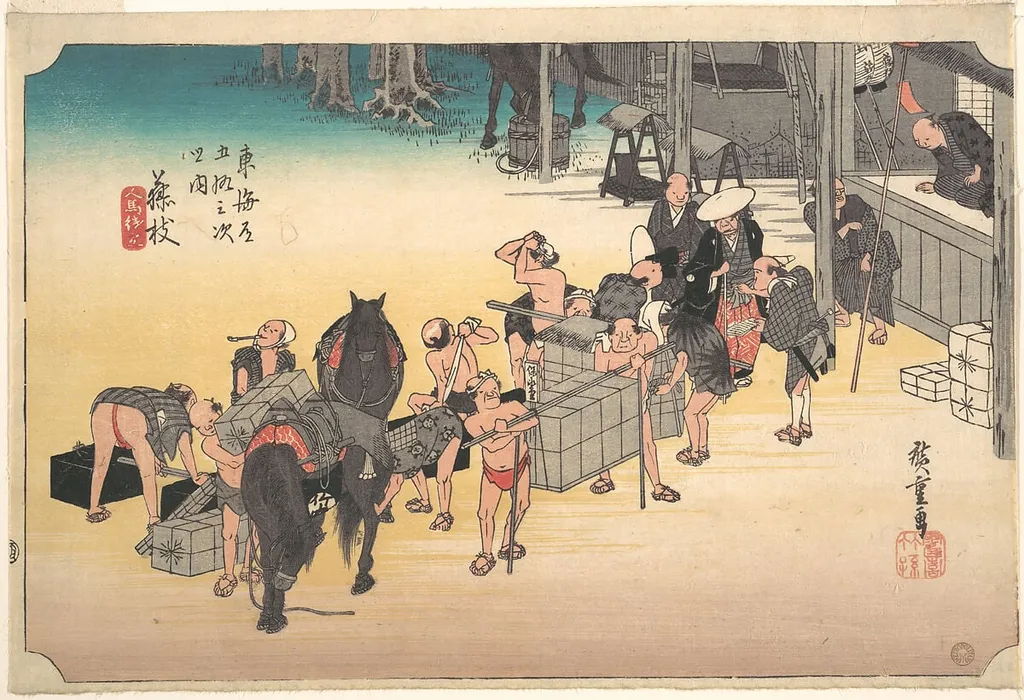
東海道五十三次之内 藤枝 人馬継立|Fujieda; Hito Uma Keitatsu is an ink print by the Romanticist artist Utagawa Hiroshige. It dates from 1834 and is held in the collection of the Metropolitan Museum of Art.
About this work
Overview
The work is executed in ink and color on paper, adhering to the traditional methods of Japanese printmaking.
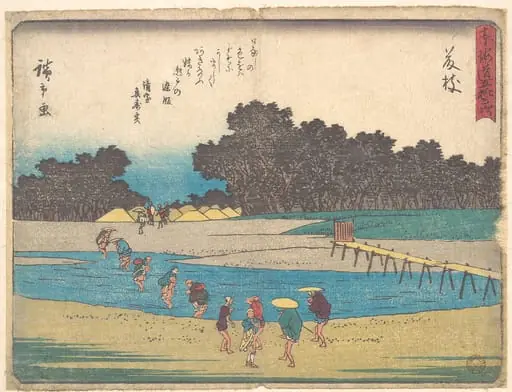
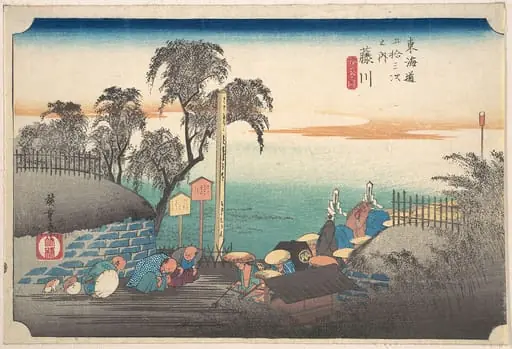
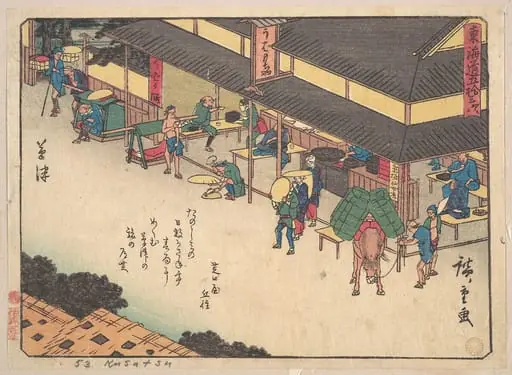
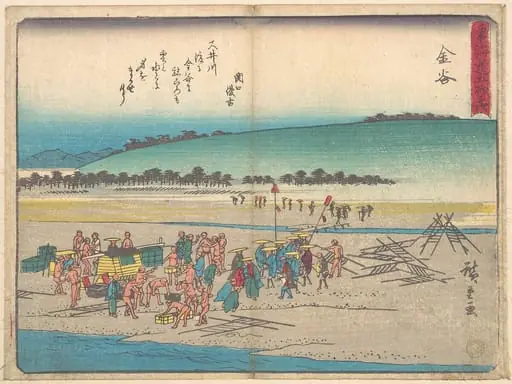
Created around 1834 by Utagawa Hiroshige, this woodblock print is part of the series *The Fifty-three Stations of the Tōkaidō*, which documents the journey along Japan’s main coastal road. Unlike typical ukiyo-e subjects centered on urban life, this scene captures a quiet moment of transit at the Fujieda post station, emphasizing movement and labor rather than spectacle. The work is executed in ink and color on paper, adhering to the traditional methods of Japanese printmaking.
Subject & Meaning
The print portrays a roadside halt where laborers carry heavy loads on poles, their bare torsos indicating physical toil. A horse, weary and bent under its burden, pulls a cart of crates, while a rider adjusts its harness. Figures in robes observe from the periphery, suggesting a hierarchy of movement. The scene conveys the quiet endurance of travel and work, transforming a mundane stop into a meditation on human effort within the broader rhythm of the journey.
Technique & Style
Hiroshige employs fine linework and subtle gradations of color to suggest depth and atmosphere. The composition directs the eye along the road, using diagonal lines of poles and the horse’s posture to imply motion. Background elements like the thatched roof and bridge are rendered with minimal detail, enhancing the sense of distance. The balance between bustling foreground activity and calm, muted surroundings reflects Hiroshige’s signature sensitivity to natural and human rhythms.
History & Provenance
Produced during the early 1830s, this print was part of a widely distributed series commissioned by the publisher Hoeidō. As one of over fifty prints in the *Tōkaidō* series, it circulated among merchants and travelers, serving both as a guide and a cultural artifact. Its survival in multiple collections today reflects its popularity and the durability of the woodblock printing process during the Edo period.
Context
The Tōkaidō road connected Edo with Kyoto, serving as a vital artery for commerce, pilgrimage, and official travel. Post stations like Fujieda were essential rest points, bustling with porters, messengers, and travelers. Hiroshige’s focus on these functional spaces—rather than temples or scenic vistas—reflects a shift in ukiyo-e toward documenting everyday life, aligning with growing public interest in travel and regional identity.
Legacy
Hiroshige’s *Tōkaidō* series influenced later generations of artists, both in Japan and abroad, particularly in the development of landscape printmaking. His attention to transient moments and atmospheric detail helped redefine the genre beyond decorative imagery. This print, like others in the series, remains a quiet record of pre-modern Japanese mobility, valued for its observational clarity rather than its grandeur.
Artist & collection
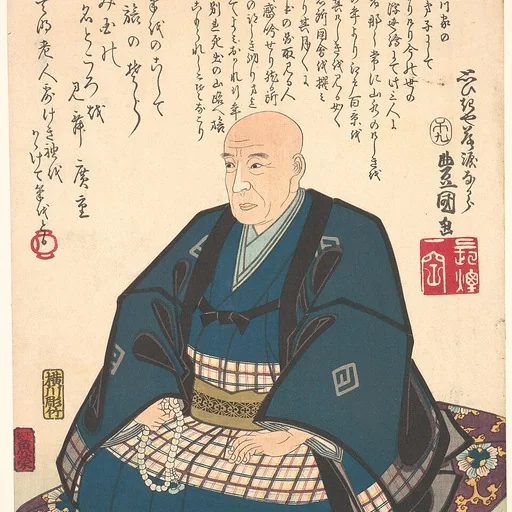
Artist
Utagawa Hiroshige (歌川 広重) or Andō Hiroshige (安藤 広重), born Andō Tokutarō (安藤 徳太郎; 1797 – 12 October 1858), was a Japanese ukiyo-e artist, considered the last great master of that tradition.