Artwork
東海道五十三次 草津|Kusatsu
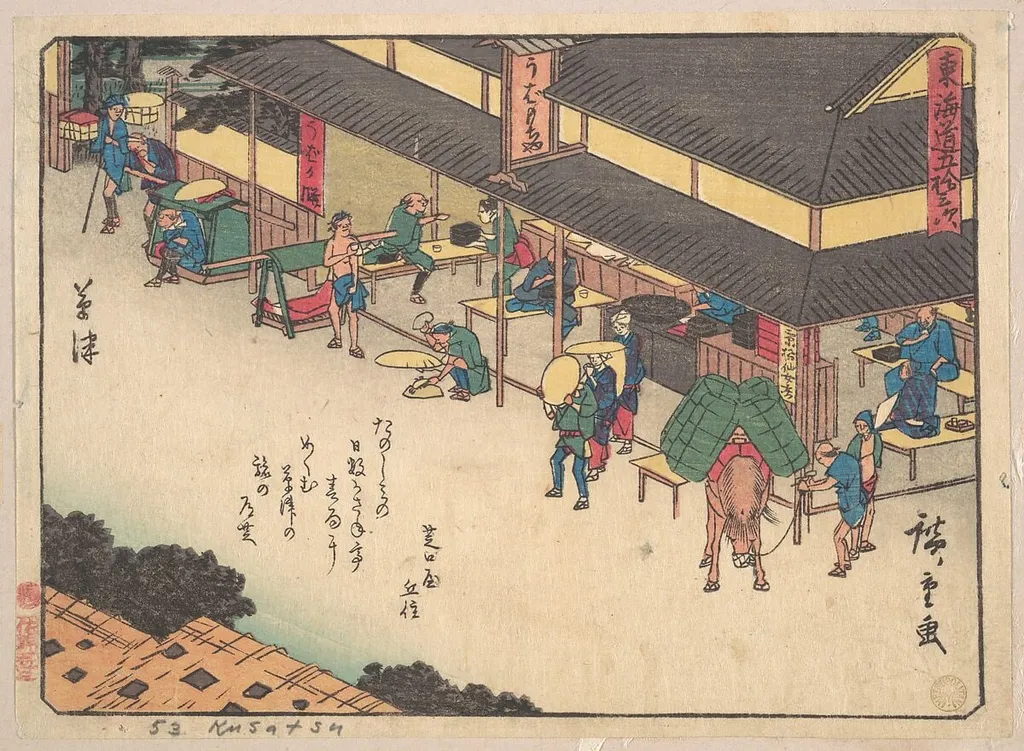
東海道五十三次 草津|Kusatsu is an ink print by the Romanticist artist Utagawa Hiroshige. It dates from 1838 and is held in the collection of the Metropolitan Museum of Art.
About this work
Overview
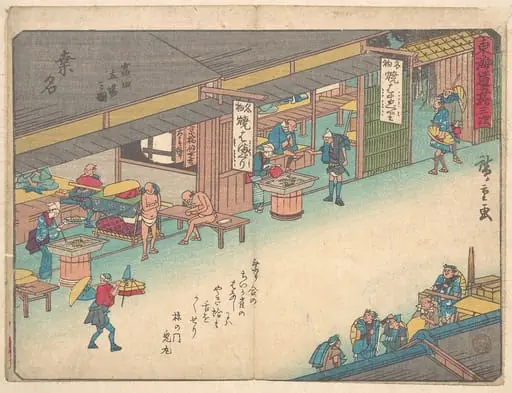
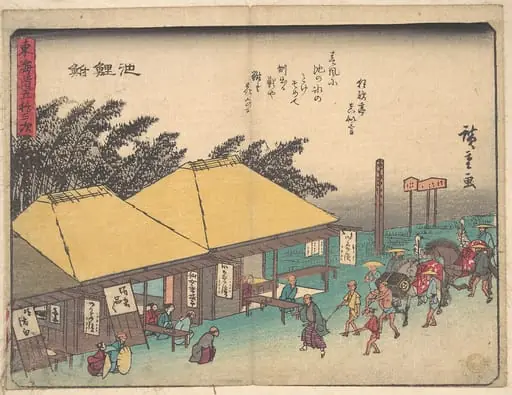
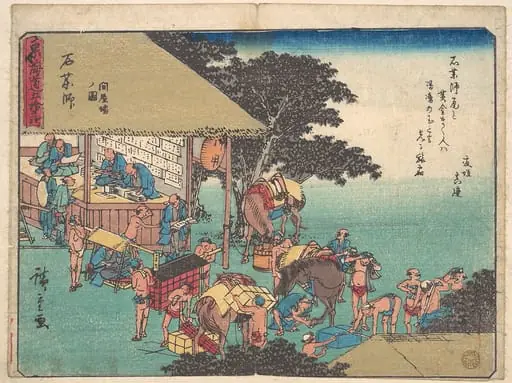
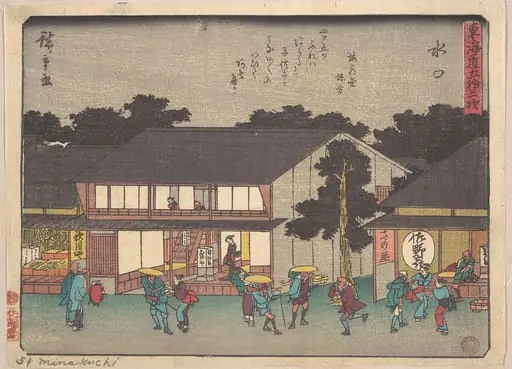
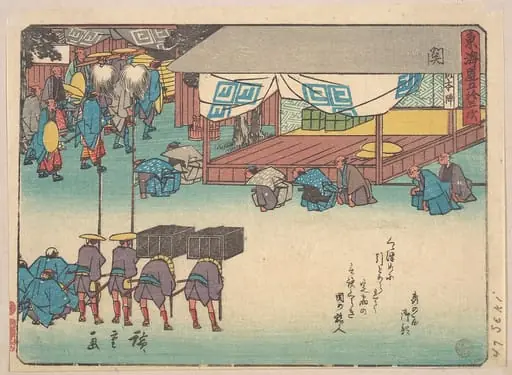
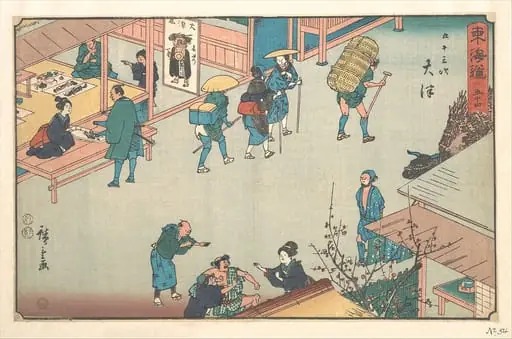
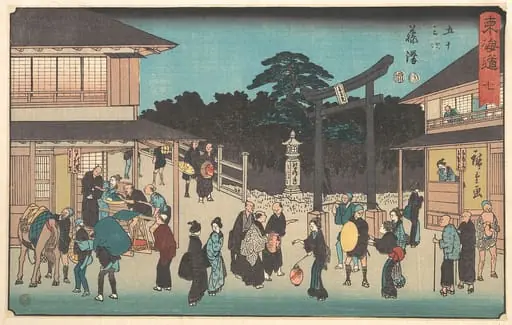
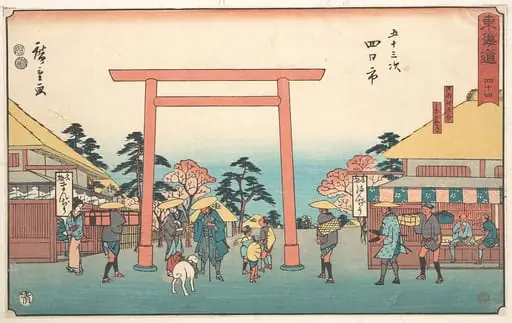
Created circa 1838 by the ukiyo‑e master Utagawa Hiroshige, this woodblock print forms part of his celebrated series *The Fifty‑three Stations of the Tōkaidō*. Executed in ink and color on paper, it portrays a bustling stop at Kusatsu, one of the post towns along the historic road that linked Edo (Tokyo) with Kyoto.
Subject & Meaning
The scene captures travelers and local workers gathered beneath a covered arcade. Figures sit on benches, stand, or crouch while a horse is tethered nearby, suggesting a moment of rest during a long journey. The composition reflects everyday life on the highway, emphasizing the rhythm of movement and pause that defined travel in Edo‑period Japan.
Technique & Style
Hiroshige employed the traditional multiblock woodcut process, carving separate blocks for line work and each color.
Hiroshige employed the traditional multiblock woodcut process, carving separate blocks for line work and each color. His use of bright, flat pigments and crisp, delineated outlines creates a clear visual hierarchy, allowing the viewer to discern individual activities within the crowded space. The slanted roofs and hanging signs are rendered with precise linearity, characteristic of his landscape approach.
History & Provenance
The print was issued as the Kusatsu station image in the *Fifty‑three Stations of the Tōkaidō* series, which was widely circulated in the 1830s and 1840s. Original impressions were sold as affordable souvenirs to travelers and collectors, contributing to the series’ popularity across Japan and later abroad. Copies are now held in major museum collections worldwide.
Context
Unlike many ukiyo‑e works that focus on urban pleasure districts, Hiroshige’s series documents the natural and built environment of Japan’s principal highway. By depicting each station’s distinctive architecture and activity, the series offers a visual travelogue that complements contemporary guidebooks and maps, providing insight into the socio‑economic fabric of the period.
Legacy
The *Tōkaidō* series, and the Kusatsu print in particular, influenced later Japanese and Western artists interested in landscape and travel scenes. Its compositional clarity and vibrant palette helped shape the perception of Japanese visual culture in the 19th‑century West, contributing to the broader appreciation of ukiyo‑e as a fine‑art tradition.
Artist & collection
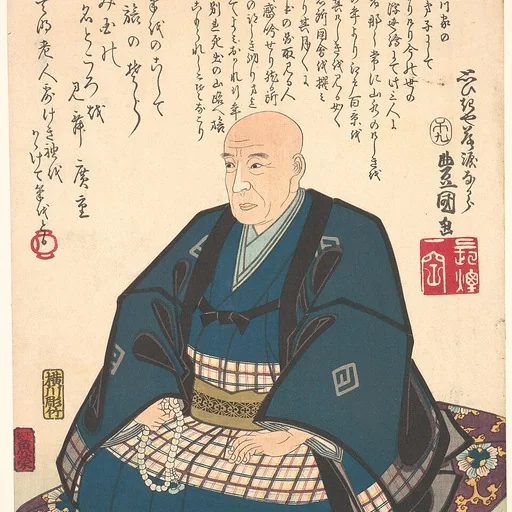
Artist
Utagawa Hiroshige (歌川 広重) or Andō Hiroshige (安藤 広重), born Andō Tokutarō (安藤 徳太郎; 1797 – 12 October 1858), was a Japanese ukiyo-e artist, considered the last great master of that tradition.