Artwork
東海道五十三次 池鯉鮒|Chiryu
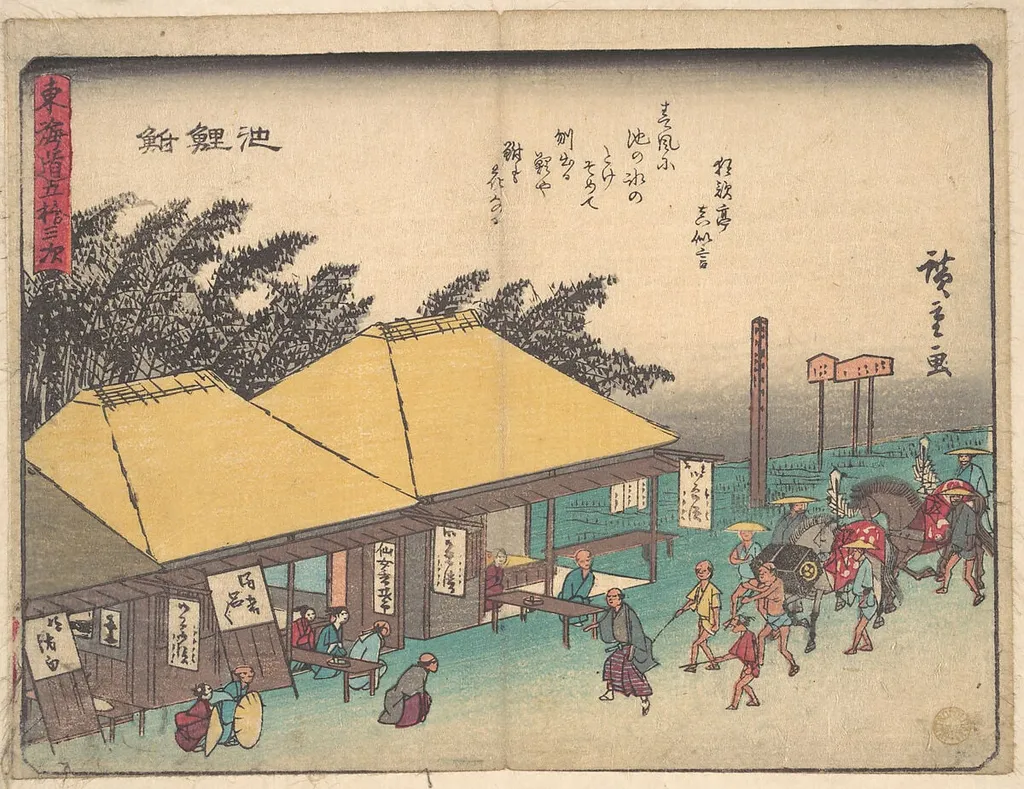
東海道五十三次 池鯉鮒|Chiryu is an ink print by the Romanticist artist Utagawa Hiroshige. It dates from 1838 and is held in the collection of the Metropolitan Museum of Art.
About this work
Overview
Chiryu is a woodblock print created by Utagawa Hiroshige around 1838 as part of his series The Fifty-three Stations of the Tōkaidō.
Subject & Meaning
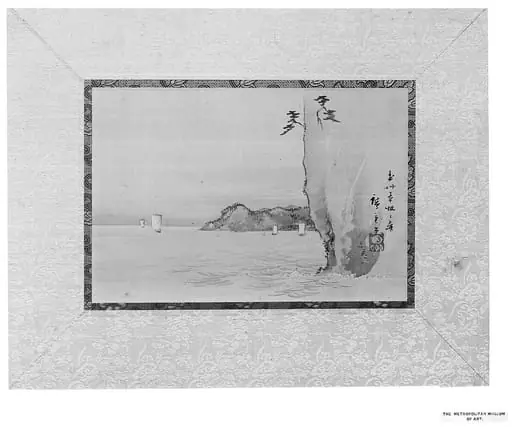
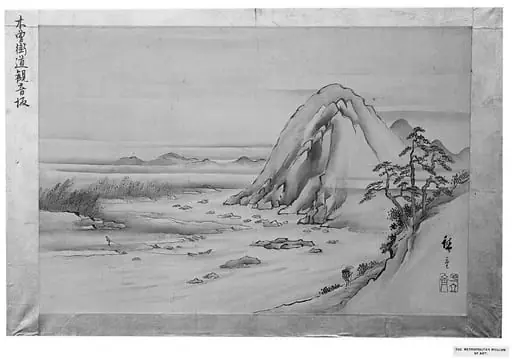
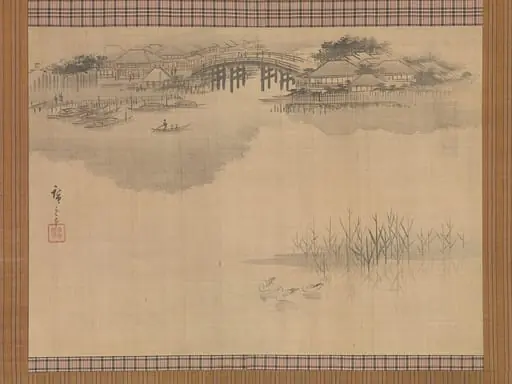
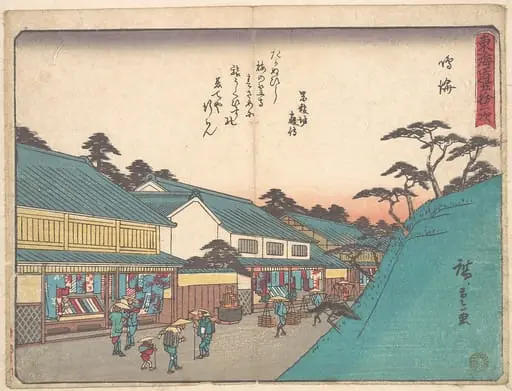
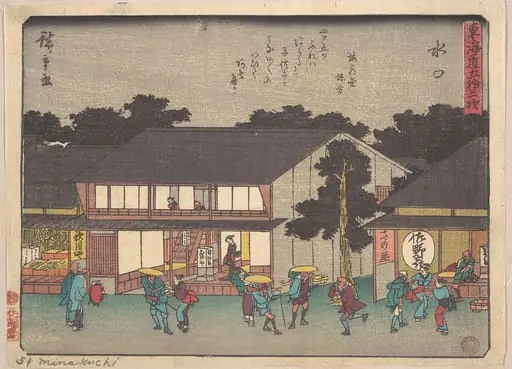
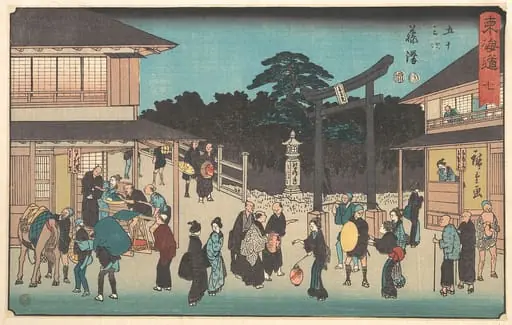
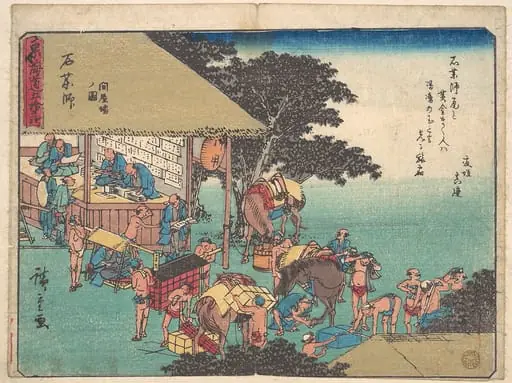
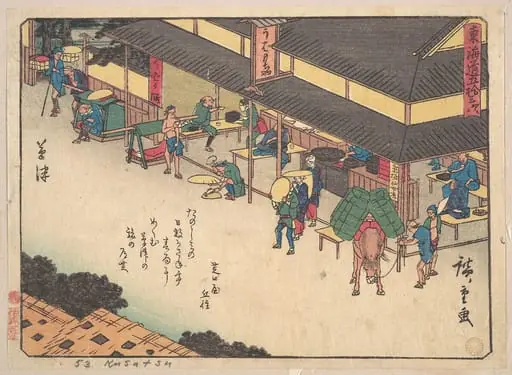
The print depicts a scene at a rest stop along the Tōkaidō road, featuring a large building with travelers and locals gathered inside and outside. The image captures a moment of everyday life, showcasing the artist's interest in travel scenes and landscapes.
Technique & Style
Executed in ink and color on paper, Chiryu exemplifies Hiroshige's signature style, characterized by a horizontal format and attention to detail, including the rendering of clothing, signs, and natural surroundings.
History & Provenance
Hiroshige was a prominent ukiyo-e artist during Japan's Edo period, known for his landscapes and travel scenes, which diverged from the genre's typical focus on urban entertainment.
Artist & collection
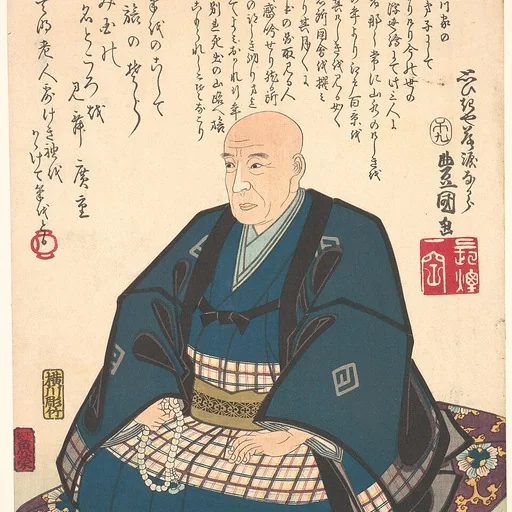
Artist
Utagawa Hiroshige (歌川 広重) or Andō Hiroshige (安藤 広重), born Andō Tokutarō (安藤 徳太郎; 1797 – 12 October 1858), was a Japanese ukiyo-e artist, considered the last great master of that tradition.