Artwork
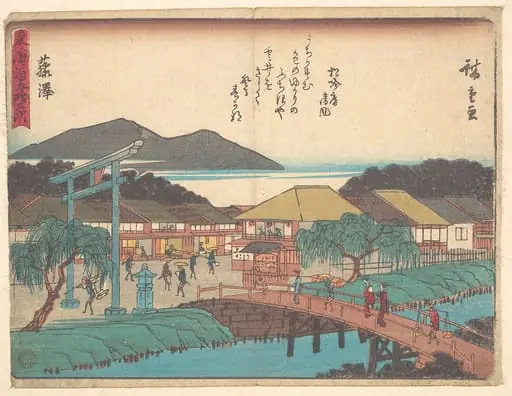
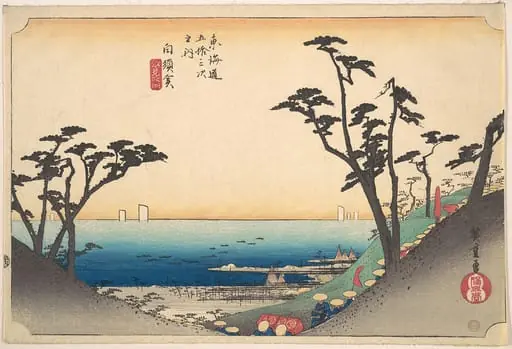
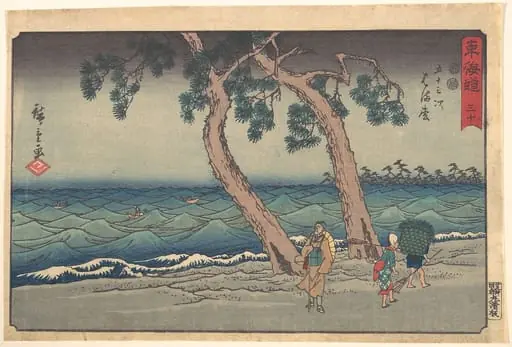
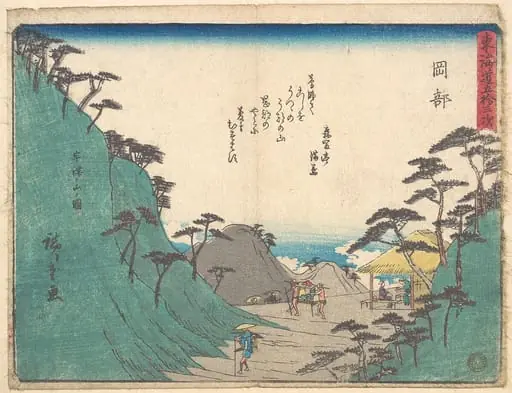
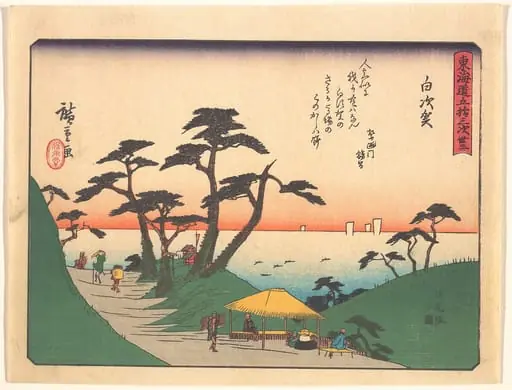
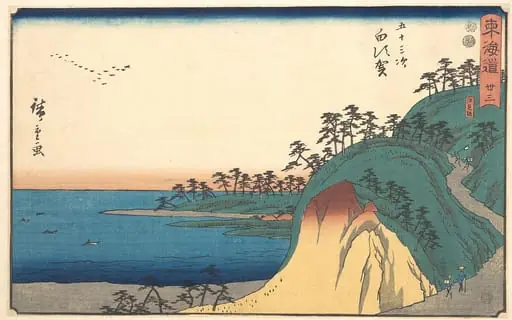
東海道五十三次 白須賀|Shirasuka
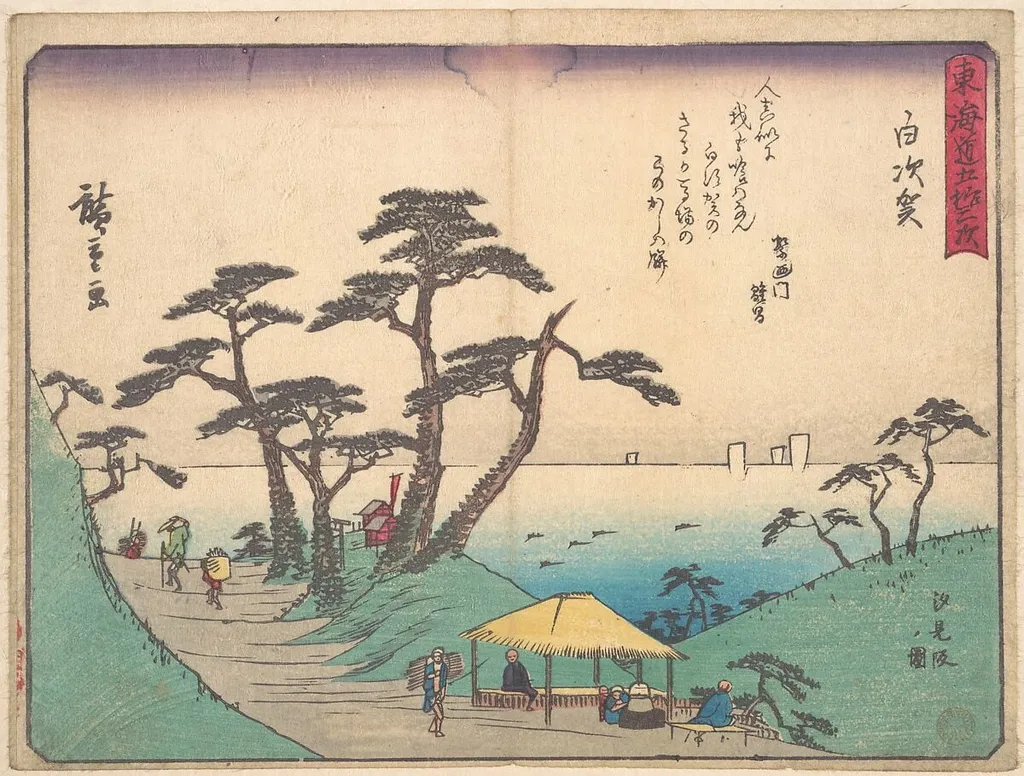
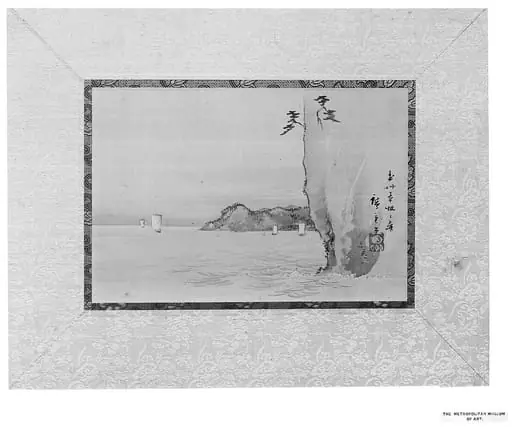
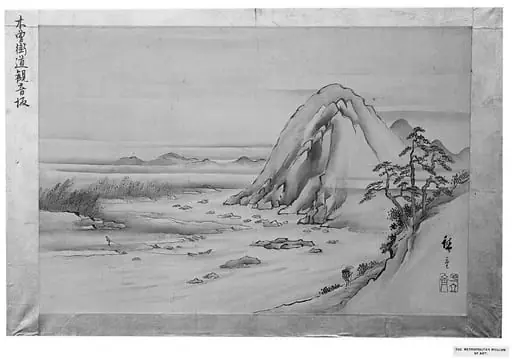
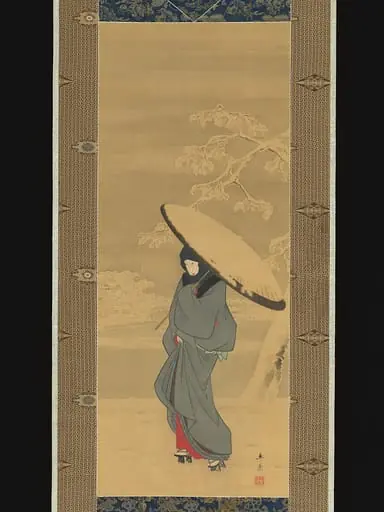
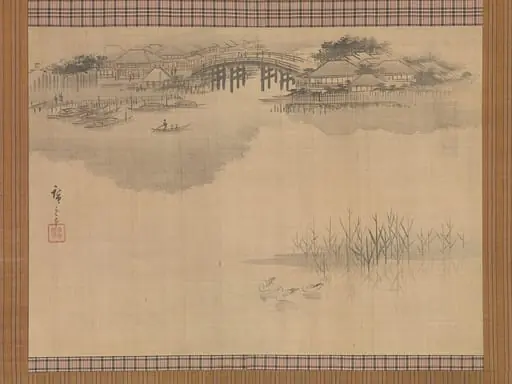
東海道五十三次 白須賀|Shirasuka is an ink print by the Romanticist artist Utagawa Hiroshige. It dates from 1838 and is held in the collection of the Metropolitan Museum of Art.
About this work
Overview
Shirasuka is a woodblock print from Utagawa Hiroshige's *The Fifty-three Stations of the Tōkaidō* series, created circa 1838. Executed in ink and color on paper, it represents a tranquil stop along the historic Tōkaidō road.
Subject & Meaning
The print captures a serene moment at Shirasuka station, depicting travelers and a natural setting. A dominant curved tree, winding path, and gazebo with seated figures convey a sense of peaceful journey through rural Japan.
Technique & Style
Hiroshige's composition employs a range of colors, from deep blues/greens to warm tones, creating depth. The arrangement guides the viewer's eye, exemplifying the artist's departure from urban ukiyo-e themes towards landscape serenity.
History & Provenance
Created around 1838 by Utagawa Hiroshige, a prominent Edo period ukiyo-e artist, as part of his renowned Tōkaidō series. Original provenance details are not provided.
Context
Part of *The Fifty-three Stations of the Tōkaidō*, a series highlighting travel along the major Edo-Kyoto route. Reflects Hiroshige's shift towards capturing Japan's countryside in ukiyo-e.
Legacy
While specific legacy details of *Shirasuka* are not provided, Hiroshige's Tōkaidō series broadly influenced Western artists, notably the Impressionists, though a direct connection to Romanticism is not inherent in this work.
Artist & collection
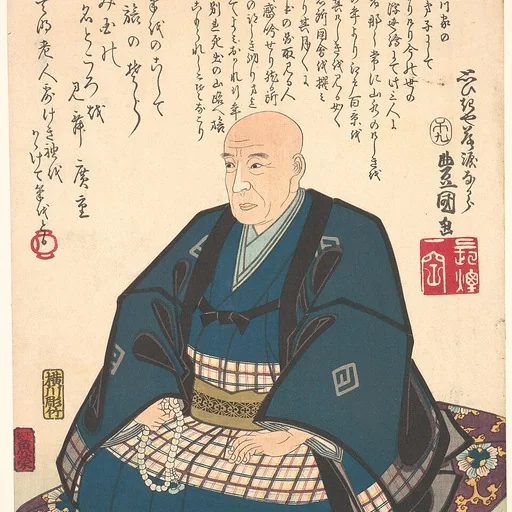
Artist
Utagawa Hiroshige (歌川 広重) or Andō Hiroshige (安藤 広重), born Andō Tokutarō (安藤 徳太郎; 1797 – 12 October 1858), was a Japanese ukiyo-e artist, considered the last great master of that tradition.