Artwork
歌川広重画 東海道五十三次之内 原 朝の富士|Hara: Mount Fuji in the Morning (Hara, Asa no Fuji), from the series Fifty-Three Stations of the Tōkaidō Road (Tōkaidō gojūsan tsugi), also known as the First Tōkaidō or Great Tōkaidō
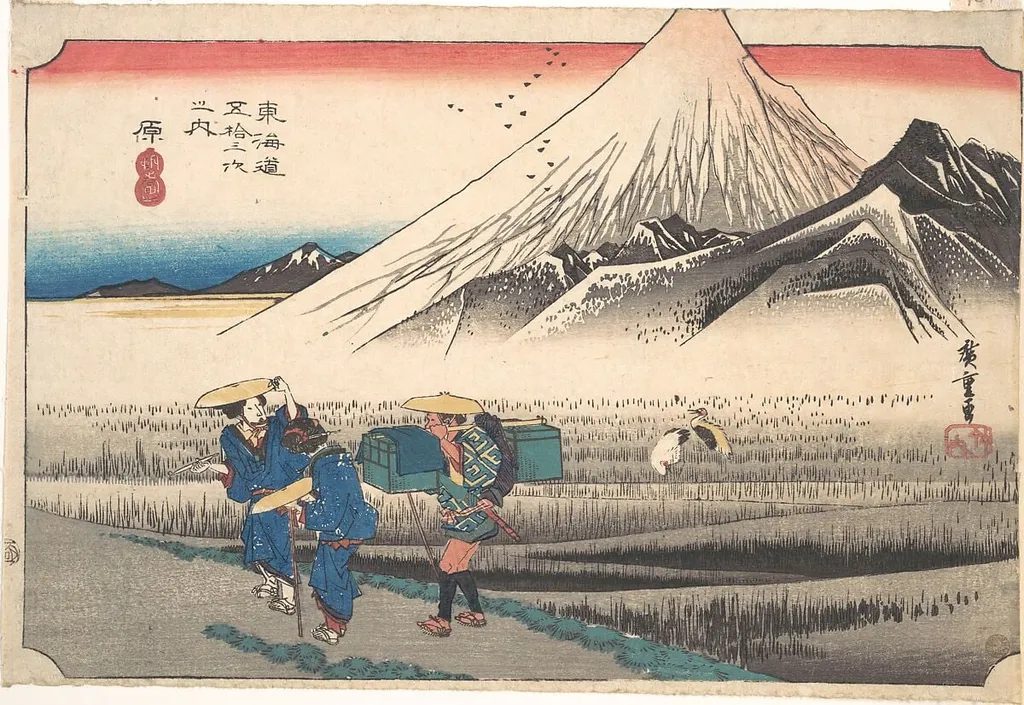
歌川広重画 東海道五十三次之内 原 朝の富士|Hara: Mount Fuji in the Morning (Hara, Asa no Fuji), from the series Fifty-Three Stations of the Tōkaidō Road (Tōkaidō gojūsan tsugi), also known as the First Tōkaidō or Great Tōkaidō is an ink print by the Romanticist artist Utagawa Hiroshige. It dates from 1834 and is held in the collection of the Metropolitan Museum of Art.
About this work
Overview
Created circa 1834, this woodblock print belongs to Utagawa Hiroshige’s celebrated series documenting the stations along the Tōkaidō, the principal coastal highway of Edo‑period Japan. The image presents a tranquil riverside tableau in which the iconic silhouette of Mount Fuji rises softly in the distance, bathed in the pale light of early morning.
Subject & Meaning
The composition juxtaposes the monumental presence of Fuji with modest figures of travelers moving along the riverbank, suggesting a moment of pause within a long journey. The calm atmosphere and muted palette convey a sense of contemplation, inviting viewers to consider the relationship between human movement and the enduring natural landscape.
Technique & Style
Executed in traditional ukiyo‑e woodblock method, the print relies on clean line work and restrained coloration to achieve depth. Hiroshige’s handling of atmospheric perspective—using subtle tonal shifts to render mist and distance—creates a layered effect that emphasizes the fleeting quality of light at dawn.
History & Provenance
The work formed part of the original fifty‑three prints issued by Hiroshige’s workshop for the Tōkaidō series, a popular commercial product in the 1830s. Copies have circulated among private collectors and museum holdings since the Meiji period, reflecting the series’ long‑standing appeal both in Japan and abroad.
Context
During the late Edo era, travel guides and travel‑related imagery flourished as the Tōkaidō facilitated increased movement of people and goods. Hiroshige’s focus on varied landscapes, rather than urban pleasure districts, marked a shift toward depicting the broader geography of Japan, aligning with contemporary interests in travel and the natural world.
Artist & collection
Artist
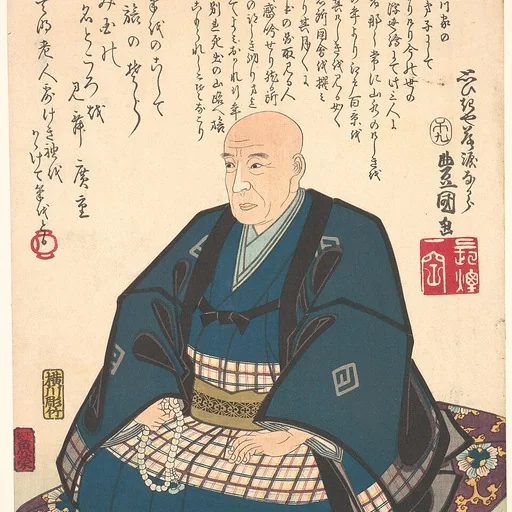
Utagawa Hiroshige (歌川 広重) or Andō Hiroshige (安藤 広重), born Andō Tokutarō (安藤 徳太郎; 1797 – 12 October 1858), was a Japanese ukiyo-e artist, considered the last great master of that tradition.

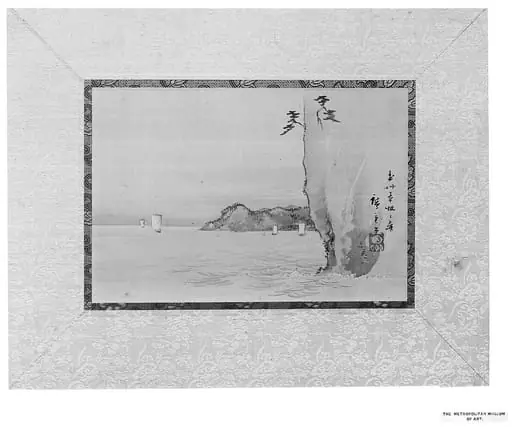
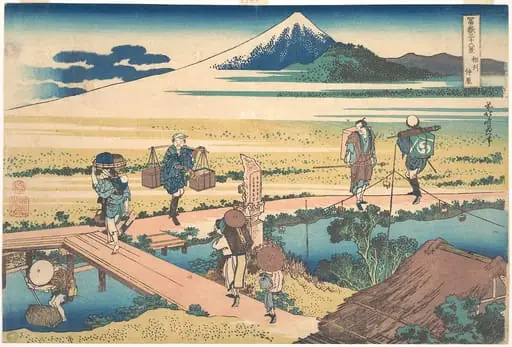 冨嶽三十六景 相州仲原|Nakahara in Sagami Province (Sōshū Nakahara), from the series Thirty-six Views of Mount Fuji (Fugaku sanjūrokkei)
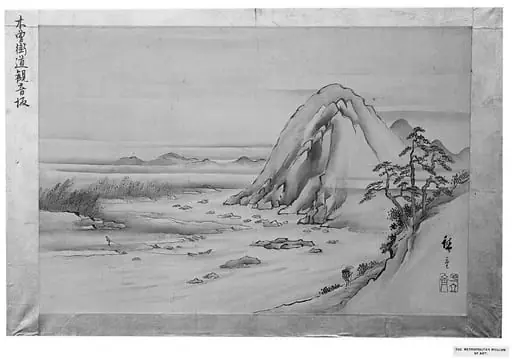
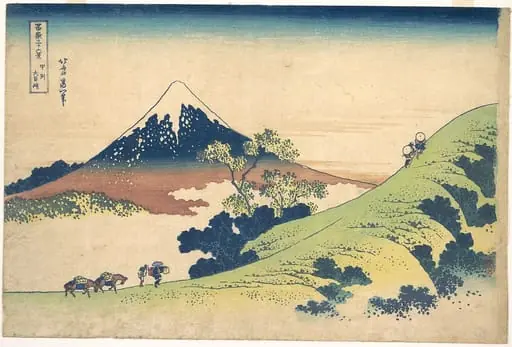 冨嶽三十六景 甲州犬目峠|The Inume Pass in Kai Province (Kōshū Inume tōge), from the series Thirty-six Views of Mount Fuji (Fugaku sanjūrokkei)
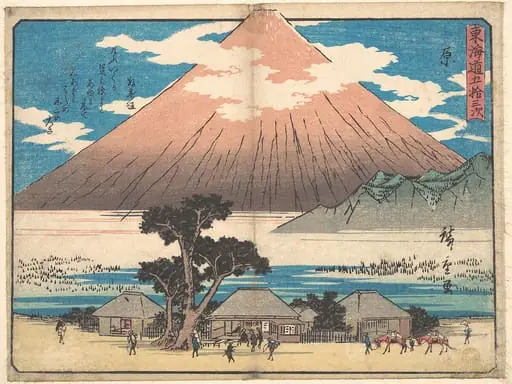 東海道五十三次 原|Hara
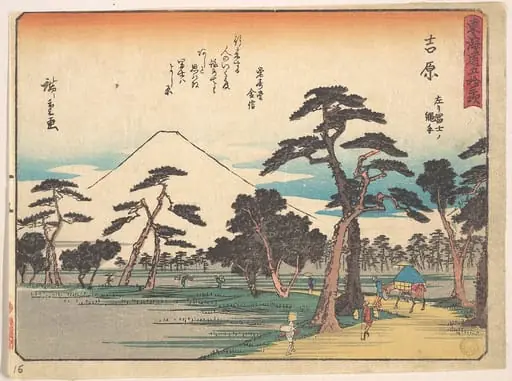 東海道五十三次 吉原 左リ富士ノ縄手|Yoshiwara
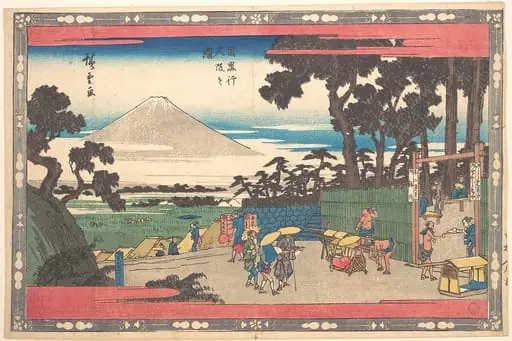 東都名所 目黒行人阪之図|Meguro Gionin Zaka
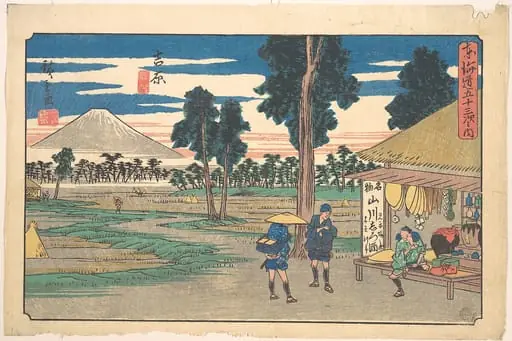 東海道五十三次之内 吉原|Yoshiwara
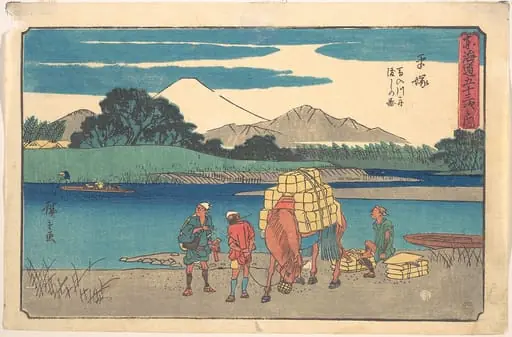 東海道五十三次之内 平塚 馬入川舟渡しの図|Hiratsuka; Banyugawa Funa Watashi no Zu
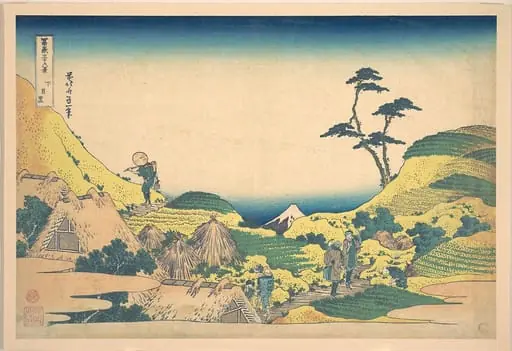 冨嶽三十六景 下目黒|Lower Meguro (Shimo Meguro), from the series Thirty-six Views of Mount Fuji (Fugaku sanjūrokkei)
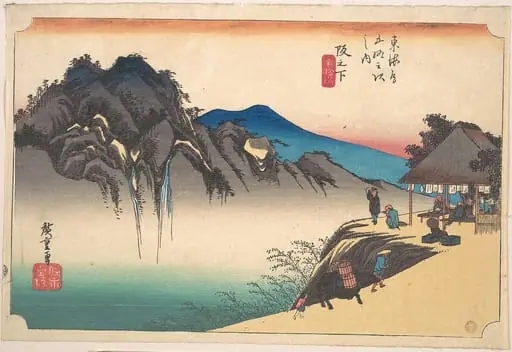 東海道五十三次之内 阪之下 筆捨嶺|Saka-no-shita, Fude-sute Mine