Artwork
東海道五十三次 原|Hara
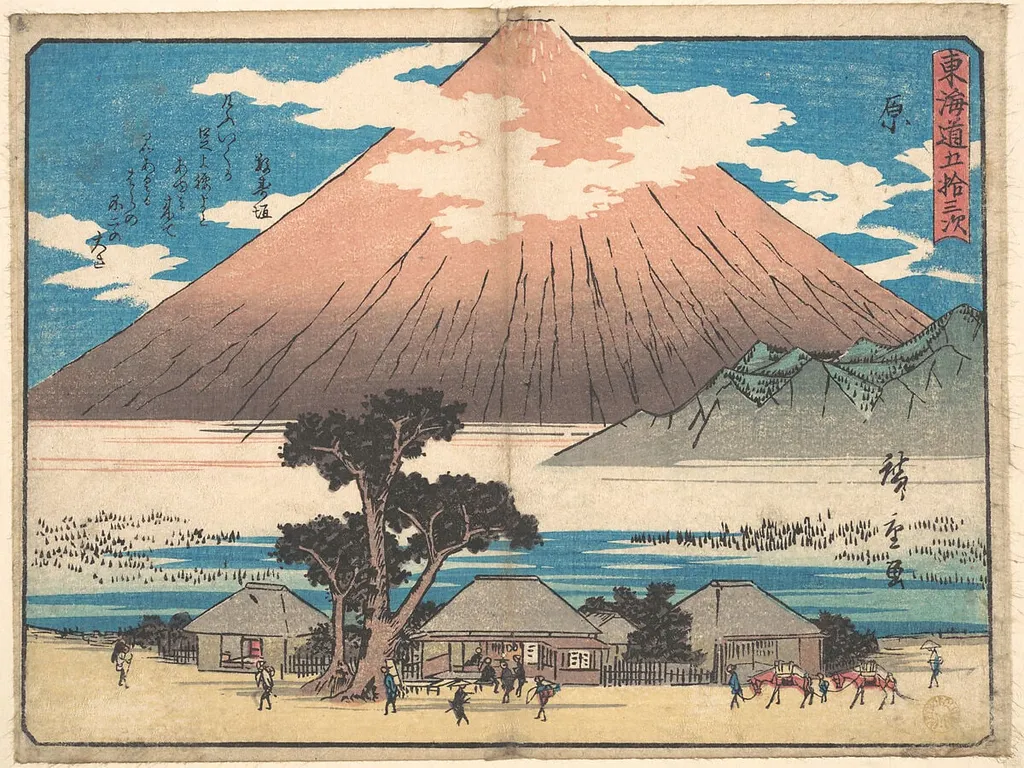
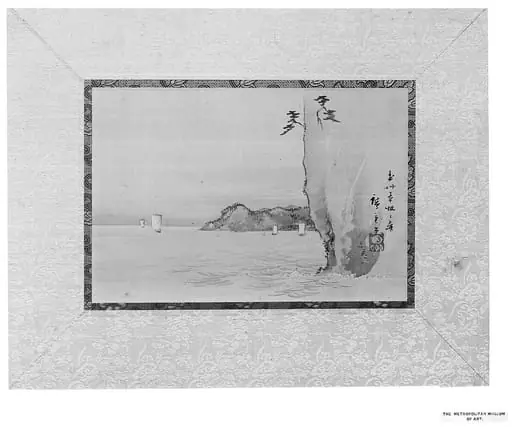
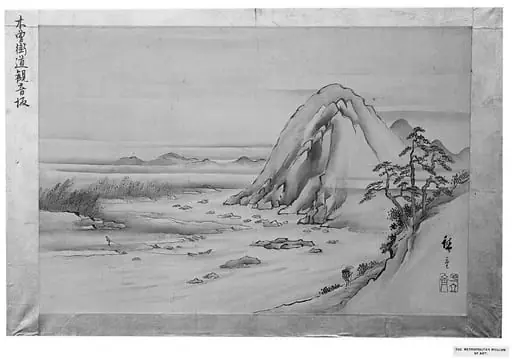
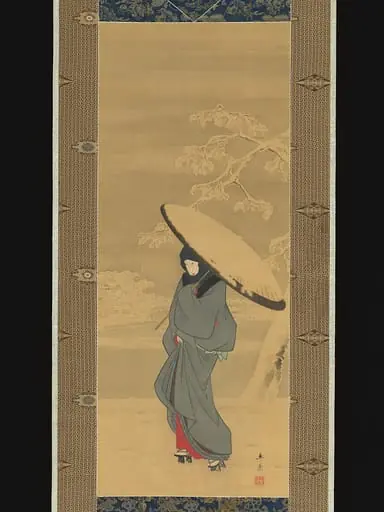
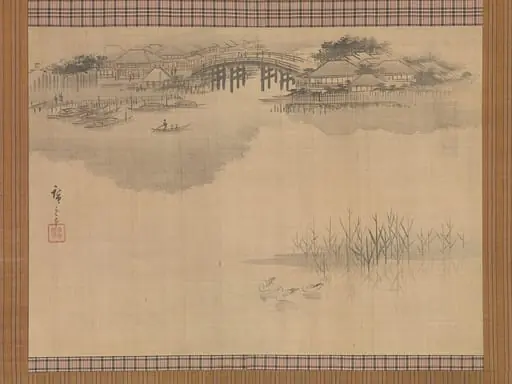
東海道五十三次 原|Hara is an ink print by the Romanticist artist Utagawa Hiroshige. It dates from 1838 and is held in the collection of the Metropolitan Museum of Art.
About this work
Overview
Hara is a woodblock print from Utagawa Hiroshige's 1838 series, The Fifty-three Stations of the Tōkaidō, depicting a scenic stop on the Edo-Kyoto road.
Subject & Meaning
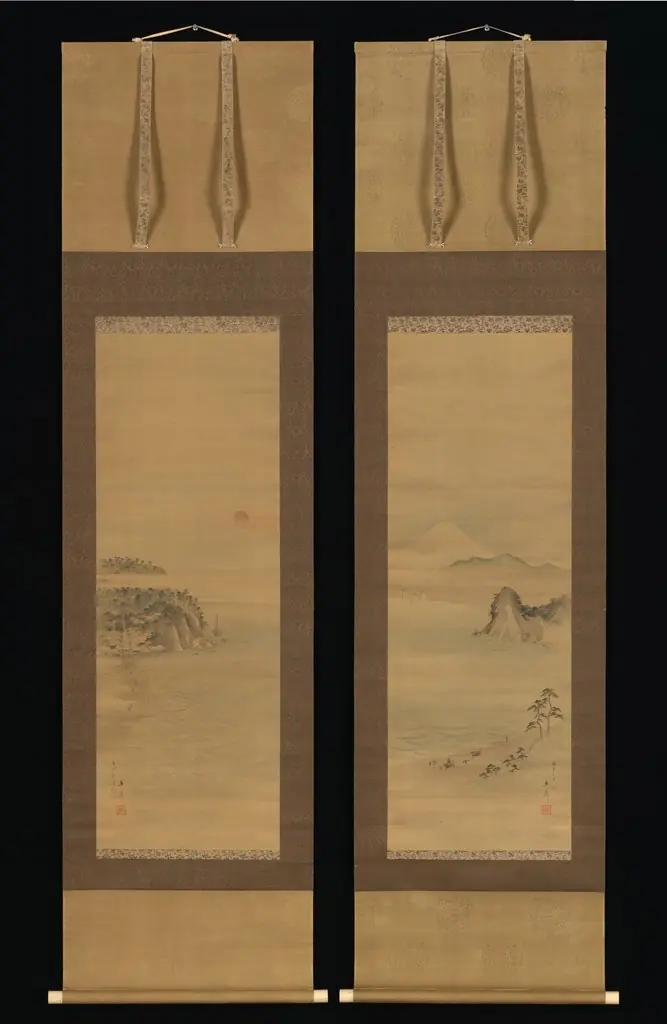
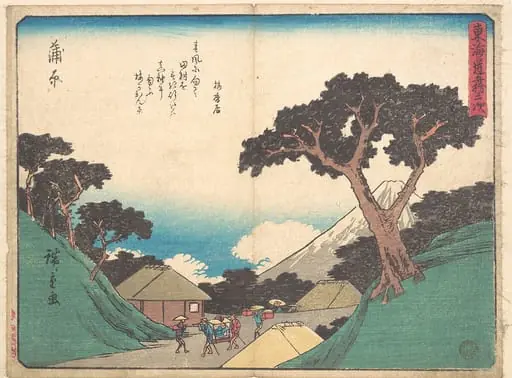
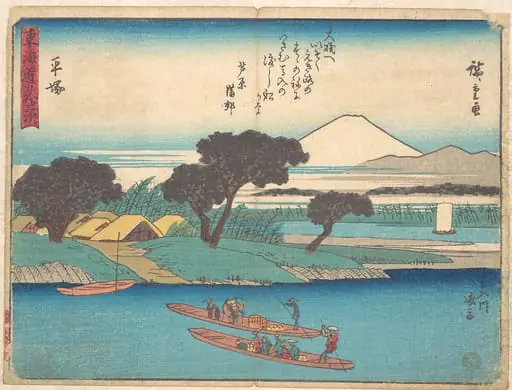
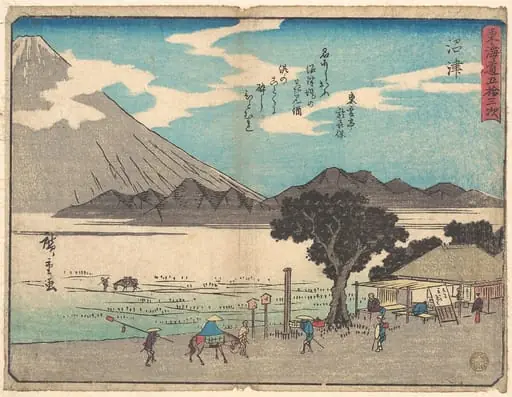
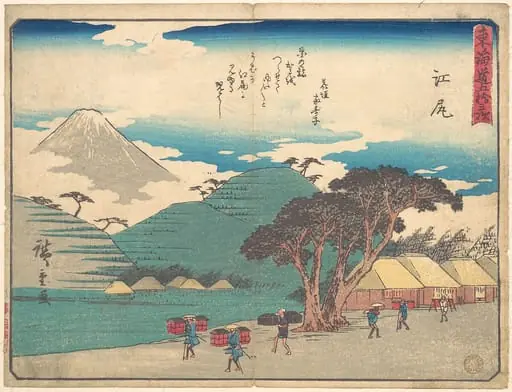
The print captures a serene winter scene: a snow-capped mountain towers over a quiet village, with daily life unfolding in the foreground—people walking, a horse-drawn cart, and a lone tree, juxtaposing natural grandeur with everyday human activity.
Technique & Style
Characterized by Hiroshige's signature horizontal format, the print uses simple lines, flat colors, and subtle atmospheric detail to create depth, blending stylized natural elements with realistically depicted human figures and architecture.
History & Provenance
Created around 1838 by Utagawa Hiroshige (born Andō Tokutarō in 1797), a prominent ukiyo-e artist known for transitioning from urban to natural themes. The work is part of The Metropolitan Museum of Art's collection.
Context
Part of a larger series documenting the Tōkaidō's stations, Hara reflects Hiroshige's contribution to the ukiyo-e genre's shift towards landscapes, capturing the beauty of Japan's natural and rural landscapes for urban viewers.
Artist & collection
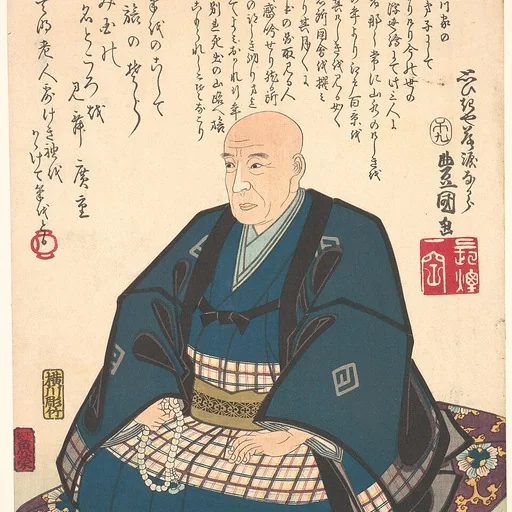
Artist
Utagawa Hiroshige (歌川 広重) or Andō Hiroshige (安藤 広重), born Andō Tokutarō (安藤 徳太郎; 1797 – 12 October 1858), was a Japanese ukiyo-e artist, considered the last great master of that tradition.