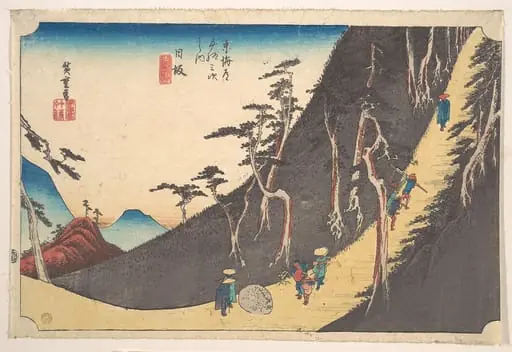
Artwork
東海道五十三次之内 平塚 縄手道|Hiratsuka, Nawate Do
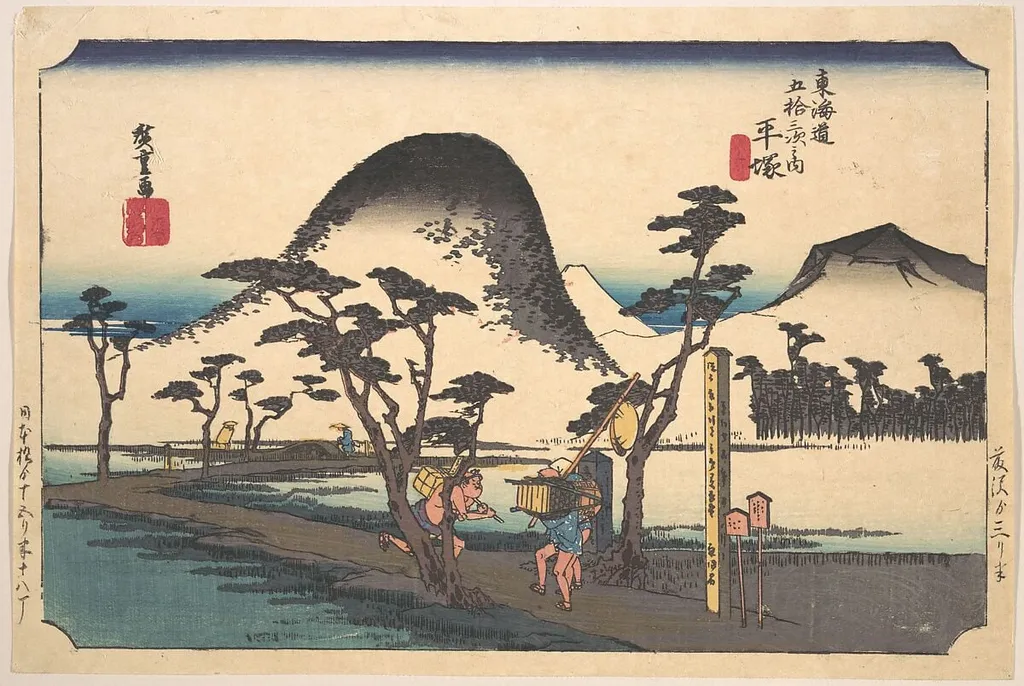
東海道五十三次之内 平塚 縄手道|Hiratsuka, Nawate Do is an ink print by the Romanticist artist Utagawa Hiroshige. It dates from 1834 and is held in the collection of the Metropolitan Museum of Art.
About this work
Overview
Created around 1834 by Utagawa Hiroshige, this woodblock print is one of fifty-three scenes in the series *The Fifty-three Stations of the Tōkaidō*.
Created around 1834 by Utagawa Hiroshige, this woodblock print is one of fifty-three scenes in the series *The Fifty-three Stations of the Tōkaidō*. It depicts a quiet stretch of the historic road connecting Edo and Kyoto, rendered in ink and color on paper. Unlike many ukiyo-e works focused on urban life, Hiroshige turned his attention to the natural and transient moments of travel, emphasizing atmosphere over spectacle.
Subject & Meaning
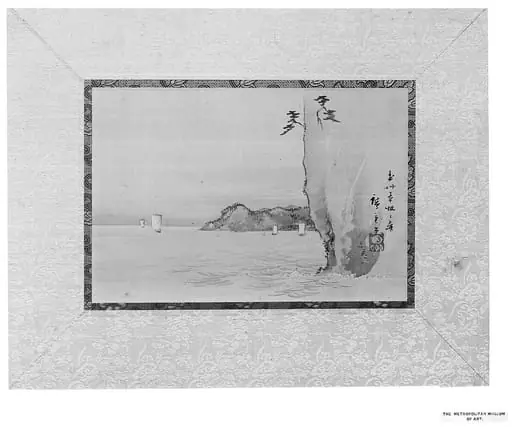
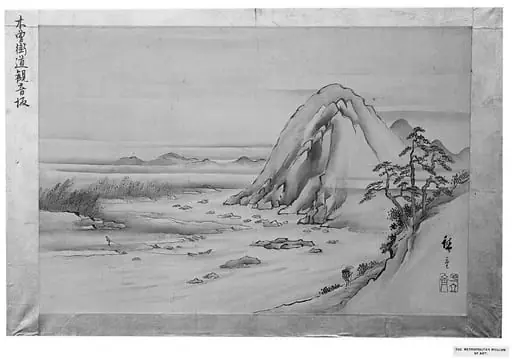
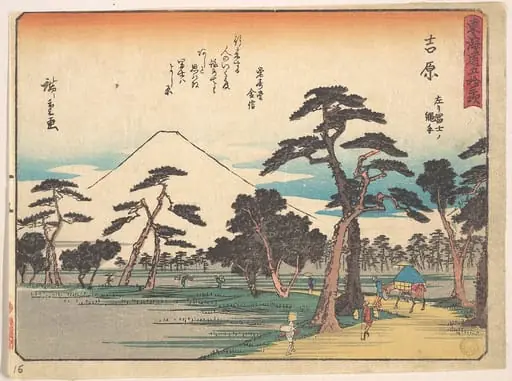
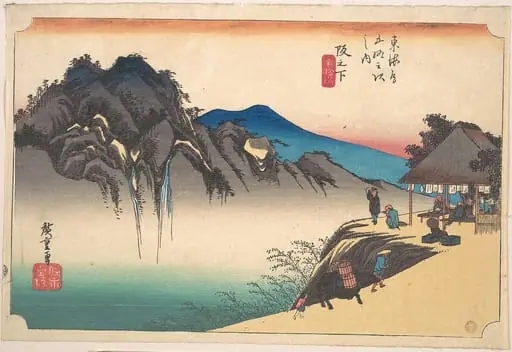
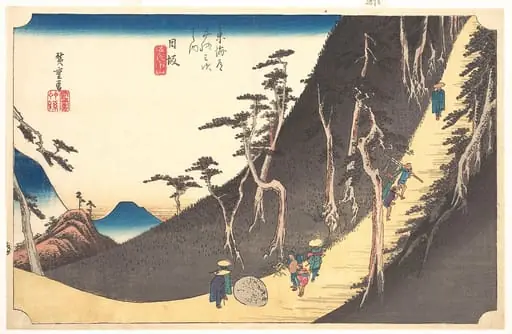
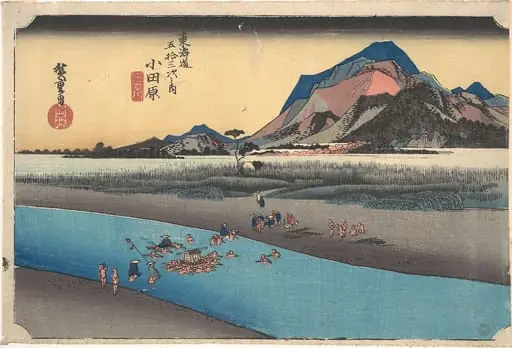
The scene shows two travelers moving along a path beside a river, one carrying a lantern, the other a burden balanced on a pole. A wooden milestone stands near the road, and a distant temple roof emerges through the trees. The mountain in the background, though culturally significant, is presented not as a monument but as a quiet backdrop to daily movement. The image conveys solitude and the rhythm of pilgrimage or trade along a well-trodden route.
Technique & Style
Hiroshige employed fine linework and layered washes of color to suggest depth and mood. The river mirrors the sky’s pale tones, while the pine trees frame the path with vertical rhythm. Subtle shadows under the travelers and the delicate rendering of the milestone’s inscription demonstrate his attention to quiet detail. The composition balances open space with carefully placed elements, guiding the viewer’s eye along the road’s curve.
History & Provenance
The print was produced during the early 1830s as part of Hiroshige’s first major landscape series, which became widely popular among Edo-period travelers and townspeople. Woodblock prints like this were mass-produced for public sale, making them accessible beyond elite circles. Copies survive in major collections worldwide, reflecting the series’ enduring circulation and cultural resonance in Japan and beyond.
Context
The Tōkaidō was Japan’s most important travel corridor, used by merchants, pilgrims, and samurai. Hiroshige’s series captured its stations not as grand monuments but as lived spaces—marked by weather, time of day, and human presence. This approach aligned with a growing Edo-period interest in regional identity and the aesthetics of transience, contrasting with earlier ukiyo-e’s focus on courtesans and actors.
Legacy
Hiroshige’s *Tōkaidō* series influenced later Western artists, including Impressionists drawn to its flattened perspective and poetic simplicity. In Japan, the prints helped shape a national visual language of landscape and journey. Though produced as commercial art, these works now serve as historical records of travel, environment, and everyday life in early 19th-century Japan.
Artist & collection
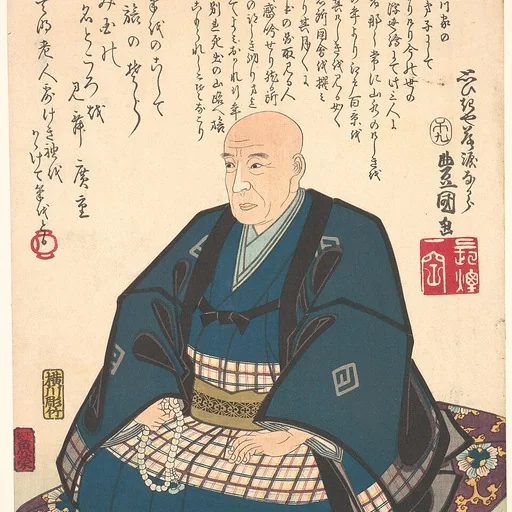
Artist
Utagawa Hiroshige (歌川 広重) or Andō Hiroshige (安藤 広重), born Andō Tokutarō (安藤 徳太郎; 1797 – 12 October 1858), was a Japanese ukiyo-e artist, considered the last great master of that tradition.