Artwork
江戸高名会亭尽 浅草雷門前 かめや|Asakusa Kaminarimon Mae (Kameya)
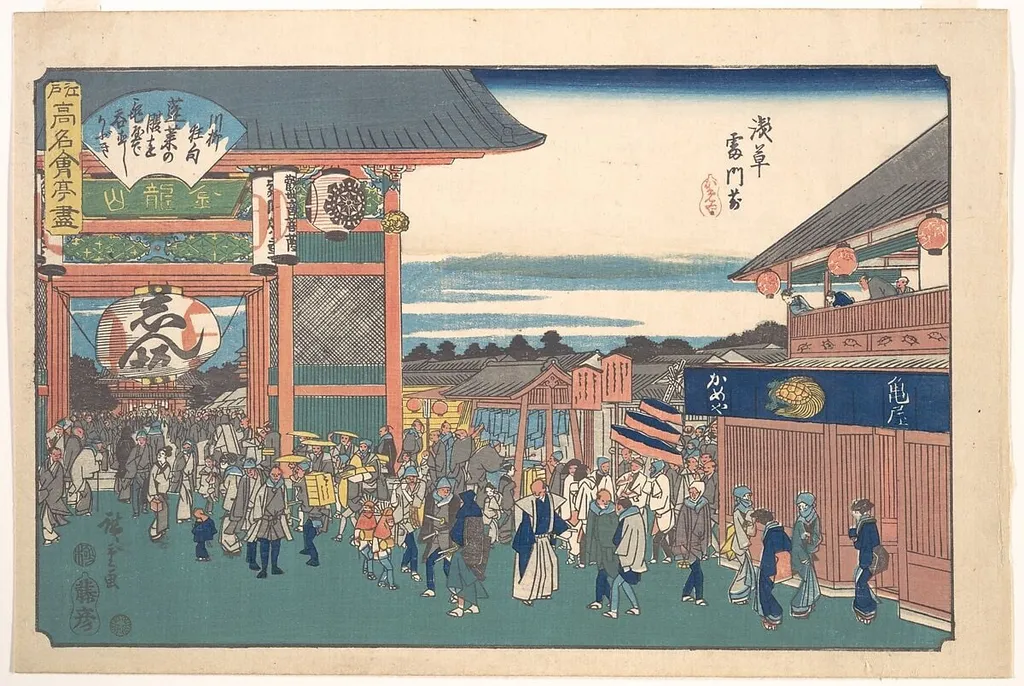
江戸高名会亭尽 浅草雷門前 かめや|Asakusa Kaminarimon Mae (Kameya) is an ink print by the Romanticist artist Utagawa Hiroshige. It dates from 1838 and is held in the collection of the Metropolitan Museum of Art.
About this work
Overview
Asakusa Kaminarimon Mae (Kameya) is a woodblock print created by Utagawa Hiroshige around 1838, featuring a vibrant scene near the Thunder Gate in Asakusa.
Subject & Meaning
The print depicts a bustling street scene in front of the iconic red Thunder Gate, capturing everyday life in Edo-period Asakusa. Figures in traditional attire engage in various activities, conveying a sense of orderly liveliness.
Technique & Style
Executed in ink and color on paper, the print showcases ukiyo-e's characteristic blend of vibrancy and precision. Bold, bright colors—particularly reds, greens, and blues—dominate the composition, accentuating the scene's energy.
History & Provenance
Dating to the late Edo period (1603–1868), this work reflects the flourishing of ukiyo-e in urban Japan. It is part of Hiroshige's broader shift towards landscape themes, diverging from the genre's common focus on courtesans and actors.
Context
As part of Hiroshige's landscape series, Asakusa Kaminarimon Mae (Kameya) highlights the artist's interest in capturing the essence of famous locations in Edo (modern-day Tokyo), appealing to the growing urban population's nostalgia for local landmarks.
Legacy
This print, like much of Hiroshige's work, has contributed significantly to the global appreciation of ukiyo-e. Its depiction of Asakusa's Thunder Gate has become an enduring image of traditional Japanese urban life.
Artist & collection
Artist
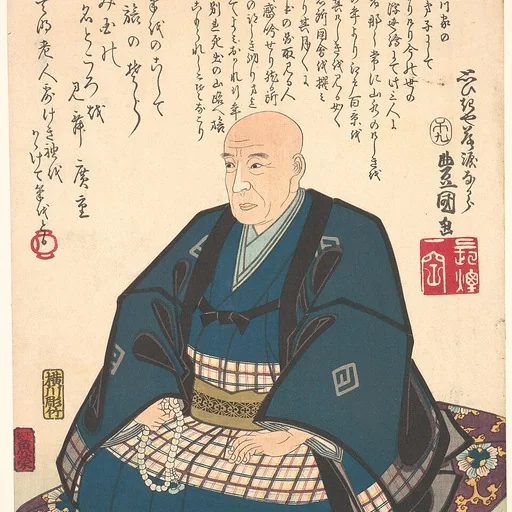
Utagawa Hiroshige (歌川 広重) or Andō Hiroshige (安藤 広重), born Andō Tokutarō (安藤 徳太郎; 1797 – 12 October 1858), was a Japanese ukiyo-e artist, considered the last great master of that tradition.

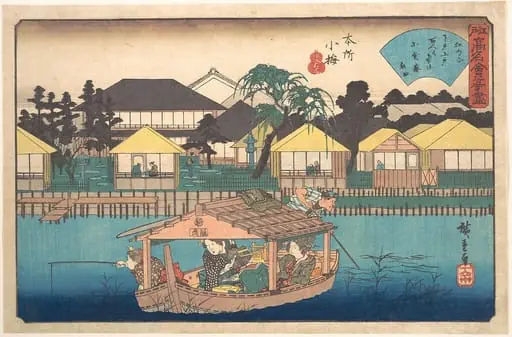 江戸高名会亭尽 本所小梅 小倉庵|Honjo Komme (Ogura-an)
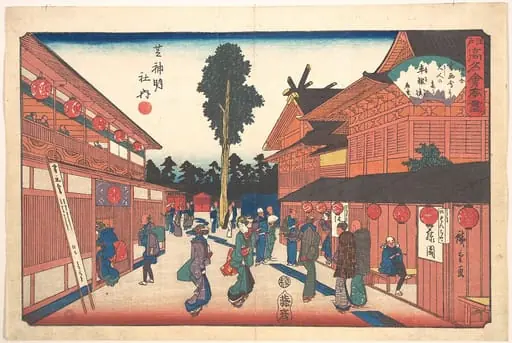 江戸高名会亭尽 芝神明社内 車轍楼|Shiba Shinmeisha Uchi (Shatetsu-ro)
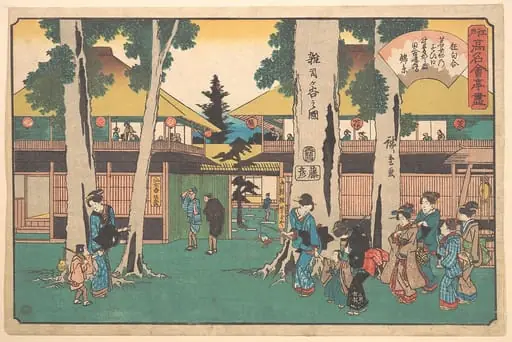 江戸高名会亭尽 雑司ヶ谷の図 茗荷屋|Zoshigaya no Zu (Myoga-ya)
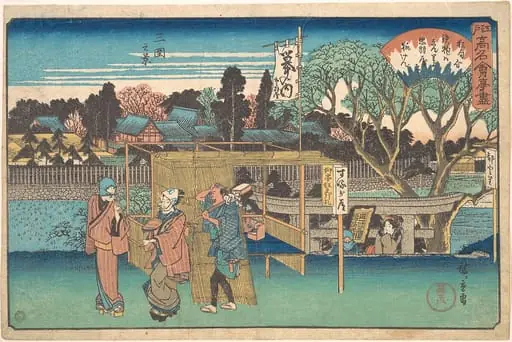 江戸高名会亭尽 三囲之景 出羽屋|Mimeguri no Kei (Toyoha-ya)
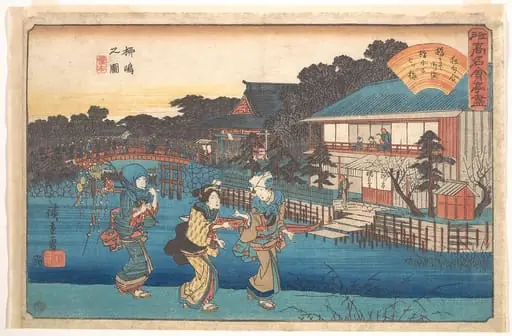 江戸高名会亭尽 柳島の図 橋本|Yanagishima no Zu
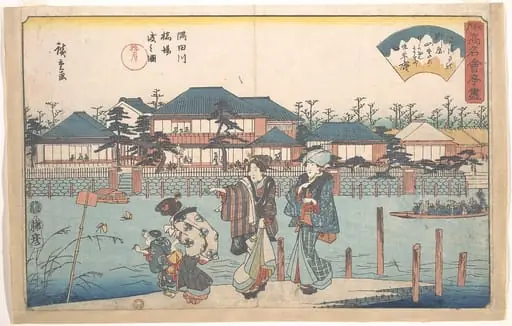 江戸高名会亭尽 隅田川橋場渡之図 柳屋|Sumidagawa Hashiba Watashi Zu (Yanagiya)
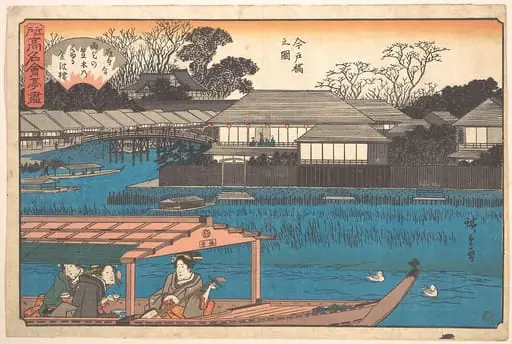 江戸高名会亭尽 今戸橋之図 金波楼|Imadobashi no Zu (Tama-Sho)
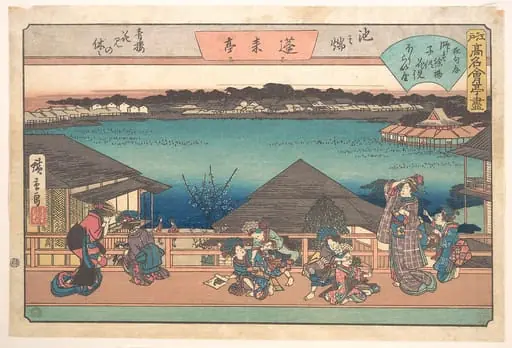 江戸高名会亭尽 池之端 蓬莱亭 青楼花見の休み|Ikeno Mata (Horai-ya)
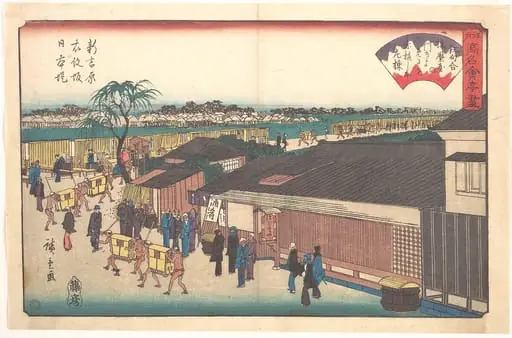 Shinyoshiwara Emonzaka Nihonzutsumi (Harimaya)|江戸高名会亭尽 新吉原衣紋坂日本堤 播磨屋|The Harimaya at Shinyoshiwara Emonzaka Nihonzutsumi