Artwork
江戸高名会亭尽 柳島の図 橋本|Yanagishima no Zu
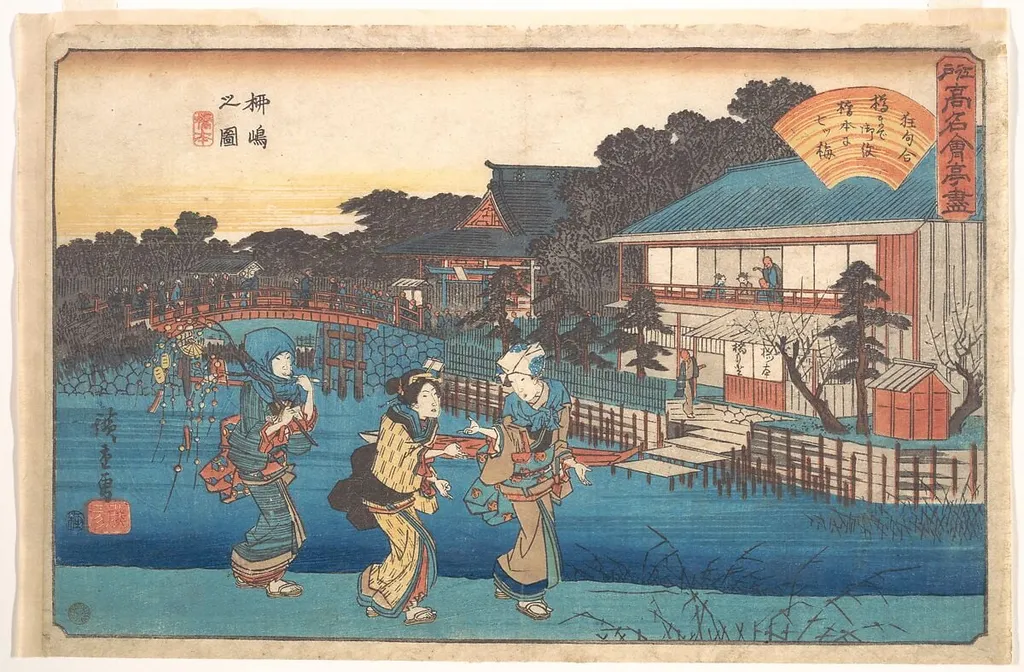
江戸高名会亭尽 柳島の図 橋本|Yanagishima no Zu is an ink print by the Romanticist artist Utagawa Hiroshige. It dates from 1838 and is held in the collection of the Metropolitan Museum of Art.
About this work
Overview
Utagawa Hiroshige's *Yanagishima no Zu*, created circa 1838, is a woodblock print on paper, executed in ink and color. Characteristic of Hiroshige's ukiyo-e landscapes, it diverges from the genre's typical urban entertainment themes, instead capturing a serene Edo locale.
Subject & Meaning
The print portrays three individuals in vibrant, patterned attire by a pond, conveying a sense of everyday life in Edo. The scene's tranquility, despite the subjects' gentle interactions, highlights Hiroshige's ability to balance liveliness with calm.
Technique & Style
Hiroshige employed bold, vibrant colors and crisp lines to define the composition, which includes a deep blue pond, a bridge, trees, and curved-roof buildings. A Japanese sign in the top-right corner adds contextual detail.
History & Provenance
*Yanagishima no Zu* is part of The Metropolitan Museum of Art's collection, reflecting its significance within Hiroshige's oeuvre and the broader ukiyo-e tradition.
Artist & collection
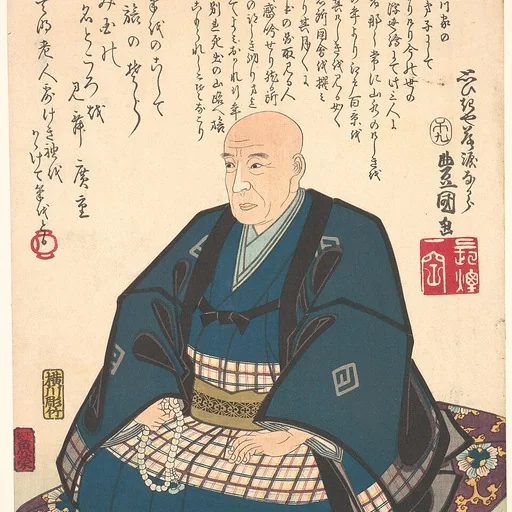
Artist
Utagawa Hiroshige (歌川 広重) or Andō Hiroshige (安藤 広重), born Andō Tokutarō (安藤 徳太郎; 1797 – 12 October 1858), was a Japanese ukiyo-e artist, considered the last great master of that tradition.

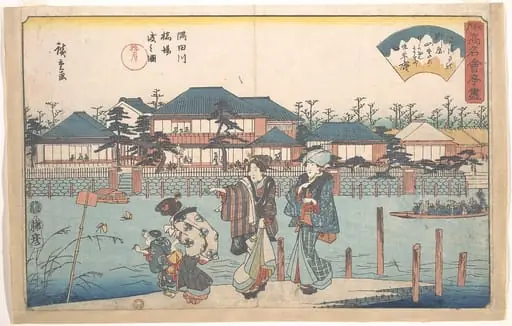 江戸高名会亭尽 隅田川橋場渡之図 柳屋|Sumidagawa Hashiba Watashi Zu (Yanagiya)
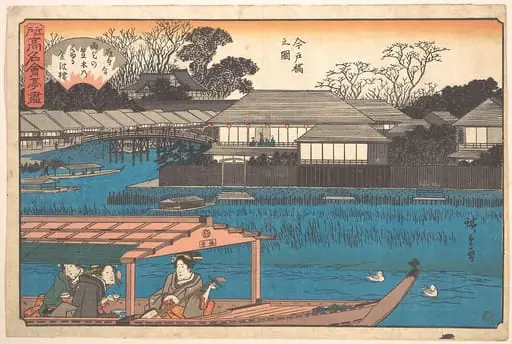 江戸高名会亭尽 今戸橋之図 金波楼|Imadobashi no Zu (Tama-Sho)
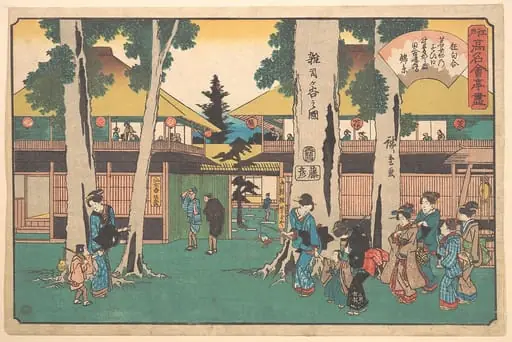 江戸高名会亭尽 雑司ヶ谷の図 茗荷屋|Zoshigaya no Zu (Myoga-ya)
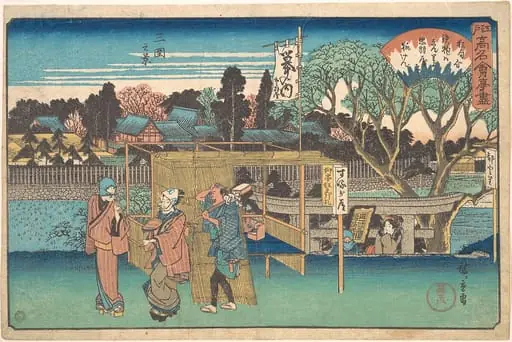 江戸高名会亭尽 三囲之景 出羽屋|Mimeguri no Kei (Toyoha-ya)
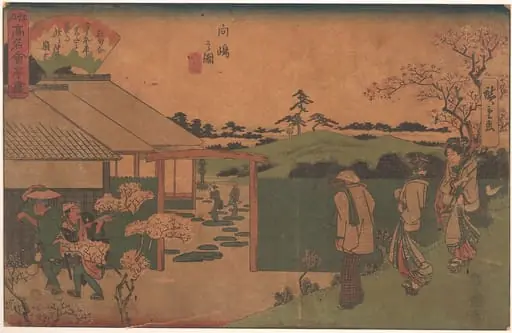 江戸高名会亭尽 向島の図 平岩|Mukojima no Zu (Hira-Iwa)
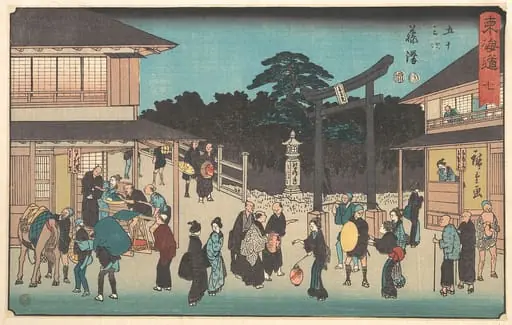 東海道五十三次 藤澤|Fujisawa
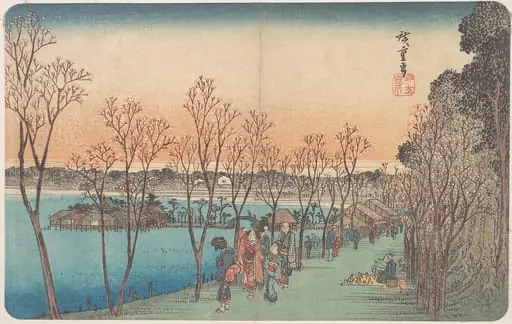 江戸名所 上野不忍の池|Ueno, Shinobazu no Ike
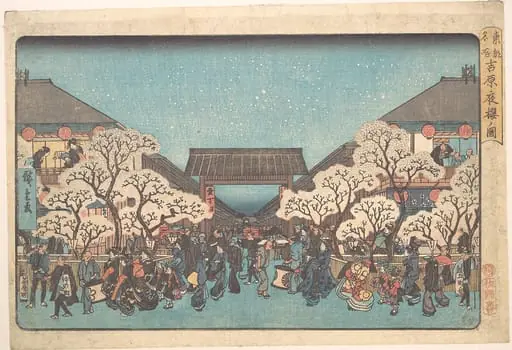 東都名所 吉原夜桜の図|Yoshiwara Yo Zakura no Zu
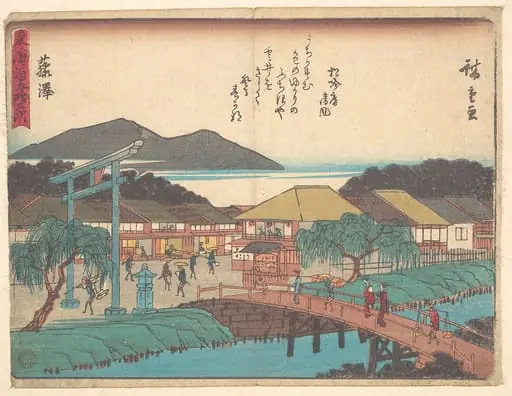 東海道五十三次 藤沢|Fujisawa