Artwork
横浜商館天主堂ノ図|Illustration of Foreign Residences and the Catholic Church in Yokohama (Yokohama shōkan tenshudō no zu)
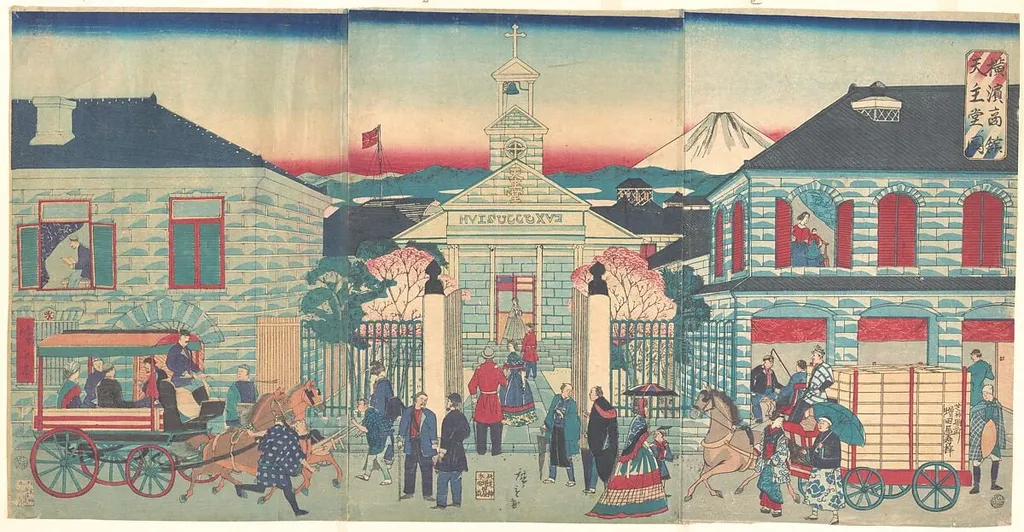
横浜商館天主堂ノ図|Illustration of Foreign Residences and the Catholic Church in Yokohama (Yokohama shōkan tenshudō no zu) is an ink print by the Impressionist artist Utagawa Hiroshige III. It dates from 10 and is held in the collection of the Metropolitan Museum of Art.
About this work
Notice how the artist packed so much activity into one scene—people walking, riding, and gathering, all while keeping the colors bright and the details sharp.
This print shows a busy street in Yokohama with a mix of people, horses, and wagons. A tall church with a cross sits in the middle, surrounded by low buildings with red doors and green windows. Trees bloom with pink flowers, and Mount Fuji looms in the distance under a soft sky.
Notice how the artist packed so much activity into one scene—people walking, riding, and gathering, all while keeping the colors bright and the details sharp. The print was made in 1870, when Yokohama was a place where foreign and local cultures mixed.
Want to see more? Check out Utagawa Hiroshige III.
Overview
This triptych woodblock print, created in 1870 by Utagawa Hiroshige III, depicts the foreign settlement of Yokohama during a period of rapid international engagement. Composed of three panels, it captures a bustling street scene with a blend of Japanese and Western elements. Ink and color on paper convey both movement and architectural detail, reflecting Yokohama’s transformation into a hub of cross-cultural exchange following Japan’s opening to foreign trade.
Subject & Meaning
The central focus is a Catholic church with a prominent cross, flanked by low-rise foreign residences marked by red doors and green shutters. Along the street, figures in both Japanese and Western attire interact with horses and carts, suggesting daily life in a hybrid community. Mount Fuji appears in the distance, subtly anchoring the scene in Japan’s landscape despite the foreign presence. The composition conveys coexistence rather than conflict, emphasizing observation over judgment.
Technique & Style
Hiroshige III employs precise linework and layered color to render textures and spatial depth. The bright palette—pink blossoms, vivid reds, and soft blues—enhances the vibrancy of the scene without overwhelming detail. Perspective is flattened in the traditional ukiyo-e manner, yet architectural elements like the church’s spire and the winding road suggest depth. The triptych format allows for a panoramic view, accommodating numerous figures and activities without clutter.
History & Provenance
Produced in 1870, the print emerged during Japan’s early Meiji era, when Yokohama was one of the first ports opened to foreign merchants after centuries of isolation. It was likely made for domestic audiences curious about the foreign enclave. The work entered the collection of The Metropolitan Museum of Art through documented acquisitions, preserving its role as a visual record of Japan’s transition into global commerce.
Context
Yokohama’s foreign settlement, established in 1859, became a microcosm of cultural interaction, where Japanese citizens encountered Western architecture, dress, and religion. This print reflects public fascination with the new foreign quarter, not as a threat but as a spectacle of modernity. The inclusion of Mount Fuji signals continuity with Japanese identity, even amid foreign influence, illustrating a nuanced national response to globalization.
Legacy
As one of the few surviving woodblock prints documenting Yokohama’s foreign settlement, it serves as a primary source for understanding visual culture during Japan’s modernization. While Hiroshige III is less renowned than his predecessors, this work stands as a testament to the ukiyo-e tradition’s adaptability. It remains a key reference for scholars studying cross-cultural representation in 19th-century Japanese art.
Artist & collection

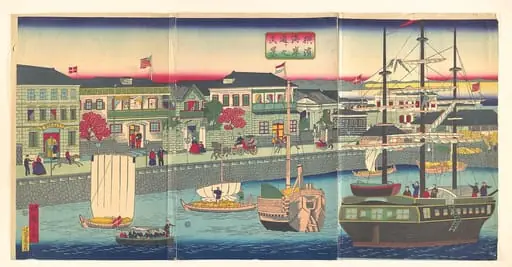 横浜海岸通り之風景|View of the Seafront in Yokohama (Yokohama Kagandori no fūkei)
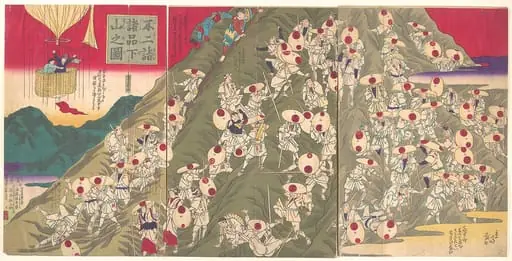 不二詣諸品下山之図|View of the Descent from a Mountain by Many from Pilgrimage to Mt. Fuji (Fuji mōde shoshina gesan no zu)
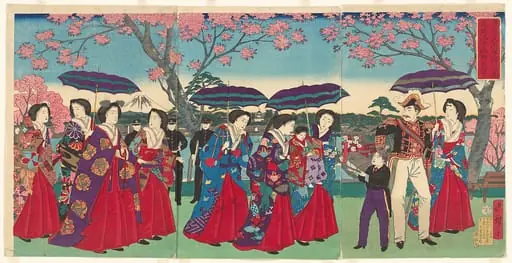 三代歌川広重画 『東京名所 従上野公園 不忍池中嶋弁天之景』|View of Benten Shrine on Nakanoshima Island in Shinobazu Pond, Ueno Park, from the series Famous Views of Tokyo (Tōkyō Tokyo meisho yori Ueno kōen Shinobazu no ike Nakanoshima Benten no kei)
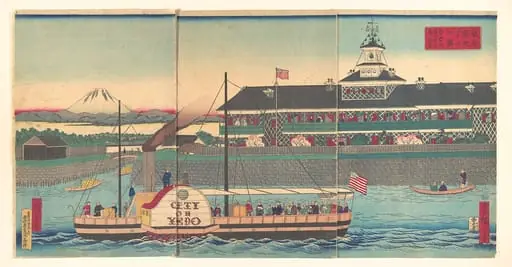 東京築地ホテル館|The Tsukiji Hotel in Tokyo (Tokyo Tsukiji hoteru kan)
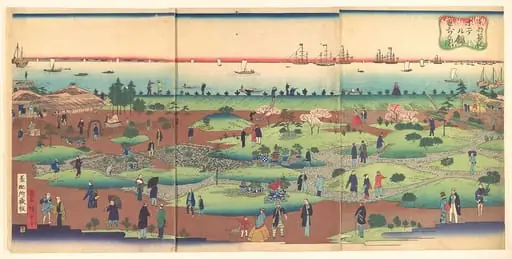 東都築地ホテル館庭前の図|Illustration of the Front Garden of the Tsukiji Hotel in the Eastern Capital (Tōto Tsukiji hoteru kan niwa mae no zu)
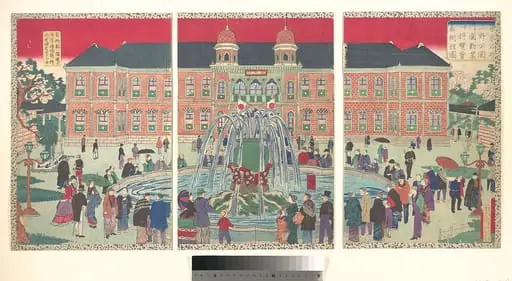 東京名所 上野公園内国勧業第二博覧会美術館図|Illustration of the Museum at the Second National Industrial Exhibition in Ueno, from the series Famous Places in Tokyo (Tokyo meisho-Ueno kōen naikoku kangyō daini hakurankai bijutsukan zu)
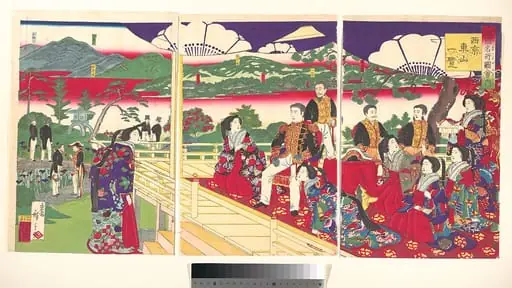 諸国名所図会内 西京東山一覧|A Glimpse of Higayashiyama the Western Capital, from the series Famous Places in the Nation (Shokoku meisho zukai no uchi-Saikyō Higashiyama ichiran)
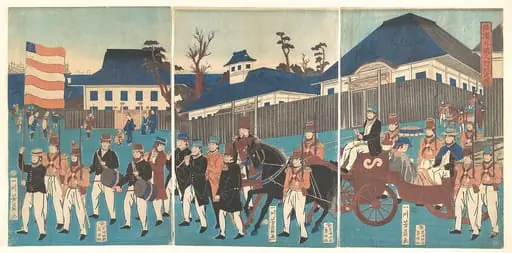 Yokohama Gankirō gaikokujin gyōretsu no zu|Picture of a Procession of Foreigners at Yokohama
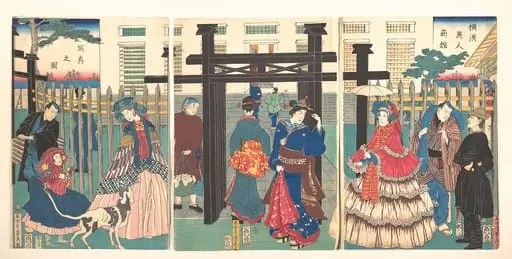 歌川五雲亭貞秀画 『横浜異人商館 写真之図』|Foreign Business Establishment in Yokohama (Yokohama ijin shōkan shashin no zu)
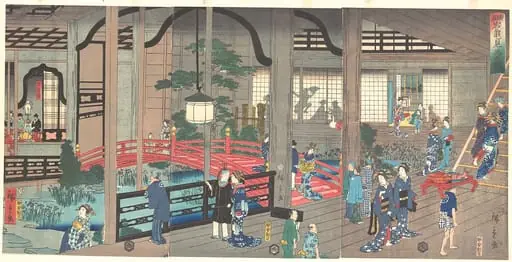 横浜 岩亀見込の図|The Interior of the Gankiro Tea House in Yokohama
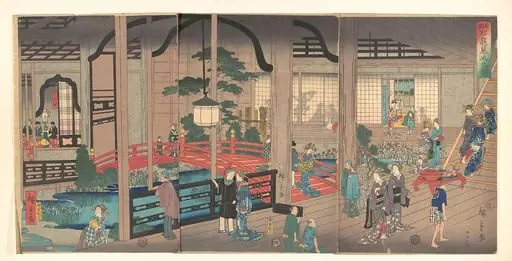 Yokohama Gankirō no zu|View of the Interior of the Gankirō Tea House in Yokohama